
You’re reading about the dimples on your thighs when a new word comes up cellulogia. It sounds enough like cellulite to make you wonder whether it’s a different skin condition. Then the article starts talking about creams and massage, and it’s hard to tell whether the word describes your skin or something you’re supposed to buy.
Cellulite is the dimpling itself. Cellulogia has no established medical definition. Some online articles use it as a catchall for products or services marketed to make cellulite less noticeable. That usage doesn’t tell you whether someone means a cream, a massage, or a procedure.
Cellulogia vs. Cellulite at a Glance
| What to compare | Cellulogia | Cellulite |
|---|---|---|
| What it describes | An informal term used in some online skincare content | Dimpling commonly seen on the thighs, hips, and buttocks |
| Does it have a standard meaning? | No established medical definition | Yes, it describes a recognizable skin appearance |
| Does it tell you what treatment is involved? | No. You need the exact product, device, or procedure name. | No. Several cosmetic options target its appearance. |
| Do you need treatment? | The term alone gives you no reason to buy anything. | Ordinary cellulite is harmless. Treatment is optional. |
1. What Does Cellulogia Mean?
Some online articles group cellulite creams, massage techniques, and device treatments under the word cellulogia. That’s how those articles use it; it doesn’t make the word a medical diagnosis or a standard treatment. A seller using the same word may be describing an entirely different service.
Start with the details underneath the name. If it’s a cream, look for the ingredient list and what the seller says it can change. If it’s a spa service, find out what happens during a session. If it’s a device treatment, ask for the device name and the intended result. The more specific the answer, the easier it is to compare the offer with other options.
A useful rule: Look up the evidence for the method, not the name on the package. Research on one device doesn’t establish that another device, a massage package, or a lotion will give the same result.
2. What Causes Cellulite?
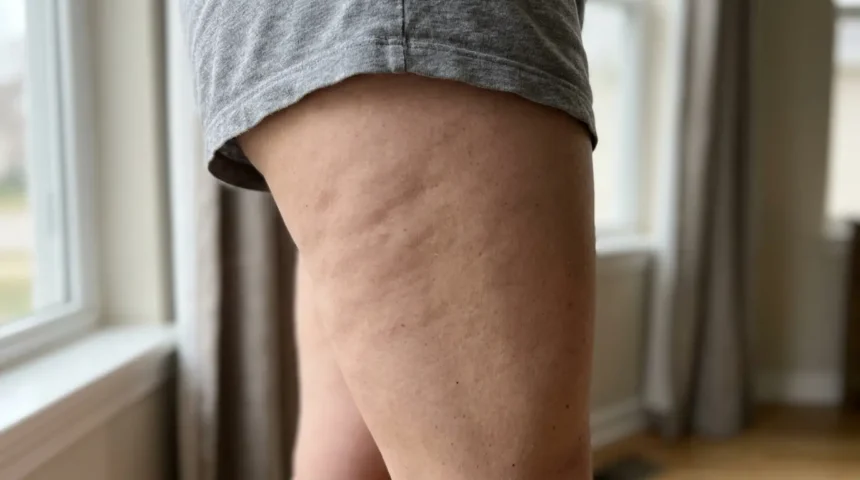
Cellulite has to do with the way fat and connective tissue sit just beneath the skin. Fibrous bands can pull the skin downward at certain points while the surrounding tissue pushes upward. Together, they create the uneven surface you see as dimples. This is especially common around the thighs, hips, and buttocks.
You can have cellulite whether you’re thin, athletic, or carrying more body fat. Its presence doesn’t tell you how fit you are. It also explains why reducing fat and smoothing dimples are two different goals: removing fat doesn’t necessarily change the bands that pull on the skin.
That difference matters when you’re comparing treatments. A service that promises to reduce the size of an area isn’t necessarily promising to make individual dimples less visible. Ask which change the provider expects you to see.
3. Can Creams or Massage Make Cellulite Less Noticeable?
Some products and services can make a visible difference, but the answer depends on what you use and what you expect. The American Academy of Dermatology’s guide to cellulite treatments separates options by what research has found, including whether any improvement lasted.
Creams and lotions
Some caffeine creams can make cellulite less noticeable with continued use. The AAD also notes that a product containing 0.3% retinol may make a modest difference for some people, though it can take six months or longer to judge the effect. Those findings don’t apply to every lotion with “smoothing” on the label.
Think about what would make the purchase worthwhile for you. If you mainly want a lotion that leaves your skin feeling soft, you can judge it on that. If you’re paying extra because it claims to reduce dimpling, look for evidence about that specific product and result.
Massage and vacuum-based treatments
Studies of a vacuum-assisted massage method have reported mixed results. Some found no difference; others found an improvement that faded after treatment stopped. A smoother look after a session doesn’t tell you what the area will look like several weeks later.
Before buying a package, ask how many sessions are included, when the provider assesses results, and whether maintenance sessions cost extra. A low price for the first visit doesn’t tell you what the full course will cost.
In-office procedures
Some procedures target the bands beneath the skin more directly. Subcision, for example, releases bands that pull down on the skin. The AAD reports that some procedures can make dimpling less noticeable for longer than massage-based treatments, but the result depends on the method and the person. A dermatologist can help you assess whether a procedure is suited to the dimples you want treated.
If you’re considering a procedure, ask who will perform it, what side effects to expect, and how much recovery time you may need. Those answers matter more than whether the treatment has a newer name.
4. How to Read Before-and-After Photos
Before-and-after photos are more useful when the conditions match. Side lighting can emphasize the shadows around dimples, while softer light can make the same skin look smoother. Turning a leg, shifting weight, or changing the camera angle can also change how much texture you see.
Check three things before taking a comparison at face value:
- Lighting and pose: Is the person standing the same way in both photos, with similar light and camera distance?
- Timing: Was the after photo taken immediately, a few weeks later, or after the full course?
- Treatment details: Does the caption say which method was used and how many sessions the person had?
A photo taken after one session can show a short-term change. It can’t answer whether you’ll still see that change after you stop treatment. If lasting results are the reason you’re interested, ask to see follow-up photos.
5. What to Ask Before Paying for a “Cellulogia” Treatment
You don’t need to know the technical terms before calling a clinic or spa. Start with what you want to understand about the purchase.
| Ask this | Why it matters |
|---|---|
| What exactly happens during the session? | It tells you whether you’re comparing a massage, a device treatment, or a procedure. |
| What change should I realistically expect? | Smoother-looking skin, less visible dimpling, and a smaller measurement are different outcomes. |
| How many visits are included in the quoted price? | The cost of a full course can be higher than the advertised session price. |
| How long does improvement typically last? | It helps you decide whether the result is worth the cost and any maintenance. |
| Who performs the treatment, and what are the risks? | The provider’s experience and the method both matter, especially for procedures. |
If the answer to “What method do you use?” is just “cellulogia,” ask for the product or procedure name in writing. That gives you something specific to look up before you commit.
Final Takeaway
Cellulite is the dimpling. Cellulogia is an informal label that doesn’t tell you what a product or service does. If you’re considering an offer, ask for the exact method, the total cost, and how long any improvement is expected to last. A clear answer to those questions gives you a better basis for deciding than the label alone.
Frequently Asked Questions
Is cellulogia another word for cellulite?
No. Cellulite describes the dimpling you see on the skin. Some sites use cellulogia when discussing products or services for cellulite, but it doesn’t have a standard medical meaning.
Does having cellulite mean I need to lose weight?
No. People at different weights and fitness levels can have cellulite. Weight changes may affect how visible it is, but losing weight doesn’t guarantee the dimples will disappear.
Can exercise make cellulite less visible?
For some people, building muscle can make the skin look firmer and the dimples less noticeable. You can exercise regularly and still have cellulite. Its appearance isn’t a reliable way to judge whether your workouts are working.
Does liposuction remove cellulite?
Liposuction removes fat, but the AAD doesn’t recommend it for getting rid of cellulite. It can make the dimpling more noticeable. If dimples are what you want to change, ask about options studied for that specific goal.
Do I need to treat cellulite at all?
No. Ordinary cellulite is harmless. If you’re comfortable with how it looks, you don’t need to do anything. If you want to make it less noticeable, compare the likely improvement, cost, and upkeep before choosing an option.
Our Editorial Approach
Beauty and self-care information should be clear and easy to use. Our goal is to help you understand your options and make more informed choices about your everyday routine.
Our articles are for educational purposes only and do not replace advice from a qualified healthcare professional.