

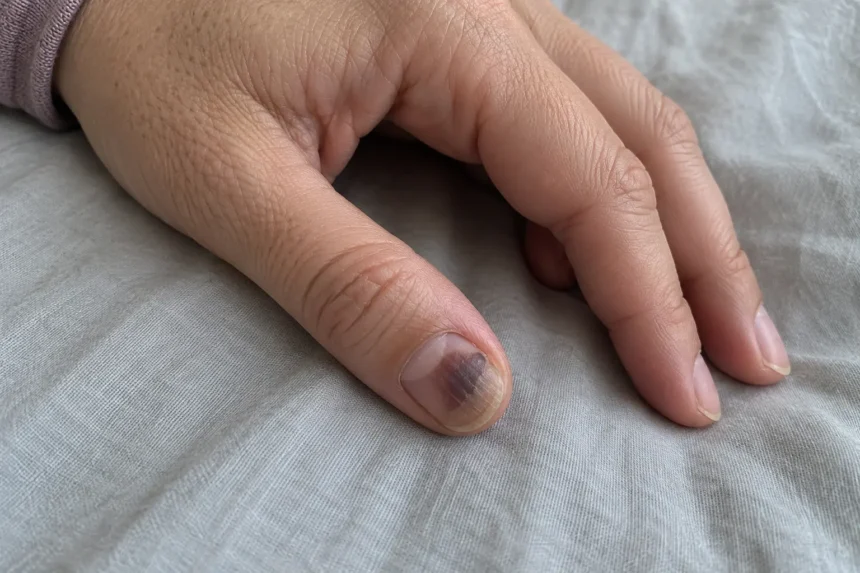
Seeing what looks like a new fingernail growing under an old nail can be unsettling. The older nail may feel loose, catch on clothing, or have a gap near its base. It can be tempting to pull it away, especially when another layer seems to be taking its place.
- New Nail Growing Under an Old Nail at a Glance
- 1. Why a New Fingernail Can Appear Beneath an Old One
- 2. Nail Shedding Can Follow a Temporary Growth Interruption
- 3. A Lifted Nail Isn’t Always a Second Nail
- 4. Previous Injury Is an Important Clue
- Should You Pull the Old Fingernail Off?
- How to Care for a Mildly Injured Fingernail
- Can You Cut the Loose Part?
- How Long Does a Fingernail Take to Grow Back?
- Signs You Should Get Medical Help
- Seek Urgent Assessment After a Significant Injury
- Watch for Possible Infection
- Arrange a Review for Unexplained Changes
- Can You Cover It With Gel, Acrylic, or Nail Glue?
- Is a New Fingernail Under an Old Nail a Fungal Infection?
- What If Several Fingernails Are Affected?
- Common Mistakes When an Old Nail Is Coming Off
- Pulling It to See Whether It’s Ready
- Cutting Too Far Back
- Digging Underneath
- Gluing the Nail Down
- Assuming New Growth Means Everything Has Healed
- Ignoring Increasing Pain or Swelling
- Final Takeaway
- Frequently Asked Questions
Don’t pull off a nail that is still attached. A loose section can remain connected to sensitive tissue, and pulling may tear the nail bed or cause bleeding. Protect it from catching while you work out what caused the change.
Sometimes an injured nail is being replaced as new growth moves forward. In other cases, lifting or splitting can resemble a second nail without being one. Where the separation starts, whether it hurts, and how many nails are affected help determine what to do next.
New Nail Growing Under an Old Nail at a Glance
| What you notice | What it may mean | What to do |
|---|---|---|
| New growth after a previous injury | The damaged nail may be growing out | Protect it and leave attached sections alone |
| A gap or separation near the nail base | Nail shedding after a temporary growth interruption is possible | Arrange an assessment if the cause is unclear |
| A white area lifting from the tip | The nail may be separating from its bed | Keep it short and avoid digging underneath |
| A loose edge catching on clothing | Part of the nail is detached | Trim only a clearly free edge or ask for help |
| Increasing pain, warmth, swelling, or pus | Infection or another complication is possible | Seek prompt medical care |
| Several nails becoming loose | A shared trigger may be involved | Have a clinician review the changes |
| Severe pain after a crush injury | The nail bed or fingertip may also be injured | Get urgent assessment |
This chart can help you describe the change, but appearance alone cannot confirm the cause. An unexplained loose nail or sore, swollen surrounding skin deserves medical assessment.
1. Why a New Fingernail Can Appear Beneath an Old One
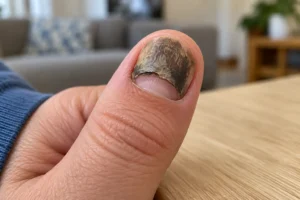
The nail plate is the hard part you can see. New nail is produced by the nail matrix, the growth area beneath the skin near the nail base.
After an injury or interruption to growth, the older plate may loosen while a newer plate begins moving forward. For a time, the overlap can look like two nails occupying the same space.
That doesn’t mean the whole older nail is ready to come away. Some areas may remain firmly attached.
A recent injury can help explain the change, but a nail that loosens without an obvious reason should be checked.
2. Nail Shedding Can Follow a Temporary Growth Interruption
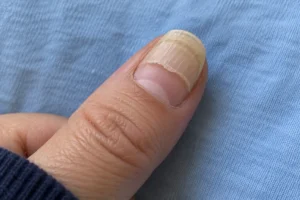
One possible explanation is onychomadesis, which describes separation beginning near the nail base after nail production temporarily stops.
When growth resumes, the newer plate can become visible behind or beneath the older one. The change may appear after the original trigger rather than immediately.
Reported triggers include injury, illness, and certain medications. A clinician can review the timing and decide whether this explanation fits.
Don’t stop a prescribed medicine because you suspect it affected your nails. Discuss the change with the prescriber.
3. A Lifted Nail Isn’t Always a Second Nail
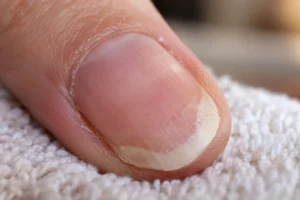
A pale or white area beneath the nail can be a space where the plate has separated from the nail bed.
This is called onycholysis. It often starts at the tip or sides and can follow trauma, irritation, infection, or other nail conditions.
The detached portion won’t stick back down. The aim is to address the cause and allow new growth to remain attached.
Avoid sliding tools underneath to inspect the gap. That can extend the separation.
4. Previous Injury Is an Important Clue
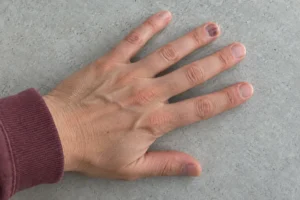
A trapped finger, a bent-back nail, or repeated pressure can affect the nail plate and the structures underneath it.
Think back beyond the day you noticed the loose section. The visible change may follow an earlier incident.
Tell the clinician whether the finger was crushed, whether there was bleeding, and whether the nail has changed position.
A serious injury needs assessment even if you can see new growth. A replacement nail doesn’t rule out damage beneath the old one.
Should You Pull the Old Fingernail Off?
Leave any attached part in place. Don’t test its attachment by tugging, twisting, or lifting it repeatedly.
If a small free edge catches, you may be able to trim that edge without disturbing the attached nail. If you cannot clearly see where it is attached, cover it and ask a clinician for help.
Some nail injuries require professional removal or repair. That decision depends on the injury, rather than simply how loose the nail looks.
How to Care for a Mildly Injured Fingernail
These steps are for a minor injury. If the nail has already been repaired or dressed by a clinician, follow those instructions instead.
Clean Gently
Wash the area carefully with soap and water.
Avoid scrubbing the exposed surface or pushing anything under the plate.
Protect Exposed Tissue
For a small exposed wound, apply a thin layer of petroleum jelly and cover it with a suitable dressing.
Keep adhesive on the surrounding skin rather than directly on the injured nail. Change the dressing daily, or sooner if it becomes wet or dirty.
Prevent Catching
Use light protection while the nail remains vulnerable. Don’t wrap the finger tightly.
The American Academy of Dermatology recommends gentle cleaning, protection, and trimming only nail that is no longer connected to the skin for mild injuries. Get help if the injury isn’t improving after a few days.
Can You Cut the Loose Part?
You can carefully shorten a clearly detached free edge with clean nail clippers.
Don’t cut into the pink attached area, along the sides, or down toward the cuticle. Stop if trimming causes pain, bleeding, or pulls on the remaining nail.
A plate that is loose near its base can be difficult to trim safely. Covering it until it is assessed is a better choice than trying to remove the whole section.
How Long Does a Fingernail Take to Grow Back?
A fingernail commonly takes around four to six months to grow back fully, although the cause and extent of injury can change that timeline. Damage to the growth area may also affect the new nail’s shape.
Seeing a small new section is different from having a fully replaced nail.
Take an occasional photograph in similar lighting if you want to track progress. Avoid lifting the older plate to look underneath.
Ask for a review if the nail remains painful, repeatedly separates, or the new growth looks increasingly distorted.
Signs You Should Get Medical Help
Seek Urgent Assessment After a Significant Injury
Get urgent care if:
- You have severe or increasing pain.
- You cannot bend the finger normally.
- Bleeding continues despite firm, direct pressure.
- The nail is torn away near its base.
- A crush injury has caused a large dark collection beneath the nail.
These signs can indicate an injury that needs more than home care. Don’t pierce or burn a hole in the nail yourself to release pressure.
Watch for Possible Infection
Increasing redness, warmth, swelling, pus, or worsening tenderness should be checked promptly.
Seek urgent care if redness spreads rapidly, red streaks develop, or you have a fever.
Arrange a Review for Unexplained Changes
Have a clinician examine a nail that loosens without a clear cause, several nails changing together, or a new dark streak that isn’t explained by an injury.
If you have diabetes, poor circulation, or a weakened immune system, get advice early about an open nail wound.
Can You Cover It With Gel, Acrylic, or Nail Glue?
Avoid using artificial nails or glue to hold down or disguise a damaged, separating nail.
They can make it harder to inspect the area, and application or removal may disturb it further. The AAD advises against covering nail problems with artificial nails because they may worsen them.
A protective dressing serves a different purpose from a cosmetic covering.
Wait until the area has healed and the reason for separation has been addressed before returning to nail enhancements.
Is a New Fingernail Under an Old Nail a Fungal Infection?
Not necessarily.
An injured or shedding nail can look thick, uneven, or discolored without fungus being the cause. Fungal infection is one possible explanation for some nail changes, but a second-looking layer doesn’t establish that diagnosis.
Avoid choosing a treatment only from an online photograph. A clinician may examine the nail and take a sample when infection is suspected.
The correct treatment depends on why the nail is changing.
What If Several Fingernails Are Affected?
Several nails changing around the same time can point toward a shared trigger.
Make a note of recent illness, medication changes, repeated chemical exposure, or nail treatments. Include when each nail first began to change.
This history helps the clinician assess the pattern. It doesn’t automatically mean you have a vitamin deficiency.
Avoid starting supplements or antifungal products simply because more than one nail is affected.
Common Mistakes When an Old Nail Is Coming Off
Pulling It to See Whether It’s Ready
Repeated tugging can disturb tissue that is still attached. Protect the loose section instead.
Cutting Too Far Back
Only shorten a clearly free edge. Leave attached portions and the nail base alone.
Digging Underneath
Trying to scrape out the gap can injure the nail bed and enlarge the separation.
Gluing the Nail Down
Household glue and cosmetic nail glue aren’t substitutes for assessment or a suitable wound dressing.
Assuming New Growth Means Everything Has Healed
The new nail can be growing while the surrounding tissue still needs protection.
Ignoring Increasing Pain or Swelling
A loose nail may catch occasionally, but worsening symptoms shouldn’t be dismissed as normal regrowth.
Final Takeaway
A new fingernail growing under an old nail can be part of replacement after injury or interrupted growth, but similar-looking changes have other causes.
Leave attached nail in place, protect loose edges, and trim only clearly detached portions. Get medical help for significant injury, worsening symptoms, or changes you cannot explain.
Frequently Asked Questions
Why is a new fingernail growing under my old nail?
The older nail may be separating while replacement growth moves forward after injury or a temporary interruption to nail production. Other types of lifting or splitting can look similar, so the appearance alone doesn’t confirm the cause.
Will the old nail fall off by itself?
It may gradually loosen and shed as the replacement grows. Don’t pull away sections that remain attached. Ask for help if it keeps catching or becomes painful.
Should I remove a nail that is almost completely off?
Don’t tear it away. A small remaining attachment may still connect to sensitive tissue. Protect it and have it assessed if safe trimming isn’t straightforward.
Will the detached nail reattach?
A portion that has separated from the nail bed generally won’t reattach. Healthy replacement growth needs to grow forward while the underlying cause is addressed.
Can I wash my hands normally?
Gentle washing is important. Protect an exposed wound afterward and replace wet dressings. Follow any specific instructions given after nail-bed repair.
Can I paint over the old nail?
Leave a damaged or separating nail free of cosmetic products while the cause is being assessed. Polish can hide changes you need to monitor.
Is it normal for the new nail to look uneven?
New growth can look different after an injury. Whether it settles depends partly on the condition of the nail matrix. Persistent splitting, pain, or worsening distortion should be checked.
When should I see a doctor?
Seek care for significant injury, severe pain, infection signs, unexplained separation, or several affected nails. A minor injury that isn’t improving after a few days also needs review.
Our Editorial Approach
Beauty and self-care information should be clear and easy to use. Our goal is to help you understand your options and make more informed choices about your everyday routine.
Our articles are for educational purposes only and do not replace advice from a qualified healthcare professional.