

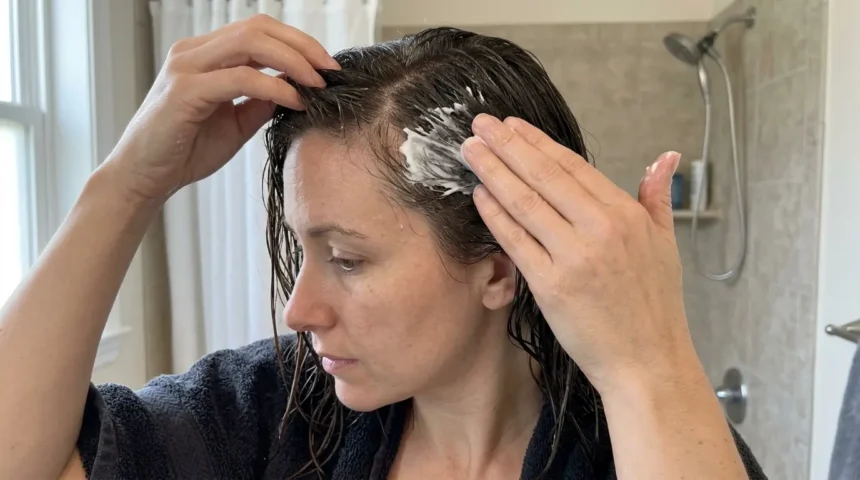
Your hair feels clean after washing, but the next morning the roots are already flat. By afternoon, your fringe has separated into strands and the hair around your parting looks oily. Washing again might seem excessive, especially when the ends still feel dry.
- Greasy Hair After One Day at a Glance
- 1. Your Scalp May Naturally Produce More Oil
- 2. Fine or Straight Hair May Show Oil Quickly
- 3. Shampoo May Be Missing Parts of Your Scalp
- 4. Conditioner May Be Too Heavy Near the Roots
- 5. Styling Products Can Leave a Coated Finish
- 6. Dry Shampoo May Be Building Up
- 7. Itching or Flakes May Need a Different Approach
- How to Tell Oiliness From Product Buildup
- Should You Wash Greasy Hair Every Day?
- A Simple Washing Routine to Try
- Common Greasy-Hair Mistakes
- Copying Someone Else’s Wash Schedule
- Skipping Conditioner Everywhere
- Applying More Product to Fix Flat Roots
- Using Dry Shampoo for Several Days Without Washing
- Changing Everything at Once
- When to Get Your Scalp Checked
- Final Takeaway
- Frequently Asked Questions
An oily scalp can need more frequent washing than you expect. Fine or straight hair may show oil quickly, while conditioner and styling products near the roots can add a coated feeling. The useful question is whether your hair becomes greasy overnight or never feels fully clean after washing.
If your hair gets greasy after one day, start with that distinction. Then look at how you shampoo, where you apply conditioner, and what stays on your hair between washes.
Greasy Hair After One Day at a Glance
| What you notice | Possible explanation | What to consider |
|---|---|---|
| Roots feel clean after washing but oily the next day | Your scalp may need frequent cleansing | A shorter gap between washes |
| Fine hair quickly falls flat | Oil or product makes the strands group together | Smaller amounts of styling product |
| Roots feel coated as soon as the hair dries | Residue or incomplete cleansing may be involved | Shampoo coverage and rinsing |
| Hair feels greasy after conditioning | The amount or placement may be too heavy | Conditioner mainly through the lengths |
| Roots are oily but ends feel rough | The scalp and lengths have different needs | Scalp cleansing with conditioning on the ends |
| Hair feels powdery after several refreshes | Dry shampoo has accumulated | A regular shampoo-and-water wash |
| Oiliness comes with itching or flakes | A scalp concern may need attention | Appropriate dandruff care or professional advice |
These are starting points for adjusting your routine. Greasy-looking hair alone doesn’t identify a scalp condition.
1. Your Scalp May Naturally Produce More Oil
The scalp produces sebum, the oil that collects around the roots between washes.
Some people notice that oil sooner than others. Hormones influence oil production, so the difference isn’t simply about how thoroughly you washed.
Notice how long your hair stays comfortable after a normal wash. If the roots feel clean initially and become oily at a predictable time, your washing schedule may need adjusting.
You don’t have to reach a certain number of days between washes for your routine to be suitable.
Best starting point: Wash according to your scalp’s needs rather than someone else’s schedule.
2. Fine or Straight Hair May Show Oil Quickly
Fine hair can lose its airy appearance once strands begin sticking together. The hair around your parting or fringe may look flat before the rest feels particularly oily.
Cleveland Clinic notes that fine hair may need washing every one to two days, while people with oily scalps may choose daily washing.
Start with a small amount of any leave-in product. A cream that feels comfortable on thick lengths may make finer roots feel heavy.
If only the front looks greasy, notice what you apply near that area before deciding the whole routine needs replacing.
Best starting point: Keep products light around fine roots and adjust washing frequency as needed.
3. Shampoo May Be Missing Parts of Your Scalp

It’s easy to work shampoo into the hairline and top of the head while barely reaching the crown or nape.
Wet the hair thoroughly before applying shampoo. Use your fingertips to distribute it across the scalp, paying attention to areas that regularly feel coated.
The American Academy of Dermatology recommends applying shampoo to the scalp, where it removes excess oil and accumulated products.
Rinse carefully before conditioning. If one section still feels slippery or heavy after drying, review how well that area was cleansed and rinsed.
Best starting point: Improve scalp coverage before choosing a stronger shampoo.
4. Conditioner May Be Too Heavy Near the Roots
Conditioner helps with detangling and manageability, but its placement can change how the finished hair feels.
For fine or straight hair, the AAD recommends applying conditioner to the ends. Dry or curly hair may benefit from conditioner throughout the lengths.
If your roots feel heavy after every wash, try keeping your usual conditioner farther down the hair. Use enough for the dry areas without spreading the same amount everywhere.
There’s no need to leave dry ends unconditioned simply because the scalp becomes oily.
Best starting point: Put conditioner where the hair needs softness and easier detangling.
5. Styling Products Can Leave a Coated Finish
Hair oil, smoothing cream, serum, and other styling products can accumulate on the hair and scalp. That residue may make the roots feel oily even when you’ve recently washed them.
Think about what goes on after your shampoo. If you apply several products, reduce one before replacing the entire routine.
Keep richer products on the lengths or ends when that’s where you need them. Follow the directions for products specifically intended for the scalp.
Change one thing at a time so you can tell whether the amount, placement, or formula made the difference.
Best starting point: Use the smallest amount that gives you the finish you want.
6. Dry Shampoo May Be Building Up
Dry shampoo can make oily roots look fresher, but it absorbs oil without washing the scalp.
Repeated layers may leave the hair feeling gritty or stiff. Adding more can reduce shine while making the coated feeling worse.
The AAD advises continuing to wash with shampoo and water and suggests doing so after one or two dry shampoo applications.
Apply a small amount only where needed and follow the product’s waiting and brushing instructions.
Best starting point: Use dry shampoo for an occasional refresh between proper washes.
7. Itching or Flakes May Need a Different Approach
Oiliness with persistent itching or flakes deserves attention beyond choosing a lighter styling product.
Oil and skin-cell residue can accumulate when the scalp isn’t cleansed often enough. Dandruff may also need a suitable shampoo rather than changes aimed only at the appearance of the hair.
Follow the instructions on a dandruff shampoo carefully. How often to use it and how long to leave it on depend on the formula and your hair type.
If the scalp remains uncomfortable, ask a dermatologist for advice.
Best starting point: Address scalp symptoms separately from oily-looking roots.
How to Tell Oiliness From Product Buildup
The two can overlap. Your hair may have natural oil at the roots and residue from products applied over it.
| When the heavy feeling appears | What to review first |
|---|---|
| Immediately after washing and drying | Shampoo coverage, rinsing, and conditioner placement |
| After applying a leave-in cream or serum | The amount and application area |
| The day after an otherwise comfortable wash | Your usual washing interval |
| After several dry shampoo applications | Powder and residue that need washing out |
| Alongside persistent itching or flakes | Your scalp-care routine and whether you need advice |
Use the timing to choose your first adjustment. It’s easier to understand what helped when you change one part of the routine.
Should You Wash Greasy Hair Every Day?
Daily washing can be appropriate for some people. The AAD says people with straight hair and an oily scalp may want to shampoo every day.
Look at how your scalp and lengths respond. The scalp may feel better with frequent cleansing while the ends need more careful conditioning.
If washing leaves the lengths tangled or rough, focus shampoo on the scalp and review the conditioner you use. Don’t assume you have to choose between oily roots and uncomfortable ends.
A Simple Washing Routine to Try
Cleanse the Scalp Carefully
Wet the hair thoroughly and apply shampoo according to its directions.
Work through the scalp with your fingertips, including the crown and nape. Avoid scratching with your nails.
Condition the Lengths
Apply conditioner to the areas that need it.
For fine hair, begin at the ends. Distribute it through more of the lengths if your hair is dry, curly, or difficult to detangle.
Keep Root Products Minimal
Use small amounts of leave-in products and notice how the hair feels once dry.
If it looks flat immediately, try reducing the amount or moving the product away from the roots.
Adjust Your Next Wash
Wash when the scalp needs cleansing instead of waiting for a particular day.
Take note of whether the adjustment keeps your scalp comfortable without leaving the lengths harder to manage.
Common Greasy-Hair Mistakes
Copying Someone Else’s Wash Schedule
Hair texture and scalp oiliness vary. A routine that works for a friend may leave your roots uncomfortable.
Skipping Conditioner Everywhere
Oily roots don’t mean the ends have enough conditioning. Adjust placement before removing it completely.
Applying More Product to Fix Flat Roots
Another cream or serum may add weight. First decide whether the hair needs cleansing or simply a different styling approach.
Using Dry Shampoo for Several Days Without Washing
Powder doesn’t replace cleansing. If the roots feel coated, wash out the accumulated product.
Changing Everything at Once
A new shampoo, conditioner, scalp treatment, and styling routine make it difficult to identify what helped.
When to Get Your Scalp Checked
Arrange a review if oiliness comes with persistent itching, a rash, or soreness, or if suitable dandruff care doesn’t help.
A scalp concern may need a different approach from ordinary greasy roots. Explain when the symptoms started and bring a list of the products you use.
Final Takeaway
If your hair gets greasy after one day, your scalp may need more frequent washing. If it feels coated straight after drying, start with cleansing, rinsing, and product placement.
Keep conditioner on the areas that need it, use dry shampoo sparingly, and change one step at a time. A comfortable scalp matters more than making every wash last several days.
Frequently Asked Questions
Why does my hair get greasy after one day?
Your scalp may naturally need frequent washing. Fine hair, heavy products near the roots, and incomplete cleansing can also contribute to how quickly it looks oily.
Is daily washing bad for greasy hair?
Daily washing can suit an oily scalp, particularly with straight hair. Adjust the products and conditioner placement so the lengths remain comfortable.
Why does my hair feel greasy immediately after washing?
Review shampoo coverage, rinsing, and the amount of conditioner or styling product used near the roots. Change one step at a time.
Should I shampoo twice?
Not automatically. Follow your shampoo’s directions and begin with thorough scalp coverage. A second application isn’t a substitute for identifying a product that feels too heavy.
Does dry shampoo clean the scalp?
No. It absorbs oil but doesn’t replace washing with shampoo and water.
Why are my roots greasy while my ends are dry?
The scalp and lengths can have different needs. You may need frequent scalp cleansing and conditioner through the drier ends.
Will washing less often stop the oil?
Extending the gap doesn’t guarantee less oil production. Choose a schedule that keeps your scalp comfortable.
What should I ask a hairdresser?
Describe when the heaviness appears. For example: “My roots feel clean after washing but look oily the next morning, while my ends stay dry. Can we review my conditioner placement and styling products?”
Our Editorial Approach
Beauty and self-care information should be clear and easy to use. Our goal is to help you understand your options and make more informed choices about your everyday routine.
Our articles are for educational purposes only and do not replace advice from a qualified healthcare professional.