

Hair breakage around the hairline often begins with short pieces near the temples, forehead, or ears. The area may look frizzy at first, then gradually become thinner as more strands snap under repeated tension, heat, brushing, or chemical stress.
- Is It Hair Breakage or Hair Loss?
- Common Causes of Hair Breakage Around the Hairline
- Tight Hairstyles
- Strong Edge-Control Products
- Wigs, Clips, and Adhesives
- Heat Styling
- Chemical Processing
- Friction
- How to Stop Hairline Breakage
- 1. Take a Break From Tight Styles
- 2. Stop Slicking the Hairline Every Day
- 3. Reduce Heat on the Front Section
- 4. Handle the Area Gently During Detangling
- 5. Keep the Hair Flexible
- 6. Protect the Hairline at Night
- 7. Adjust Wigs and Protective Styles
- A Simple Routine for Fragile Edges
- Can Oil Grow Back Broken Edges?
- How Long Does Hairline Breakage Take to Grow Back?
- Mistakes That Can Keep the Edges From Recovering
- Changing Products but Keeping the Same Tight Style
- Brushing the Edges Several Times a Day
- Applying More Product Over Buildup
- Relaxing Only the Hairline Too Often
- Cutting New Growth by Mistake
- Ignoring Pain or Scalp Changes
- When to See a Dermatologist
- Final Takeaway
- Frequently Asked Questions
The fastest way to stop hairline breakage is to remove the source of damage. Loosen tight hairstyles, reduce heat, stop brushing the edges aggressively, and keep heavy extensions away from fragile areas. Broken strands need time to grow, but changing the routine now can prevent the damage from continuing.
Before treating the area, it helps to work out whether you are dealing with breakage or hair loss. They can look similar, but they are not always caused by the same problem.
Is It Hair Breakage or Hair Loss?
Breakage happens when the hair shaft snaps somewhere along its length. You may notice short strands of different lengths around the forehead, rough ends, frizz, or hair that breaks during styling.
Hair loss happens when the complete strand leaves the follicle. The fallen hair may have a small bulb at one end, although this is not always easy to see.
Look closely at the affected area:
| What you notice | More likely to be |
|---|---|
| Short hairs in several uneven lengths | Breakage |
| Rough or split ends near the hairline | Breakage |
| Snapping during brushing or styling | Breakage |
| Smooth areas with very little visible hair | Hair loss |
| A widening or receding hairline | Possible hair loss |
| Tenderness, bumps, burning, or itching | Scalp irritation or another condition |
New growth can also look like breakage. New hairs usually have softer, tapered ends and become longer over time. Broken hairs may feel rough and end abruptly.
If the hairline continues to recede or develops smooth patches, do not assume that every short strand is simple breakage.
Common Causes of Hair Breakage Around the Hairline
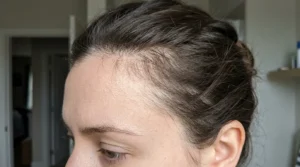
The hairline contains short, exposed strands that are easy to pull and overstyle. Several habits may contribute to the damage at the same time.
Tight Hairstyles
Slick ponytails, tight braids, buns, cornrows, and tightly secured wigs can place repeated pressure on the same areas. The temples and space above the ears are often affected first.
A style does not need to feel extremely painful to cause trouble. Daily pulling in the same direction can gradually weaken the strands.
Strong Edge-Control Products
Edge gel does not automatically cause breakage, but problems can develop when it is combined with firm brushing, repeated restyling, and tight tension.
Once a strong product dries, brushing through it may cause delicate hairs to snap. Adding more product each day without removing buildup can also make the area stiff and difficult to manipulate.
Wigs, Clips, and Adhesives
Wig combs, clips, elastic bands, and adhesive removal can place pressure directly on the hairline. A wig that feels secure may still rub the same spot every day.
Tight braids underneath a wig can add another layer of tension, especially when the front sections are braided firmly to create a flat base.
Heat Styling
Flat irons, hot combs, curling tools, and high-temperature blow-drying can weaken already delicate strands. Repeatedly straightening the front to blend it with extensions or a leave-out style can make breakage worse.
The hairline is often touched up more frequently than the rest of the hair, so it may receive much more heat over time.
Chemical Processing
Relaxers, permanent color, bleach, and overlapping chemical treatments may weaken the hair shaft. Applying a relaxer repeatedly over previously processed edges can leave the area especially vulnerable.
Chemical damage may be accompanied by a rough texture, reduced elasticity, or hair that breaks with very little pressure.
Friction
Cotton pillowcases, tight hats, rough headbands, helmet edges, and scarves tied firmly around the hairline can rub against the same strands repeatedly.
Friction alone may not explain severe thinning, but it can contribute when the hair is already dry or weakened.
How to Stop Hairline Breakage
You cannot reconnect a strand after it has snapped, but you can protect the remaining hair and reduce further damage.
1. Take a Break From Tight Styles

Stop wearing any hairstyle that pulls at the temples, forehead, or edges.
Choose loose twists, a soft low bun, a relaxed wash-and-go, or another low-tension style. The finished style should not cause pain, scalp tenderness, or a tight feeling when you move your eyebrows.
If you wear braids, ask the stylist to leave fragile edges out rather than forcing every short hair into the style. Larger sections and lighter extensions may also reduce pressure.
2. Stop Slicking the Hairline Every Day

Give the edges a break from daily gel, brushing, and repeated smoothing.
If you use edge control, apply a small amount and shape the hair gently with your fingers or a soft tool. Do not keep brushing once the product has dried.
Allow some natural texture to remain. A perfectly smooth hairline is not worth repeated damage.
3. Reduce Heat on the Front Section

Avoid passing a flat iron or hot comb over the same hair several times.
When heat is necessary, use the lowest effective temperature and apply an appropriate heat protectant. Let the hair dry before using a flat iron, since applying one to damp hair can cause more damage.
Consider styles that allow the front section to blend naturally instead of requiring constant straightening.
4. Handle the Area Gently During Detangling

Do not begin detangling at the roots or pull a comb through knots around the hairline.
Work on damp, conditioned hair and separate tangles with your fingers first. Hold the section above the knot to reduce pulling at the root, then detangle from the ends upward.
A wide-tooth comb may be useful for longer sections, but the shortest hairs around the forehead may need only gentle finger detangling.
5. Keep the Hair Flexible

Dry, stiff strands tend to snap more easily during styling. Use enough conditioner to give the hair slip and flexibility without covering the hairline in thick layers of product.
A lightweight leave-in may help if the area feels dry. Heavy oils do not repair broken hair, and excessive buildup can make the roots harder to cleanse.
Focus on keeping the strands comfortable and easy to handle.
6. Protect the Hairline at Night

Sleep on a satin pillowcase or wear a loose satin bonnet that does not press tightly against the edges.
Check the elastic band. If it leaves a deep mark across the forehead or repeatedly slides over the same area, it may create unnecessary friction.
Do not tie a scarf firmly over a slicked hairstyle every night. A loose covering is usually enough to reduce rubbing without adding tension.
7. Adjust Wigs and Protective Styles

Remove or reposition clips that sit directly on thinning areas. A properly fitted wig should remain secure without pulling at the temples.
Avoid wearing the same attachment method every day. Alternating between a grip, adjustable band, and completely clip-free option may reduce repeated stress on one area.
When using adhesive, follow the removal instructions and allow enough time for it to loosen. Pulling lace away quickly can remove delicate hairs along with it.
A Simple Routine for Fragile Edges
A complicated product routine is not necessary. The main goal is to reduce tension and handle the area carefully.
On Wash Day
- Loosen the hairstyle before adding water.
- Apply shampoo to the scalp without scratching aggressively.
- Rinse thoroughly around the hairline.
- Apply conditioner and separate tangles gently.
- Pat the area with a soft towel instead of rubbing it.
- Apply a lightweight leave-in if needed.
- Choose a loose style that does not pull the edges.
During the Week
- Avoid brushing the hairline repeatedly.
- Keep headbands and scarves loose.
- Use only a small amount of styling product.
- Change the position of ponytails, buns, and parts.
- Protect the hair at night.
- Clean product buildup before applying more.
- Leave short hairs alone when they do not need styling.
A consistent low-tension routine will usually do more than repeatedly applying oils while continuing to wear tight styles.
Can Oil Grow Back Broken Edges?
Oil can reduce friction and soften dry strands, but it cannot reconnect broken hair or guarantee new growth.
Castor oil is often used around the edges because of its thick texture, but thickness does not mean it will make hair grow faster. Applying too much may leave buildup that requires stronger cleansing or extra manipulation.
If you enjoy using oil, apply a small amount to reduce dryness. Do not rely on it while ignoring tight hairstyles, heat, or rough handling.
Healthy-looking edges depend more on reducing damage than finding one miracle product.
How Long Does Hairline Breakage Take to Grow Back?
Visible improvement takes time because new hair grows gradually. The exact timeline depends on the amount of breakage, the condition of the follicles, and whether the damaging habit has stopped.
Short broken hairs may begin looking fuller as they gain length. More serious thinning can take much longer, particularly when the area has experienced repeated tension.
Take a clear photo in the same lighting every few weeks. Daily mirror checks make progress difficult to judge and can encourage unnecessary product changes.
If the hairline keeps becoming thinner despite a gentler routine, the issue may involve more than surface breakage.
Mistakes That Can Keep the Edges From Recovering
Changing Products but Keeping the Same Tight Style
A new serum cannot cancel the tension created by a tight ponytail, heavy braids, or an uncomfortable wig.
Brushing the Edges Several Times a Day
Repeated brushing creates friction and pulls on hairs that are already short and delicate.
Applying More Product Over Buildup
Layering gel, oil, and edge control can leave the area stiff. Clean the hair gently before adding more styling product.
Relaxing Only the Hairline Too Often
Frequent chemical touch-ups around the front can overlap previously processed hair and increase breakage.
Cutting New Growth by Mistake
Not every short hair is damaged. Look at the ends and monitor whether the strands are gaining length before trimming them.
Ignoring Pain or Scalp Changes
Tenderness, bumps, burning, and inflammation are not normal signs of a protective style. Remove the source of tension instead of waiting for the discomfort to pass.
When to See a Dermatologist
Hairline breakage may improve after changing your styling habits, but some forms of thinning need professional assessment.
Consider seeing a dermatologist if:
- The hairline is visibly receding.
- The thinning continues after you stop tight styling.
- The affected area feels smooth or shiny.
- You have scalp pain, burning, itching, or bumps.
- Hair is also thinning in other areas.
- The change appeared suddenly.
- There is scaling, redness, or inflammation.
- You are unsure whether the problem is breakage or hair loss.
Repeated tension can contribute to traction alopecia. Early changes may improve when the pulling stops, but long-term damage can become harder to reverse. Getting advice early is more useful than hiding the area under another tight style.
Final Takeaway
Hair breakage around the hairline will not improve while the same pressure continues. The first step is to loosen tight hairstyles, reduce heat, stop aggressive edge brushing, and remove anything that rubs or pulls at the temples.
Keep the routine simple. Clean the area gently, use enough conditioner for easy detangling, choose low-tension styles, and protect the hairline at night.
Short broken hairs need time to regain length. If the area becomes painful, smooth, inflamed, or increasingly thin, seek professional advice rather than covering it with another tight style.
Frequently Asked Questions
Why is my hair breaking only around the hairline?
The hairline receives more brushing, smoothing, heat, friction, and tension than many other areas. Tight hairstyles and repeated edge styling are common causes.
Should I cut broken hairs around my forehead?
Trim only rough or split ends that are causing tangles. Some short strands may be new growth, so avoid cutting the entire area without checking the ends.
Can tight ponytails cause hairline breakage?
Yes. Wearing tight ponytails repeatedly can strain the strands around the forehead and temples. Lower the tension and change the style regularly.
Should I stop wearing wigs while my edges recover?
Not necessarily, but the wig should not pull, rub, or rely on clips placed over fragile areas. Keep the style underneath loose and remove adhesive carefully.
Does edge control cause breakage?
The product alone may not be the problem. Breakage is more likely when strong edge control is combined with hard brushing, daily restyling, buildup, and tight hairstyles.
Can broken edges grow back?
Broken strands can gain length if they stop snapping, while new hairs may grow from healthy follicles. Continued thinning, smooth patches, or a receding hairline should be checked by a dermatologist.
Our Editorial Approach
Beauty and self-care information should be clear and easy to use. Our goal is to help you understand your options and make more informed choices about your everyday routine.
Our articles are for educational purposes only and do not replace advice from a qualified healthcare professional.