
If your hair looks dull, faded, or lacks the shine it once had, you’ve probably come across two popular salon services: hair gloss and hair glaze.
- Hair Gloss vs Hair Glaze at a Glance
- What Is a Hair Gloss?
- What Is a Hair Glaze?
- Gloss vs Glaze for Hair: What’s the Real Difference?
- Does Hair Gloss Change Hair Color?
- Hair Gloss Before and After: What Results Can You Expect?
- Hair Gloss vs Glaze for Color-Treated Hair
- Hair Gloss vs Glaze for Damaged Hair
- How Long Does Hair Gloss Last?
- Is Hair Gloss Better Than Hair Glaze?
- Salon Gloss vs Glaze Treatment
- Hair Gloss Treatment at Home
- How Often Should You Get a Hair Gloss?
- Common Mistakes to Avoid
- Final Takeaway
- Frequently Asked Questions
The short answer? Both treatments are designed to boost shine and improve the appearance of your hair, but they’re not exactly the same. A hair gloss vs glaze treatment typically penetrates the hair more deeply, can help tone color, and usually lasts longer. A hair glaze treatment primarily coats the hair shaft to add shine and smoothness, making it a more temporary option.
Understanding the difference can help you spend your money wisely and choose the treatment that matches your hair goals.
Hair Gloss vs Hair Glaze at a Glance
| Feature | Hair Gloss | Hair Glaze |
|---|---|---|
| Primary Purpose | Enhance color and shine | Enhance shine |
| Longevity | Usually 4–6 weeks | Usually 1–2 weeks |
| Color Correction | Yes, often | Minimal |
| Hair Penetration | Partially penetrates hair | Coats hair surface |
| Maintenance | Moderate | Low |
| Best For | Color-treated or faded hair | Dull, healthy-looking shine |
What Is a Hair Gloss?
A hair gloss is a shine-enhancing hair treatment that helps improve color, smooth the hair cuticle, and add reflective shine.
Many gloss formulas contain semi-permanent hair color pigments that can refresh faded hair, tone unwanted brassiness, or subtly deepen existing color.
A gloss won’t dramatically change your hair color like permanent dye. Instead, it enhances what’s already there.
Benefits of a Hair Gloss Treatment
A gloss can:
- Add noticeable shine
- Refresh faded hair color
- Reduce brassiness
- Improve softness
- Help hair appear healthier
- Smooth rough cuticles
- Enhance color-treated hair
Many salons recommend a gloss between color appointments to keep hair looking fresh without applying another full color service.
What Is a Hair Glaze?

A hair glaze treatment focuses primarily on coating the outer layer of the hair.
Think of it as a temporary topcoat for your hair.
Rather than significantly altering color, a glaze creates a smoother surface that reflects more light, making hair appear shinier and healthier.
Benefits of a Hair Glaze Treatment
A glaze may help:
- Add instant shine
- Reduce the appearance of frizz
- Smooth the hair surface
- Improve softness temporarily
- Revive dull-looking hair
Because most glazes sit on the hair rather than penetrating it, results tend to fade faster than a gloss.
Gloss vs Glaze for Hair: What’s the Real Difference?
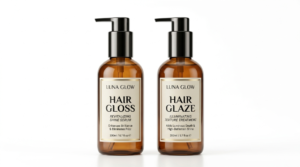
The biggest difference comes down to how the treatment works.
Hair Gloss Works Within the Hair
A gloss can:
- Deposit subtle color
- Neutralize unwanted tones
- Refresh highlights
- Extend the appearance of salon color
This makes gloss treatments particularly popular for blonde, brunette, and color-treated hair.
Hair Glaze Works on the Surface
A glaze acts more like a protective coating.
It enhances shine and smoothness but generally doesn’t provide the same color-correcting benefits as a gloss.
For someone who loves their current color and simply wants more shine, a glaze can be enough.
Does Hair Gloss Change Hair Color?
One of the most common questions is whether a gloss actually changes hair color.
The answer is yes, but only slightly.
A gloss can:
- Tone yellow or brassy blonde hair
- Refresh faded brunette shades
- Deepen richness
- Add warmth or coolness
However, it won’t dramatically lighten dark hair or completely transform your natural color.
Think of it as color refinement rather than color replacement.
Hair Gloss Before and After: What Results Can You Expect?
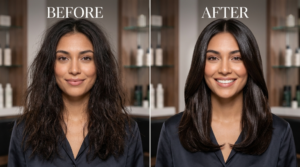
The most noticeable changes usually include:
Before
- Dull appearance
- Faded color
- Rough texture
- Less light reflection
After
- Increased shine
- More vibrant color
- Smoother texture
- Healthier-looking finish
It’s important to have realistic expectations. A gloss can make hair look significantly better, but it won’t repair severe damage or split ends.
Hair Gloss vs Glaze for Color-Treated Hair
For color-treated hair, gloss usually wins.
Why Gloss Often Works Better
Color-treated hair tends to fade over time. A gloss can help restore richness and tone without requiring a complete recoloring appointment.
Benefits include:
- Refreshing salon color
- Reducing brassiness
- Extending time between color services
- Improving shine
A glaze can still add shine, but it generally won’t provide the same color-enhancing benefits.
Hair Gloss vs Glaze for Damaged Hair
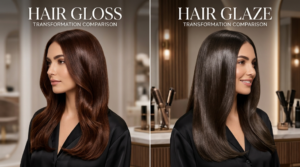
Neither treatment is a substitute for repairing damaged hair, but they can improve its appearance.
Choose Hair Gloss If:
- Your color looks faded
- Your hair feels rough
- You want shine and color enhancement
Choose Hair Glaze If:
- You mainly want extra shine
- Your hair color already looks good
- You’re looking for a quick refresh
If your hair is severely damaged from bleaching, heat styling, or chemical processing, focus on strengthening and moisturizing treatments first.
How Long Does Hair Gloss Last?
How long does hair gloss last?
Most gloss treatments last approximately 4 to 6 weeks, depending on:
- Hair porosity
- Shampoo frequency
- Product choice
- Heat styling habits
- Sun exposure
Using sulfate-free shampoos may help preserve results longer.
How Long Does Hair Glaze Last?
Hair glaze typically lasts around 1 to 2 weeks.
Since the treatment sits on the hair surface, it gradually washes away with regular cleansing.
Is Hair Gloss Better Than Hair Glaze?
Not necessarily.
The better option depends on your goals.
Choose Hair Gloss If You Want:
- Longer-lasting results
- Color enhancement
- Brassiness correction
- A salon-like refresh
Choose Hair Glaze If You Want:
- Quick shine
- Lower commitment
- Temporary results
- A simple boost before an event
Neither treatment is universally better. They’re simply designed for different purposes.
Salon Gloss vs Glaze Treatment
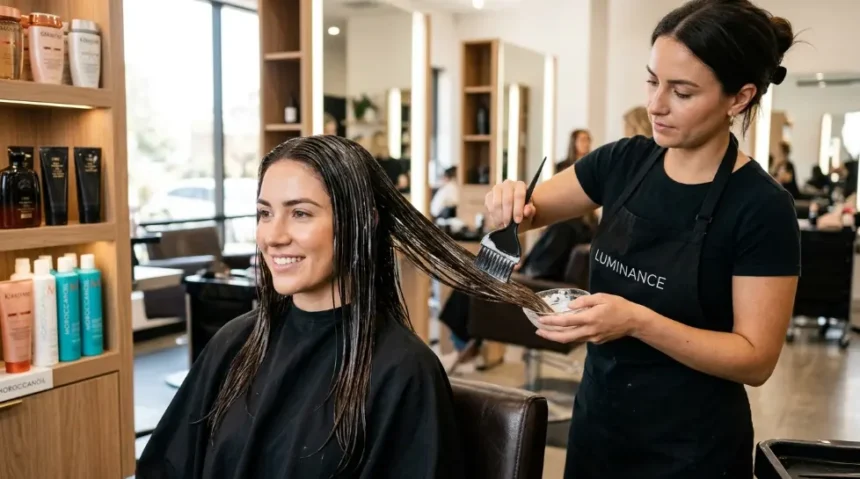
Professional salon treatments generally provide stronger and longer-lasting results than many at-home alternatives.
Salon Hair Gloss Treatment
Professional gloss services often include customized color formulations tailored to your hair’s needs.
These treatments may:
- Correct tone more precisely
- Deliver more even results
- Last longer
Salon Hair Glaze Treatment
Salon glazes can provide exceptional shine, especially before weddings, vacations, photoshoots, or special occasions.
Hair Gloss Treatment at Home
At-home gloss products have become increasingly popular.
They can be useful for:
- Refreshing color between appointments
- Boosting shine
- Reducing dullness
When shopping for the best hair gloss for shiny hair, look for formulas designed for your hair color and concerns.
Follow directions carefully and avoid leaving pigmented formulas on longer than recommended.
How Often Should You Get a Hair Gloss?
Most people benefit from a gloss every 4 to 8 weeks.
Factors that influence frequency include:
- Hair color
- Washing habits
- Hair condition
- Desired level of shine
Overusing gloss treatments generally isn’t necessary. Maintaining healthy hair through gentle cleansing, conditioning, and heat protection often has an even bigger impact on appearance.
For more haircare tips, readers can explore other healthy hair and frizz-management guides available on The Serenity Lab.
Common Mistakes to Avoid
Expecting Permanent Results
Glosses and glazes are temporary treatments. They require maintenance.
Using the Wrong Tone
A cool gloss on warm hair or vice versa may create results you don’t love.
Ignoring Hair Health
No shine treatment can completely disguise significant damage.
Washing Too Frequently
Frequent shampooing can shorten the lifespan of both treatments.
Final Takeaway
When comparing Hair Gloss vs Glaze, the best choice depends on what you’re trying to achieve. A hair gloss treatment offers longer-lasting shine, subtle color enhancement, and tone correction, making it ideal for color-treated hair. A hair glaze treatment focuses on temporary shine and smoothness without significantly affecting color.
If your hair color looks faded, choose a gloss. If your hair simply needs a quick shine boost, a glaze may be all you need. Either way, both treatments can help dull hair look healthier, smoother, and more polished without the commitment of permanent color.
Frequently Asked Questions
Can a hair glaze cover gray hair?
Most hair glazes do not effectively cover gray hair. They are designed primarily for shine and surface smoothing.
Is a hair gloss safe for color-treated hair?
Yes. Hair gloss treatments are commonly used to refresh and maintain color-treated hair between appointments.
Does hair gloss damage hair?
Most modern gloss treatments are considered low-risk compared to permanent coloring. However, results vary depending on the formula and hair condition.
Can I use a hair gloss and a hair glaze together?
Some salon services combine shine-enhancing techniques, but most people only need one treatment based on their goals.
Which treatment gives the most shine?
Both can increase shine, but many people notice more immediate reflective shine from a glaze, while a gloss often provides longer-lasting overall improvement.
Is a gloss worth it between color appointments?
For many people with color-treated hair, a gloss can help maintain vibrancy and reduce fading between full color services.
For more practical beauty, wellness, and self-care guidance, explore The Serenity Lab.
Our Editorial Approach
Beauty and self-care information should be clear and easy to use. Our goal is to help you understand your options and make more informed choices about your everyday routine.
Our articles are for educational purposes only and do not replace advice from a qualified healthcare professional.