

Copper and auburn are good starting points if you want a hair color that makes green eyes more noticeable. Their reddish tones create contrast around the face, while a brown base can keep the result subtle. You can choose a light strawberry blonde, a soft chestnut, or a deeper red-brown depending on how much change you want.
- Hair Colors for Green Eyes at a Glance
- 1. Copper Hair
- 2. Auburn Hair
- 3. Chestnut Brown Hair
- 4. Chocolate Brown Hair
- 5. Strawberry Blonde Hair
- 6. Golden Blonde Hair
- 7. Caramel Highlights
- 8. Burgundy Hair
- 9. Soft Black Hair
- 10. Beige Blonde Hair
- How to Choose a Shade for Your Complexion
- Consider the Particular Green in Your Eyes
- Make the Color Fit Your Starting Hair
- Try a Smaller Change First
- Common Hair Color Mistakes When Highlighting Green Eyes
- Final Takeaway
- Frequently Asked Questions
Brown and blonde shades offer different options. Dark chocolate creates a deeper frame around lighter eyes, while golden highlights bring brightness near the face. The overall effect depends on your complexion, your starting hair color, and the particular green in your eyes.
If you’re wondering what hair color brings out green eyes, start by comparing a few shades at a depth you already enjoy. A small change in warmth may be enough without going much lighter or darker.
Hair Colors for Green Eyes at a Glance
| Hair color | Main tones | Overall effect | What to consider |
|---|---|---|---|
| Copper | Orange-red | Clear, warm contrast | How bright you want the red to appear |
| Auburn | Red and brown | Rich contrast with a brunette base | The balance between red and brown |
| Chestnut brown | Brown with red-gold warmth | A softer warm option | How visible the warmth looks in daylight |
| Chocolate brown | Deep brown | A darker frame around the eyes | Whether you prefer neutral or warm brown |
| Strawberry blonde | Blonde with a soft copper tint | Light and gently warm | Your starting color and required lightening |
| Golden blonde | Blonde with golden warmth | Brightness around the face | How much yellow warmth you enjoy |
| Caramel highlights | Golden brown | Dimension through a brunette base | Highlight placement and contrast |
| Burgundy | Red with violet tones | A deeper, more noticeable color | How red or purple you want the result |
| Soft black | Very deep brown-black | Strong contrast around lighter eyes | The commitment involved in going darker |
| Beige blonde | Muted blonde with balanced warmth | A softer blonde frame | Keeping the shade from looking too gray or yellow |
These are options to compare rather than rules. Your eye color doesn’t require you to choose a particular shade, and the same color can look different beside different complexions.
1. Copper Hair
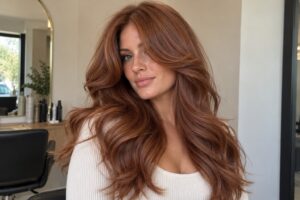
Copper places orange-red tones around the face, creating a noticeable contrast with green eyes.
A lighter copper gives a brighter result. A deeper copper brown keeps more of a brunette appearance while adding warmth.
Compare the color near your face before choosing. A vivid orange copper can look quite different from a muted, brown-based version.
If you want a smaller change, consider copper ribbons or a few pieces around the face instead of an all-over color.
Best for: A warm shade with clear contrast against green eyes.
2. Auburn Hair
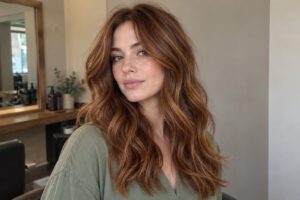
Auburn combines red with brown, making it a useful option when you like copper but want more depth.
A medium auburn can show its red tone clearly in daylight. A darker version may look mostly brunette indoors, with warmer reflections as the light changes.
Ask to compare shades with different amounts of red. “Auburn” can describe anything from a soft reddish brown to a much stronger red.
Keep your starting color in mind when discussing the result with your colorist.
Best for: Bringing red tones into a richer brunette shade.
3. Chestnut Brown Hair

Chestnut brown adds red-gold warmth without making the whole head look distinctly red.
It’s an option to compare if you already enjoy brown hair and want a modest change.
A lighter chestnut shows more warmth, while a deeper version keeps the overall appearance closer to dark brown.
Look at the shade in daylight. The warm reflection may be less obvious under indoor lighting than it appears in a salon photo.
Best for: A subtle warm brown around green eyes.
4. Chocolate Brown Hair

Chocolate brown creates a deeper frame around the face, which can make lighter green eyes appear more noticeable.
Choose the undertone separately from the depth. Some chocolate shades look neutral, while others have a red or golden reflection.
If your current hair is light, compare a medium chocolate before choosing a very dark version. You may enjoy the contrast without needing the deepest brown.
A few slightly lighter pieces can add dimension if you prefer variation through the lengths.
Best for: Emphasizing lighter eyes with a brunette color.
5. Strawberry Blonde Hair

Strawberry blonde brings a soft copper tint into blonde hair.
It offers warmth without the depth of auburn or the brightness of a stronger copper.
Compare a beige-blonde version with a more peachy one. Small changes in the red content can noticeably alter the result.
If your hair is naturally dark or previously colored, ask what preparation would be needed to reach the shade. A reference photo alone won’t show the process involved.
Best for: A lighter hair color with gentle red warmth.
6. Golden Blonde Hair
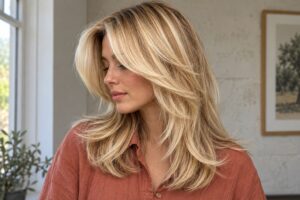
Golden blonde adds brightness around the face with a warm yellow-gold tone.
A soft golden shade gives a different result from a strongly yellow blonde, so compare samples rather than relying on the color name.
Keep some depth near the roots if you prefer a more gradual transition from your natural hair.
You can also use golden highlights through a darker blonde base instead of choosing one solid color.
Best for: A bright blonde look with visible warmth.
7. Caramel Highlights
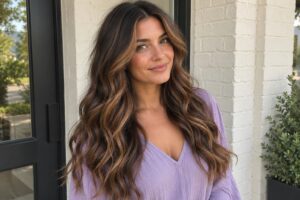
Caramel highlights add golden-brown pieces through a brunette base.
Their placement matters as much as the shade. Pieces near the face change the color beside your eyes, while highlights mainly through the ends create a different balance.
Choose fine ribbons for a blended result or wider pieces for more obvious contrast.
Keep enough of the base visible if you want the overall look to remain brunette.
Best for: Adding warmth and dimension without changing all your hair.
8. Burgundy Hair

Burgundy combines red with violet for a deeper color that can create a striking frame around green eyes.
A brown-based burgundy looks more restrained. A saturated wine shade makes the red-violet tone much more noticeable.
Compare the shade beside your skin as well as your eyes. A color you enjoy in a swatch may feel stronger when it surrounds your whole face.
If you’re unsure, discuss a subtle burgundy tint through a darker base before committing to a vivid result.
Best for: A deeper red with a cooler, violet influence.
9. Soft Black Hair

Soft black creates a strong contrast around lighter green eyes. L’Oréal Paris also lists black among its suggested hair colors for green eyes.
Compare a very dark brown with black before deciding. They may look similar in some lighting but give a different result around your face.
Think about whether you’re comfortable keeping the darker color. Going darker now can complicate a later move back to blonde.
Use reference photos with similar skin coloring to help judge the overall effect.
Best for: A dramatic difference between dark hair and lighter eyes.
10. Beige Blonde Hair

Beige blonde offers a more muted alternative to a strongly golden or icy blonde.
It’s useful to compare when yellow blonde feels too warm but a very ashy shade looks too gray beside your skin.
Keep some variation through the hair if you prefer dimension. A darker root and lighter lengths can give a different effect from one pale shade throughout.
Describe the balance you want to your colorist. “Beige” can mean different things across shade ranges.
Best for: A softer blonde option with restrained warmth.
How to Choose a Shade for Your Complexion
Your eyes are one part of the overall look. The hair color also sits beside your skin, eyebrows, and natural coloring.
| If you want | Compare these options |
|---|---|
| A clear red contrast | Copper or medium auburn |
| A subtle brunette change | Chestnut or warm chocolate |
| A darker frame around the eyes | Deep chocolate or soft black |
| A lighter shade with red warmth | Strawberry blonde |
| Brightness without all-over blonde | Caramel or golden highlights |
| A deeper red-violet color | Brown-based burgundy |
| A muted blonde | Beige blonde |
Compare colors near your face in balanced daylight. Notice whether you enjoy the whole combination rather than judging only how bright your eyes appear.
Undertone guides can help you shortlist shades, but they don’t need to decide for you. Warm and cool hair colors can create different effects on the same person.
Consider the Particular Green in Your Eyes
Green eyes vary in appearance. Some look gray-green, others have a golden center, and some appear blue-green in certain lighting.
Use that variation as a way to compare colors rather than as a strict matching system.
Gray-Green Eyes
Compare a muted chestnut with a brighter copper. One gives softer warmth, while the other creates a more noticeable color difference.
A neutral chocolate brown is another option if you prefer depth over red.
Green Eyes With Golden Flecks
Try comparing caramel, chestnut, and auburn near your face.
These shades introduce different amounts of gold and red. Choose according to whether you prefer a subtle blend or a clearer contrast.
Blue-Green Eyes
Compare both warm and neutral options, such as copper, chocolate, and beige blonde.
Check the result in more than one setting. Eye color and hair reflections can both look different as the lighting changes.
Make the Color Fit Your Starting Hair
A shade that looks like a small change in a photo may require a different process on your hair.
Naturally light hair, dark hair, and previously colored hair won’t necessarily produce the same result with the same product.
Tell your colorist about previous dye, lightening, and any color treatments still present through the lengths.
For a larger change, discuss what’s achievable now and whether the result would need more than one appointment. Avoid choosing the process from a shade name alone.
Try a Smaller Change First
You don’t have to choose an all-over color to see whether you enjoy a new tone.
A few warm highlights, a subtle color adjustment, or face-framing pieces may give you enough variation.
Virtual try-on tools can help you compare broad color families, although they won’t predict the exact salon result.
When using inspiration photos, look for similar starting hair and complexion. Save several examples and point out which parts you like.
Common Hair Color Mistakes When Highlighting Green Eyes
Choosing Only by Eye Color
A shade can contrast with green eyes while still feeling wrong beside your complexion. Compare the whole face before deciding.
Assuming Every Red Looks the Same
Copper, auburn, cherry, and burgundy have different undertones. Bring a reference rather than asking simply for “red.”
Going Much Darker Than You Intended
Soft black and medium chocolate create very different levels of contrast. Compare depths before making a large change.
Putting All the Lightness Through the Ends
If your goal is to change the color beside your eyes, discuss placement around the face. Light ends alone may not give the effect you had in mind.
Ignoring the Upkeep
Ask how the chosen shade is likely to change between appointments and what maintenance it requires. Choose a result you’re comfortable keeping.
Judging the Shade From One Edited Photo
Filters, lighting, makeup, and colored contact lenses can change the appearance of a hair-and-eye combination. Compare several references.
Final Takeaway
Copper and auburn offer warm contrast with green eyes, while chocolate brown and soft black add a darker frame. Strawberry blonde, golden blonde, and caramel highlights provide lighter options.
Compare a few shades beside your face, consider your starting hair, and choose a level of upkeep you can maintain. A small adjustment in tone or placement may give you the change you want.
Frequently Asked Questions
What hair color brings out green eyes the most?
Copper and auburn are useful starting points if you want red-toned contrast. Dark chocolate and soft black offer a different approach by creating depth around lighter eyes. The effect depends on your overall coloring and preference.
Does blonde or brown hair look better with green eyes?
Either can work. Blonde gives a lighter frame, while brown creates more depth. Compare the undertone and shade rather than deciding by color family alone.
Can cool-toned hair bring out green eyes?
Yes. Beige blonde, neutral brown, and red-violet shades offer options beyond golden or copper hair. Compare how they look beside both your skin and eyes.
What hair color suits green eyes and fair skin?
Compare strawberry blonde, soft copper, chestnut, and chocolate brown. Fair skin can have different undertones, so there isn’t one shade that suits every light complexion.
What hair color suits green eyes and olive skin?
Chestnut, chocolate, caramel highlights, and auburn are options to compare. Olive complexions vary in depth and warmth, so test the color near your face before choosing.
Do I need red hair to make green eyes stand out?
No. Red tones offer one kind of contrast, but darker browns, black, and blonde shades create other effects. Choose a color you also enjoy wearing.
Can highlights make green eyes more noticeable?
Highlights change the color and brightness around the face, especially when placed near the front. Their effect depends on the highlight shade, your base color, and the amount of contrast.
What should I ask for at the salon?
Describe the depth, undertone, and placement you want. For example: “A medium chestnut brown with subtle copper warmth near the face, while keeping most of my brunette base.”
Our Editorial Approach
Beauty and self-care information should be clear and easy to use. Our goal is to help you understand your options and make more informed choices about your everyday routine.
Our articles are for educational purposes only and do not replace advice from a qualified healthcare professional.