
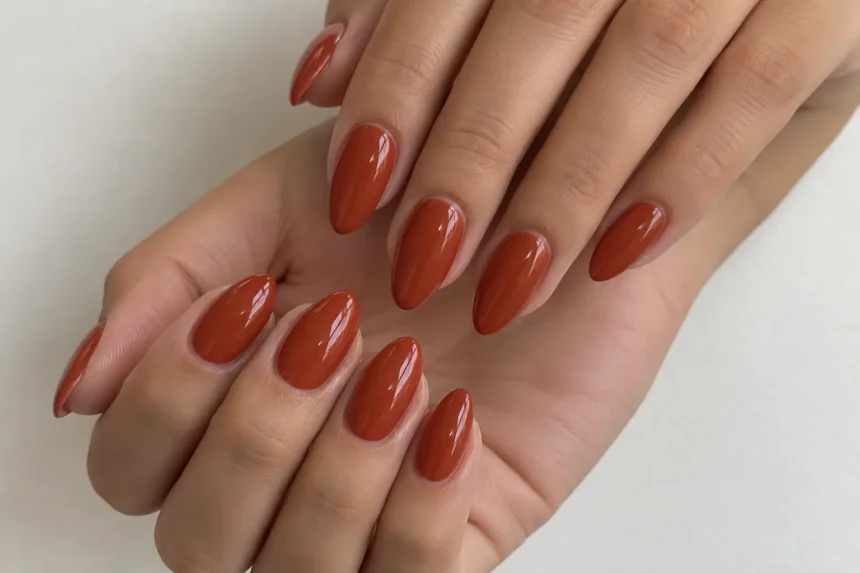
A beige polish can look quietly neutral in the bottle, then turn noticeably peach or gray once it’s on your nails. A coral you expected to feel too bright might be the shade you keep wearing. On olive skin, comparing a few colors beside your hands can tell you more than the shade name.
- Summer Nail Colors for Olive Skin at a Glance
- 1. Coral Red
- 2. Peach Pink
- 3. Terracotta
- 4. Warm Pink-Beige
- 5. Dusty Rose
- 6. Milky White
- 7. Butter Yellow
- 8. Muted Lilac
- 9. Pistachio Green
- 10. Teal
- 11. Cobalt Blue
- 12. Soft Bronze
- How to Choose Nail Colors for Olive Skin
- Light, Medium, and Deep Olive Skin
- What if a Neutral Polish Looks Too Orange or Gray?
- Choose the Finish Alongside the Shade
- Make the Color Fit Your Nail Length
- Simple Ways to Combine Summer Colors
- Pair a Neutral With One Accent
- Use One Color for French Tips
- Combine Related Shades
- Keep Metallic Details Small
- Getting a Smooth Summer Manicure
- Common Nail Color Mistakes for Olive Skin
- Assuming Olive Always Means Warm
- Buying a Nude Without Checking Its Depth
- Avoiding Every Pastel
- Choosing Only From an Edited Photo
- Treating Contrast as a Color Mismatch
- Final Takeaway
- Frequently Asked Questions
Olive complexions vary in depth and overall warmth, so there isn’t one summer palette that works the same way for everyone. You might prefer a sheer rosy tint, a warm terracotta, or a clear blue that creates more contrast.
These nail colors for olive skin cover understated neutrals, softer pastels, and brighter summer shades. Start with how much contrast you enjoy, then compare the undertone, coverage, and finish.
Summer Nail Colors for Olive Skin at a Glance
| Nail color | Main tones | Finish to compare | Overall effect |
|---|---|---|---|
| Coral red | Red with orange-pink warmth | Glossy cream | Bright and clearly defined |
| Peach pink | Pink and soft peach | Sheer or cream | Warm and delicate |
| Terracotta | Muted orange and brown | Cream | Earthy with visible depth |
| Warm pink-beige | Pink, beige, and peach | Sheer or opaque | Neutral and understated |
| Dusty rose | Muted rose and mauve | Glossy cream | Soft pink with more depth |
| Milky white | White with gentle translucency | Sheer or buildable | Light and softly contrasting |
| Butter yellow | Pale, creamy yellow | Cream | Warm pastel color |
| Muted lilac | Soft pink-purple | Cream | A gentle cooler contrast |
| Pistachio green | Pale yellow-green | Cream | Warm and softly colorful |
| Teal | Blue and green | Glossy cream | Rich color with clear contrast |
| Cobalt blue | Saturated blue | Opaque cream | Bright and noticeable |
| Soft bronze | Brown-gold metallic | Fine shimmer | Warm reflection |
These are options to compare rather than rules. A color doesn’t need to blend with your skin to look intentional.
1. Coral Red
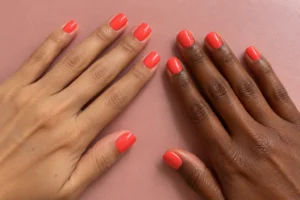
Coral red brings orange and pink warmth into a red manicure.
A red-forward version gives a stronger outline, while a pinker coral feels closer to a bright rose.
Compare the shade in daylight. Some corals look much more orange once painted than they do inside the bottle.
Keep the nails solid if you want the color to be the main feature. OPI includes coral among its summer shade suggestions for olive complexions.
Best for: A bright summer manicure with a warm red influence.
2. Peach Pink
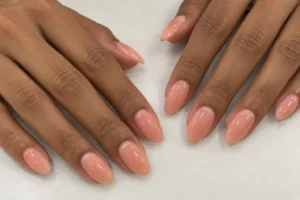
Peach pink offers a softer warm option than coral.
A sheer formula gives the natural nail a light tint. An opaque cream makes the peach more noticeable and creates a clearer outline.
Compare a pink-forward shade with one that contains more orange. Small changes in that balance can alter how the polish looks beside your hands.
If the color feels too close to your skin, try a slightly lighter or deeper version for more contrast.
Best for: A gentle pink manicure with warmth.
3. Terracotta
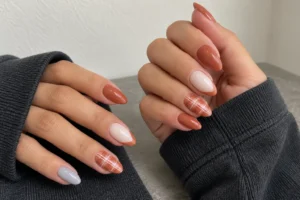
Terracotta combines orange with brown for a muted, earthy color.
A lighter version may look close to warm peach, while a deeper shade creates a richer rust-colored manicure.
Choose how much brown you want to see. A strongly orange terracotta looks different from a softer clay shade.
A glossy finish adds reflection to the muted base. Matte gives it a flatter surface and changes the appearance of the color.
Best for: Warm color without the brightness of coral.
4. Warm Pink-Beige
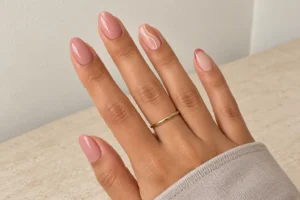
Warm pink-beige gives you a neutral option with a little rosy or peach influence.
Start by deciding whether you want the polish to blend with your hands or remain clearly visible.
A shade close to your skin depth can look understated. A lighter beige-pink creates more contrast, especially with opaque coverage.
Check a painted sample before choosing. A label such as “nude” doesn’t guarantee that the color will look neutral on you.
Best for: A quiet summer manicure with a warm pink tint.
5. Dusty Rose
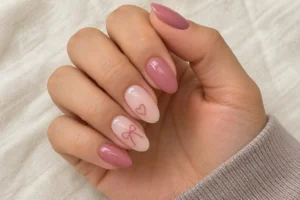
Dusty rose brings muted pink into the palette without relying on a very pale pastel.
Some versions lean beige or brown, while others have a cooler mauve influence.
Compare both directions beside your hands. A warmer rose and a cooler mauve-pink can create different effects on the same complexion.
Keep the finish glossy and simple, or add one small metallic accent if you want a little detail.
Best for: Soft pink color with more depth than a sheer blush.
6. Milky White
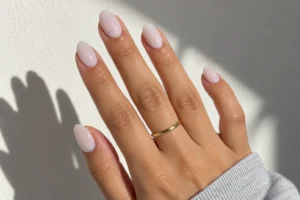
Milky white gives a lighter appearance than most neutral pinks and beiges.
A translucent version leaves some natural nail visible. A more opaque formula creates a stronger contrast.
Compare a neutral white with one that has a cream or pink influence. The difference may be subtle in the bottle but clearer across the whole hand.
If full white coverage feels stronger than you want, use it as a narrow French tip over a sheer base.
Best for: A light manicure with adjustable contrast.
7. Butter Yellow
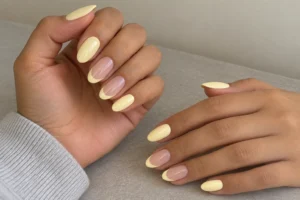
Butter yellow softens yellow with a creamy, pale base.
A very light version can look close to ivory, while a deeper shade keeps the yellow more obvious.
Compare the polish beside your skin rather than assuming every warm shade will blend comfortably. You may prefer a clearer yellow or a slightly cooler pastel.
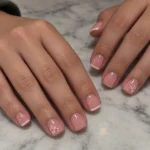
Short square and round nails give the color a compact outline. The solid shade is enough without extra decoration.
Best for: A warm pastel with visible summer color.
8. Muted Lilac
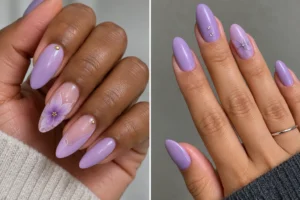
Muted lilac introduces a cooler option alongside the peaches, corals, and warm neutrals.
A pinker lilac looks different from a blue-based lavender, even when both have similar depth.
Try a shade with enough purple to remain recognizable after the recommended application. An extremely pale formula may look almost white.
If a gray-purple feels too muted for your preference, compare a clearer lilac rather than ruling out purple entirely.
Best for: A soft purple manicure with gentle contrast.
9. Pistachio Green
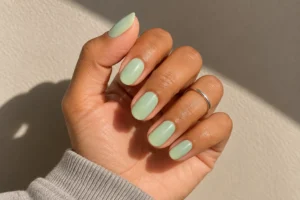
Pistachio green combines pale green with yellow warmth.
A lighter cream gives a pastel result, while a slightly deeper shade creates more separation from the skin.
Compare it with mint if you’re unsure which direction you prefer. Mint often has a cooler blue influence, while pistachio leans warmer.
Keep the finish consistent if you combine it with other shades. One pistachio accent nail can also sit beside a neutral manicure.
Best for: A warm green alternative to pink and beige.
10. Teal
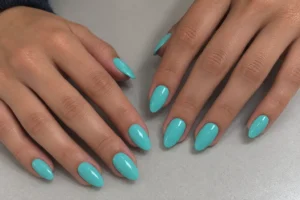
Teal combines blue and green in a shade that can range from bright turquoise-teal to a deeper blue-green.
Choose the depth separately from the undertone. A lighter teal and a dark petrol shade create quite different manicures.
A glossy cream keeps the color clear, while shimmer adds more variation as the hands move.
Compare teal with a straight blue if you want to see how much green you enjoy in the shade.
Best for: Rich summer color beyond warm pinks and oranges.
11. Cobalt Blue
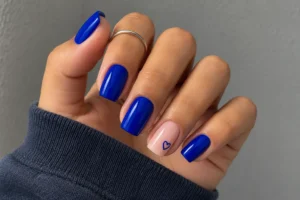
Cobalt blue gives the nails a saturated color with a strong outline.
It’s an option when you want the manicure to stand out rather than blend quietly with your hands.
Compare a clear blue with a slightly violet version. Both can be sold under similar names.
Use it across the whole hand for full color, or try fine blue tips over a sheer pink-beige base.
Best for: A bright manicure with noticeable contrast.
12. Soft Bronze
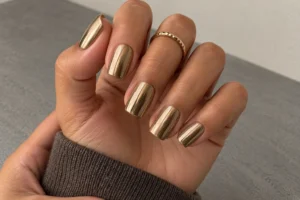
Soft bronze adds a brown-gold reflection without needing separate nail art.
A fine shimmer gives a quieter finish than large metallic particles.
Check the color as you move your hand under the light. Some bronze polishes look strongly copper, while others stay closer to golden brown.
You can also use bronze on one accent nail and leave the surrounding nails a solid neutral.
Best for: Warm shine with a little more depth than pale gold.
How to Choose Nail Colors for Olive Skin
Olive describes an undertone rather than one fixed skin depth. It doesn’t automatically mean medium or tan skin.
Begin with the depth and contrast you enjoy, then compare the warmth and clarity of the polish.
| If you want | Compare these options |
|---|---|
| A subtle neutral | Warm pink-beige or sheer peach pink |
| Muted color with depth | Dusty rose or terracotta |
| A light manicure | Milky white or butter yellow |
| A soft cooler shade | Muted lilac |
| A warm pastel green | Pistachio |
| A brighter warm color | Coral red |
| A rich blue-green | Teal |
| A strong color contrast | Cobalt blue |
| A reflective finish | Soft bronze |
You don’t have to choose warm polish simply because your skin looks golden in certain lighting.
Cool colors can create a contrast you enjoy. Warm colors can either blend softly or stand out, depending on their depth and coverage.
Light, Medium, and Deep Olive Skin
The same polish can look understated on one hand and much lighter or brighter on another.
Light Olive Skin
Compare pink-beige, dusty rose, and peach pink if you want a softer result.
Coral and cobalt create a more noticeable change, while milky white can give the nails a pale, defined outline.
If a beige looks too orange, compare a less-peachy neutral at a similar depth before choosing something lighter.
Medium Olive Skin
Terracotta, rose, and warm beige offer different levels of depth.
Teal and coral bring clearer color, while milky white and lilac create lighter contrast.
Decide whether you want the manicure to blend or stand out before choosing between shades.
Deep Olive Skin
Rosy beige, terracotta, and bronze are options when you want warmth and depth.
Pastels and milky white can create a stronger light contrast, while cobalt and coral provide saturated color.
A pale polish isn’t automatically unsuitable because it stands out. Choose that contrast deliberately if it’s the effect you enjoy.
What if a Neutral Polish Looks Too Orange or Gray?
A neutral that looks wrong may need a different undertone, depth, or level of coverage.
Don’t change all three at once if you want to understand what improved the result.
| What you notice | What to compare next |
|---|---|
| Beige looks too peach or orange | A less-peachy pink-beige or neutral taupe |
| Pink looks gray or dull | A clearer rose with less gray influence |
| Pale polish feels too chalky | A sheer formula or slightly deeper shade |
| The color disappears more than you want | A lighter, deeper, or more saturated option |
| A neutral looks darker than expected | A lighter sample with the same general undertone |
Check the polish beside your whole hand rather than judging it against one finger.
Balanced daylight is useful for comparison. Colored lighting and phone filters can make a subtle shade look quite different.
Choose the Finish Alongside the Shade
Sheer
Sheer polish leaves the natural nail visible.
It works when you want a tint, but the nail underneath will influence the finished color.
Cream
A cream finish gives a more consistent block of color without obvious shimmer.
It’s useful for comparing the actual shade and seeing the nail shape clearly.
Shimmer
Fine shimmer adds reflection and can change the apparent warmth of the base.
Check whether the reflective particles look gold, silver, pink, or copper.
Gloss or Matte
Gloss creates a visible reflection across the surface.
Matte reduces shine and can make the same color appear different. Test the top coat over your chosen polish before doing the full manicure.
Make the Color Fit Your Nail Length
Short square nails give coral, teal, and cobalt a compact block of color.
Sheer pink-beige and peach offer lighter coverage, while a narrow French tip leaves more of the base uncovered.
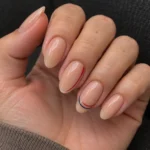
Oval and almond nails provide room for a gradual blend or a longer reflective finish.
You don’t need extensions to wear a particular shade. Choose a comfortable length, then scale any art or tip to the available space.
Simple Ways to Combine Summer Colors
Pair a Neutral With One Accent
Try pink-beige with a bronze accent or dusty rose with one coral nail.
Keep the surrounding nails plain so the change remains clear.
Use One Color for French Tips
Coral, teal, and cobalt can sit along the free edge over a sheer base.
Compare the tip width across the hand before finishing.
Combine Related Shades
Peach and coral create a warmer combination. Lilac and blue give a different balance.
Choose a consistent finish if you want the changing colors to provide most of the detail.
Keep Metallic Details Small
A fine bronze line or a tiny gold dot can add reflection to a solid color.
Leave enough plain polish around the accent for its outline to remain visible.
Getting a Smooth Summer Manicure
Shape the nails before painting and use the base coat recommended for your polish.
Apply controlled layers rather than trying to create full coverage with one heavy coat.
Pale creams may look uneven initially. Judge the coverage after the recommended application and allow the appropriate drying time.
Keep polish away from the surrounding skin.
Finish with a compatible top coat. For gel polish, follow the manufacturer’s instructions for application, lamp compatibility, and curing.
Common Nail Color Mistakes for Olive Skin
Assuming Olive Always Means Warm
Compare warm and cool shades rather than choosing from one color family automatically.
The finish and depth matter too.
Buying a Nude Without Checking Its Depth
A beige that blends with one person’s hands may look much lighter on another.
Decide how visible you want the polish to be.
Avoiding Every Pastel
A pastel can create a deliberate light contrast.
Compare a sheer version if opaque coverage feels stronger than you want.
Choosing Only From an Edited Photo
Lighting and filters can change the appearance of both skin and polish.
Use several references and painted samples where possible.
Treating Contrast as a Color Mismatch
A bright blue or pale white may stand out because that is the effect of the shade.
Choose according to your preference rather than expecting every polish to blend.
Final Takeaway
Summer nail colors for olive skin can range from sheer peach and warm beige to coral, teal, and cobalt. Dusty rose keeps the color muted, milky white creates lighter contrast, and bronze adds reflection.
Compare a few shades beside your hands, then choose the depth and finish you enjoy. Your manicure can blend softly with your skin or stand out clearly both are options.
Frequently Asked Questions
What nail colors look good on olive skin in summer?
Coral, peach pink, terracotta, teal, cobalt, and warm neutrals offer different effects. Milky white and lilac provide lighter options to compare.
Can olive skin wear cool nail colors?
Yes. Lilac, blue, and cooler rose shades can create a contrast you enjoy. There’s no requirement to wear only warm colors.
What nude nail polish should I try?
Compare pink-beige, peach-beige, and more neutral beige shades at a suitable depth. Choose according to whether you want blending or a visible outline.
Does white nail polish suit olive skin?
Yes. Milky white gives softer coverage, while opaque white creates a stronger contrast. Choose the finish you prefer.
Why does beige polish look orange on me?
The polish may contain more peach or orange than you expected. Compare a less-peachy shade at a similar depth and check it in daylight.
Can olive skin wear pastel yellow?
Yes. Compare butter yellow with a creamier ivory-yellow to see which balance you enjoy beside your hands.
Are bright colors suitable for short nails?
Yes. Coral, teal, and cobalt can all work as solid colors on short natural nails. Keep the edges tidy and the coverage even.
What should I ask for at the salon?
Describe the color direction, depth, coverage, and finish. For example: “Short square nails with a glossy coral-red cream, leaning more red than orange, with no extra art.”
Our Editorial Approach
Beauty and self-care information should be clear and easy to use. Our goal is to help you understand your options and make more informed choices about your everyday routine.
Our articles are for educational purposes only and do not replace advice from a qualified healthcare professional.