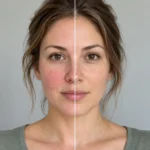

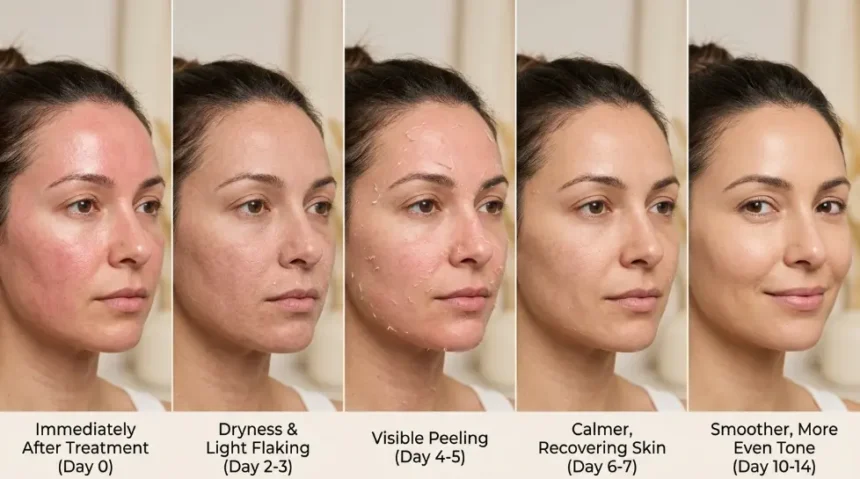
If your skin looks worse after a chemical peel, don’t panic immediately. Peeling, dryness, redness, tightness, and temporary irritation can make your skin look rougher before it looks smoother.
- Why Does Skin Look Worse After a Chemical Peel?
- Chemical Peel Healing Stages
- Stage 1: Immediately After the Peel
- Stage 2: Dry Skin and Tightness
- Stage 3: Skin Peeling After a Chemical Peel
- Stage 4: When Does Skin Start Looking Better?
- What to Do When Skin Looks Bad After a Chemical Peel
- 1. Follow Your Provider’s Instructions
- 2. Keep Cleansing Gentle
- 3. Moisturize as Directed
- 4. Protect Your Skin From the Sun
- 5. Don’t Add Strong Actives Without Guidance
- Chemical Peel Side Effects: What’s Normal and What’s Not?
- Be Especially Careful With At-Home Chemical Peels
- Chemical Peel Recovery: Mistakes to Avoid
- Don’t Pick at Peeling Skin
- Don’t Exfoliate
- Don’t Chase Faster Results
- Don’t Compare Your Skin With Photos Online
- Don’t Ignore a Reaction That Seems Abnormal
- A Simple Post-Peel Skin Care Approach
- When Should You Expect Your Final Result?
- Final Takeaway
- Frequently Asked Questions
A chemical peel intentionally exfoliates the skin, and the visible recovery depends heavily on the type and strength of the peel. A superficial peel may cause mild redness and flaking, while a deeper peel can involve more significant peeling and downtime. The key is knowing what belongs to a normal healing process and what deserves professional attention.
Why Does Skin Look Worse After a Chemical Peel?
A chemical peel causes controlled exfoliation of the skin. Ingredients such as alpha hydroxy acids can encourage shedding of surface skin, with the extent depending partly on the acid, concentration, pH, and formulation.
That process can temporarily make your complexion look:
- Drier than usual
- Red or flushed
- Flaky
- Uneven in texture
- Dull
- Tight or uncomfortable
- More noticeable around areas that are already dry
This doesn’t necessarily mean the treatment failed.
In fact, the early recovery period can be the least flattering part of the process.
However, not every reaction should automatically be considered normal. The depth of the peel, product used, application technique, and your individual skin response all matter.
Chemical Peel Healing Stages
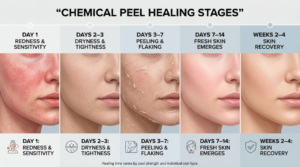
There isn’t one universal chemical peel healing timeline. A superficial peel and a deeper professional peel can have very different recovery periods.
Still, the process often follows a general pattern.
| Stage | What Your Skin May Look or Feel Like | What to Focus On |
|---|---|---|
| Immediately after | Redness, warmth, tightness | Follow your provider’s instructions |
| Early recovery | Dryness, sensitivity, mild flaking | Keep the routine simple |
| Peeling stage | Visible shedding or rough texture | Don’t pull or pick |
| Settling stage | Less redness and irritation | Continue gentle care |
| Post-recovery | Smoother-looking skin | Gradually return to your usual routine |
Your provider’s specific instructions should take priority because the expected recovery depends on the peel you received.
Stage 1: Immediately After the Peel
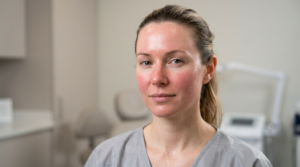
Right after treatment, your skin may look different from what you expected.
Redness, tightness, warmth, or mild sensitivity can occur. Some people notice a smoother appearance immediately, while others mainly notice irritation.
Don’t judge the final result at this stage.
Your skin has just undergone a resurfacing treatment, so the first few hours are about protecting it rather than evaluating whether you love the outcome.
Stage 2: Dry Skin and Tightness

Dry skin after a chemical peel is common during the recovery period.
Your face may feel:
- Tight when you smile
- Rough to the touch
- More sensitive to products
- Dry around the mouth or nose
- Less radiant than expected
This can be particularly frustrating if you had the peel specifically to improve texture or brightness.
The temptation is to compensate by applying lots of products. That’s usually not the best approach.
Keep your post-peel skin care routine simple and follow the instructions provided by the professional who performed the treatment.
Stage 3: Skin Peeling After a Chemical Peel
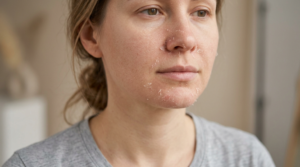
Visible peeling can be the stage that causes the most concern.
You may see small flakes, patches of shedding skin, or areas that appear uneven. The amount of peeling isn’t a reliable measure of whether a peel “worked.”
Some peels produce relatively little visible shedding, while others cause more noticeable peeling.
Should You Peel the Skin Yourself?
No.
Avoid pulling, scratching, or manually removing pieces of shedding skin. Doing so can further irritate the area and interfere with the healing process.
Instead, allow the skin to shed on its own and follow the aftercare instructions provided by your practitioner.
Stage 4: When Does Skin Start Looking Better?

The answer depends on the type of peel and your individual recovery.
A superficial peel may have relatively little downtime, while stronger treatments can require considerably more recovery.
Instead of expecting a specific “perfect skin” day, look for gradual changes such as:
- Less redness
- Less tightness
- Reduced flaking
- More comfortable skin
- Smoother-looking texture
If your skin is steadily becoming calmer, that’s generally more reassuring than focusing on how it looked during the worst-looking part of recovery.
What to Do When Skin Looks Bad After a Chemical Peel
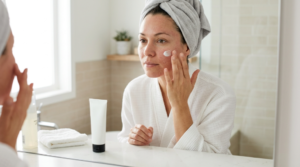
The safest approach is usually to simplify your routine.
1. Follow Your Provider’s Instructions
The person who performed your peel knows which chemical was used, its strength, and how deeply the treatment was intended to act.
Their aftercare instructions should take priority over generic online advice.
2. Keep Cleansing Gentle
Avoid aggressive scrubbing or exfoliation while your skin is recovering.
Your goal isn’t to remove every visible flake. It’s to avoid unnecessarily irritating already-sensitive skin.
3. Moisturize as Directed
A bland, gentle moisturizer may help with the uncomfortable tightness and dryness associated with recovery.
Use whatever product your provider recommends, particularly if your peel was medium or deep.
4. Protect Your Skin From the Sun
Sun protection is particularly important after procedures that leave skin more vulnerable to irritation from UV exposure.
Follow your provider’s recommendations for sunscreen and sun avoidance during recovery.
5. Don’t Add Strong Actives Without Guidance
Avoid automatically returning to your normal collection of active ingredients.
Products containing exfoliating acids, retinoids, or other potentially irritating ingredients may not be appropriate immediately after a peel.
Ask your provider when you’re ready to restart them.
Chemical Peel Side Effects: What’s Normal and What’s Not?
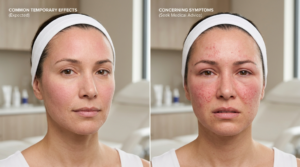
Some temporary irritation can occur after a peel. But there is an important difference between expected recovery and a potentially serious reaction.
The FDA warns that improperly used high-strength chemical peel products can cause serious injuries, including chemical burns, pain, swelling, infection, changes in skin color, and scarring.
Contact Your Provider If You Notice:
- Increasing rather than improving pain
- Significant swelling
- Severe or worsening redness
- Blistering
- Open or weeping areas
- Signs of infection
- Significant skin-color changes
- Symptoms that concern you or don’t match the aftercare instructions you received
Don’t try to treat a severe reaction by adding more skincare products.
If symptoms are severe or rapidly worsening, seek prompt medical care.
Be Especially Careful With At-Home Chemical Peels
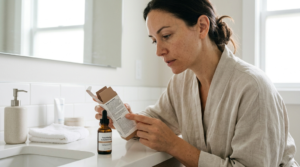
Professional supervision matters.
In July 2024, the FDA specifically warned consumers against using certain chemical peel products without appropriate professional supervision because high-concentration products can cause serious skin injuries.
This is particularly important with potent TCA, glycolic acid, lactic acid, salicylic acid, and combination peels sold for at-home use.
A stronger peel isn’t automatically a better peel.
If you’re considering an at-home treatment, don’t assume that a concentration marketed online is appropriate for your skin.
Chemical Peel Recovery: Mistakes to Avoid
The recovery period isn’t the time to experiment.
Don’t Pick at Peeling Skin
Let shedding happen naturally.
Don’t Exfoliate
Adding another exfoliating treatment can increase irritation while the skin is already recovering.
Don’t Chase Faster Results
Applying additional acids because your skin doesn’t look improved yet can backfire.
Don’t Compare Your Skin With Photos Online
Before-and-after photographs don’t show the entire recovery process. Lighting, timing, camera settings, and individual skin responses can all affect how results appear.
Don’t Ignore a Reaction That Seems Abnormal
A little dryness isn’t the same as severe burning or swelling.
When something seems significantly different from the instructions you were given, contact the practitioner who performed the peel.
A Simple Post-Peel Skin Care Approach
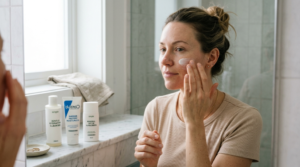
Once your provider has cleared you to resume basic skincare, a simple routine may be easier for recovering skin than a complicated regimen.
Morning
- Gentle cleansing, if recommended
- Moisturizer
- Broad-spectrum sunscreen as directed
Evening
- Gentle cleansing
- Moisturizer or other recovery product recommended by your provider
Don’t introduce multiple new products at the same time. If your skin reacts, it becomes much harder to identify what caused the problem.
For additional guidance on building a simple skincare routine, explore the related skincare resources available through The Serenity Lab.
When Should You Expect Your Final Result?

The final appearance shouldn’t be judged while your skin is actively irritated or peeling.
Depending on the treatment, improvement may become apparent gradually as the skin settles.
If you’re concerned that your skin isn’t improving, contact your provider rather than scheduling another peel or adding aggressive products yourself.
Repeated treatments should be based on your skin’s recovery and the professional’s recommendations, not simply on how quickly you want results.
Final Takeaway
If your skin looks worse after a chemical peel, the first step is to avoid assuming that something has gone wrong. Dryness, redness, tightness, and peeling can occur during the chemical peel healing process, and your skin may look less polished before it settles.
Keep your routine gentle, don’t pick or exfoliate peeling skin, protect your skin from sun exposure, and follow the specific instructions given by your practitioner.
Most importantly, know the difference between ordinary irritation and a concerning reaction. Severe pain, swelling, blistering, infection, or worsening symptoms deserve professional evaluation rather than more DIY skincare.
Frequently Asked Questions
Is it normal for skin to look worse after a chemical peel?
It can be. Temporary redness, dryness, tightness, flaking, and sensitivity may make skin look worse before it settles. However, severe or worsening symptoms should be assessed by a professional.
How long does chemical peel peeling last?
It varies considerably depending on the type and strength of the peel. Superficial treatments may involve limited visible peeling, while deeper treatments can require more substantial recovery.
Why is my skin so dry after a chemical peel?
A peel intentionally exfoliates the skin’s surface, so temporary dryness and tightness can occur during recovery. Follow the moisturizer and cleansing instructions provided by your practitioner.
Can I exfoliate peeling skin after a chemical peel?
Avoid manually removing peeling skin or adding exfoliating treatments unless your provider specifically tells you to do so.
When should I worry about redness after a chemical peel?
Redness can occur during normal recovery, but severe, worsening, or painful redness deserves professional attention, particularly when accompanied by swelling, blistering, drainage, or other unusual symptoms.
Can a chemical peel cause permanent skin damage?
Serious complications are possible, particularly with improperly used or excessively strong peels. The FDA has reported risks including burns, infection, pigment changes, and scarring with certain high-strength chemical peel products.
For more practical beauty, wellness, and self-care guidance, explore The Serenity Lab.
Our Editorial Approach
Beauty and self-care information should be clear and easy to use. Our goal is to help you understand your options and make more informed choices about your everyday routine.
Our articles are for educational purposes only and do not replace advice from a qualified healthcare professional.