
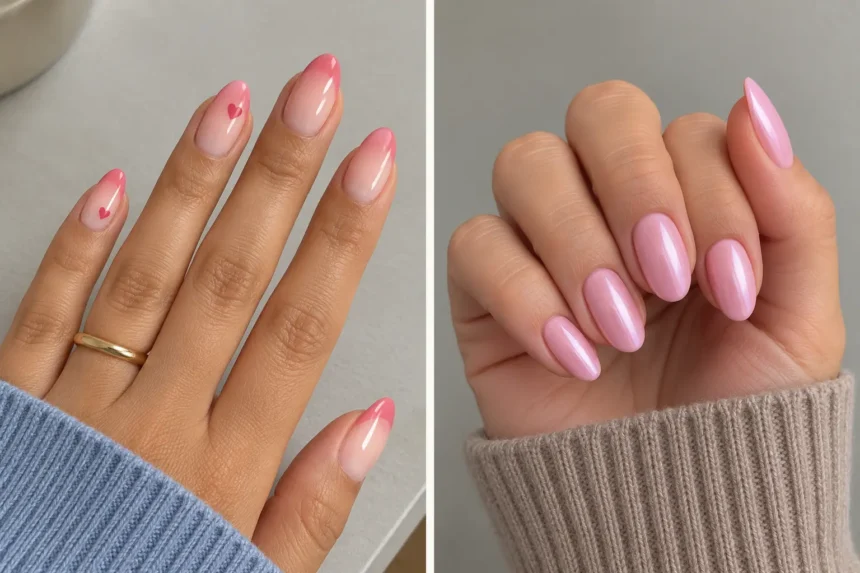
A pink polish can look perfect in the bottle and surprisingly different once it’s on your nails. One shade blends quietly with your hands, while another looks brighter, milkier, or more peach than you expected. Even two pale pinks can give your manicure a completely different feel.
- Soft Pink Nail Polish at a Glance
- 1. Sheer Blush Pink
- 2. Milky Pink
- 3. Baby Pink
- 4. Pink-Beige
- 5. Peachy Pink
- 6. Dusty Rose
- 7. Soft Rose Pink
- 8. Cool Pink
- 9. Mauve Pink
- 10. Rosy Brown Pink
- 11. Pearl Pink
- 12. Pink Jelly
- How to Choose Soft Pink Polish for Your Skin Tone
- Soft Pink Nail Polish for Fair and Light Skin
- Soft Pink Nail Polish for Medium and Tan Skin
- Soft Pink Nail Polish for Deep Skin
- How Undertones Change the Look of Pink Polish
- Sheer vs. Opaque Soft Pink
- Make Soft Pink Work With Your Nail Shape
- Getting a Smooth Soft Pink Manicure
- Common Soft Pink Polish Mistakes
- Final Takeaway
- Frequently Asked Questions
The best choice depends on the result you want. A sheer blush lets your natural nail show, while an opaque pink creates a more defined shape. Your skin tone can help you compare shades, but it doesn’t mean you have to avoid a pink you enjoy.
These soft pink nail polish ideas cover sheer, creamy, warm, and cool options. Start with the amount of contrast you like, then choose the coverage and finish that feel right for you.
Soft Pink Nail Polish at a Glance
| Soft pink shade | Main tones | Coverage to compare | Overall effect |
|---|---|---|---|
| Sheer blush pink | Translucent rosy pink | Sheer | Light and understated |
| Milky pink | Pink and soft white | Sheer to opaque | Creamy and delicate |
| Baby pink | Pale pink | Opaque cream | Soft and clearly defined |
| Pink-beige | Pink and beige | Sheer or cream | Neutral and subtle |
| Peachy pink | Pink with peach warmth | Sheer or opaque | Warm and gentle |
| Dusty rose | Muted rose and mauve | Cream | Soft color with depth |
| Rose pink | Balanced rosy pink | Sheer or cream | A visible pink finish |
| Cool pink | Pink with a blue or lilac influence | Cream or sheer | Fresh and cool |
| Mauve pink | Pink with muted purple | Cream | Quiet and slightly deeper |
| Rosy brown pink | Rose with brown undertones | Sheer or cream | Warm and understated |
| Pearl pink | Pink with fine shimmer | Sheer or buildable | Soft reflection |
| Pink jelly | Translucent pink | Sheer and buildable | Glossy and light-catching |
These shades are starting points rather than rules for particular skin tones. The same pink can look subtle on one person and create more contrast on another.
1. Sheer Blush Pink
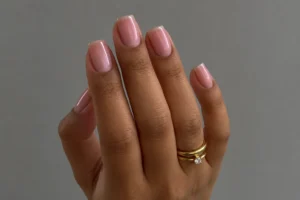
Sheer blush pink adds a light rosy tint while leaving some of the natural nail visible.
It’s a good option if you want your nails to look polished without a solid block of color.
The finished shade depends partly on the natural color underneath. A sheer formula may look pinker on one set of nails and more neutral on another.
Compare one and two coats according to the product’s directions. Stop when you like the balance between polish and visible nail.
Best for: A light pink manicure with minimal coverage.
2. Milky Pink
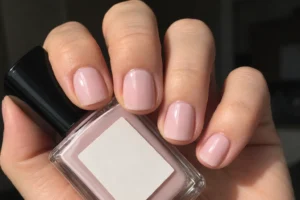
Milky pink combines a pink tint with a soft white influence.
Some versions remain slightly translucent, while others give a more opaque, creamy result. Check the coverage on a sample before deciding.
A pale milky pink can create a gentle contrast on fair skin and a more noticeable light outline on deeper skin.
If the white makes the shade look too pale for your preference, compare a milkier rose with less white.
Best for: A creamy pink manicure with a soft finish.
3. Baby Pink
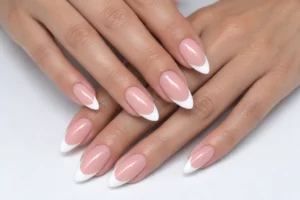
Baby pink offers a clearer pastel color than a sheer blush.
A cream formula gives the nail a defined pink outline, whether you wear it short and round or longer and almond-shaped.
Compare a pink that leans warm with one that has a cooler, blue-based appearance. Both may be labeled baby pink.
If a very pale shade feels too chalky on your hands, try a slightly deeper pink or a more translucent finish.
Best for: A noticeable pastel pink without bright color.
4. Pink-Beige
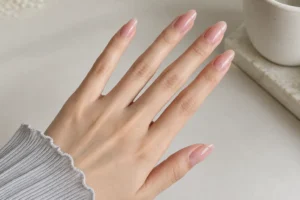
Pink-beige sits between a neutral beige and a soft pink.
It can give a quiet result when the shade is close to your skin depth. A lighter or deeper version creates more contrast while keeping the color muted.
Some pink-beige polishes look peachy, while others lean cooler or slightly gray.
Compare several shades against your hand rather than relying on a label such as “nude.” A neutral-looking pink isn’t the same depth for everyone.
Best for: A subtle pink with a neutral influence.
5. Peachy Pink
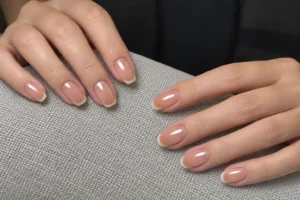
Peachy pink brings a little orange warmth into the color.
A sheer peach-pink can look light and natural, while an opaque cream gives the warmth a clearer outline.
Choose how much peach you want to see. A strongly orange shade may look different from the softly pink result you had in mind.
Try it beside a neutral pink in daylight. The comparison makes the warmth easier to judge.
Best for: A soft pink with a warmer appearance.
6. Dusty Rose
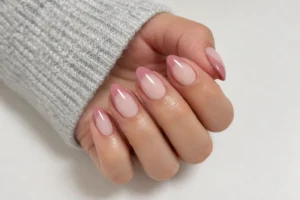
Dusty rose has a muted quality and usually carries more depth than baby pink.
Depending on the formula, it can lean beige, mauve, or brown.
Choose a sheer dusty rose if you want the natural nail to remain visible. An opaque version gives the manicure a more defined rosy color.
Keep the finish glossy and simple, or add a small gold accent if you want a little detail.
Best for: A muted pink that remains visible without looking bright.
7. Soft Rose Pink
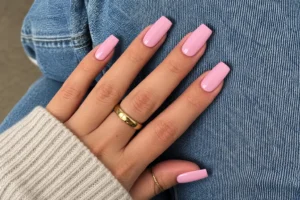
Soft rose pink gives you a recognizable pink manicure without necessarily looking pastel.
It can be useful when a pale milky shade feels too light or a dusty rose looks more muted than you want.
Compare a translucent rose with a cream formula. The same general color can look delicate in one finish and much more defined in another.
On deeper skin, a soft rose can provide a visible pink result while retaining warmth and depth.
Best for: A balanced pink with gentle color.
8. Cool Pink
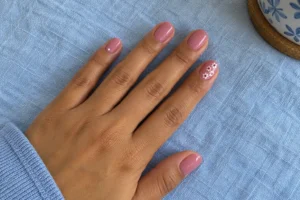
Cool pink can have a blue, lilac, or slightly rosy influence.
A pale cool pink offers a different look from a peachy shade, even when both have similar coverage.
Compare the two beside your skin rather than deciding from the name alone.
If a cool pink looks too gray for your preference, try a clearer rosy shade with less muted pigment.
Best for: A soft pink without an obvious peach tone.
9. Mauve Pink
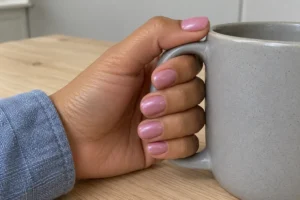
Mauve pink adds a subtle purple influence to pink polish.
It often looks more muted than baby pink and can be slightly deeper than a pale blush.
Compare a pink-forward mauve with a more purple version. Both may look similar in the bottle but create different results on the nail.
A glossy cream finish keeps the color straightforward. Fine shimmer gives it a little more reflection.
Best for: A soft pink with a cooler, muted appearance.
10. Rosy Brown Pink
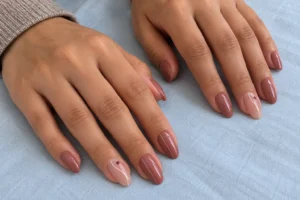
Rosy brown pink combines pink with beige or brown depth.
It can create a subtle result on medium or deeper skin, while offering more contrast on lighter skin.
Decide whether you want the pink or brown to be more noticeable.
A sheer formula gives a tinted effect. An opaque cream makes the color more defined and may look deeper than the bottle suggests.
Best for: A soft pink with warm, neutral depth.
11. Pearl Pink
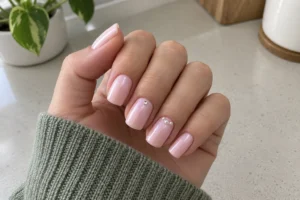
Pearl pink adds fine shimmer over a pink base.
The reflection can appear white, silver, pink, or slightly gold depending on the product.
Choose a translucent pearl finish if you want the pink underneath to remain visible. A more opaque topper may make the manicure look lighter.
Check the combination on a practice tip, including the top coat. The finished result can differ from the base color alone.
Best for: Soft pink nails with a gentle glow.
12. Pink Jelly
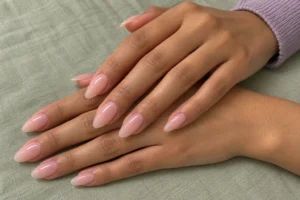
Pink jelly has a translucent, glossy appearance that lets light pass through the color.
One layer may give a light tint, while additional coats can make the pink more noticeable. Follow the formula’s directions and stop when you like the coverage.
Because the natural nail remains visible, the result may vary between fingers and between people.
Choose a polish made for a jelly effect rather than adding thinner to an ordinary cream formula.
Best for: A glossy pink manicure with visible transparency.
How to Choose Soft Pink Polish for Your Skin Tone
Skin tone is a useful place to start, but it doesn’t decide which pink you can wear.
Think about whether you want the polish to blend softly with your hands or stand out as a lighter, brighter, or deeper color.
| If you want | Compare these options |
|---|---|
| A barely-there tint | Sheer blush or pink jelly |
| A pale, creamy manicure | Milky pink or baby pink |
| A pink close to a neutral | Pink-beige or rosy brown pink |
| A warmer shade | Peachy pink or rosy brown pink |
| A cooler shade | Cool pink or mauve pink |
| A muted color with more depth | Dusty rose |
| A recognizable pink without strong brightness | Soft rose pink |
| A reflective finish | Pearl pink |
Polish names don’t always describe the same shade across brands. A painted sample gives you a better idea of the depth and coverage than the bottle alone.
Soft Pink Nail Polish for Fair and Light Skin
If you want a subtle manicure, compare sheer blush, pink-beige, and milky pink.
A polish close to your skin depth may look understated. A cooler baby pink or a deeper dusty rose gives the nail a more noticeable outline.
Fair skin can have warm, cool, neutral, or olive undertones, so a single pink won’t give everyone the same result.
If a pale shade looks too white for your taste, compare a slightly deeper rose or a sheer formula.
Soft Pink Nail Polish for Medium and Tan Skin
Peachy pink, soft rose, and pink-beige offer different amounts of warmth and contrast.
A pale milky pink can look more noticeable, while a deeper rosy beige may blend more closely with the hand.
Compare the actual polish beside your skin. A shade described as “warm nude” may still look too peach, too pale, or too brown for the effect you want.
Choose a sheer finish if you prefer a lighter tint, or an opaque cream for a clearer pink.
Soft Pink Nail Polish for Deep Skin
Soft pink can be subtle or high-contrast on deep skin, depending on the shade and coverage.
Rosy brown pink and dusty rose offer more depth. Sheer blush allows the natural nail to show, while opaque baby pink creates a lighter, more defined outline.
A pale pink that stands out isn’t automatically the wrong choice. It may be exactly the contrast you want.
If you prefer a softer transition, compare a slightly deeper pink or a translucent formula.
How Undertones Change the Look of Pink Polish
Soft pink can lean peach, blue, beige, purple, or brown.
Those undertones affect how the polish appears beside your hands, even when the overall depth is similar.
| Pink undertone | What it can look like | Shade to compare |
|---|---|---|
| Peach | Warmer and slightly orange | Peachy pink |
| Blue or lilac | Cooler and less peachy | Cool pink |
| Beige | More neutral and muted | Pink-beige |
| Purple | Soft and slightly gray | Mauve pink |
| Brown | Warmer and deeper | Rosy brown pink |
Use these descriptions to compare, not to exclude shades.
Place two painted samples beside your hand in daylight. The better choice is the one that gives you the appearance you enjoy.
Sheer vs. Opaque Soft Pink
Sheer Pink
Sheer pink lets the natural nail remain visible.
It can look light and understated, but the color underneath will influence the finished result.
Choose this finish when you want a tint rather than full coverage.
Opaque Pink
Opaque pink gives the nail a more consistent block of color.
It makes the shade and nail shape easier to see, particularly with pale cream formulas.
Compare the polish after the recommended application. A shade that looks soft in one thin layer may appear brighter or milkier with full coverage.
Buildable Pink
Some formulas let you adjust the depth with additional coats.
Check the product directions and decide when the result looks right to you. More layers aren’t always necessary if you prefer a translucent finish.
Make Soft Pink Work With Your Nail Shape
Short round and squoval nails suit sheer blush, dusty rose, and solid pink-beige.
A narrow French tip can add detail without taking up much space.
Oval and almond nails give milky pink and pearl finishes a longer outline. Square nails create a straighter edge for an opaque baby pink.
The shape doesn’t determine which shade you can use. Choose a length you can maintain comfortably and adjust any decoration to fit it.
Getting a Smooth Soft Pink Manicure
Shape the nails before painting and use the base coat recommended for your polish.
Apply controlled layers instead of trying to cover the nail with one heavy coat.
Some pale cream formulas can look uneven initially. Follow the product’s directions and allow the recommended drying time between layers.
Keep polish away from the surrounding skin.
Finish with a top coat suited to your chosen effect. Gloss adds reflection, while matte changes the appearance of the pink.
For gel polish, follow the manufacturer’s directions for application, a compatible lamp, and curing.
Common Soft Pink Polish Mistakes
Choosing Only From the Bottle
A bottle can make polish look deeper or more opaque than it appears on the nail.
Compare a painted sample where possible.
Assuming the Lightest Pink Looks Most Natural
A very pale pink may create a stronger contrast than a slightly deeper rose.
Decide whether you want blending or a visible outline.
Ignoring the Finish
Sheer blush and opaque baby pink can have similar names while giving very different coverage.
Check the finish before choosing.
Applying Thick Layers
A heavy coat may be harder to control, particularly with pale cream polish.
Follow the formula’s recommended application.
Treating Skin-Tone Suggestions as Rules
A shade can look subtle on one person and bold on another.
Both effects are options. Choose the one you prefer.
Final Takeaway
Soft pink nail polish can be sheer and barely visible, creamy and pale, or muted with rose and brown undertones. The same color can create a subtle finish on one hand and a stronger contrast on another.
Compare the depth and finish beside your skin, then choose the pink you enjoy looking at. A simple, even coat can be enough to make the manicure feel complete.
Frequently Asked Questions
What is the best soft pink nail polish for every skin tone?
There isn’t one shade that looks identical on everyone. Sheer blush, milky pink, dusty rose, and pink-beige are useful options to compare according to the contrast you want.
Does soft pink nail polish suit deep skin?
Yes. A sheer rosy pink can look delicate, while opaque baby pink creates a lighter contrast. Rosy brown and dusty rose offer options with more depth.
What’s the difference between milky pink and sheer pink?
Milky pink usually has a soft white influence. Sheer pink allows more of the natural nail to show, although a polish can be both milky and translucent.
Which pink polish looks most natural?
That depends on your skin tone, natural nail color, and preference. Compare sheer blush, pink-beige, and rosy brown pink for different understated effects.
Can soft pink work on short nails?
Yes. Sheer pink, solid dusty rose, and narrow pink French tips all work on short natural nails.
Why does my pink polish look different from the bottle?
The natural nail color, number of coats, finish, and lighting can all change its appearance. A painted sample is more reliable than the bottle alone.
Is warm or cool pink better?
Neither is automatically better. Peachy pink gives warmth, while cool pink or mauve offers a different effect. Compare both beside your hands.
What should I ask for at the salon?
Describe the shade, coverage, shape, and finish. For example: “Short oval nails with a sheer rosy pink polish and a glossy top coat.”
Our Editorial Approach
Beauty and self-care information should be clear and easy to use. Our goal is to help you understand your options and make more informed choices about your everyday routine.
Our articles are for educational purposes only and do not replace advice from a qualified healthcare professional.