
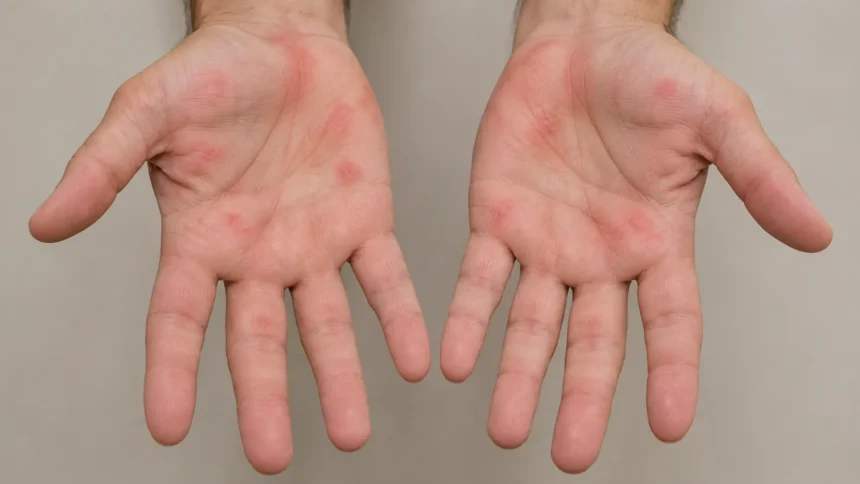
Palms Itch can feel distracting, especially when the skin looks normal or the sensation keeps returning. Sometimes the cause is something simple, such as dry skin or frequent contact with soap. In other cases, a rash, blisters, or another symptom can help explain what is happening.
- Common Causes of Itchy Palms at a Glance
- 1. Dry or Irritated Skin
- 2. Contact Dermatitis
- 3. Hand Eczema
- 4. Dyshidrotic Eczema
- 5. A Skin Infection or Parasite
- 6. Pregnancy-Related Cholestasis
- 7. Less Common Internal Causes
- What You Can Try for Itchy Palms
- When to Contact a Healthcare Professional
- Common Mistakes When Your Palms Itch
- Scratching Until the Skin Breaks
- Trying Several New Products at Once
- Treating Every Itch With the Same Cream
- Waiting Out Itching During Pregnancy
- Final Takeaway
- Frequently Asked Questions
The right treatment depends on the cause. Moisturizer and avoiding an irritating product may help some people, while eczema, infection, or a medical condition may need specific care.
Here are common reasons your palms might itch, what you can try at home, and signs that it’s time to contact a healthcare professional.
Common Causes of Itchy Palms at a Glance
| Possible cause | What you may notice | What may help |
|---|---|---|
| Dry or irritated skin | Tight, rough, or flaky skin | Fragrance-free moisturizer and gentler washing |
| Contact dermatitis | Itching with dryness, cracks, or a rash after exposure | Avoiding the trigger and protecting the hands |
| Hand eczema | Recurring dry, sore, or inflamed patches | A clinician’s treatment plan and trigger management |
| Dyshidrotic eczema | Very itchy, small fluid-filled blisters | Medical advice, especially for painful or recurring blisters |
| Skin infection or parasites | Rash, scaling, blisters, or itching in other people nearby | Diagnosis and treatment matched to the cause |
| Pregnancy-related cholestasis | Itching, sometimes without a rash, often involving palms or soles | Prompt contact with a maternity care team |
| Less common internal causes | Persistent itch, sometimes without a visible rash | A medical assessment to investigate the cause |
These clues can help you decide what to do next, but they can’t confirm a diagnosis. Similar symptoms may have different causes, so avoid treating a persistent or worsening problem based on appearance alone.
1. Dry or Irritated Skin
The skin on your hands is exposed to water, soap, cleaning products, and changes in temperature throughout the day. Frequent washing or harsh products can leave it dry, rough, and itchy.
Dryness may be more noticeable after washing or during cold, dry weather. The skin can feel tight or look flaky, although mild irritation may cause itching before obvious changes appear.
Try washing with lukewarm water and a gentle, fragrance-free cleanser. Apply an unperfumed moisturizer after washing and whenever your hands feel dry. Avoid long, hot showers and perfumed products if they seem to make the itching worse.
Best for: Mild itching that appears alongside dryness or frequent hand washing.
2. Contact Dermatitis
Contact dermatitis is a skin reaction that can happen after your hands touch an irritant or an allergen. Common irritants include soaps, detergents, solvents, and repeated contact with water. Some people react to particular ingredients in cosmetics or to metals such as nickel.
The affected skin may itch, become dry or cracked, or develop a rash or blisters. Symptoms can appear within hours or days after contact. Think about new products or tasks that began around the time the itching started, such as cleaning, gardening, or using a new hand cream.
If you suspect a product is triggering the reaction, stop using it if you can and see whether symptoms improve. If the rash is severe, keeps returning, or doesn’t improve, ask a pharmacist or clinician for advice. Treatment may include moisturizers or, when appropriate, a prescribed corticosteroid cream.
Best for: Itching that starts after contact with a product or substance and comes with visible irritation.
3. Hand Eczema
Hand eczema can cause dry, itchy, painful, or inflamed skin. It may affect the palms, fingers, or backs of the hands, and repeated exposure to irritants can make symptoms harder to manage.
Moisturizing regularly and reducing contact with known triggers may help protect the skin. A dermatologist or other clinician can help identify what is contributing to the problem and recommend a treatment plan. That may include moisturizers or medicated creams, depending on the symptoms and diagnosis.
Best for: Repeated episodes of itchy, dry, sore, or cracked hands.
4. Dyshidrotic Eczema
Dyshidrotic eczema, also called pompholyx, often begins with an itchy, burning, or prickling feeling. Small fluid-filled blisters can then appear on the palms, fingers, or sides of the hands. Afterward, skin may become dry, cracked, or sore.
The blisters may resemble other skin conditions, including fungal infections, so it’s better not to assume the cause. A clinician can assess the skin and advise whether treatment is needed. Moisturizers are commonly used to reduce dryness; prescription creams may be recommended for some cases. Seek medical advice if blisters are painful, look infected, or keep recurring.
Best for: Itchy palms accompanied by small, recurring blisters.
5. A Skin Infection or Parasite
Some infections and parasites can cause itching, but the symptoms vary. Fungal infections may produce scaling or patches, while scabies can cause intense itching and may affect other parts of the body. If people you live with are also itchy, mention that when you seek medical advice.
A clinician can help distinguish infections from eczema or contact dermatitis. The treatments differ, so avoid using leftover creams or guessing at a cause—especially if the rash is spreading or getting worse. NHS guidance lists fungal skin infections and scabies among possible causes of itchy skin.
Best for: Itching with a spreading rash, scaling, or similar symptoms in close contacts.
6. Pregnancy-Related Cholestasis
Itching during pregnancy is often caused by ordinary skin changes, but itchy palms or soles can sometimes be a sign of intrahepatic cholestasis of pregnancy, also called ICP. The itching may be intense or worse at night, and there may be no visible rash.
If you’re pregnant and your palms or soles itch—especially if the itching is severe or disrupts sleep—contact your maternity unit or healthcare professional promptly. Don’t wait to see whether a moisturizer clears it. A clinician can assess your symptoms and arrange any tests or care that may be needed.
Best for: Anyone who is pregnant and has itchy palms or soles.
7. Less Common Internal Causes
Less often, itching can be associated with conditions affecting the liver, kidneys, thyroid, blood, or other parts of the body. Itching alone doesn’t mean you have one of these conditions. It becomes more important to seek medical advice if the sensation is persistent, severe, widespread, or occurs with other symptoms.
A healthcare professional may ask about your health, examine your skin, and decide whether tests are appropriate. Don’t try to diagnose an internal condition from palm itching by itself.
Best for: Persistent or unexplained itching, particularly when it affects more than the palms.
What You Can Try for Itchy Palms
For mild itching that seems related to dryness or irritation, a few simple steps may help:
- Apply an unperfumed moisturizer regularly, especially after washing your hands.
- Use lukewarm water and a gentle cleanser.
- Avoid products that seem to trigger the itching, including perfumed soaps or creams.
- Wear protective gloves for cleaning or wet tasks; remove them if they make your hands sweaty or more irritated.
- Pat or tap the itchy area instead of scratching it.
- Keep your nails short to reduce skin damage if you scratch.
A pharmacist can help you choose a suitable product and advise whether you should see a clinician. Some treatments, such as steroid creams or antihistamines, aren’t right for every cause or every person. Ask a pharmacist or healthcare professional before using them, particularly during pregnancy.
When to Contact a Healthcare Professional
Arrange medical advice if the itching is severe, keeps coming back, affects daily activities, or doesn’t improve with self-care. It’s also sensible to seek help if a new rash, lump, swelling, or blister worries you.
Contact a clinician if the itching is widespread or occurs with symptoms such as fever, unexplained weight loss, or night sweats. A provider can examine the skin and decide whether further evaluation is needed.
If you’re pregnant and your palms or soles itch, contact your maternity team promptly, especially if the itching is intense or worse at night.
Common Mistakes When Your Palms Itch
Scratching Until the Skin Breaks
Scratching can damage the skin and may make the itch-scratch cycle harder to stop. Try a cool compress or gentle pressure instead.
Trying Several New Products at Once
If you change soaps, creams, and cleaning products together, it can be difficult to work out what helped or worsened the symptoms. Keep the routine simple and note any likely triggers.
Treating Every Itch With the Same Cream
Dry skin, eczema, contact reactions, and infections may need different approaches. A cream that helps one cause may not be appropriate for another.
Waiting Out Itching During Pregnancy
Itchy palms or soles in pregnancy should be discussed promptly with a maternity care professional because ICP needs medical assessment.
Final Takeaway
Itchy palms are often linked to dry skin, contact irritation, or eczema, but blisters, infection, pregnancy-related cholestasis, and other conditions are also possible.
Start with gentle hand care if the itching is mild and your skin seems dry. Seek medical advice if symptoms persist, worsen, or come with other changes. If you’re pregnant and your palms or soles itch, contact your maternity team promptly.
Frequently Asked Questions
Why do my palms itch but there’s no rash?
Dryness or irritation can cause itching before a rash is easy to see. Itching without a visible rash can also have other causes. If it persists, is severe, or spreads beyond your hands, contact a healthcare professional.
Can hand soap make my palms itch?
Yes. Soaps and detergents can irritate the skin, particularly with frequent use. A gentle, fragrance-free cleanser and regular moisturizing may help if dryness is the cause.
Do itchy palms always mean a liver problem?
No. Many cases have a skin-related cause, such as dryness or contact dermatitis. Liver conditions are one less common possibility, and itching alone cannot diagnose them.
Why do my palms itch more at night?
Itching can feel more noticeable at night, but timing alone doesn’t identify the cause. If it keeps you awake, is intense, or comes with other symptoms, ask a healthcare professional for advice.
Should I use hydrocortisone cream on itchy palms?
It depends on what is causing the itch and where the cream will be used. Ask a pharmacist or clinician to check whether it’s appropriate, and follow the product directions.
When should I worry about itchy palms during pregnancy?
Contact your maternity team promptly if you’re pregnant and your palms or soles itch, especially if the itching is intense or worse at night. These can be signs of ICP and need assessment.
Our Editorial Approach
Beauty and self-care information should be clear and easy to use. Our goal is to help you understand your options and make more informed choices about your everyday routine.
Our articles are for educational purposes only and do not replace advice from a qualified healthcare professional.