
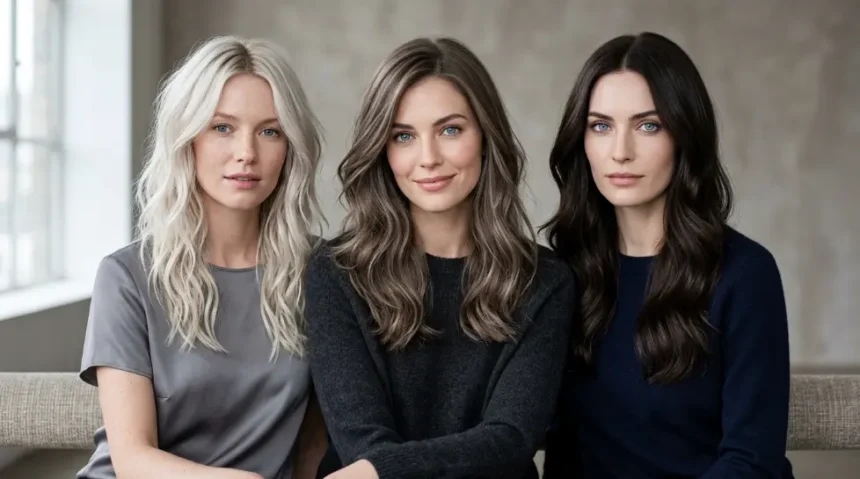
The best hair color for white skin and blue eyes is usually a cool or neutral shade that complements the skin’s undertone without competing with the eyes. Icy platinum, pearl blonde, mushroom brown, cool espresso, and soft blue-black can all be flattering. The right choice depends on your undertone, natural hair depth, and preferred level of contrast.
- At a Glance: The Most Flattering Shades
- First, Check Your Skin Undertone
- Best Blonde Hair Colors for Pale Skin and Blue Eyes
- Best Brunette Hair Colors for Pale Skin and Blue Eyes
- Dark Hair Colors for Pale Skin and Blue Eyes
- Creative Cool-Toned Colors Worth Considering
- How to Choose Between Blonde and Brunette
- Hair Colors That May Be Less Flattering
- Ask for Dimension, Not Just One Flat Color
- How to Maintain a Cool Hair Color
- What to Tell Your Colorist
- Final Takeaway
- Frequently Asked Questions
Pale skin and blue eyes can support more variety than you might expect. Light blondes create a soft, airy effect, while dark brunette shades make blue eyes appear brighter and more defined.
The important part is choosing a color with the right temperature. A beautiful shade can still look slightly disconnected if its undertone clashes with your complexion.
At a Glance: The Most Flattering Shades
| Hair color | Best for | Overall effect | Maintenance |
|---|---|---|---|
| Icy platinum blonde | Cool pink or rosy undertones | Bright and striking | High |
| Pearl blonde | Cool to neutral skin | Soft and luminous | High |
| Ash blonde | Cool or neutral undertones | Natural and understated | Medium |
| Beige blonde | Neutral undertones | Balanced and wearable | Medium |
| Mushroom brown | Cool or neutral skin | Soft, modern contrast | Medium |
| Ash brown | Cool undertones | Polished and natural | Low to medium |
| Cool espresso | Pale skin that suits contrast | Dramatic and elegant | Medium |
| Blue-black | Strong cool undertones | Bold, high contrast | High commitment |
| Burgundy brown | Cool or neutral skin | Rich without strong warmth | Medium |
| Smoky lavender | Cool undertones | Creative and ethereal | High |
First, Check Your Skin Undertone
Pale skin describes the depth of your complexion, not its undertone. Two people can have equally fair skin but look completely different in the same hair color.
Signs of a cool undertone
You may have a cool undertone if:
- Your skin has pink, rosy, red, or bluish tones.
- Silver jewelry tends to look especially flattering.
- The veins near your wrist appear blue or purple.
- Bright white looks better on you than cream.
- You burn easily, although this alone does not determine undertone.
Cool-toned hair colors for fair skin usually contain ash, pearl, violet, blue, or smoky pigments. These shades can harmonize with a rosy complexion and enhance the clarity of blue eyes.
Signs of a neutral undertone
Neutral skin contains a relatively balanced mix of warm and cool tones. Both silver and gold jewelry may work, and your veins may look blue-green rather than distinctly blue or green.
If your undertone is neutral, you can often wear cool shades without appearing washed out. You may also find that slightly softened colors, such as beige blonde or neutral brown, look more natural than extremely icy tones.
What if your pale skin has a warm undertone?
You can still wear a cool hair color, but a completely gray or blue-based shade may make your complexion look flat. A neutral-cool color with a small amount of beige, champagne, or soft gold is often more forgiving.
Your natural coloring matters more than a rigid seasonal rule. Hold color swatches near your face in daylight before making a permanent change.
Best Blonde Hair Colors for Pale Skin and Blue Eyes
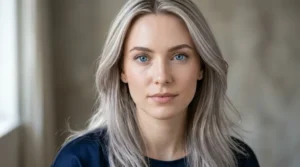
Blonde shades create relatively little contrast against pale skin, producing a soft and cohesive appearance. They can also reflect light around the face and make blue eyes look clear and luminous.
1. Icy Platinum Blonde
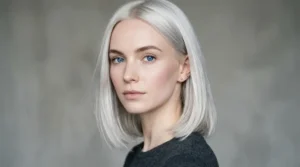
Platinum blonde with blue eyes creates one of the most striking cool-toned combinations. Its silvery-white finish echoes the coolness of blue irises and looks particularly harmonious against pink or rosy skin.
Platinum is also one of the most demanding colors to maintain. Naturally dark hair may need multiple lightening appointments to reach this level safely. Regular toning, conditioning, and careful heat styling are essential because very lightened hair can become dry and fragile.
2. Pearl Blonde
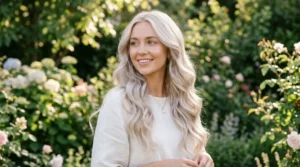
Pearl blonde combines cool silver and delicate violet tones with a slightly creamy finish. It’s softer than pure platinum, which can make it easier to wear if you want a bright blonde without an extremely stark result.
This shade works beautifully with light blue, gray-blue, and blue-green eyes.
3. Ash Blonde

Ash blonde for pale skin is a versatile option because it neutralizes strong yellow or orange tones without looking white. It may range from pale ash blonde to a deeper, smoky dark blonde.
Choose a lighter ash shade for a delicate appearance or a darker root melt for more definition around the face. A shadow root can also make regrowth less noticeable.
4. Cool Beige Blonde

Beige blonde sits between warm golden blonde and distinctly gray ash blonde. A cool beige formula can be especially flattering for neutral undertones because it doesn’t look overly warm or severely icy.
It’s a practical choice for anyone concerned that platinum will wash them out.
5. Silver Blonde
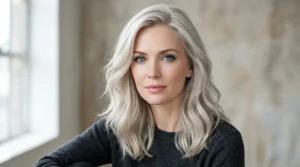
Silver blonde has a more visible gray or metallic cast than pearl blonde. It creates a modern, editorial effect and works best when the hair has been lightened evenly.
Silver pigments fade relatively quickly. A color-safe routine and occasional toning treatment may help preserve the finish, but overusing purple products can leave very porous sections looking dull or violet.
Best Brunette Hair Colors for Pale Skin and Blue Eyes
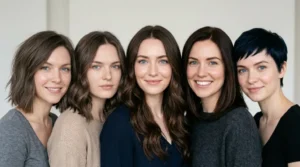
Brunette hair creates greater contrast against pale skin, which can make blue eyes look more saturated. You don’t necessarily need to choose the darkest brown available. Mid-depth, cool brunettes can provide definition while remaining soft.
6. Mushroom Brown

Mushroom brown blends taupe, ash, and muted beige tones. It has enough dimension to avoid looking flat, but it contains little of the red or orange warmth found in chestnut brown.
This is one of the easiest transitions for someone with dark blonde or light brown hair who wants a richer color without a dramatic change.
7. Light Ash Brown

Light ash brown offers more depth than blonde while preserving an understated, natural appearance. Its smoky base can complement cool skin undertones and provide gentle contrast around blue eyes.
Ask for fine, cool-toned highlights if you want movement without introducing obvious warmth.
8. Medium Cool Brown
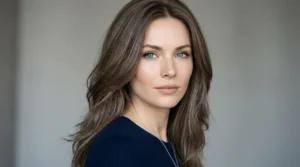
A medium cool brown is polished, adaptable, and usually easier to maintain than icy blonde. It can work particularly well when the brows are naturally darker than the hair.
Avoid choosing a shade that looks completely flat in the swatch book. Subtle taupe or neutral dimension can make the finished color appear more natural.
9. Cool Espresso
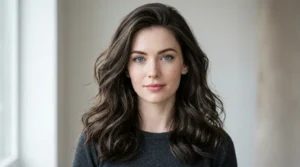
Cool espresso is a deep brunette with neutral, ash, or faint blue-violet undertones. Against fair skin, it creates a Snow White-style contrast that draws attention to the eyes and facial features.
Very dark permanent dye can be difficult to remove. If you’re starting with blonde hair, consider testing a demi-permanent brunette or trying a virtual color preview before committing.
Dark Hair Colors for Pale Skin and Blue Eyes
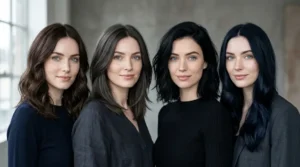
Dark hair can look stunning with blue eyes, but the contrast changes the overall balance of the face. Brows may appear lighter, redness may become more visible, and the eyes can become the strongest focal point.
10. Soft Black
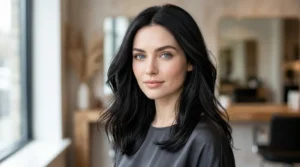
Soft black is usually more wearable than an intense jet black. It provides drama without producing quite as sharp a boundary against pale skin.
A neutral or cool soft black is preferable if warm black shades tend to pull reddish on your hair.
11. Blue-Black

Blue-black hair color has subtle navy or inky undertones that visually intensify blue eyes. It works especially well with distinctly cool complexions and naturally dark brows.
This shade is a commitment. Black pigment can remain in the hair even after the visible color begins to fade, making a later return to blonde difficult and potentially damaging.
12. Cool Burgundy Brown

Burgundy brown introduces a controlled amount of red-violet without turning copper or orange. The violet component can complement cool skin and blue eyes, while the brown base makes the color more wearable than vivid purple.
If facial redness is a concern, test the shade near your face first. Red-based hair colors can sometimes emphasize pinkness in the complexion.
Creative Cool-Toned Colors Worth Considering
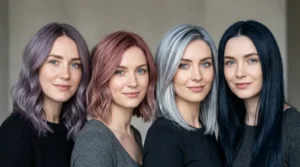
Natural shades aren’t the only option for pale skin and blue eyes. Cool fashion colors can create a deliberate, artistic effect when they share similar blue, violet, or silver undertones.
Smoky Lavender
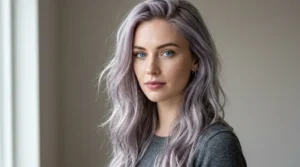
A muted lavender can blend beautifully with cool skin and gray-blue eyes. It’s less intense than a bright purple and can fade into a pretty silvery tone, although the exact fading pattern depends on the hair’s porosity.
Dusty Rose
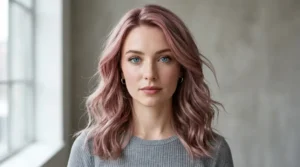
Dusty rose combines pink with mauve or violet rather than coral or orange. It can add color without fighting the coolness of the complexion.
Midnight Navy
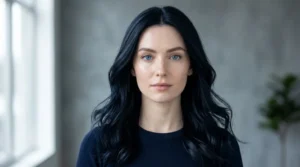
Midnight navy appears almost black indoors but reveals a blue cast under bright light. It delivers the impact of blue-black with a more creative finish.
Fashion colors generally require pre-lightening for a clear result and may transfer onto towels or pillowcases while fresh.
How to Choose Between Blonde and Brunette
Both color families can flatter pale skin and blue eyes. The decision comes down to contrast, maintenance, and the condition of your hair.
Choose a cool blonde if you want:
- A soft, luminous effect
- Lower contrast with your complexion
- An airy or ethereal appearance
- A color that blends naturally with light brows
Choose a cool brunette if you want:
- Blue eyes to look more prominent
- Greater facial definition
- Less frequent lightening
- A polished, high-contrast appearance
Choose a dark brown or black only if you’re comfortable with visible regrowth and a more difficult color-removal process later.
Hair Colors That May Be Less Flattering
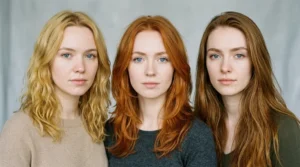
There are no absolute forbidden shades. However, certain colors can be harder to balance when your skin and eyes are distinctly cool.
Strong orange copper, brassy yellow blonde, and highly golden brown may clash with rosy or blue-toned skin. They can also make the complexion look redder.
This doesn’t mean all warmth should be avoided. A colorist may use a small amount of beige or gold to keep an ash formula from appearing gray, dull, or hollow. Balanced color often looks more natural than an aggressively cool formula.
Ask for Dimension, Not Just One Flat Color
A single solid shade can sometimes make fair skin look washed out or create a wig-like effect, particularly at the lightest and darkest ends of the spectrum.
Dimension can come from:
- A softly blended shadow root
- Fine ash-blonde highlights
- Cool beige lowlights
- Face-framing brightness
- A brunette gloss with subtle tonal variation
The placement matters as much as the shade. Lighter pieces around the face create softness, while a darker root adds structure and makes blue eyes stand out.
How to Maintain a Cool Hair Color
Cool pigments tend to reveal unwanted warmth as they fade. Blonde hair may become yellow, while brunette color can expose orange or reddish tones.
To keep your shade looking balanced:
- Wash with a color-safe shampoo and conditioner.
- Use lukewarm rather than very hot water.
- Protect hair before using heated styling tools.
- Follow purple shampoo directions instead of using it every day.
- Use a blue-toned product only when your colorist recommends it for orange tones.
- Protect hair from prolonged sun and chlorine exposure.
- Schedule toning or gloss appointments when the color starts looking warm.
Purple shampoo is mainly intended to counter yellow. Blue products target orange tones. Using the wrong pigment may not produce the correction you expect.
Bleached hair also needs moisture and protection from breakage. A gentle haircare routine can help maintain softness between color appointments, but it cannot reverse structural damage caused by excessive processing.
What to Tell Your Colorist
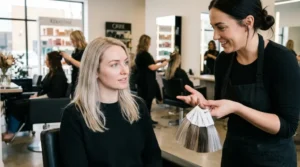
Names such as “ash blonde” and “cool brown” can mean different things to different people. Bring two or three reference photos taken in natural-looking light rather than relying only on a shade name.
Tell your colorist:
- Whether you want soft or dramatic contrast
- How frequently you can return for maintenance
- What dyes or lighteners have previously been used
- Whether your hair tends to turn yellow, orange, or red
- How much heat styling you normally do
- Whether you plan to go lighter or darker later
A professional strand test can show how the hair responds before a major color transformation. It is especially valuable when the hair has previously been bleached, colored dark, or treated with henna.
Final Takeaway
The best hair color for pale skin and blue eyes should complement both your undertone and your preferred level of contrast. Icy platinum, pearl blonde, ash blonde, mushroom brown, cool espresso, and soft black are all strong options.
Choose a softened cool shade for a natural result or a deep brunette for dramatic eye-enhancing contrast. Most importantly, consider your starting color and hair condition before making a major change. The most flattering color is one your hair can reach safely and you can realistically maintain.
Frequently Asked Questions
What hair color makes blue eyes look bluer?
Cool brunette shades such as ash brown, espresso, and soft black create contrast that can make blue eyes appear brighter. Icy blondes can also enhance blue eyes by repeating their cool tone, although the effect is softer.
Does ash blonde suit all pale skin tones?
Ash blonde generally suits cool and neutral pale skin. On very warm or muted complexions, an extremely gray ash can look flat. A beige-ash or pearl-beige blonde may provide a more balanced result.
Can pale skin wear very dark hair?
Yes. Cool espresso, soft black, and blue-black can look striking on pale skin, especially with blue eyes. Dark dye is difficult to remove, so testing a temporary or demi-permanent version first is sensible.
Should eyebrows match cool blonde hair?
They don’t need to match exactly. Brows that are one or two levels darker can provide helpful definition. Extremely warm brows may look disconnected from icy blonde hair, so a subtle taupe brow product can create better balance.
Is platinum blonde damaging?
Reaching platinum requires significant lightening, which weakens the hair structure and can increase dryness and breakage. The risk depends on your starting color, previous treatments, hair condition, and how gradually the color is achieved.
Which cool hair color is easiest to maintain?
A shade close to your natural depth is normally the easiest. For naturally dark blonde or light brown hair, mushroom brown, dark ash blonde, or light ash brown usually requires less maintenance than platinum or blue-black.
Sources & Further Reading
- American Academy of Dermatology: Coloring and perming tips for healthier-looking hair
- U.S. Food and Drug Administration: Hair Dyes
- Sturm RA, Larsson M: Genetics of human iris colour and patterns
Our Editorial Approach
Beauty and self-care information should be clear and easy to use. Our goal is to help you understand your options and make more informed choices about your everyday routine.
Our articles are for educational purposes only and do not replace advice from a qualified healthcare professional.