
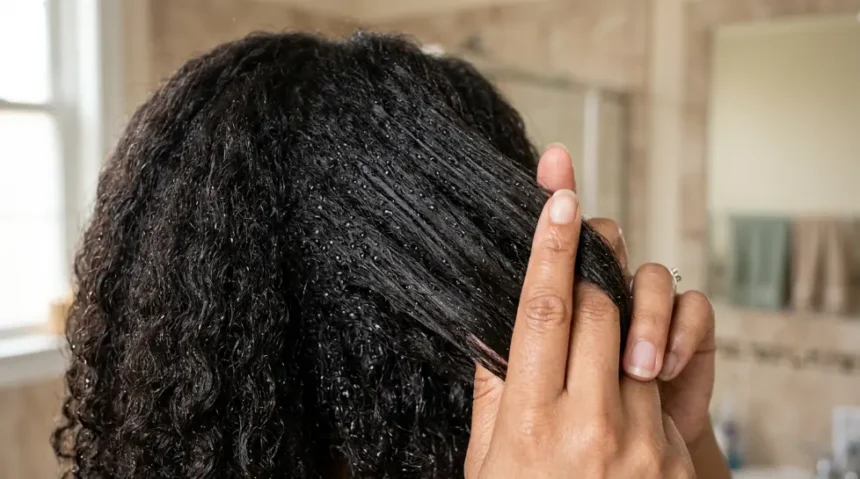
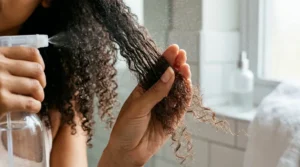
To test hair porosity at home, start with clean, dry hair that has no leave-in conditioner, oil, or styling product on it. Lightly mist several sections with room-temperature water and watch how the droplets behave. Water that beads for a while may suggest low porosity, while water that disappears almost immediately may point to high porosity.
- What Hair Porosity Actually Means
- Hair Porosity Results at a Glance
- Before You Test Your Hair
- Method 1: Try the Water Spray Test
- Method 2: Observe Your Hair on Wash Day
- Method 3: Use the Hair Porosity Float Test Carefully
- Signs of Low, Medium, and High Porosity Hair
- Build a Hair Routine Around Your Result
- If Your Hair Appears Low Porosity
- If Your Hair Appears Medium Porosity
- If Your Hair Appears High Porosity
- Common Hair Porosity Testing Mistakes
- Frequently Asked Questions
- Final Takeaway
One result isn’t enough, though. The most useful answer comes from combining the water spray test with what you notice on wash day, including how quickly your hair becomes saturated, how products sit on it, and how well it stays moisturized. The popular hair porosity float test can offer another clue, but it shouldn’t be treated as a final verdict.
What Hair Porosity Actually Means
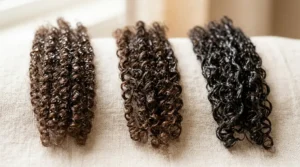
Hair porosity describes how readily the hair fiber takes in water and how well it retains that moisture. Much of this behavior is influenced by the cuticle, the protective outer layer.
Hair with a smoother, less weathered surface tends to resist water at first. Hair with lifted, chipped, or worn cuticle areas may take in water faster, but it can also lose that moisture quickly. Hair is naturally porous, and damage from bleaching, chemical straightening, repeated heat styling, and everyday wear can increase that porosity over time.
Porosity is not the same as curl pattern, strand thickness, density, or dryness. Straight hair can be highly porous, and tightly coiled hair can have low porosity. Buildup, climate, and an unsuitable routine can also make hair feel dry when porosity isn’t the main issue.
Porosity may also vary from root to tip. Older ends have had more exposure to washing, friction, heat, and chemical services, so they may behave differently from newer growth.
Hair Porosity Results at a Glance
| What you notice | Possible porosity level | What it may mean |
|---|---|---|
| Water forms beads and takes time to soak in | Low | The hair surface resists water and products may collect on top |
| Water sits briefly, then absorbs at a steady rate | Medium | The hair generally absorbs and retains moisture without much difficulty |
| Water disappears almost immediately, but hair soon feels dry again | High | The fiber takes in water readily but may not retain it well |
Use this table as a pattern guide, not a diagnosis. Product residue, strand thickness, damaged ends, humidity, and your drying method can all affect what you see.
Before You Test Your Hair
A little preparation makes the results more useful:
- Test freshly washed hair after it has dried completely.
- Skip conditioner, leave-in products, gels, creams, serums, and oils on the sections you plan to test.
- If you use heavy stylers or dry shampoo often, shampoo thoroughly first. Buildup can make porous hair appear water-resistant.
- Check more than one area, including the crown, sides, and ends.
- Use room-temperature water so heat does not add another variable.
- Repeat the test before changing your entire routine.
Method 1: Try the Water Spray Test

The water spray test is the easiest place to start.
How to Do It
- Separate a small section of clean, dry, product-free hair.
- Hold a spray bottle about six inches away.
- Apply a light, even mist. Do not soak the section.
- Watch the droplets for about a minute.
- Repeat on two or three areas of your head.
How to Read the Result
Droplets that remain on the surface or roll off before soaking in suggest low porosity. Water that pauses briefly and then absorbs evenly points toward medium porosity. If the mist vanishes almost immediately and the section quickly feels saturated, high porosity is more likely.
Gently touch the section after observing it rather than judging by appearance alone.
Method 2: Observe Your Hair on Wash Day
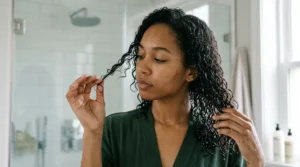
Your hair’s repeated behavior is usually more informative than a single trick. Pay attention to the wetting-and-drying cycle over several wash days.
Ask yourself:
- Does water sit on the surface before the hair becomes fully wet?
- Does it take extra time and water to saturate every section?
- Does the hair become wet very quickly but feel rough or dry again soon afterward?
- Do your ends dry much faster than your roots?
- Do products quickly feel heavy and waxy?
Hair that is slow to saturate and prone to buildup often shows low-porosity tendencies. Hair that wets and dries at a predictable pace may be medium porosity. Hair that gets wet quickly yet struggles to stay soft may be more porous.
Drying time alone cannot determine porosity. Density, strand diameter, length, humidity, and drying method all affect it.
Method 3: Use the Hair Porosity Float Test Carefully
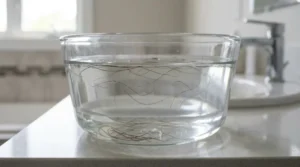
The float test places a strand in water to see whether it floats or sinks. In theory, floating suggests lower porosity, slow sinking suggests medium porosity, and fast sinking suggests higher porosity.
How to Do the Float Test
- Collect several naturally shed strands rather than pulling out hair.
- Make sure they are clean, completely dry, and free of product.
- Fill a clean glass with room-temperature water.
- Place the strands gently on the surface.
- Observe what happens over the next few minutes.
Do not base your routine on this result alone. Product residue, air bubbles, water surface tension, strand diameter, and time in the water can all affect the outcome.
If the float test disagrees with your spray test and wash-day experience, trust the repeated pattern.
Signs of Low, Medium, and High Porosity Hair
Low Porosity Hair

Low porosity hair resists water and product penetration at first. You may notice water beads, longer saturation time, slow drying, or creams sitting on the surface.
Buildup can develop when oils, butters, and stylers are layered. Once moisturized, however, this hair may retain moisture well.
Medium Porosity Hair
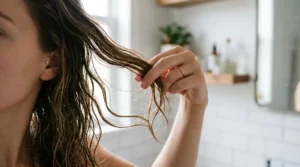
Medium porosity hair behaves fairly predictably. It becomes wet without a long delay, accepts conditioner, dries at a moderate rate, and stays soft for a reasonable time.
It can still become more porous with frequent bleaching, relaxing, permanent coloring, or high heat.
High Porosity Hair
High porosity hair absorbs water quickly but may struggle to retain it. It can tangle easily, feel rough, develop frizz, or need leave-in moisture more often.
This may be natural or reflect accumulated chemical, thermal, or mechanical damage. Sudden changes after bleaching or repeated straightening are especially useful clues.
Build a Hair Routine Around Your Result
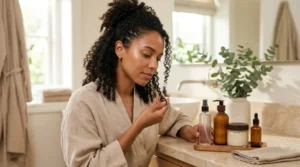
Porosity can help you adjust a routine, but it should not override texture, density, scalp needs, climate, or how your hair responds in practice.
If Your Hair Appears Low Porosity
- Apply lightweight, water-based leave-ins in small amounts.
- Work conditioner through thoroughly instead of adding more product.
- Use gentle warmth from a warm towel or conditioning cap if it helps your conditioner spread and soften the hair.
- Shampoo regularly enough to prevent coating and buildup.
- Add rich oils and butters only when your hair actually benefits from them.
If Your Hair Appears Medium Porosity
- Keep the routine balanced and uncomplicated.
- Use conditioner after shampooing and a leave-in when needed.
- Protect the hair before heat styling.
- Clarify when buildup changes how the hair feels or behaves.
- Watch for changes after coloring or chemical services.
If Your Hair Appears High Porosity
- Use a moisturizing rinse-out conditioner and, if needed, a leave-in conditioner.
- Add a cream or small amount of oil over water-based moisture if it improves softness.
- Limit repeated bleaching, chemical processing, and excessive heat.
- Detangle gently and reduce friction from rough towels or aggressive brushing.
- Use strengthening or bond-support products only as directed.
Products cannot permanently return a damaged cuticle to its original condition. Conditioners can reduce friction and improve softness, while gentler styling habits help prevent more wear. The American Academy of Dermatology also recommends using conditioner after shampooing, limiting hot tools, and handling wet hair carefully to reduce damage.
For more straightforward routines and hair-health guidance, explore the haircare resources on The Serenity Lab.
Common Hair Porosity Testing Mistakes
- Testing hair covered in product: Oils, silicones, and styling polymers can make water bead even when the strand itself is porous.
- Using only one strand: One strand cannot represent every area of your head.
- Relying only on the float test: Floating and sinking are affected by more than cuticle condition.
- Assuming curls equal high porosity: Curl pattern and porosity describe different characteristics.
- Judging by drying time alone: Density, thickness, weather, and styling method also affect drying.
- Ignoring different zones: Chemically treated ends may be more porous than untreated roots.
- Changing every product at once: Make one or two adjustments, then judge the result over several wash days.
Frequently Asked Questions
What Is the Most Accurate Way to Test Hair Porosity at Home?
There is no perfect kitchen test. Combine the water spray test with wash-day observations on clean, product-free hair, checking several sections for a consistent pattern.
Can I Test Hair Porosity Without Products?
Yes. Clean hair without conditioner, oil, or styling products gives you a clearer result because product coatings can change how water behaves on the surface.
Can My Roots and Ends Have Different Porosity Levels?
Yes. Ends are older and have more exposure to washing, friction, heat, and chemical services, so they may be more porous than newer growth.
Can Low Porosity Hair Still Feel Dry?
Yes. Water resistance and buildup may leave low porosity hair feeling dry or stiff. Cleansing habits, climate, product choice, and styling damage also matter.
Does High Porosity Hair Always Mean Severe Damage?
No. Some hair naturally absorbs water quickly. A noticeable change after bleaching, relaxing, coloring, or frequent high heat, however, may indicate cuticle wear.
How Often Should I Retest My Hair?
Reassess after a major chemical service, frequent heat styling, or when your usual products suddenly stop performing as expected.
Final Takeaway
The simplest way to test hair porosity at home is to mist clean, dry, product-free hair and compare the result with what happens during several wash days. Water beading may suggest low porosity, steady absorption may indicate medium porosity, and very fast absorption paired with quick moisture loss may point to high porosity.
Use the float test only as an extra clue. Your hair’s repeated behavior across different sections is far more helpful when deciding how much moisture, cleansing, conditioning, and protection it needs.