

Makeup is separating on face usually means your foundation is losing its even film over the skin. Dry flakes, excess oil, heavy skincare layers, too much foundation, or an unsuitable application method can make the base break apart, gather into dots, or disappear from certain areas.
- Is Your Makeup Separating, Pilling, or Looking Cakey?
- Why Is My Makeup Separating?
- 1. Your Skin Is Dry, Flaky, or Dehydrated
- 2. Excess Oil Is Breaking Down the Foundation
- 3. Your Skincare Has Not Settled
- 4. You Are Applying Too Many Layers
- 5. Your Primer and Foundation Are Not Working Well Together
- 6. You Are Rubbing Instead of Pressing
- 7. Powder Is Making the Base Look Patchy
- 8. Sweat, Weather, and Facial Movement Are Affecting Wear
- 9. Your Skin Is Irritated
- Why Is Foundation Separating on the Nose?
- How to Stop Foundation From Separating on Dry Skin
- How to Stop Foundation From Separating on Oily Skin
- How to Fix Separated Makeup Without Starting Over
- A Better Way to Troubleshoot Your Routine
- Frequently Asked Questions
- Final Takeaway
The location and timing offer useful clues. Immediate separation often points to layering or application problems. Makeup separating after a few hours is more commonly related to oil, sweat, movement, or an overloaded base. The fix is not always another primer. Sometimes, using less of everything produces the smoothest result.
Is Your Makeup Separating, Pilling, or Looking Cakey?
These problems can look similar in the mirror, but they usually need different fixes.
| What you see | What it probably means | First adjustment to try |
|---|---|---|
| Small gaps, dots, or broken patches | Foundation is separating | Use thinner layers and adjust skin preparation |
| Tiny rolls or flakes forming during application | Skincare or makeup is pilling | Reduce product and press instead of rubbing |
| Thick, dry-looking makeup that emphasizes lines | The base is cakey | Use less foundation and powder |
| Foundation disappearing from the nose or forehead | Oil, sweat, or friction is breaking down the base | Blot and set those areas lightly |
| Makeup clinging to flakes | The skin surface is dry or irritated | Simplify skincare and reduce powder |
| Base sliding across the entire face | Too much skincare, a rich formula, or excess oil | Use lighter layers and allow each one to settle |
Your skin can have more than one issue at the same time. Combination skin, for example, may look dry and patchy on the cheeks while foundation separates around the nose.
Why Is My Makeup Separating?
A foundation formula needs to spread into a thin, relatively even layer and remain in place as it dries. Anything that creates an uneven surface or keeps that layer from setting can lead to separation.
These are the most common causes.
1. Your Skin Is Dry, Flaky, or Dehydrated

Foundation cannot smooth over flakes that are already lifting from the skin. It settles around them instead, making small dry areas appear more obvious.
Dryness often shows up around the mouth, between the eyebrows, beside the nose, or over blemishes. Retinoids, exfoliating acids, acne treatments, cold weather, harsh cleansing, and a disrupted moisture barrier can all contribute.
If your skin also feels tight, rough, unusually sensitive, or uncomfortable when products are applied, use our guide to recognizing and caring for a damaged skin barrier.
Do not try to scrub visible flakes away immediately before applying makeup. Aggressive exfoliation can create more irritation and leave the foundation looking worse. Use gentle skincare consistently and let loose flakes shed naturally.
The American Academy of Dermatology recommends applying moisturizer while the skin is still slightly damp to help retain moisture.
2. Excess Oil Is Breaking Down the Foundation

Makeup separating on oily skin often looks good initially and begins breaking apart later. You may see shine followed by small gaps around the nose, forehead, chin, or inner cheeks.
Sebum mixes with foundation throughout the day. If the base is too emollient or applied too heavily, it may start sliding rather than wearing down evenly.
Trying to make oily skin completely dry can backfire. Harsh cleansers, alcohol-heavy products, and skipping moisturizer may leave the skin irritated without solving the makeup problem.
The AAD’s oily-skin guidance recommends gentle cleansing, an appropriate moisturizer, and oil-free or noncomedogenic products rather than aggressively scrubbing or stripping the skin.
Use a lightweight moisturizer, give it time to settle, and control oil only where you need it.
3. Your Skincare Has Not Settled
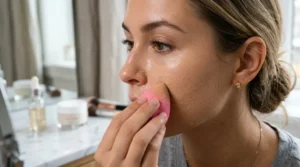
A thick layer of serum, moisturizer, facial oil, and sunscreen can leave the surface too slippery for foundation. The makeup may streak, lift, or move around instead of gripping evenly.
This does not mean you should skip moisturizer or sunscreen. It means the amount and texture of each layer matter.
After completing your morning skincare, wait until the surface no longer feels wet or excessively slippery. There is no universal waiting time because products set at different speeds. Judge by how the skin feels rather than following an arbitrary ten-minute rule.
If a product remains greasy, use less the next time instead of covering it with more primer or powder.
4. You Are Applying Too Many Layers

More foundation does not necessarily create more coverage. Once too much product sits on the face, it can collect around pores, creases, peach fuzz, and areas that move.
This becomes more noticeable when full-coverage foundation is layered over a gripping primer, color corrector, concealer, cream contour, and powder.
Start with a thin layer of foundation from the center of the face and blend outward. Add a small amount only where you still want coverage. Leave areas that already look smooth alone.
A thin base is usually easier to repair and wears more naturally than one heavy layer.
5. Your Primer and Foundation Are Not Working Well Together
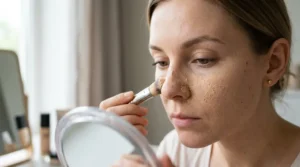
Primer and foundation compatibility can matter, but the popular “water-based with water-based and silicone-based with silicone-based” rule is too simple.
Many liquid foundations contain water, silicones, oils, powders, and film-forming ingredients in the same formula. Water appearing first on an ingredient list does not automatically tell you how a product will behave over another formula.
Instead, look at the actual result:
- Does the foundation spread smoothly over the primer?
- Does it bead up or form dots?
- Does it lift when you blend a second area?
- Does the combination stay unusually slippery?
- Does it begin pilling when you rub it?
Test the primer and foundation on one side of your face. Apply the same foundation over skincare alone on the other side. If the side without primer wears better, you may not need that primer.
Some foundations perform best without an additional priming layer.
6. You Are Rubbing Instead of Pressing
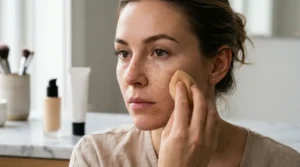
Repeated back-and-forth blending can disturb sunscreen, primer, and foundation underneath. This is particularly common with fast-setting foundations or gripping primers.
Use short, controlled motions. A damp makeup sponge can press foundation into an even layer without continually dragging the products below it.
With a brush, apply a small amount and blend one section at a time. If the foundation begins setting quickly, avoid going back over it repeatedly.
Also clean brushes and sponges regularly. Product buildup makes precise, even application more difficult.
7. Powder Is Making the Base Look Patchy
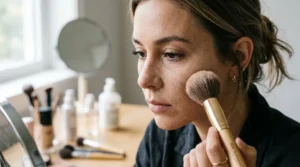
Powder helps control shine, but too much can absorb moisture from the base and leave the surface dry, heavy, or uneven.
This is especially likely when you bake beneath the eyes, around the mouth, or over naturally dry skin. Powder can also catch on areas where the foundation has not finished settling.
Use a small brush or puff to press a light amount onto the forehead, sides of the nose, and chin. Skip powder on dry cheeks unless it is genuinely needed.
If you can see a layer of loose powder sitting on the skin, you have probably applied more than necessary.
8. Sweat, Weather, and Facial Movement Are Affecting Wear

Foundation naturally wears faster around areas that move or become warm. Smiling, talking, touching your face, wearing glasses, and wiping your nose can disturb the base.
Heat and humidity also increase sweat and oil, while cold or dry air may make flaking more visible.
Adjust your base for the day rather than expecting one routine to work in every condition. Use lighter layers in hot weather, set high-movement areas strategically, and carry blotting paper instead of repeatedly adding powder.
9. Your Skin Is Irritated

Makeup looks patchy when the skin underneath is inflamed, peeling, or recovering from a strong treatment.
Retinoids, chemical exfoliants, acne products, sunburn, facial waxing, and peels can temporarily change the skin’s texture. Adding a heavy foundation may make that texture more noticeable.
If basic skincare stings, the skin looks unusually red, or peeling continues, focus on calming the skin rather than trying to hide it with extra coverage. Persistent burning, swelling, itching, or a rash should be evaluated by a dermatologist.
Why Is Foundation Separating on the Nose?
The nose combines several makeup challenges in one small area: visible pores, natural oil, facial movement, and frequent touching. Glasses and sunglasses add friction, while foundation can collect around the nostrils and creases.
To improve wear around the nose:
- Apply only a light layer of moisturizer to the area.
- Let sunscreen and skincare settle completely.
- Press a small amount of oil-controlling primer onto the sides of the nose if needed.
- Apply less foundation than you use on the cheeks.
- Press the product in with a sponge or compact brush.
- Set only the oily areas with a small amount of powder.
- Avoid repeatedly touching or rubbing the nose.
Do not try to fill visible pores with several thick layers. That usually makes the area look heavier without improving wear.
How to Stop Foundation From Separating on Dry Skin
For dry skin, the goal is to create a comfortable, flexible surface without making it greasy.
A Simple Dry-Skin Makeup Routine
- Cleanse gently or rinse with water if your skin does not need a morning cleanse.
- Apply a light hydrating layer.
- Follow with a moisturizer suited to your level of dryness.
- Apply sunscreen and allow it to settle.
- Use a hydrating or smoothing primer only where needed.
- Apply foundation in thin layers with a damp sponge.
- Use powder sparingly.
If it already suits your skin, a few drops of the Face Hydration Serum can be used before moisturizer. Allow it to absorb fully before continuing. Applying more serum than your skin can comfortably hold may leave the base slippery rather than smoother.
For flaky areas, avoid placing extra foundation directly over the texture. Use the smallest amount needed and press it gently into place.
How to Stop Foundation From Separating on Oily Skin
Oily skin usually needs strategic oil control rather than a completely matte layer across the entire face.
A Simple Oily-Skin Makeup Routine
- Wash with a gentle cleanser.
- Apply a lightweight, noncomedogenic moisturizer.
- Let skincare and sunscreen settle.
- Press a mattifying or oil-controlling primer onto the T-zone.
- Apply a thin layer of long-wearing foundation.
- Set the nose, forehead, and chin with a small amount of powder.
- Finish with setting spray if it improves wear for your base.
- Blot excess oil during the day before adding more powder.
For additional options, compare the finishes and wear styles in our guide to the best e.l.f. setting sprays for oily skin.
How to Fix Separated Makeup Without Starting Over
Adding another thick layer of foundation directly over separation usually makes the area more obvious.
Instead:
- Gently blot oil or moisture with a tissue or blotting paper.
- Use a clean sponge to press the edges of the separated area back into the surrounding makeup.
- Add a tiny amount of foundation or concealer only to the uncovered spot.
- Blend with pressing motions.
- Set lightly if the area is oily.
For a dry patch, do not keep rubbing it with a sponge. If necessary, remove the makeup from that small area, apply a minimal amount of moisturizer, let it settle, and reapply a thin layer of complexion product.
A small targeted repair usually looks better than rebuilding the entire base on top of old makeup.
A Better Way to Troubleshoot Your Routine
Changing your moisturizer, sunscreen, primer, foundation, powder, sponge, and setting spray at the same time will not tell you what caused the problem.
Change one variable at a time.
Begin with the shortest practical routine: skincare, sunscreen, and a thin layer of foundation. Keep your application method the same for several wear tests.
Then test one adjustment, such as:
- Removing the primer
- Using half as much foundation
- Powdering only the T-zone
- Changing from a brush to a damp sponge
- Using less moisturizer around the nose
- Blotting before touching up
You can also test a primer on one side of the face and leave the other side primer-free. Check both sides immediately after application and again after several hours.
This is more reliable than buying several new products based on one bad makeup day.
Frequently Asked Questions
Why does my makeup separate after a few hours?
Oil, sweat, facial movement, and friction gradually weaken the foundation layer. Heavy skincare or foundation may make the problem appear sooner. Blot oily areas and use thinner layers rather than repeatedly adding powder.
Can too much moisturizer make foundation separate?
Yes. Moisturizer is important, but an excessive amount or a texture that remains greasy can make foundation slide. Apply enough to keep the skin comfortable, then wait until the surface no longer feels wet or overly slippery.
Do I need primer to stop foundation from separating?
Not necessarily. Primer can improve texture or oil control, but some foundations wear better directly over settled skincare and sunscreen. Test your foundation with and without primer before assuming another layer is required.
Why does my foundation look patchy even after moisturizing?
The moisturizer may not have had time to settle, the skin may still have visible flakes, or the foundation may be drying too quickly. Use less product, press instead of rub, and avoid heavy powder over dry areas.
Should primer and foundation have the same base?
They need to work well together, but matching them by the first ingredient is not a guaranteed method. Modern formulas often combine water, silicones, oils, and film formers. A controlled wear test gives you a more useful answer.
How long should skincare sit before makeup?
Continue when the products feel settled and the skin is no longer wet or excessively slippery. The necessary time varies by formula, amount, skin type, and climate, so there is no single waiting period that works for everyone.
Final Takeaway
Makeup separating on your face is usually caused by an uneven skin surface, excess oil, heavy product layers, too much foundation, or an application method that disturbs the base.
Start by using less product and adjusting only the area where separation occurs. Hydrate dry patches, control oil strategically, allow skincare to settle, and test primer rather than assuming it is essential. A thinner, simpler base often lasts longer and looks more natural than layers added to prevent every possible problem.