
Thinning hair can change how a familiar haircut sits. A twist-out may no longer hold the same shape, the crown may look flatter, or a once-full fringe may start separating. Cutting the hair shorter can make those changes less noticeable, but only when the shape works with the areas where density has shifted.
- Close-Cropped Styles With Minimal Daily Work
- 1. Classic Teeny Weeny Afro
- 2. Soft Rounded TWA
- 3. Close Buzz Cut
- 4. Buzz Cut With a Low Taper
- 5. Even Coily Crop
- 6. Brushed-Forward Crop
- 7. Salt-and-Pepper Natural Crop
- 8. Low Caesar Cut
- 9. Textured Micro Crop
- 10. Barely There Taper
- Tapered Cuts That Build Shape
- 11. Soft Taper With a Fuller Crown
- 12. Low Taper With Natural Curls
- 13. Tapered Cut With a Side Part
- 14. Tapered Cut With a Wispy Fringe
- 15. Rounded Tapered Afro
- 16. Tapered Finger-Coil Cut
- 17. Tapered Twist-Out
- 18. Temple Taper
- 19. Nape-Tapered Crop
- 20. Mini Frohawk Taper
- Pixie Cuts for Thinning Hair
- 21. Soft Curly Pixie
- 22. Side-Swept Pixie
- 23. Layered Pixie
- 24. Feathered Pixie
- 25. Pixie With a Long Fringe
- 26. Tapered Natural Pixie
- 27. Asymmetrical Pixie
- 28. Piecey Pixie
- 29. Pixie With Soft Sideburns
- 30. Silver Sculpted Pixie
- Styles for Crown Thinning
- 31. Forward-Layered Crop
- 32. Off-Center Curly Crop
- 33. Fluffy Wash-and-Go
- 34. Short Layered Afro
- 35. Crown-Lifting Taper
- How to Choose the Right Short Haircut
- How to Make a Short Cut Look Fuller
- Low Maintenance Does Not Mean No Maintenance
- What to Avoid When Hair Is Thinning
- When Thinning Needs Professional Attention
- Frequently Asked Questions
- What is the best short haircut for a Black woman with thinning hair?
- Do short haircuts make thinning hair look thicker?
- What short style works for thin 4C hair?
- Should thinning natural hair be layered?
- Is a pixie cut suitable for thinning edges?
- How often should a short natural haircut be trimmed?
- Can I wear wigs over thinning hair?
- Final Takeaway
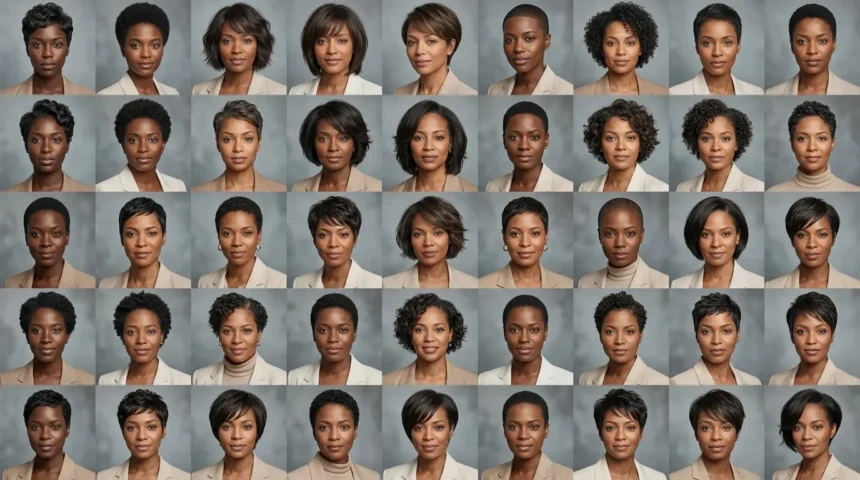
The most flattering African American womens short haircuts use proportion rather than heavy styling to create a fuller appearance. A softly tapered side can make the crown look denser. A wispy fringe can redirect attention from the temples. A close crop can make uneven density feel deliberate instead of something that needs to be hidden.
None of these haircuts can restore lost hair, and there is no single shape that suits every type of thinning. Use the ideas below as a starting point, then ask a stylist to adjust the length, part, and outline around your own hairline and curl pattern.
Close-Cropped Styles With Minimal Daily Work
1. Classic Teeny Weeny Afro
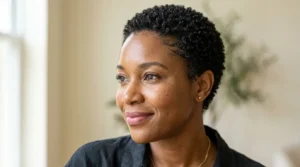
A neatly shaped TWA keeps the length fairly even and lets the natural coil pattern provide texture. It is easy to wash, requires little manipulation, and can make low-density natural hair look more balanced.
2. Soft Rounded TWA

This version leaves slightly more length through the crown and follows a smooth, rounded outline. It works well when the hair is thin overall but still has enough curl to hold a gentle shape.
3. Close Buzz Cut
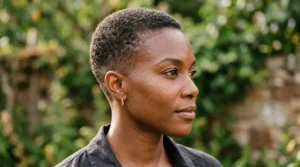
A buzz cut removes the contrast between sparse and fuller sections. Keeping a little visible texture rather than shaving completely to the scalp can create a softer finish.
4. Buzz Cut With a Low Taper
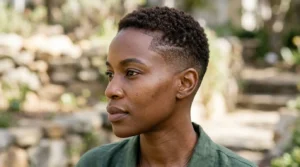
The top remains lightly textured while the ears and neckline are tapered. That small difference in length gives a simple cut more structure without adding daily styling.
5. Even Coily Crop
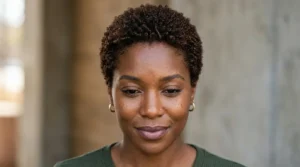
An even crop keeps short coils at approximately the same length across the head. It is a practical option when aggressive tapering would expose areas that already have less coverage.
6. Brushed-Forward Crop
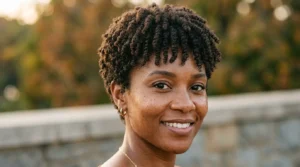
Short hair is directed gently toward the forehead instead of upward. This can soften a sparse front section, provided brushing is light and no tension is placed on fragile edges.
7. Salt-and-Pepper Natural Crop

Gray and silver strands can give a close crop extra dimension. A clean outline allows the natural color variation to become part of the style rather than something that needs to be covered.
8. Low Caesar Cut

A Caesar-inspired cut keeps the hair short with a small, soft fringe. It can help disguise slight unevenness along the front without requiring a thick or sharply cut bang.
9. Textured Micro Crop

A small amount of curl foam or mousse can bring out texture in a very short cut. Leave some softness between the coils so the hair does not separate into scalp-revealing sections.
10. Barely There Taper
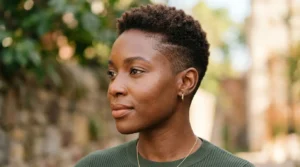
This cut creates only a subtle change around the sideburns and nape. It is a good choice when you want a finished outline but do not want the sides taken extremely short.
Tapered Cuts That Build Shape
11. Soft Taper With a Fuller Crown

The sides and back are shortened gradually while the crown keeps more length. This contrast can make the upper section appear fuller without requiring a dramatic high-top shape.
12. Low Taper With Natural Curls
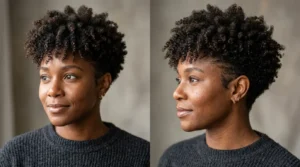
Only the hair around the ears and neckline is closely tapered. Most of the natural texture remains untouched, making the grow-out softer and easier to maintain.
13. Tapered Cut With a Side Part

A loose side part adds direction and lets you position the fuller section over an area with lower density. Use your fingers rather than repeatedly carving a hard part into the same spot.
14. Tapered Cut With a Wispy Fringe

Light curls are left longer near the forehead while the sides remain neat. The fringe should look airy rather than thick, especially when the front hairline is delicate.
15. Rounded Tapered Afro

This shape combines a softly rounded crown with shorter sides. The transition is blended instead of sharply faded, creating a classic silhouette that does not rely on perfectly defined curls.
16. Tapered Finger-Coil Cut
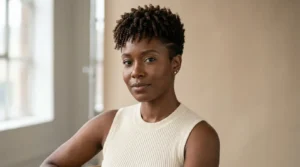
Larger finger coils add definition across the longer top section. Keeping the coils slightly loose prevents the roots from separating too much and exposing more scalp.
17. Tapered Twist-Out

A loose twist-out gives the top movement while the tapered sides preserve the haircut’s outline. Fewer, larger twists generally create a fuller finish than many tiny sections.
18. Temple Taper

The cut is cleaned up only around the temples and ears, leaving the remaining hair relatively full. It works best when the temple area is healthy enough to tolerate regular shaping.
19. Nape-Tapered Crop

The back is shortened neatly at the neckline while the sides and top remain soft. This is a subtle way to make a growing crop look intentional between full haircuts.
20. Mini Frohawk Taper
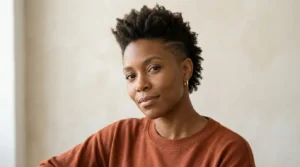
The sides are kept shorter while the center remains longer and gently lifted. Avoid slicking the sides tightly; the haircut itself should create the silhouette.
Pixie Cuts for Thinning Hair
21. Soft Curly Pixie

A curly pixie keeps the back and sides short with a little more length on top. Soft curls near the forehead stop the cut from looking flat or overly severe.
22. Side-Swept Pixie

Longer hair across the front is swept gently to one side. It can create coverage around one temple or soften an area where the front appears less dense.
23. Layered Pixie
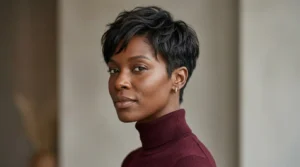
Light layers give short hair movement and prevent it from sitting in one solid piece. Too many layers can remove valuable density, so the shape should remain controlled.
24. Feathered Pixie

The top is styled in soft, separated pieces rather than firm curls. It works particularly well on relaxed or naturally straighter textures that need movement without heavy product.
25. Pixie With a Long Fringe

A longer fringe draws attention toward the eyes and can disguise mild thinning near the front. The section should fall naturally rather than being pulled across the forehead.
26. Tapered Natural Pixie

This cut combines a pixie outline with visible natural curls. The sides stay close, while the top has enough length for a small wash-and-go or loose finger coils.
27. Asymmetrical Pixie

One side or the front is left slightly longer to create movement. This can balance uneven density when one temple appears thinner than the other.
28. Piecey Pixie

A light styling foam or flexible wax separates the top into soft pieces. Use very little product; too much can make fine strands clump together and expose the scalp.
29. Pixie With Soft Sideburns

Instead of a sharply carved hairline, this style keeps the sideburns natural and lightly shaped. It is more forgiving when the edges are sparse or easily irritated.
30. Silver Sculpted Pixie
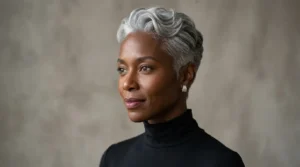
A sculpted pixie gives gray hair a clear outline and polished finish. Gentle height through the top can keep fine silver strands from lying flat against the scalp.
Styles for Crown Thinning
31. Forward-Layered Crop
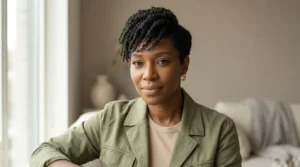
Layers are directed slightly forward from the crown. This changes where the hair separates and may help reduce the appearance of a visible spot at the top.
32. Off-Center Curly Crop

An off-center shape prevents the hair from dividing along a thin central line. The part can remain soft or barely visible rather than being drawn sharply with a comb.
33. Fluffy Wash-and-Go

A lightly defined wash-and-go keeps some natural frizz for volume. Once dry, lift only the roots with your fingers or a wide-tooth pick.
34. Short Layered Afro

Subtle layers stop a short afro from becoming heavy at the perimeter and flat at the crown. The stylist should remove only enough hair to improve the shape.
35. Crown-Lifting Taper

The sides are shortened and the crown is left long enough to lift gently. It suits hair that has reduced density on top but can still hold some texture.
How to Choose the Right Short Haircut
Start by identifying where the hair appears thinnest.
For thinning at the crown, choose a crop without a strong center part. Soft layers, larger curl groupings, and a little controlled height can make the area look more balanced.
For sparse temples or edges, avoid cuts that require a sharp lineup or daily slicking. A side-swept pixie, soft fringe, or rounded crop can frame the face without asking fragile hairs to hold the style.
If the hair has low density throughout, an even TWA or close crop may look fuller than a cut with dramatic differences in length. Keeping the outline neat gives the entire style a stronger visual shape.
Bring photos to your appointment, but choose examples with a texture, density, and length reasonably close to yours. A haircut shown on very dense hair will need to be adapted rather than copied exactly.
How to Make a Short Cut Look Fuller
Short hairstyles for Black women with thin hair usually look best with light, flexible products. Heavy butters and multiple layers of oil can cause fine strands to clump together, making the scalp more visible.
Apply a modest amount of mousse, foam, or lightweight curl cream. Let the hair dry fully before lifting the roots. Styling wet or damp hair repeatedly after it begins to set can disturb the curl pattern and create frizz in places where you may not want it.
A few other adjustments can help:
- Keep some natural softness instead of defining every curl.
- Avoid making dozens of tiny coils or twists.
- Change the location of your part occasionally.
- Sleep on a satin pillowcase or wear a loose satin bonnet.
- Detangle with enough water and conditioner to reduce pulling.
- Limit tight headbands, wig combs, and firm edge control.
- Refresh the haircut before the shape becomes difficult to manage.
Low Maintenance Does Not Mean No Maintenance
Even the simplest short cut needs occasional reshaping. A close taper may require more frequent appointments than a soft TWA because its outline becomes less defined as it grows.
Wash the scalp often enough to remove sweat and product buildup. Fine or low-density hair may look flatter when several styling products collect at the roots.
Condition the hair without leaving a heavy coating behind. Apply richer products mainly where the strands feel dry, and keep oils or thick creams away from areas that lose volume easily.
Short hair also leaves more of the scalp exposed. If you spend time outdoors, protect visible areas with a hat or a scalp-friendly sun-protection product.
What to Avoid When Hair Is Thinning
A short haircut should reduce styling stress, not create a new routine built around daily pulling.
Be cautious with:
- Tight braids used underneath wigs
- Strong-hold products brushed repeatedly onto the edges
- Extensions that feel heavy, painful, or tight
- Frequent high-heat styling
- Aggressive combing at the crown
- Constantly parting the hair in the same location
- Cutting deeply into the sidewalls to force a particular shape
No hairstyle should cause pain, persistent tenderness, bumps, or a headache. Those signs deserve attention rather than being accepted as part of the finished look.
When Thinning Needs Professional Attention
A haircut can improve how thinning hair looks, but it cannot determine why the change is happening.
Consider speaking with a dermatologist if thinning begins suddenly, spreads quickly, creates a smooth patch, or comes with burning, soreness, itching, scaling, or scalp inflammation. Changes that begin in the center of the scalp or continue around the hairline should not be covered indefinitely without being assessed.
Take clear photos in consistent lighting every few weeks if you are unsure whether the area is changing. That record can make gradual differences easier to notice and discuss at an appointment.
Frequently Asked Questions
What is the best short haircut for a Black woman with thinning hair?
A soft tapered cut, TWA, rounded crop, or layered pixie can all work well. The best choice depends on whether thinning is concentrated at the crown, hairline, temples, or across the entire scalp.
Do short haircuts make thinning hair look thicker?
They can make it look fuller by removing thin ends and creating a stronger outline. A haircut changes the appearance and distribution of existing hair; it does not increase the number of strands.
What short style works for thin 4C hair?
A shaped TWA, tapered coil cut, or rounded natural crop can work with 4C shrinkage while limiting daily manipulation. Larger curl groupings may provide a fuller finish than tiny, separated coils.
Should thinning natural hair be layered?
Light layers can add movement and lift, but excessive layering may remove too much density. Ask for strategic shaping rather than heavy thinning or aggressive texturizing.
Is a pixie cut suitable for thinning edges?
Yes, particularly when it includes a soft fringe, natural sideburns, or a side-swept front. Avoid pixie styles that depend on a sharp lineup or daily tension around the hairline.
How often should a short natural haircut be trimmed?
The timing depends on the shape. A close fade may need frequent cleanup, while a soft TWA or rounded crop can grow longer without losing its overall balance. Schedule a trim when the outline becomes difficult to style.
Can I wear wigs over thinning hair?
Yes, but the wig should fit comfortably and the hair underneath should not be braided tightly. Avoid clips, combs, adhesives, or elastic bands that repeatedly stress the same fragile areas.
Final Takeaway
The best African American womens short haircuts for thinning hair create shape without relying on tight styling, heavy products, or perfect density. A clean TWA, soft taper, curly pixie, rounded crop, or close buzz cut can all make a noticeable difference in how the hair sits.
Choose the cut around the location of the thinning rather than the trend you see most often. Keep fragile areas free from unnecessary tension, use enough product to support the texture without flattening it, and ask for professional advice if the thinning continues or the scalp becomes uncomfortable.
A good short haircut should make your routine feel easier. More importantly, it should look like a deliberate style not an attempt to hide your hair.
Our Editorial Approach
Beauty and self-care information should be clear and easy to use. Our goal is to help you understand your options and make more informed choices about your everyday routine.
Our articles are for educational purposes only and do not replace advice from a qualified healthcare professional.