
Put a coffin nail next to a ballerina nail and, at first glance, they can look almost identical. Both shapes have tapered sides and a flat tip. Both are usually worn at medium or long lengths. And depending on the salon, the two names may even be used for the same shape.
- Coffin Nails vs Ballerina at a Glance
- What Is the Coffin Nail Shape?
- What Is the Ballerina Nail Shape?
- Are Coffin and Ballerina Nails the Same?
- The Main Difference Is in the Tip Width
- Sidewalls Change the Entire Look
- Which Shape Looks Better on Different Hands?
- Coffin Nails vs Ballerina on Short Nails
- Which Shape Is Stronger?
- Can Coffin or Ballerina Shapes Work on Natural Nails?
- How to Ask for the Exact Shape You Want
- How Each Shape Changes Nail Art
- Common Shaping Mistakes
- Filing the Sides Too Narrow
- Leaving the Tip Too Wide
- Making the Tip Uneven
- Ignoring the Nail’s Structure
- Choosing a Reference With a Different Length
- Which Shape Is Easier to Maintain?
- Coffin Nails vs Ballerina: Which One Should You Choose?
- Frequently Asked Questions
- How can you tell coffin and ballerina nails apart?
- Are coffin and ballerina nails the same shape?
- Which shape makes fingers look longer?
- Can coffin nails be short?
- Are ballerina nails weaker than coffin nails?
- Which shape is better for wide nail beds?
- Can I change coffin nails into ballerina nails?
- Final Takeaway
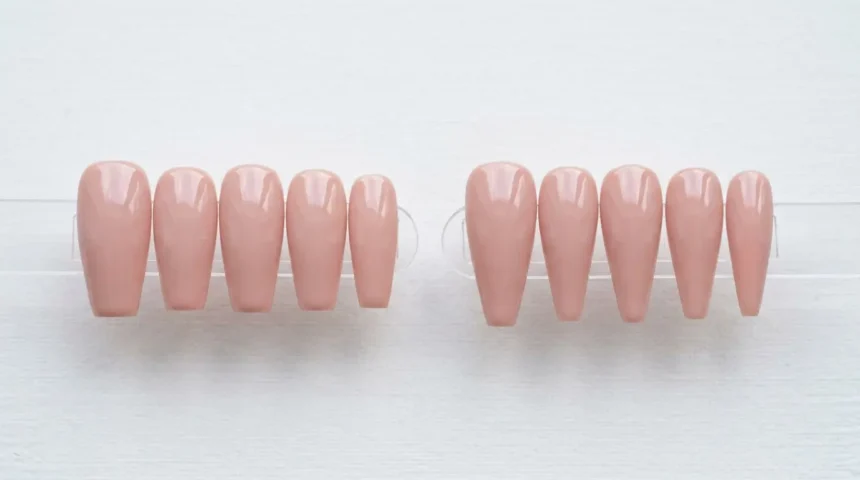
Look more closely, though, and there is a subtle difference. Coffin nails tend to have straighter, more angular sidewalls and a wider flat tip. Ballerina nails usually taper more softly and finish with a slightly narrower tip, creating a silhouette similar to a ballet slipper.
That is the simplest way to understand the Coffin Nails vs Ballerina comparison: coffin is typically sharper and boxier, while ballerina is slimmer and softer. The distinction isn’t standardized across every salon, so showing your nail technician a reference photo is often more useful than relying on the name alone.
Coffin Nails vs Ballerina at a Glance
| Feature | Coffin nails | Ballerina nails |
|---|---|---|
| Overall shape | Angular and structured | Slimmer and more delicate |
| Taper | Strong, defined taper | Softer, gradual taper |
| Sidewalls | Straighter and sharper | Slightly curved or gently angled |
| Flat tip | Usually wider | Usually narrower |
| Typical length | Medium to extra long | Medium to long |
| Visual effect | Bold and dramatic | Elegant and lengthening |
| Best support | Acrylic, gel extensions, or strong natural nails | Gel extensions, acrylic, or longer natural nails |
| Short version | More likely to look square | Can resemble a soft tapered square |
What Is the Coffin Nail Shape?
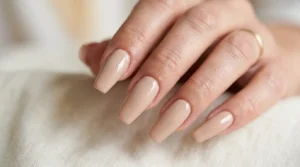
Coffin nails begin with relatively straight sidewalls near the cuticle. The sides then taper inward before ending in a clearly defined flat tip.
The name comes from the shape’s resemblance to a traditional coffin: wider near the base, narrower toward the end, and squared off at the top. It is a bold silhouette, especially when the nails are long enough to show the change in width.
A well-shaped coffin manicure should not look like an ordinary square nail with the corners filed away. The narrowing needs to begin along the sidewalls, while enough width remains at the tip to create that recognizable structured finish.
Coffin nails work particularly well with designs that benefit from a broad surface, including French tips, chrome finishes, ombré color, marble effects, and detailed nail art.
What Coffin Nails Usually Look Like
- Noticeably tapered sides
- A broad, flat free edge
- Defined corners at the tip
- A straight, architectural outline
- More width through the center than a ballerina nail
The longer the nail, the easier it is to create the full coffin shape. On very short nails, there may not be enough free edge to taper the sides without making the tip too narrow or weakening the nail.
What Is the Ballerina Nail Shape?
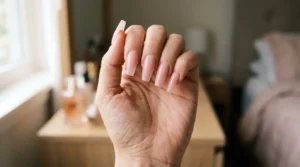
Ballerina nails also taper toward a flat tip, but the finished shape is usually a little more refined. The sides narrow more gradually, and the corners may look softer than those of a coffin nail.
The silhouette is meant to resemble a ballerina’s pointe shoe. A pointe shoe has an elongated body that narrows toward a flattened toe, which explains why ballerina nails often appear slimmer and less severe.
The difference can be subtle. Some ballerina nails have nearly straight sides, while others are shaped with a gentle curve before reaching the flat tip. The most consistent detail is that the tip width is normally narrower in relation to the widest part of the nail.
What Ballerina Nails Usually Look Like
- Softly tapered sidewalls
- A narrow, flat tip
- Less angular corners
- An elongated silhouette
- A more delicate finish than the traditional coffin shape
Ballerina nails can still carry detailed designs, but their slimmer proportions often suit minimal French tips, sheer pinks, soft neutrals, glazed finishes, and delicate line work.
Are Coffin and Ballerina Nails the Same?
In everyday salon language, they sometimes are.
There is no universal measurement that decides exactly where a coffin nail ends and a ballerina nail begins. One nail technician may use “coffin” for any long tapered nail with a flat tip, while another may reserve “ballerina” for a narrower and more softly filed version.
Social media, product packaging, and press-on nail brands also use the terms inconsistently. A set labeled ballerina by one company may look almost identical to another company’s coffin set.
The difference is therefore best understood as a change in proportion rather than two completely separate shapes:
- Coffin nails have a wider tip and stronger angles.
- Ballerina nails have a narrower tip and gentler lines.
If you ask for either style without showing a picture, you may receive the nail technician’s own interpretation.
The Main Difference Is in the Tip Width
The easiest way to tell coffin and ballerina nails apart is to look at the width of the flat tip.
On a coffin nail, the tip usually keeps enough width to look bold and squared. The corners are easy to see, and the transition from the sidewalls to the tip appears deliberate.
A ballerina nail narrows further before reaching the end. The flat tip is still present, but it looks slimmer in comparison with the body of the nail.
Imagine drawing a line across the free edge. A wider line suggests coffin; a shorter, more delicate line suggests ballerina.
This difference becomes much easier to see on medium and long nails. Short coffin vs ballerina nails can be difficult to distinguish because there is limited space to create two visibly different tapers.
Sidewalls Change the Entire Look
Tip width isn’t the only detail that matters. The nail sidewalls-the edges running from the nail bed toward the tip-also determine whether the shape feels more like coffin or ballerina.
Coffin nails usually have straighter, more decisive sidewalls. The taper may begin farther down the nail and create a crisp angle.
Ballerina nails often have a smoother transition. Their sidewalls may begin narrowing earlier, which produces an elongated appearance without such a strong corner.
Neither version should be filed aggressively into the natural nail’s stress points. Removing too much width from the sides can weaken the structure, particularly on natural nails without an overlay.
Which Shape Looks Better on Different Hands?
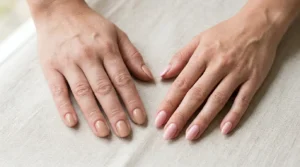
The best choice depends less on rigid hand-shape rules and more on the finish you want.
Coffin Nails May Suit You If:
- You like bold, defined nail shapes.
- You want more space for detailed nail art.
- You prefer a wider French tip.
- Your nail extensions have enough length to support a visible taper.
- You want your manicure to feel modern and structured.
Ballerina Nails May Suit You If:
- You prefer a slimmer silhouette.
- You want the fingers to appear visually elongated.
- You like soft, understated nail art.
- A wide coffin tip feels too heavy on your hands.
- You want a tapered shape without a sharp point.
If your natural nail beds are wide, ballerina nails can create a slender appearance. Coffin nails can still work beautifully, especially if you like a stronger, more noticeable manicure.
Narrow nail beds can carry either shape. A very narrow ballerina tip, however, may look unbalanced if the nail is extremely long, so the proportions still need to suit the hand.
Coffin Nails vs Ballerina on Short Nails
Both styles are easier to recognize with some length. Without enough free edge, the nail technician has very little room to narrow the sidewalls and create a flat tip.
Short coffin nails usually look like a tapered square. They retain a relatively broad tip, but the sides angle inward slightly.
Short ballerina nails require a finer taper. If the tip becomes too narrow, the shape may start resembling a squoval nail with clipped corners rather than a true ballerina silhouette.
You can wear either style short, but keep expectations realistic. A reference image showing nails at your preferred length will help the technician create the closest possible version.
If your priority is durability, a short tapered square may be more practical than forcing a dramatic coffin or ballerina outline onto a small free edge.
Which Shape Is Stronger?
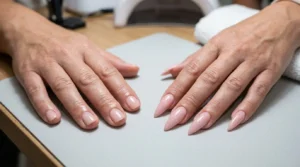
At the same length and with the same product, coffin nails are often slightly sturdier because they keep more width at the tip. That extra material can provide support at the corners and free edge.
Ballerina nails narrow more, so there is less structure toward the end. An excessively narrow tip may be more vulnerable to cracking or snapping if the extension is very long.
That does not automatically make ballerina nails fragile. Strength also depends on:
- The condition of the natural nail
- The type and quality of the extension product
- Correct placement of the apex
- The thickness of the free edge
- The overall nail length
- How the nails are used between appointments
A properly built ballerina extension can be more reliable than a poorly structured coffin nail. Shape matters, but application and daily habits matter just as much.
Can Coffin or Ballerina Shapes Work on Natural Nails?
Yes, provided the natural nails have enough length and strength.
Both shapes require filing along the sides, so weak, peeling, or bendy nails may struggle to maintain the outline. The corners can also break if the nail is filed too thin.
A structured gel overlay can add support without requiring a full extension. Acrylic and hard gel are also commonly used when more length or reinforcement is needed.
If your natural nails are short, allow them to grow before creating a dramatic taper. Repeatedly filing the sidewalls in an attempt to force the shape may leave the nail narrower and more vulnerable.
How to Ask for the Exact Shape You Want
Rather than saying only “coffin” or “ballerina,” describe the details you want the technician to create.
For coffin nails, ask for:
A defined taper with straight sidewalls and a medium-width flat tip.
For ballerina nails, ask for:
A soft, gradual taper with a narrow flat tip and slightly softened corners.
Bring two or three reference photos showing the shape from above. Side-angle images are helpful too, especially when extensions are involved.
Point out what you like in each photo. You might prefer the narrowness of one set but the length and corner shape of another. That information is more useful than assuming everyone uses the two names in exactly the same way.
How Each Shape Changes Nail Art
The coffin nail shape provides a little more room near the tip. This makes it a strong option for designs with wide French edges, geometric details, lettering, charms, or multiple colors.
The ballerina nail shape creates a slimmer canvas. Designs tend to look more elongated, particularly when a vertical line, narrow French tip, or color gradient follows the taper.
Neither style limits your color choices. The difference is mostly visual:
- Dark shades make coffin nails feel even bolder.
- Sheer and neutral shades emphasize the elegance of ballerina nails.
- Chrome highlights the smooth surface of both shapes.
- Ombré designs draw attention to the taper.
- Side-French designs can exaggerate a narrow ballerina silhouette.
- Wide French tips emphasize the flat edge of coffin nails.
Choose the design after deciding on the shape. A nail-art reference created on almond nails, for example, may look different once adapted to a wide coffin tip.
Common Shaping Mistakes
Filing the Sides Too Narrow
Removing too much from the sidewalls can weaken the nail and make the shape look pinched. It may also turn a coffin or ballerina nail into something closer to a pointed shape with the end cut off.
Leaving the Tip Too Wide
If the sides barely taper, the finished nail will look square rather than coffin. The difference should be visible when looking directly down at the hand.
Making the Tip Uneven
Because both shapes finish with a flat edge, even a slight slant can be noticeable. The tip should align with the center of the finger, not simply follow a naturally crooked nail.
Ignoring the Nail’s Structure
A beautiful outline isn’t enough. Long extensions need proper balance and support. Filing for appearance without considering structure can leave the nail vulnerable to lifting or breaking.
Choosing a Reference With a Different Length
The same taper looks different on short and extra-long nails. Choose inspiration photos that are reasonably close to the length you plan to wear.
Which Shape Is Easier to Maintain?
Coffin nails may be slightly easier to maintain because the wider tip provides a little more structure. Their corners can still catch on clothing or hair, particularly when the edges are very sharp.
Ballerina nails feel slimmer but may need more careful handling at longer lengths. As the nails grow out, their balance changes, and the tapered end can place more leverage on the extension.
For either shape:
- Wear gloves for cleaning and dishwashing.
- Don’t use the nails to open cans or scrape labels.
- Apply cuticle oil regularly.
- Avoid picking at lifting product.
- Return for maintenance at the interval recommended by your technician.
- Have a cracked or lifted extension repaired rather than covering it with glue at home.
Coffin Nails vs Ballerina: Which One Should You Choose?
Choose coffin nails if you want a bold shape with visible angles, a wider tip, and more room for statement designs.
Choose ballerina nails if you prefer a narrow, graceful outline with a softer taper and a slightly more delicate appearance.
If you still can’t decide, ask for a shape between the two: a moderately tapered nail with a flat tip that is neither especially wide nor extremely narrow. Many salon manicures naturally fall into this middle ground.
The names are less important than the proportions. Focus on the sidewalls, tip width, length, and corner sharpness you actually want.
Frequently Asked Questions
How can you tell coffin and ballerina nails apart?
Look at the tip and sidewalls. Coffin nails usually have a wider flat tip with stronger angles, while ballerina nails narrow more gradually and end in a slimmer flat tip.
Are coffin and ballerina nails the same shape?
They belong to the same family of tapered, flat-tipped nail shapes and are often treated as the same style. When a distinction is made, coffin is usually wider and more angular, while ballerina is narrower and softer.
Which shape makes fingers look longer?
Both can create an elongated appearance, but the slimmer taper of ballerina nails may make that effect more noticeable.
Can coffin nails be short?
Yes, although short coffin nails often resemble a tapered square. A medium length makes the coffin outline easier to see.
Are ballerina nails weaker than coffin nails?
They can be slightly more delicate because the tip is narrower. Actual strength depends on length, product, structure, application, and how the nails are treated.
Which shape is better for wide nail beds?
Either can work. Ballerina nails create a narrower visual line, while coffin nails retain a bolder width. The best choice depends on whether you want a slimming or more structured effect.
Can I change coffin nails into ballerina nails?
Usually, yes. A technician can narrow and soften the sidewalls and reduce the tip width, provided enough product remains to maintain a safe structure. Changing a narrow ballerina shape into a wider coffin shape may require a new set because removed width cannot simply be filed back in.
Final Takeaway
The real difference in the Coffin Nails vs Ballerina comparison comes down to proportion. Coffin nails are generally wider, straighter, and more angular. Ballerina nails have a softer taper and a narrower flat tip.
In practice, the names often overlap. Instead of depending entirely on salon terminology, bring a clear photo and explain how tapered, narrow, or sharp you want the finished nails to look.
That small conversation before shaping begins is the best way to leave with the manicure you pictured.
Our Editorial Approach
Beauty and self-care information should be clear and easy to use. Our goal is to help you understand your options and make more informed choices about your everyday routine.
Our articles are for educational purposes only and do not replace advice from a qualified healthcare professional.