
Body milk and body lotion both moisturize the skin. The difference usually comes down to the formula and how it feels, but brands don’t use the names consistently. A body milk can be rich and creamy or light and fluid, so the label alone won’t tell you which one suits you.
- Body Milk vs Body Lotion at a Glance
- 1. What Is Body Milk?
- 2. What Is Body Lotion?
- 3. Is Body Milk Always Lighter Than Body Lotion?
- 4. Which One Moisturizes Better?
- What Ingredients Should You Compare?
- How to Choose for Your Skin
- If Your Skin Feels Comfortable Most Days
- If Your Skin Feels Dry or Rough
- If You Dislike a Heavy Finish
- If Your Skin Reacts Easily
- Does the Season Change Which One You Need?
- How to Apply Body Milk or Body Lotion
- Check Whether It Is Leave-On or Rinse-Off
- Apply After Washing
- Work in Sections
- Reapply According to Need
- Can You Use Body Milk and Body Lotion Together?
- Can They Replace Body Cream?
- Can You Use Body Milk or Lotion on Your Face?
- Common Body Milk and Lotion Mistakes
- Choosing Only by the Name
- Assuming Quick Absorption Means Better Moisturizing
- Choosing Fragrance for Irritated Skin
- Applying More of an Unsuitable Formula
- Expecting Moisturizer to Replace Sunscreen
- When Dryness Needs a Closer Look
- Final Takeaway
- Frequently Asked Questions
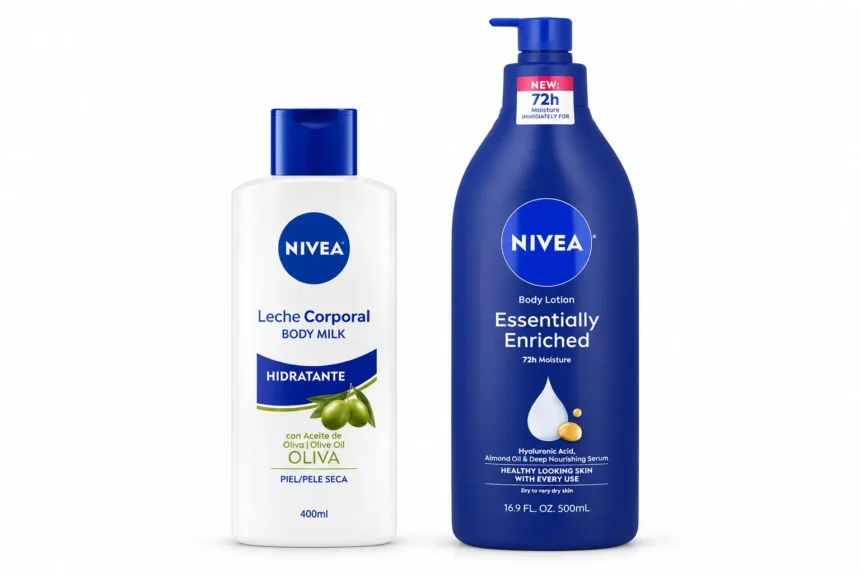
NIVEA, for example, describes body milk as having a higher oil content than body lotion. L’Occitane uses “body milk” for some lightweight lotions. That overlap explains why two products with different names can feel surprisingly similar.
When comparing body milk vs body lotion, start with how your skin feels between applications. Then check the texture, ingredients, fragrance, and directions to find a formula you’ll comfortably use.
Body Milk vs Body Lotion at a Glance
| What you’re comparing | Body milk | Body lotion |
|---|---|---|
| Main purpose | Moisturizes and softens skin | Moisturizes and softens skin |
| Texture | May be fluid, creamy, or rich | Often spreadable and fluid, although richness varies |
| Oil content | Some brands use the name for oil-rich formulas | Varies between products |
| Intended skin type | Often normal to dry skin, depending on the formula | Can range from normal to very dry skin |
| Finish | May feel light, silky, or more protective | May feel light, creamy, or slightly coated |
| Ingredients | Can contain humectants, oils, and moisture-sealing ingredients | Can contain the same ingredient groups |
| Fragrance | Check the individual product | Check the individual product |
| Best way to choose | Compare the formula and how it wears | Compare the formula and how it wears |
These are shopping comparisons rather than fixed categories. A lightweight body milk may feel closer to one lotion than to a richer product with the same name.
1. What Is Body Milk?
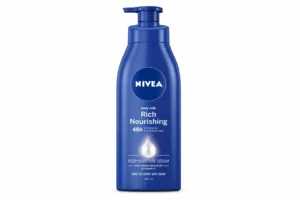
Body milk is a name used for certain body moisturizers, often with a milky appearance or spreadable texture.
It doesn’t automatically mean the product contains dairy milk. It also doesn’t guarantee a thin or lightweight formula.
Within some ranges, body milk is a richer option for dry skin. In others, it describes a fluid lotion that spreads easily.
Read the product description alongside the ingredient list. Words such as “light,” “rich,” and “for very dry skin” help explain where the formula sits within that brand’s range.
2. What Is Body Lotion?
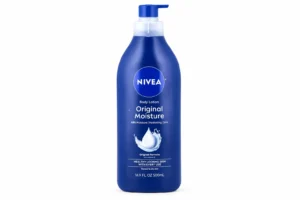
Body lotion is a moisturizer designed to spread across larger areas such as the arms, legs, and torso.
Many lotions have a more fluid texture than creams, although some still feel rich.
A lighter lotion may suit skin that needs modest moisturizing. A richer version may leave a more noticeable protective finish.
The name doesn’t guarantee quick absorption or a non-greasy feel. Those qualities depend on the complete formula and how much you apply.
3. Is Body Milk Always Lighter Than Body Lotion?
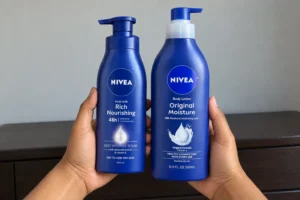
No. This is one of the most confusing parts of the comparison.
“Milk” may suggest a thin texture, but NIVEA describes body milk as the higher-oil option compared with body lotion.
Meanwhile, L’Occitane describes its Jasmin Bergamote Body Milk as a light-textured hand and body lotion.
These examples show why the name is most useful within a particular brand’s range. It doesn’t provide a reliable comparison across every product.
If possible, try a small amount. Notice how it spreads, how the finish feels, and whether your skin stays comfortable later.
4. Which One Moisturizes Better?
Neither name guarantees better moisturizing.
A body milk may provide lasting comfort, but so can a well-formulated lotion. The right choice depends on your skin’s needs and the product itself.
If a light formula leaves your skin feeling dry again soon afterward, compare a richer texture.
For very dry skin, you may need to look beyond both labels. The American Academy of Dermatology recommends creams or ointments because they generally provide more effective relief than lotions.
What Ingredients Should You Compare?
Body milk and lotion can contain many of the same moisturizing ingredients.
You don’t need every ingredient below in one bottle. The table explains the main roles to look for.
| Ingredient group | Examples | Main role |
|---|---|---|
| Humectants | Glycerin, hyaluronic acid | Help attract and retain water |
| Emollients | Oils, shea butter, fatty ingredients | Help soften and smooth skin |
| Ingredients that limit moisture loss | Petrolatum, mineral oil, dimethicone | Help reduce water loss from the surface |
| Barrier-supporting ingredients | Ceramides | Help support the skin’s protective outer layer |
Some ingredients have more than one role. Performance also depends on their concentration and how they work together.
The AAD lists glycerin, dimethicone, petrolatum, mineral oil, and shea butter among ingredients to consider for dry skin. Its moisturizer guidance also discusses ceramides and hyaluronic acid.
Check the whole formula instead of choosing solely because one familiar ingredient appears on the front label.
How to Choose for Your Skin
If Your Skin Feels Comfortable Most Days
Start with a texture you enjoy applying.
A lighter milk or lotion may be sufficient if your skin remains comfortable between uses.
There’s no need to choose the heaviest product when your current moisturizer already meets your needs.
If Your Skin Feels Dry or Rough
Compare a richer formula and notice how long the comfort lasts.
You may prefer a cream on your shins or elbows while using a lighter lotion elsewhere.
If dryness persists despite regular care, consider whether irritation or a skin condition needs assessment.
If You Dislike a Heavy Finish
Look for a lighter texture and apply it in manageable sections.
Allow it to settle before deciding whether you need more.
You can use a richer product on selected dry areas without covering the whole body equally.
If Your Skin Reacts Easily
Choose according to tolerance and keep fragrance in mind.
Products labeled “fragrance-free” are different from those labeled “unscented.” An unscented product may contain ingredients that mask fragrance.
“Natural,” “clean,” and “for sensitive skin” also don’t guarantee that a formula will suit you.
If you have eczema, follow your treatment plan. The AAD recommends a fragrance-free cream or ointment instead of a lotion. Introduce unfamiliar products cautiously on a small area before wider use.
Does the Season Change Which One You Need?
The season can change the texture you prefer, but body milk isn’t automatically a summer product or lotion a winter product.
In warm weather, a lighter finish may feel more comfortable beneath clothing. In colder or drier conditions, you may need more lasting protection.
Check how your skin behaves in your actual surroundings, including heated or air-conditioned rooms.
You may only need to change the product on certain areas. Dry shins can need a cream while the rest of your body remains comfortable with lotion.
How to Apply Body Milk or Body Lotion
Check Whether It Is Leave-On or Rinse-Off
Most everyday body moisturizers are left on the skin, but in-shower products can have different directions.
Read the label before applying.
A rinse-off conditioner shouldn’t be treated as an ordinary leave-on lotion.
Apply After Washing
Gently pat away excess water, then apply a suitable leave-on moisturizer while your skin is still slightly damp.
This helps retain water after bathing. You don’t need to leave your body dripping wet.
For eczema-prone skin, make moisturizing a prompt step after bathing and follow your clinician’s instructions.
Work in Sections
Apply to one area at a time so the product spreads evenly.
Pay attention to dry patches instead of using the same amount everywhere.
Follow the directions carefully if the product contains exfoliating ingredients or other treatments.
Reapply According to Need
Notice how your skin feels later in the day.
If dryness returns, you may need another application or a richer formula.
A long-lasting hydration claim doesn’t mean you should ignore discomfort until the advertised time has passed.
Can You Use Body Milk and Body Lotion Together?
You can, but layering two similar moisturizers across the whole body usually isn’t necessary.
Using a lighter product on some areas and a richer one on others may be more practical.
If one formula already works well, adding another may simply change the finish.
Introduce new products separately so you can tell which one suits your skin.
Can They Replace Body Cream?
That depends on how much moisture your skin needs.
A comfortable milk or lotion may be enough for everyday use. A thicker cream may suit areas that remain dry.
An ointment offers a heavier, more occlusive texture and may be useful on selected very dry patches.
Choose by comfort and the condition of your skin. The product name doesn’t need to be the same for every area.
Can You Use Body Milk or Lotion on Your Face?
Check the intended use before applying a body moisturizer to your face.
Some formulas are labeled for both face and body. Others contain fragrance, treatment ingredients, or a texture that may feel unsuitable.
If you’re prone to breakouts, a non-comedogenic formula is a useful option to compare, although individual tolerance still varies.
Keep products away from the eyes unless their directions specifically allow that area.
If your existing facial moisturizer works well, there’s no need to replace it simply to use one bottle everywhere.
Common Body Milk and Lotion Mistakes
Choosing Only by the Name
The terms don’t tell you exactly how rich a product will feel.
Check its description, ingredients, and directions.
Assuming Quick Absorption Means Better Moisturizing
A fast-settling finish may be convenient, but comfort later in the day matters too.
Judge the initial feel and how your skin wears afterward.
Choosing Fragrance for Irritated Skin
A pleasant scent doesn’t make a formula suitable for sore or itchy areas.
Compare fragrance-free options and seek advice if irritation persists.
Applying More of an Unsuitable Formula
A heavy layer may feel sticky without providing the lasting comfort you want.
Consider a different texture if repeated applications aren’t helping.
Expecting Moisturizer to Replace Sunscreen
Ordinary body milk or lotion doesn’t provide sun protection unless it is labeled as a sunscreen with an appropriate SPF.
Keep sun protection in your daytime routine and follow the sunscreen’s directions.
When Dryness Needs a Closer Look
Arrange a medical review if itching, a rash, or recurring dryness continues despite gentle cleansing and regular moisturizing.
Skin that repeatedly cracks or bleeds also needs attention.
Seek prompt care if an area becomes increasingly painful, warm, swollen, or develops pus or spreading redness, particularly with fever.
Stop using a product that causes persistent burning or a rash. A different moisturizer label won’t resolve every cause of irritated skin.
Final Takeaway
Body milk vs body lotion is mainly a comparison between individual formulas. Either name can cover different textures, so check how the product spreads, what it contains, and whether your skin stays comfortable.
Choose a formula you’ll use consistently, apply it after washing, and adjust the richness where needed. Persistent dryness or irritation deserves attention beyond switching labels.
Frequently Asked Questions
What is the main difference between body milk and body lotion?
Both moisturize the body. Their texture and richness may differ within a brand, but the names don’t consistently predict the formula across brands.
Is body milk better for dry skin?
Some body milks are rich, while others are lightweight. Compare the individual product and consider a cream or ointment if your skin is very dry.
Is body milk made from milk?
Not necessarily. The name can describe the texture. Check the ingredients and any verified vegan or allergy information for the product.
Which one is less greasy?
That depends on the formula and the amount applied. A sample is more useful than assuming all lotions feel lighter than all body milks.
Can I use body milk every day?
Yes, if it’s intended for daily use and your skin tolerates it. Check whether it is a leave-on or rinse-off product.
Should I apply body lotion to wet or dry skin?
Slightly damp skin after washing is a useful starting point for a standard leave-on moisturizer. Follow any different directions on the product.
Do I need both products?
Usually, one suitable moisturizer is enough. Different textures can be useful for different areas.
Can body milk lighten skin?
The name doesn’t indicate a skin-lightening treatment. Moisturizing may improve the appearance of dryness without changing your natural skin color.
Our Editorial Approach
Beauty and self-care information should be clear and easy to use. Our goal is to help you understand your options and make more informed choices about your everyday routine.
Our articles are for educational purposes only and do not replace advice from a qualified healthcare professional.