
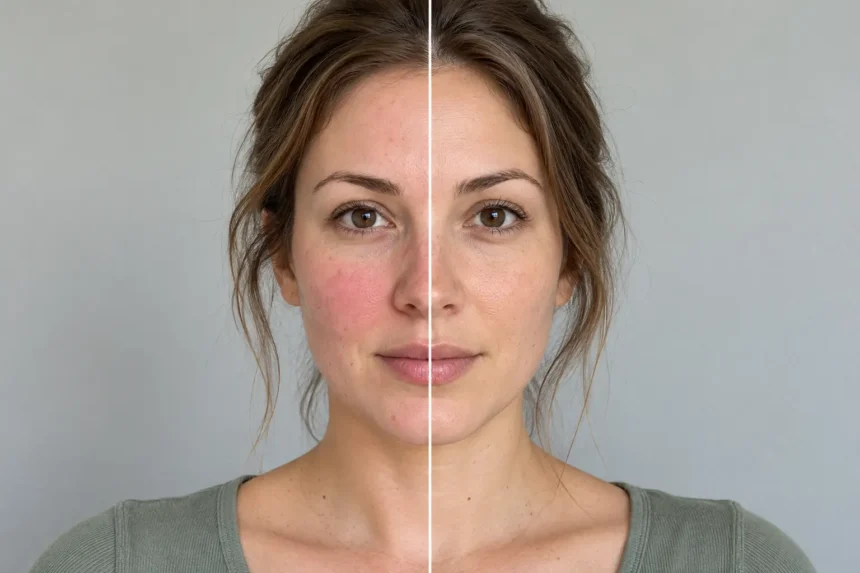
Your cheeks look pink, so you choose a pink-based foundation. Once you blend it across your face, though, it looks noticeably rosy beside your neck. The shade matches the redness on your cheeks without matching the rest of your complexion.
- Red Undertone Skin at a Glance
- 1. What Does Red Undertone Skin Mean?
- 2. Surface Redness Can Hide Your Undertone
- 3. Notice Whether the Color Changes
- 4. Compare Your Face, Neck, and Upper Chest
- 5. Red or Pink Doesn’t Automatically Mean Cool
- 6. Vein and Jewelry Tests Have Limits
- How to Check Your Undertone When Your Face Looks Red
- Start With Comfortable Skin
- Choose a Similar Foundation Depth
- Change One Thing at a Time
- Look at the Blended Edges
- Choosing Foundation for Red-Looking Skin
- Can Green Color Corrector Help?
- Skincare When Your Skin Looks Red
- When Redness May Need Medical Attention
- Common Red Undertone Skin Mistakes
- Final Takeaway
- Frequently Asked Questions
That’s where undertone and surface redness can become confusing. A naturally rosy complexion and redness from irritation may look similar at first, but they don’t tell you the same thing about your skin.
Understanding red undertone skin starts with looking beyond one flushed area. Compare your overall coloring, notice whether the redness changes, and choose makeup separately from any skincare concern that needs attention.
Red Undertone Skin at a Glance
| What you notice | What it may tell you | A useful next step |
|---|---|---|
| A consistent rosy appearance across less-flushed areas | A pink or rosy undertone may suit your coloring | Compare similar-depth foundation swatches |
| Cheeks look redder than the neck | Surface redness may be affecting the match | Check shades along the jaw |
| Color becomes stronger after heat or exercise | Flushing may be influencing the appearance | Recheck when your skin has settled |
| Redness comes with burning, itching, or flaking | Irritation or a skin condition may be involved | Review products and seek advice if persistent |
| Pink foundation looks too rosy | The undertone or saturation may be wrong | Compare less-pink options at the same depth |
| Yellow foundation looks obvious too | Simply choosing the opposite color isn’t enough | Try a more muted or neutral option |
| Persistent color with bumps or visible vessels | Rosacea is one possible explanation | Arrange a medical assessment |
These observations help you compare your skin and makeup. They cannot diagnose the cause of redness or establish an undertone by themselves.
1. What Does Red Undertone Skin Mean?
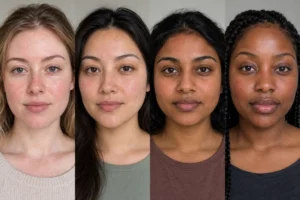
“Red undertone skin” is a descriptive makeup term rather than a medical diagnosis.
People may use it to describe a complexion that appears rosy, pink-red, or reddish beneath its overall depth. Foundation brands use different labels, so a red-based shade in one range may look quite different from another.
Skin depth and undertone are separate considerations. A complexion can be light, medium, or deep and still have a reddish influence.
Use the term to narrow your makeup options rather than treating it as a fixed category you must fit.
2. Surface Redness Can Hide Your Undertone
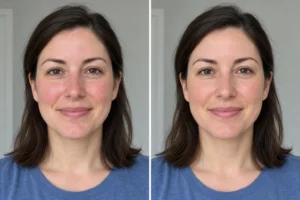
The most noticeable color on your face isn’t always the best guide to your foundation undertone.
Flushed cheeks, irritated patches, and blemishes can affect how the surface looks. Ulta’s undertone guide distinguishes these visible color changes from the underlying coloring used to compare foundation shades.
You may have red cheeks while the less-flushed areas of your face look more golden, neutral, or olive.
Compare several areas together. Matching only the strongest redness can make the finished base look too pink elsewhere.
3. Notice Whether the Color Changes
Look at your skin at different times rather than deciding from one mirror check.
You may notice more color after a hot shower, exercise, or an uncomfortable skincare product. That changing appearance is useful information, although it doesn’t identify the cause by itself.
For makeup comparisons, wait until your skin feels comfortable and has settled after washing or activity.
Persistent redness can also remain visible between episodes. A color that doesn’t disappear isn’t automatically an undertone.
4. Compare Your Face, Neck, and Upper Chest
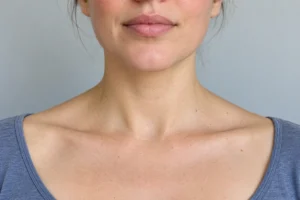
Your face and neck don’t have to be identical in color.
However, looking at them together helps you judge whether foundation creates an obvious border.
Place a few narrow swatches along the jaw rather than testing only the center of a red cheek. Compare how each shade connects the face with the surrounding skin.
Check the result in balanced daylight. Strongly warm bathroom lighting or a phone filter can make the comparison harder.
Choose the shade that looks most coherent overall rather than matching one isolated patch.
5. Red or Pink Doesn’t Automatically Mean Cool
Many makeup ranges describe fair pink shades as cool-toned, but brand terminology varies.
A deeper foundation labeled “red” may have a different balance of warmth from a pale pink foundation. The word alone doesn’t tell you exactly how it will appear.
Compare the actual swatches at a suitable depth.
If a shade looks too orange, too rosy, or too gray, use that observation to guide the next comparison. It’s more useful than assuming every red-based complexion needs the same foundation family.
6. Vein and Jewelry Tests Have Limits
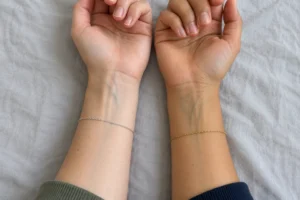
Vein color and jewelry preferences can offer informal clues, but neither should decide your foundation shade.
Lighting, visible veins, and personal taste can make those tests difficult to interpret.
You might prefer gold jewelry while finding that a strongly golden foundation looks wrong. That doesn’t mean you have misunderstood your skin.
Use these clues to shortlist options, then judge the makeup on your face.
Avoid using sunburn or deliberate tanning as an undertone test.
How to Check Your Undertone When Your Face Looks Red
Start With Comfortable Skin
Remove makeup gently and allow your skin to settle.
Avoid checking immediately after scrubbing, a hot shower, or anything that makes your face visibly flushed.
Don’t apply extra products simply to make the skin look temporarily different before testing.
Choose a Similar Foundation Depth
Begin with shades that are reasonably close to your skin depth.
Comparing a very pale pink foundation with a much darker golden one makes it difficult to tell whether depth or undertone caused the mismatch.
Keep the formula consistent where possible.
Change One Thing at a Time
Compare a rosy shade with a less-pink neutral option at a similar depth.
If both look wrong, try another undertone or a more muted shade rather than adding more coverage.
Allow the formula to settle, then check the swatches again.
Look at the Blended Edges
The center of a thick swatch may look different from foundation applied normally.
Blend the edges slightly and notice which shade becomes less obvious beside your skin.
Check near the jaw and ear as well as the cheek.
Choosing Foundation for Red-Looking Skin
A foundation match and redness coverage are related decisions, but they aren’t the same task.
First choose a suitable overall shade. Then decide whether you want extra coverage on particular areas.
| What happens after application | What to compare next |
|---|---|
| The whole face looks too pink | A less-rosy shade at a similar depth |
| The base looks yellow beside the neck | A less-golden or more neutral option |
| The foundation looks orange | A different undertone, saturation, or depth |
| The color matches but redness remains visible | Targeted coverage over the affected area |
| The base looks heavy around dry patches | Less product and a different finish |
| The face looks pale or gray | Recheck depth as well as undertone |
These are starting points for comparison. One visible mismatch doesn’t establish your undertone.
A thin foundation layer with a little concealer may give a more even result than applying full coverage everywhere.
Can Green Color Corrector Help?
A green corrector can reduce the appearance of red color beneath makeup, but the shade and amount matter.
Try a small amount only where you want correction. Applying it across the whole face can leave an unwanted cast.
A pale mint corrector may be too light for deeper skin. Compare a product intended for your skin depth rather than assuming every green formula will blend the same way.
Apply a thin layer of foundation over it and check the finished result.
Color corrector changes the appearance of redness. It doesn’t treat irritation or explain why the redness developed.
Skincare When Your Skin Looks Red
Choose skincare according to how your skin behaves, rather than an undertone label.
Oily skin, dry skin, and sensitive skin can all have a reddish appearance. A product marketed for a particular complexion may still be unsuitable for your needs.
Keep Cleansing Gentle
Use a cleanser that removes products without leaving your face uncomfortable.
Avoid scrubbing red areas or repeatedly washing them in an attempt to remove the color.
For people with rosacea, the American Academy of Dermatology recommends gentle cleansing and avoiding rubbing or scrubbing.
Moisturize According to Your Skin’s Needs
Choose a texture you can wear comfortably.
A lighter lotion may suit some areas, while a richer cream may feel better on dry patches.
If products tend to sting, fragrance-free options are worth comparing. Persistent discomfort deserves assessment rather than repeated product changes.
Keep Sun Protection Consistent
The AAD recommends broad-spectrum, water-resistant sunscreen with SPF 30 or higher, alongside shade and protective clothing.
Choose a finish you can comfortably wear according to the product directions.
A tinted sunscreen can add coverage, but its tint still needs to suit your complexion. Don’t use less than directed simply because the color looks too dark.
When Redness May Need Medical Attention
Redness can have several causes, including irritation, allergic contact dermatitis, and other skin conditions. Appearance alone may not distinguish them.
Arrange a review if the color persists, repeatedly returns, or comes with burning, itching, flaking, or discomfort.
Rosacea is one possible explanation when facial color changes occur with flushing, visible vessels, or acne-like bumps. It can appear red, violet, or brown depending on the complexion.
Don’t assume every red patch is rosacea, and don’t use a foundation undertone label to explain a new rash.
Make a note of when the change began and which products or situations seem to affect it. That information can help during an assessment.
Common Red Undertone Skin Mistakes
Matching Foundation Only to Red Cheeks
The shade may copy the redness while looking wrong beside the jaw and neck.
Compare a wider area before deciding.
Choosing Yellow Foundation Automatically
A strongly yellow base can create a different mismatch.
Compare balanced shades rather than treating all redness with an opposite foundation undertone.
Assuming Redness Means Sensitive Skin
Color alone doesn’t establish sensitivity.
Notice discomfort, product reactions, and other symptoms alongside the appearance.
Applying Corrector Everywhere
Localized correction may be enough.
Check whether you need it on each area before covering the whole face.
Using More Coverage to Fix the Wrong Shade
Extra foundation makes a color mismatch more noticeable.
Recheck the shade before adding another layer.
Treating Persistent Irritation as Natural Coloring
Burning, itching, and a changing rash deserve attention.
Don’t dismiss those symptoms simply because your complexion has always looked rosy.
Final Takeaway
Red undertone skin describes coloring, while facial redness may reflect flushing, irritation, or a skin condition. The two can overlap, so one pink area isn’t enough to guide every makeup or skincare choice.
Compare foundation along the jaw, check the whole face in daylight, and use coverage where you want it. Persistent redness or discomfort deserves attention beyond a different foundation shade.
Frequently Asked Questions
What is red undertone skin?
It’s a makeup description for skin with a reddish or rosy influence. It isn’t a medical diagnosis, and different brands use the term differently.
How can I tell undertone from redness?
Compare less-flushed areas, notice changes over time, and test foundation along the jaw. These observations help with makeup selection, but persistent or uncomfortable redness may need a clinician’s assessment.
Can I have warm undertones and red cheeks?
Yes. Visible cheek redness doesn’t automatically determine the undertone of the rest of your complexion.
Does red undertone skin always need cool foundation?
No. Compare the actual shade, depth, and saturation. Undertone labels aren’t consistent across foundation ranges.
Should I use green primer for redness?
You can try targeted correction if you like the result. Use a small amount and choose a formula suitable for your skin depth. It isn’t necessary for every red-looking complexion.
Can deeper skin have redness?
Yes. Inflammation may be less obviously bright red and can appear differently across complexions. Rosacea, for example, may cause lasting red, violet, or brown color.
Does skincare change your undertone?
Skincare may improve an irritation-related surface change when the cause is addressed. That is different from choosing products to change your natural undertone.
What should I ask for at a makeup counter?
Describe the mismatch you notice. For example: “My cheeks are red, but pink foundations look too rosy beside my neck. Can we compare less-pink shades at the same depth?”
Our Editorial Approach
Beauty and self-care information should be clear and easy to use. Our goal is to help you understand your options and make more informed choices about your everyday routine.
Our articles are for educational purposes only and do not replace advice from a qualified healthcare professional.