

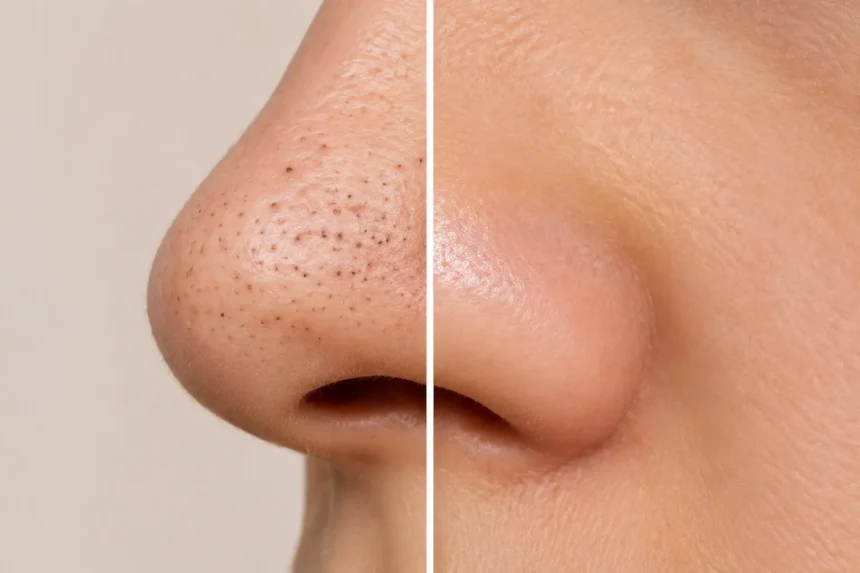
You notice a dark dot on your nose, lean closer to the mirror, and feel tempted to squeeze. It looks like something that should come out easily, but repeated pressure can leave the area sore without clearing the blockage.
- Blackhead Removal at a Glance
- 1. Understand What a Blackhead Is
- 2. Start With Gentle Cleansing
- 3. Consider Salicylic Acid
- 4. Ask Whether a Retinoid Suits Your Skin
- 5. Review Products That Touch Your Face
- 6. Consider Professional Extraction for Stubborn Blackheads
- How to Pop a Blackhead: Should You Do It Yourself?
- How Long Does Blackhead Treatment Take?
- A Simple Routine for Blackhead-Prone Skin
- Common Blackhead-Removal Mistakes
- Overusing Pore-Clearing Treatments
- Scrubbing Away the Dark Color
- Using More Treatment Than Directed
- Changing Products Too Quickly
- When to Ask for Professional Advice
- Final Takeaway
- Frequently Asked Questions
If you’re searching for how to pop a blackhead, start with treatments that clear clogged pores. Trying to extract blackheads with your fingers can injure the skin and leave lasting marks.
An appropriate skincare routine can help clear existing blackheads and reduce new blockages.
Blackhead Removal at a Glance
| What you notice | What may be happening | What to try |
|---|---|---|
| A dark plug in an open pore | Oil and dead skin have accumulated | A suitable pore-clearing treatment |
| Blackheads keep returning | Pores continue becoming blocked | Consistent treatment and product review |
| Skin feels sore after squeezing | Pressure has irritated the area | Stop picking and cleanse gently |
| Treatment causes dryness | The product or frequency may be irritating | Review the directions and reduce irritation |
| A spot is deep or painful | It may be another type of acne | Seek professional advice |
These observations can guide your routine, but they do not confirm a diagnosis.
1. Understand What a Blackhead Is
A blackhead develops when oil and dead skin cells collect inside a pore that remains open. The material inside the open pore darkens through oxidation when exposed to air.
That color is not trapped dirt. Scrubbing harder will not remove the underlying cause and may irritate your skin.
2. Start With Gentle Cleansing
Wash your face twice daily with a gentle cleanser. Remove makeup before bed and avoid rough scrubbing.
Cleansing supports your routine, but persistent blackheads may also need an acne treatment. Repeated washing or aggressive exfoliation can make skin more irritated.
3. Consider Salicylic Acid
Salicylic acid helps unclog pores by loosening the buildup of dead skin cells. It can help improve blackheads over time.
It is available in different skincare formulas, including cleansers.
Follow the product directions rather than applying extra to speed things up. If it causes dryness or irritation, adjust your use and ask a pharmacist or dermatologist for guidance.
4. Ask Whether a Retinoid Suits Your Skin
Topical retinoids such as adapalene can unclog pores and help prevent new blackheads. They may be useful when blackheads repeatedly return.
Check suitability and follow the treatment instructions. Topical retinoids, including adapalene, should generally be avoided during pregnancy. If you are pregnant, planning a pregnancy, or trying to conceive, speak with your healthcare professional before using an acne treatment.
5. Review Products That Touch Your Face
Choose skincare, sunscreen, and makeup labeled non-comedogenic, meaning they are less likely to clog pores.
Also notice whether breakouts appeared after introducing a new product. These labels are useful starting points, although individual skin reactions can vary.
6. Consider Professional Extraction for Stubborn Blackheads
A dermatologist or appropriately trained healthcare professional can remove selected blackheads using suitable sterile instruments. Extraction may be considered when other treatment has not cleared them.
Removal does not prevent future blockages, so a continuing skincare plan still matters.
How to Pop a Blackhead: Should You Do It Yourself?
Avoid trying to force the plug out, even if it appears ready to come out. If it does not clear with suitable treatment, professional extraction may be an option.
If a blackhead remains despite suitable treatment, ask a dermatologist whether extraction would help. Repeatedly pressing the same spot can make the problem harder to manage.
How Long Does Blackhead Treatment Take?
Expect gradual improvement rather than an overnight change. The American Academy of Dermatology advises giving an acne treatment six to eight weeks to show improvement.
Use it consistently as directed, but seek advice sooner if your skin develops significant irritation.
A Simple Routine for Blackhead-Prone Skin
Cleanse Without Scrubbing
Use a gentle cleanser and lukewarm water. Avoid trying to rub the dark plugs away.
Introduce One Treatment
Start with a suitable acne treatment rather than several new exfoliating products together. Follow its instructions.
Support Your Skin
Choose a non-comedogenic moisturizer and use broad-spectrum SPF 30 or higher during the day.
Watch the Response
Notice both blackhead changes and skin comfort. Persistent burning, soreness, or irritation needs a review of the routine.
Common Blackhead-Removal Mistakes
Overusing Pore-Clearing Treatments
Applying several acne treatments too frequently can irritate the skin and make your routine harder to tolerate.
Scrubbing Away the Dark Color
The dark appearance comes from oxidation, so harsh scrubbing does not solve the cause.
Using More Treatment Than Directed
Extra product can increase irritation. Follow the recommended amount and frequency.
Changing Products Too Quickly
Treatment needs time. Frequent switching makes it harder to assess what helps.
When to Ask for Professional Advice
Seek advice if appropriate treatment is not helping, acne becomes deep or painful, or marks and scars are developing.
Increasing redness, warmth, swelling, pus, or spreading tenderness around the area may indicate infection and should be assessed by a healthcare professional. Bring a list of your products and explain how long you have used them.
Final Takeaway
If you’re wondering how to pop a blackhead, focus first on clearing the pore with appropriate treatment. Gentle cleansing, consistent care, and suitable products offer a more useful starting point.
If stubborn blackheads persist despite consistent treatment, a dermatologist can recommend the next step.
Frequently Asked Questions
Why are blackheads black?
The material inside an open pore darkens through oxidation when exposed to air. The color does not mean your skin is dirty.
Can I remove blackheads by washing more often?
Gentle cleansing helps, but repeated washing does not replace a suitable treatment for clogged pores.
Does salicylic acid help blackheads?
Yes. Salicylic acid helps unclog pores by loosening the buildup of dead skin cells.
Can squeezing leave a scar?
Yes. Picking and squeezing can cause scarring and dark marks.
Will professional extraction stop blackheads returning?
No. Extraction removes existing blackheads, but continuing treatment may be needed to prevent new ones.
Can blackheads disappear overnight?
Effective treatment usually takes weeks. Give a suitable routine time to work rather than repeatedly squeezing.
Our Editorial Approach
Beauty and self-care information should be clear and easy to use. Our goal is to help you understand your options and make more informed choices about your everyday routine.
Our articles are for educational purposes only and do not replace advice from a qualified healthcare professional.