
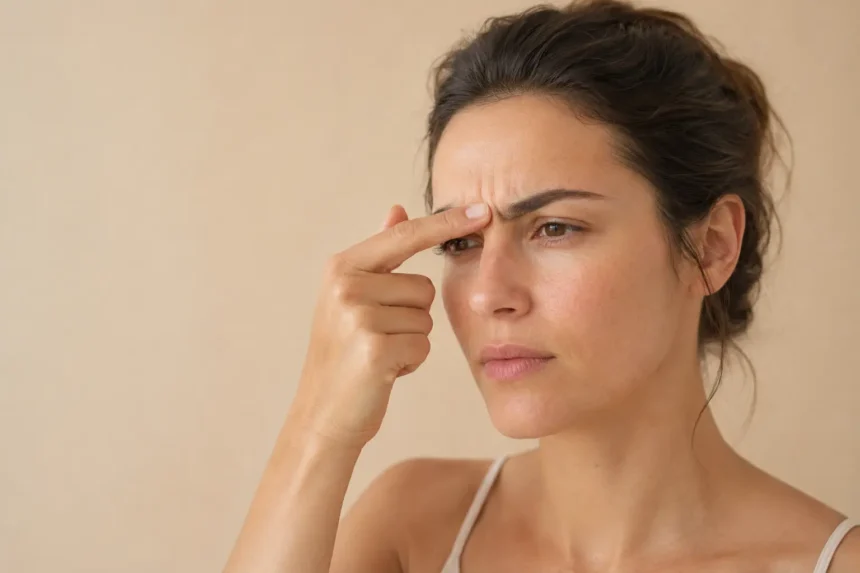
Furrowing eyebrows means drawing the brows inward and often slightly downward, creating one or more vertical creases above the nose. You may do it while concentrating, squinting, feeling stressed, or trying to see clearly. It is usually a normal facial movement, but frequent repetition can make the lines between the eyebrows more noticeable over time.
- What Does Furrowing Your Eyebrows Mean?
- Why Do I Keep Furrowing My Brows?
- Concentration
- Stress and Facial Tension
- Squinting to See Clearly
- Headaches or Facial Discomfort
- An Unconscious Habit
- Furrowing Eyebrows and Lines Between the Brows
- How to Stop Furrowing Your Eyebrows So Often
- 1. Identify When It Happens
- 2. Try a Quick Facial Reset
- 3. Adjust Your Screen and Lighting
- 4. Use Sun Protection That Reduces Squinting
- 5. Keep Skincare Supportive and Simple
- Common Mistakes to Avoid
- When Should You Get Professional Advice?
- Frequently Asked Questions
- Is furrowing your eyebrows bad?
- Can furrowing your eyebrows cause permanent wrinkles?
- How can I stop furrowing my eyebrows unconsciously?
- Does massaging between the eyebrows remove frown lines?
- Why do I furrow my brows while sleeping?
- Are furrowed brows the same as 11 lines?
- Final Takeaway
The tricky part is that many people don’t realize they’re doing it. A tense brow can become the face’s default response to a bright screen, a difficult email, or a long drive in sunlight. Once you identify the trigger, small changes can make the habit easier to interrupt.
What Does Furrowing Your Eyebrows Mean?
When you furrow your brows, small facial muscles pull the eyebrows toward the center of the face. This creates the familiar vertical creases sometimes called frown lines, brow furrows, glabellar lines, or “11 lines.” The movement can communicate concentration, concern, confusion, frustration, or discomfort, although it doesn’t always reflect how you actually feel.
Someone reading closely may furrow their eyebrows without being upset. The same thing can happen while working at a computer, applying detailed eye makeup, driving at night, or stepping into bright sunlight. Context matters more than the expression alone.
Why Do I Keep Furrowing My Brows?
There isn’t one universal cause. For most people, eyebrow furrowing is connected to a repeated expression or a situation that makes the eyes and forehead work a little harder.
Concentration
Deep focus is one of the most common triggers. You may pull your eyebrows together while reading small text, solving a problem, editing a document, or looking closely at a screen. Because your attention is elsewhere, the expression can stay in place much longer than you realize.

Stress and Facial Tension
Stress often shows up physically. Some people clench their jaw, raise their shoulders, or tighten the muscles around their eyes. Others hold tension between the brows. If you notice brow tension during demanding moments, it may be part of a broader pattern rather than a skincare problem.
Squinting to See Clearly
Bright light, screen glare, small print, or an outdated vision prescription can encourage squinting and brow furrowing. If the habit is strongest while reading, driving, or looking at distant objects, an eye exam may be more useful than another wrinkle product.
Headaches or Facial Discomfort
People sometimes tense the area around the eyes when they have a headache, sinus pressure, eye fatigue, or general facial discomfort. This doesn’t identify the cause of the discomfort, but it can explain why the brow feels tight. Frequent or worsening pain deserves professional advice rather than self-diagnosis.
An Unconscious Habit
Repeated expressions can become automatic. You might furrow your brows even after the original trigger is gone, especially if you spend hours in the same posture or work environment each day. A habit doesn’t mean anything is wrong. It simply means awareness is the first useful step.
Furrowing Eyebrows and Lines Between the Brows
Lines that appear only when you frown or concentrate are often described as dynamic lines. They form with movement and soften when the face relaxes. Over time, repeated movement, normal changes in collagen and elasticity, sun exposure, and skin dryness can make those creases visible even when your expression is neutral.
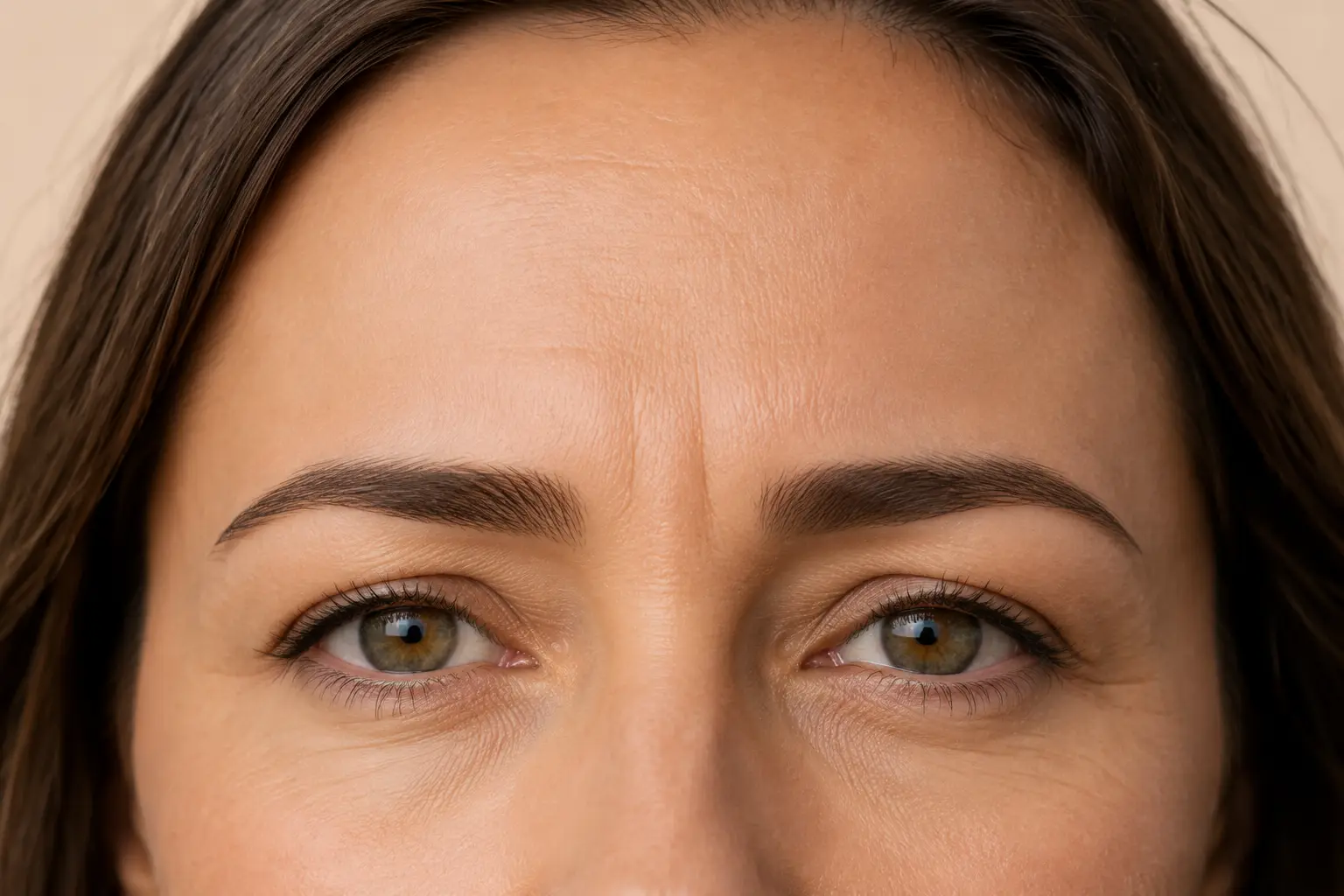
Dry or dehydrated skin can make fine texture look sharper, but moisturizer cannot stop the muscles from moving. It may temporarily soften the appearance of superficial lines by helping the outer layer of skin hold water. Deeper expression lines usually require a different conversation with a qualified dermatologist if they bother you.
It is also worth remembering that brow lines are normal. They do not automatically mean your skin is unhealthy or aging “badly.” Treatment is a personal choice, not a requirement.
How to Stop Furrowing Your Eyebrows So Often
You do not need to keep your face perfectly still. The more realistic goal is to notice unnecessary tension and remove the trigger when possible.
1. Identify When It Happens
For two or three days, pay attention to the situations that tighten your brow. Common moments include working on a laptop, scrolling on a phone, driving in sunlight, reading small print, or having a stressful conversation.
A small reminder near your screen can help. Use a neutral cue such as “relax brow” rather than repeatedly checking your face in a mirror. The goal is awareness, not constant monitoring.
2. Try a Quick Facial Reset
Let your jaw loosen, drop your shoulders, and allow a little space between your eyebrows. Close your eyes for a few seconds if it feels comfortable. You can rest clean fingertips lightly above the brows as a physical reminder, but there is no need to press hard or pull the skin.
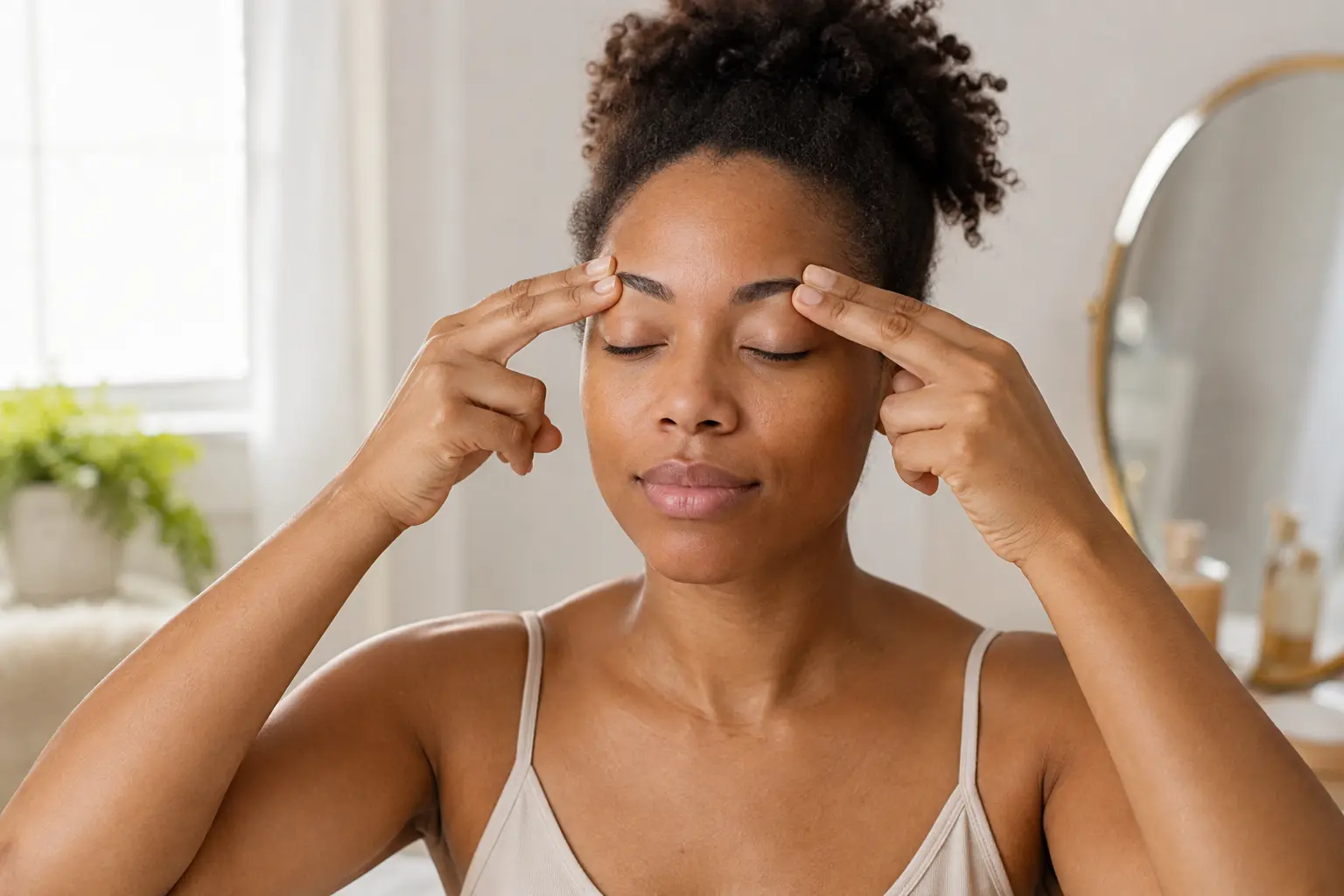
This reset can be repeated during screen breaks. It may help you recognize tension, although it will not erase established lines.
3. Adjust Your Screen and Lighting
Increase text size instead of leaning forward to read. Reduce distracting glare, position the screen at a comfortable distance, and make sure the room is not much darker than the display. These changes are simple, but they can remove a trigger that lasts for hours.
The usual screen-break advice can also help with eye fatigue: regularly look away from close work and focus on something farther away. If you still squint despite comfortable lighting and larger text, schedule an eye exam.
4. Use Sun Protection That Reduces Squinting
Broad-spectrum sunscreen protects the skin, but it does not stop the eyes from reacting to glare. Sunglasses with UV protection and a brimmed hat can make it easier to keep the brow relaxed outdoors.

Choose sunglasses that feel comfortable and provide enough coverage for the conditions. If you find yourself squinting through them, the lenses may be too light or the fit may be letting in glare from the sides.
5. Keep Skincare Supportive and Simple
A gentle moisturizer can make dry surface lines look less pronounced, particularly after cleansing. Apply it without dragging or aggressively massaging the skin between the eyebrows. During the day, follow with broad-spectrum SPF 30 or higher.
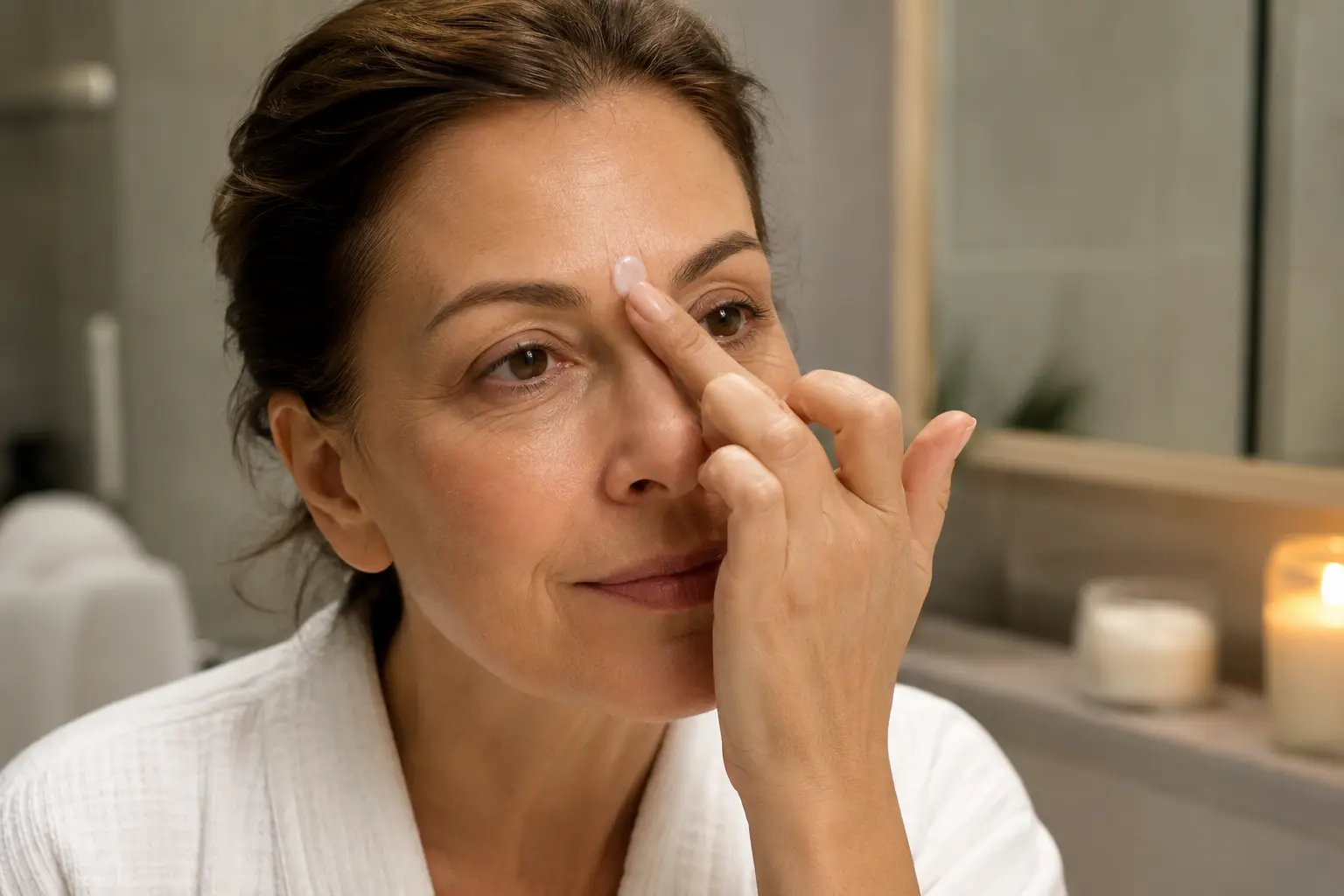
A moisturizer should not have to sting to work. If that happens, see our guide to why moisturizer can burn your face. Avoid adding multiple strong exfoliants simply because you noticed a new line. Irritated, flaky skin often makes texture more obvious; our guide to the signs of a damaged skin barrier explains what to look for. Consistent moisturizing and sun protection are more sensible starting points than a sudden, complicated routine.
Common Mistakes to Avoid
- Trying to freeze every expression: Facial movement is normal. Constantly policing your face can create more stress than the original habit.
- Pressing or stretching the skin: Forceful massage may irritate the area and will not permanently remove a muscle-driven line.
- Using harsh products on dry texture: Over-exfoliating can leave the skin tight, flaky, and more visibly textured.
- Relying on face tape as a cure: Tape may act as a temporary reminder, but it does not address screen glare, vision strain, stress, or other triggers. It can also irritate sensitive skin.
- Ignoring vision changes: If you regularly squint to read or see at a distance, changing your skincare routine will not solve the underlying problem.
When Should You Get Professional Advice?
Ordinary, expression-related brow furrowing is generally not an emergency. Consider speaking with an eye-care professional if you are squinting frequently, struggling to focus, or getting recurring eye strain. A dermatologist can discuss established glabellar lines and explain realistic cosmetic options without promising that one approach suits everyone.
Seek prompt medical care for sudden facial weakness or drooping, new vision loss, a severe or unusual headache, confusion, or other abrupt neurological symptoms. Persistent involuntary facial movements, pain, or spasms should also be evaluated rather than treated as a simple beauty concern.
Frequently Asked Questions
Is furrowing your eyebrows bad?
Occasional brow furrowing is a normal facial expression. It becomes worth addressing when it is connected to ongoing eye strain, headaches, discomfort, or tension, or when you simply want to reduce a habit that makes you feel less relaxed.
Can furrowing your eyebrows cause permanent wrinkles?
Repeated facial movement can contribute to lines that remain visible when the face is relaxed. Sun exposure, genetics, skin dryness, and normal changes in the skin also influence how noticeable those lines become.
How can I stop furrowing my eyebrows unconsciously?
Start by identifying the trigger. Use occasional reminders, relax your jaw and shoulders, enlarge screen text, reduce glare, wear sunglasses outdoors, and arrange an eye exam if you are squinting to see clearly.
Does massaging between the eyebrows remove frown lines?
Gentle touch may help you notice and release temporary facial tension, but massage does not permanently erase established expression lines. Pressing harder is not more effective and may irritate the skin.
Why do I furrow my brows while sleeping?
People can make facial expressions during sleep, but you may not be able to confirm the pattern without observation. If you wake with frequent headaches, jaw pain, facial discomfort, or sleep concerns, discuss the symptoms with a healthcare professional.
Are furrowed brows the same as 11 lines?
Furrowed brows describe the facial movement. “11 lines” is an informal name for the vertical creases that may appear between the eyebrows. Some people have one line, two lines, or a broader crease depending on their facial anatomy and expressions.
Final Takeaway
Furrowing eyebrows is usually a normal response to concentration, stress, glare, or visual effort. Instead of trying to eliminate every expression, look for the moments when your brow stays tense unnecessarily. Better lighting, readable screen settings, sun protection, simple skincare, and brief relaxation cues can all help. If furrowing comes with pain, vision problems, spasms, or sudden facial changes, professional evaluation is the right next step.
Our Editorial Approach
Beauty and self-care information should be clear and easy to use. Our goal is to help you understand your options and make more informed choices about your everyday routine.
Our articles are for educational purposes only and do not replace advice from a qualified healthcare professional.