
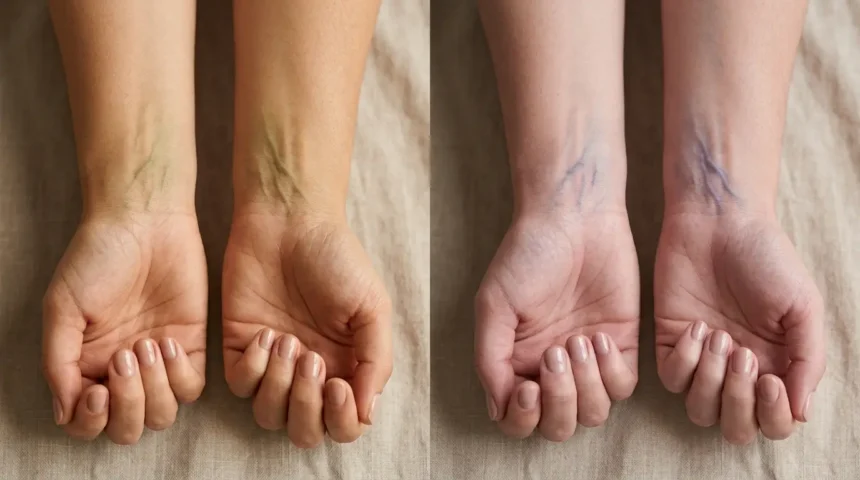
Your wrist veins can offer a quick clue about your skin undertone, but they shouldn’t make the final decision for you. Green-looking veins are commonly associated with warm undertones, while blue or purple veins often suggest cool undertones. If you see both blue and green, your undertone may be neutral.
- What Your Vein Color May Mean
- Why Do Wrist Veins Look Green or Blue?
- How to Perform the Vein Test for Undertones
- Green Veins Usually Point Toward a Warm Undertone
- Blue or Purple Veins Often Suggest a Cool Undertone
- Blue and Green Veins May Indicate a Neutral Undertone
- What If Your Veins Look Green and Your Skin Looks Olive?
- When the Vein Test Doesn’t Work
- Other Ways to Check Your Skin Undertone
- Compare White and Cream Fabric
- Notice Which Jewelry Feels More Balanced
- Watch How Foundation Changes on Your Skin
- How to Find Your Foundation Shade Undertone
- Surface Tone and Undertone Are Not the Same
- Using Undertone to Choose Blush, Lipstick, and Highlighter
- Common Vein Color Mistakes
- Treating the Test as a Final Answer
- Checking Under Bathroom Lighting
- Matching Foundation to the Wrist
- Assuming Warm Means Dark and Cool Means Fair
- Following Product Labels Too Closely
- Frequently Asked Questions
- What does green vein color mean?
- What do blue veins say about my undertone?
- What if my veins are both blue and green?
- Can dark skin use the vein test?
- Is the vein test completely accurate?
- Why does my correct foundation undertone still look wrong?
- Can my undertone change?
- Final Takeaway
The vein color test is useful when foundation looks close in depth but somehow appears too pink, yellow, orange, or gray after blending. Still, lighting, skin depth, tanning, and the natural visibility of your veins can affect what you see. Use the test as a starting point, then confirm the result by trying makeup directly on your skin.
What Your Vein Color May Mean
| Vein appearance | Possible undertone | Foundation labels to explore | Colors that often work well |
|---|---|---|---|
| Green or olive-green | Warm or olive | Warm, golden, yellow, olive | Peach, coral, bronze, terracotta |
| Blue or purple | Cool | Cool, rosy, pink, red | Rose, berry, plum, blue-red |
| Blue and green | Neutral | Neutral or balanced | Mauve, soft pink, balanced nude |
| Difficult to identify | Undetermined | Test several undertones | Compare shades directly on the jawline |
These categories are guides rather than strict rules. Two people with green-looking veins may not wear the same foundation undertone, especially if one has a golden complexion and the other has a distinctly olive cast.
Why Do Wrist Veins Look Green or Blue?
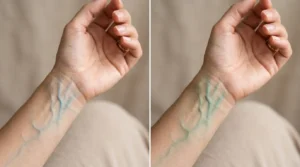
The veins beneath your skin aren’t literally green. Their visible color changes as light passes through the skin and reflects back to your eyes. Your skin tone, undertone, vein depth, lighting, and surrounding colors all influence the result.
This is why the same wrist veins may look blue near a window, blue-green in a bathroom, and barely visible outdoors. Warm artificial bulbs can make blue veins appear greener, while cool lighting may make them look more purple.
For the clearest result, check the inside of your wrist in indirect natural daylight. Move away from colored walls, bright clothing, and tinted windows that could cast another shade onto the skin.
How to Perform the Vein Test for Undertones
You don’t need to press the skin, stretch your wrist, or compare yourself with someone else. A simple visual check is enough.
- Remove any makeup, self-tanner, or tinted body product from the wrist.
- Stand near a window in natural daylight without direct sun hitting your skin.
- Keep your arm relaxed with your palm facing upward.
- Look at several visible veins instead of judging one small section.
- Decide whether they appear mostly green, mostly blue or purple, or mixed.
- Repeat the test on another day if the result is unclear.
Avoid relying on a photo of your wrist. Phone cameras automatically adjust color and exposure, which can change the appearance of both your skin and veins.
Green Veins Usually Point Toward a Warm Undertone
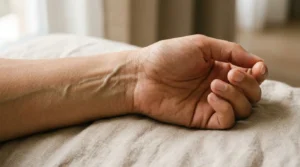
If your veins appear green, your skin may have a warm undertone. Warm complexions tend to carry golden, yellow, or peach tones beneath the surface.
Foundation labeled warm, golden, honey, peach, or yellow may blend more naturally than a strongly pink formula. That doesn’t mean every warm foundation will work. Some run very yellow, while others lean orange or peach.
The final match still depends on your complexion depth. “Warm” only describes the undertone; it doesn’t tell you whether the shade should be fair, light, medium, tan, deep, or rich.
Makeup Colors to Try
Warm undertones often work comfortably with:
- Peach and coral blush
- Golden or bronze highlighter
- Warm brown and copper eye shadow
- Terracotta, caramel, or peachy nude lipstick
- Tomato, brick, or orange-based red
- Golden-brown bronzer
You aren’t required to avoid cool colors. A plum lip or blue eye shadow can create an intentional contrast against warm skin. Undertone matching is most important when you want complexion products to disappear naturally into the skin.
Blue or Purple Veins Often Suggest a Cool Undertone
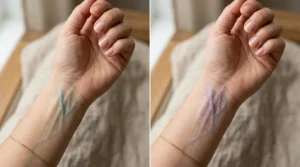
Blue veins and purple-looking veins are commonly connected with cool undertones. Cool complexions may carry pink, rosy, red, or bluish tones beneath the surface.
Foundation described as cool, rosy, pink, or red-toned may be worth testing. A foundation that is too warm can look yellow or orange, even when its depth initially seems correct.
Deeper cool complexions may need foundation with red, blue-red, or balanced berry undertones rather than a pale pink base. Product labels are not always consistent, so the shade name alone shouldn’t replace an actual skin test.
Makeup Colors to Try
Cool undertones often pair well with:
- Rose, mauve, and cool pink blush
- Pearl or cool champagne highlighter
- Taupe, charcoal, silver, and plum eye shadow
- Rose, berry, wine, or blue-based red lipstick
- Cool brown or neutral contour
- Pink-beige or mauve nude lipstick
If a cool-toned nude makes the face appear washed out, choose a slightly warmer or deeper version. The goal is balance, not strict adherence to one color family.
Blue and Green Veins May Indicate a Neutral Undertone
Seeing both blue and green veins often points toward a neutral undertone. Neutral skin has a more balanced mixture of warm and cool tones, although it may still lean slightly in one direction.
Neutral undertones can sometimes wear a wider range of makeup colors. The challenge is that strongly yellow foundation may look too warm, while strongly pink foundation can look too cool.
Start with foundation labeled neutral or balanced. If it turns peachy or orange after settling, compare it with a neutral-cool option. If it looks gray or pink, try a neutral-warm shade.
Makeup Colors to Try
Neutral undertones often suit:
- Balanced pink, rose, peach, and mauve blush
- Neutral champagne highlighter
- Taupe, bronze, brown, plum, and olive eye shadow
- Rose-brown, pink-beige, or balanced nude lipstick
- Both warm and cool reds, depending on their depth
A neutral undertone doesn’t guarantee that every color will be equally flattering. Your natural contrast, hair color, eye color, and personal preference still affect the complete look.
What If Your Veins Look Green and Your Skin Looks Olive?
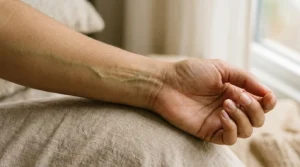
Olive undertones are often placed under the warm category, but they can be warm, neutral, or cool. Olive skin typically has a muted green, gray-green, or golden-green quality that standard foundation ranges do not always accommodate.
A foundation can match the depth of olive skin yet still appear too peach, orange, or pink. If that keeps happening, look for shades specifically labeled olive, neutral olive, golden olive, or cool olive.
You may also notice that some colors seem unusually bright against your complexion. Muted rose, earthy brown, bronze, deep berry, olive green, and softened terracotta can be easier to balance than extremely pastel or neon shades.
The wrist-vein test alone cannot confirm an olive undertone. Compare foundation against your neck and upper chest, where the overall undertone is usually easier to judge.
When the Vein Test Doesn’t Work
Some people cannot see their wrist veins clearly enough to categorize them. This is normal and does not prevent you from finding a good foundation match.
The test may be unreliable when:
- The veins are deep or difficult to see.
- Several vein colors appear across the wrist and arm.
- Your skin has recently tanned.
- The room lighting is strongly warm or cool.
- Surface redness affects the surrounding skin.
- A tattoo, self-tanner, or body product changes the area.
- Your complexion and veins have very little visible contrast.
Rather than forcing an answer, use other undertone checks and direct foundation testing.
Other Ways to Check Your Skin Undertone
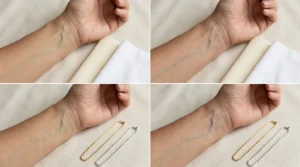
Compare White and Cream Fabric
Hold a plain white fabric and then a cream fabric close to your makeup-free face in daylight.
If cream looks softer and more harmonious, you may lean warm. If clear white looks fresher, you may lean cool. If both look equally comfortable, you may be neutral.
This test can be affected by personal preference, hair color, and clothing, so don’t use it alone.
Notice Which Jewelry Feels More Balanced
Gold is often associated with warm undertones, while silver is commonly linked with cool undertones. If both look equally natural, you may be neutral.
Jewelry is one of the least reliable tests because people frequently prefer a metal for style reasons rather than because it matches their undertone.
Watch How Foundation Changes on Your Skin
Foundation offers more useful information than jewelry or clothing. If shades repeatedly turn orange, they may be too warm or too saturated. If they look pink, the formula may be too cool. A gray or ashy appearance can mean the shade is too light, too muted, or simply the wrong undertone.
Evaluate the product after it has settled, since some foundations deepen or shift slightly as they dry.
How to Find Your Foundation Shade Undertone
Once you have a likely undertone, compare two or three foundations in the correct depth.
Apply narrow stripes from the lower cheek across the jawline. This area allows you to see how the foundation connects the face with the neck. Avoid testing only on the wrist or back of the hand because those areas may have a different depth and undertone from your face.
Let the swatches sit for several minutes. Then check them in natural daylight.
The strongest match should:
- Blend into both the jaw and neck
- Avoid turning noticeably orange, pink, yellow, or gray
- Remain close after it dries
- Look natural across more than one lighting condition
- Require minimal blending to disappear
If none of the shades blends well, the problem may be the product range rather than your ability to identify your undertone.
Surface Tone and Undertone Are Not the Same
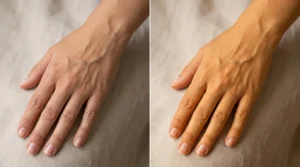
Surface tone can change with tanning, redness, acne, irritation, or seasonal sun exposure. Undertone is the underlying color direction that remains relatively consistent.
Someone with a cool undertone may have temporary golden tanning on the surface. A warm complexion may develop visible redness that makes the face look pinker than the neck.
Matching foundation only to surface redness can leave the entire face looking too pink. Instead, compare the shade with the neck and upper chest, then use concealer or color correction selectively where needed.
You may need a different foundation depth during summer and winter while keeping the same general undertone family.
Using Undertone to Choose Blush, Lipstick, and Highlighter
Undertone can narrow down your options, but makeup does not always need to match it.
Matching colors create harmony. A warm peach blush can blend seamlessly into warm skin, while a cool rose blush may look naturally flushed on cool skin.
Contrasting colors create more definition. A cool berry lipstick can stand out beautifully on a warm complexion, and a warm coral can appear especially vibrant against cool skin.
Highlighter deserves extra attention because a poorly matched base can leave a visible stripe. Warm skin often suits gold and warm champagne, while cool skin may prefer pearl, pink, or icy champagne. Neutral skin can usually choose according to the rest of the makeup.
Common Vein Color Mistakes
Treating the Test as a Final Answer
Vein color offers one clue. It cannot account for every variation in skin tone, especially olive, muted, or highly balanced undertones.
Checking Under Bathroom Lighting
Yellow bulbs can make veins appear greener, while cool LEDs may make them look bluer. Use indirect daylight whenever possible.
Matching Foundation to the Wrist
The wrist test helps suggest undertone, but it is not the best place to determine foundation depth. Test the actual product along the jawline.
Assuming Warm Means Dark and Cool Means Fair
Undertone and skin depth are separate. Fair, medium, tan, deep, and rich complexions can all have warm, cool, neutral, or olive undertones.
Following Product Labels Too Closely
One brand’s neutral may resemble another brand’s warm shade. Look at the foundation on your skin instead of trusting the letter or name printed on the bottle.
Frequently Asked Questions
What does green vein color mean?
Green-looking veins commonly suggest a warm or olive undertone. Confirm the result by testing warm, neutral, and olive foundation shades along your jawline in natural light.
What do blue veins say about my undertone?
Blue or purple veins are often associated with a cool undertone. Foundations with rosy, pink, red, or cool labels may be suitable starting points.
What if my veins are both blue and green?
Blue and green veins may indicate a neutral undertone. Begin with neutral foundation shades, then compare neutral-warm and neutral-cool options if the first shade appears slightly off.
Can dark skin use the vein test?
Yes, but the veins may not be clearly visible, and the test may provide little useful information. Comparing foundation shades along the jawline is usually more dependable.
Is the vein test completely accurate?
No. Lighting, skin depth, tanning, vein visibility, and olive tones can affect the result. It should be combined with direct foundation testing.
Why does my correct foundation undertone still look wrong?
The depth may be incorrect, the formula may change as it dries, or the shade may be too saturated or muted for your complexion. Test nearby shades and evaluate them after they settle.
Can my undertone change?
Your surface color can change with tanning, redness, and the seasons, but the underlying undertone generally remains more consistent. You may need another shade depth without changing undertone families.
Final Takeaway
Vein color can give you a useful first clue: green veins commonly point toward warm or olive skin, blue or purple veins often suggest cool skin, and a mixture may indicate a neutral undertone.
The most reliable foundation match still comes from testing products on the jawline in natural light. Look at how the shade connects your face, neck, and upper chest rather than relying on one wrist test or product label.
Use undertone as a guide, not a restriction. It can help complexion makeup blend more naturally, while blush, eye shadow, and lipstick still leave plenty of room for contrast, creativity, and personal preference.
Our Editorial Approach
Beauty and self-care information should be clear and easy to use. Our goal is to help you understand your options and make more informed choices about your everyday routine.
Our articles are for educational purposes only and do not replace advice from a qualified healthcare professional.