
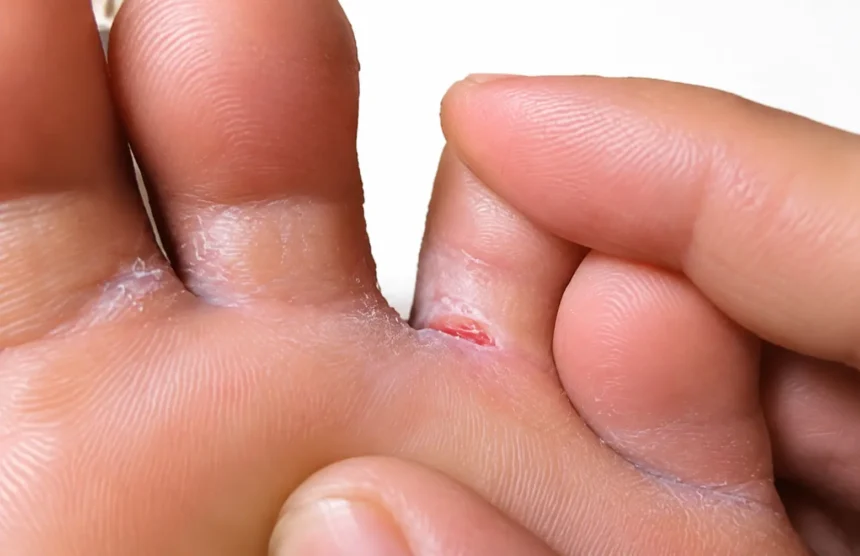
You notice a sting beneath a toe while walking, then find a small crack when you check your foot. The surrounding skin might look dry and flaky, or pale and damp between the toes.
- Splits in Toes at a Glance
- 1. Dry Skin May Be Cracking
- 2. Moisture May Be Building Up Between Your Toes
- 3. Athlete’s Foot May Be Involved
- 4. Shoes May Be Rubbing the Area
- 5. A Product May Be Irritating Your Skin
- 6. Repeated Splitting Needs a Closer Look
- Should You Put Moisturizer Between Your Toes?
- Do Splits in Toes Always Mean Athlete’s Foot?
- A Simple Routine for Caring for Splits in Toes
- Common Toe-Skin Care Mistakes
- Treating Every Crack as Dry Skin
- Leaving Feet Damp After Washing
- Picking or Scratching Loose Skin
- Continuing to Wear Shoes That Rub
- Waiting Despite Worsening Symptoms
- When to Ask for Professional Advice
- Final Takeaway
- FAQs
Splits in toes can have different causes, so the same cream will not suit every situation. Dry skin, trapped moisture, irritation, and athlete’s foot can all contribute to cracking.
Understanding the possible causes of splits in toes can help you choose the right care and know when to seek advice.
Start by checking where the split sits and how the surrounding skin feels. A dry crack on the outside of a toe needs a different approach from an itchy, soggy patch between two toes.
Splits in Toes at a Glance
| What you notice | What may be contributing | What to try |
|---|---|---|
| Dry, rough skin around a shallow crack | Dryness or irritation | Gentle cleansing and moisturizer on dry outer skin |
| Pale, damp skin between toes | Trapped moisture | Dry carefully and change damp socks |
| Itching, flaking, and cracking | Athlete’s foot may be involved | Ask a pharmacist about antifungal treatment |
| A split where footwear rubs | Friction or pressure | Review shoe fit and protect the area |
| Cracking after a new product | Contact dermatitis may be involved | Stop the suspected irritant |
| Heat, swelling, pus, or increasing pain | Possible infection | Seek prompt medical advice |
These observations can guide your next step, but they do not confirm the cause.
1. Dry Skin May Be Cracking
Dry skin can become rough and develop small fissures. Harsh cleansers and prolonged washing may make dryness worse.
Use a gentle cleanser and apply a fragrance-free moisturizer to dry outer skin. Avoid spreading moisturizer between the toes, where trapped moisture can create problems.
2. Moisture May Be Building Up Between Your Toes
Sweat and water can remain trapped where toes touch. The skin may become softened, pale, and vulnerable to breakdown.
Dry between each toe after washing and replace damp socks. Persistent wet, sore, or unusually smelly skin needs assessment rather than repeated layers of cream.
3. Athlete’s Foot May Be Involved
Athlete’s foot is a fungal infection that can cause itchy white patches, peeling, soreness, and cracks between the toes. It can also affect the soles or sides of the feet.
A pharmacist can recommend a suitable antifungal treatment. Follow the packet instructions because products differ in suitability and treatment length.
4. Shoes May Be Rubbing the Area
Poorly fitting footwear can irritate or damage foot skin. Notice whether the split appears where a shoe seam presses or where your toes feel crowded.
Choose footwear with enough room around the toes. If walking repeatedly reopens the same crack, ask a podiatrist to check the pressure on that area.
5. A Product May Be Irritating Your Skin
Contact dermatitis can leave skin itchy, dry, blistered, or cracked. Soaps, detergents, and other substances may trigger irritation.
If symptoms began after a new foot product, stop using it and review the ingredients with a pharmacist or clinician. Persistent irritation may need treatment beyond moisturizer.
6. Repeated Splitting Needs a Closer Look
A crack that keeps returning may have an unresolved cause. Moisture, fungal infection, dermatitis, or footwear pressure may still be affecting the area.
Arrange an assessment if appropriate care is not helping. A clinician may examine the skin or take a scraping when fungal infection is suspected.
Should You Put Moisturizer Between Your Toes?
Routine foot-care guidance recommends keeping moisturizer away from the spaces between your toes. These areas can retain moisture, particularly when the skin already looks pale or soggy.
Apply moisturizer to dry outer areas instead. If the toe spaces are cracked and inflamed, ask which treatment suits the cause.
Do Splits in Toes Always Mean Athlete’s Foot?
No. Athlete’s foot is one possibility, especially with itching and peeling, but dermatitis and moisture-related irritation can look similar.
Avoid choosing treatment from the crack alone. The location, surrounding skin, and response to previous products all matter.
A Simple Routine for Caring for Splits in Toes
Clean the Area Gently
For a small, superficial split, rinse with clean water. Clean the surrounding skin gently without scrubbing the wound.
Dry Carefully
Pat dry rather than rubbing. Pay particular attention to the spaces between your toes.
Protect an Open Split
If a small split is open, protect it with a suitable sterile dressing and change the dressing if it becomes wet or dirty. Avoid wrapping the toe tightly.
If the crack is between the toes and the skin remains damp or irritated, ask a pharmacist or healthcare professional about appropriate care.
Match Treatment to the Cause
Dry outer skin may need moisturizer; suspected athlete’s foot needs appropriate antifungal care. Ask a pharmacist if you are unsure.
Common Toe-Skin Care Mistakes
Treating Every Crack as Dry Skin
A damp, itchy toe space may need a different approach from dry outer skin.
Leaving Feet Damp After Washing
Dry between the toes before putting on socks and shoes.
Picking or Scratching Loose Skin
Scratching can damage the area and spread a fungal infection.
Continuing to Wear Shoes That Rub
Review the fit if the same spot becomes sore whenever you walk.
Waiting Despite Worsening Symptoms
Increasing pain, swelling, heat, or discharge deserves medical attention.
When to Ask for Professional Advice
Seek prompt care for spreading redness or discoloration, warmth, swelling, pus, worsening pain, or fever. A deep wound or bleeding that will not stop needs urgent assessment.
If you have diabetes, poor circulation, or reduced foot sensation, contact your healthcare team promptly about a new split. Do not wait for it to become painful.
Final Takeaway
Splits in toes need care that matches the surrounding skin. Keep damp toe spaces dry, moisturize dry outer areas, and seek advice when itching or peeling suggests an infection.
Protect open cracks and get help if they worsen, repeatedly return, or occur alongside diabetes or circulation problems.
FAQs
Why does the skin between my toes split?
Trapped moisture, athlete’s foot, and dermatitis are possible causes. Symptoms can overlap, so persistent cracking may need examination.
Can athlete’s foot cause bleeding cracks?
Yes. Athlete’s foot can cause skin to crack and sometimes bleed.
Should I cover a split toe?
A small open split can be protected with a suitable sterile dressing. Keep it clean and replace it when needed.
Will antifungal cream treat every split?
No. Antifungals treat fungal infections; cracks caused by irritation or other conditions may need different care.
Should I soak cracked toes?
Avoid prolonged soaking, which can damage foot skin. Wash gently and dry carefully instead.
What if I have diabetes?
Report a new crack or break in the skin promptly to your foot-care team or doctor, even if it seems small.
Our Editorial Approach
Beauty and self-care information should be clear and easy to use. Our goal is to help you understand your options and make more informed choices about your everyday routine.
Our articles are for educational purposes only and do not replace advice from a qualified healthcare professional.