
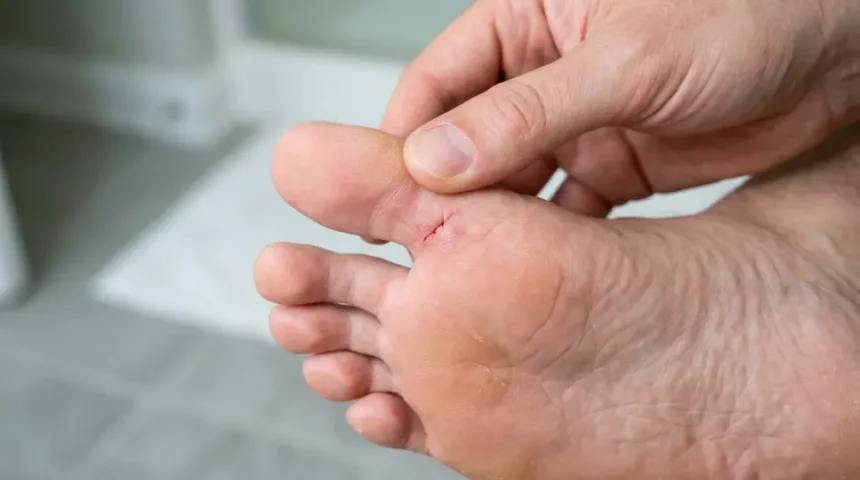
For a small, shallow cut under toe, stop the bleeding with steady pressure, rinse it with clean water, and cover it with a nonstick dressing after applying a thin layer of petroleum jelly. Reduce rubbing while it heals. Deep wounds, uncontrolled bleeding, or signs of infection need medical attention.
- Before You Treat It at Home
- How to Treat a Cut Under Toe: 7 First Aid Steps
- 1. Wash Your Hands and Find the Exact Spot
- 2. Apply Steady Pressure to Stop Bleeding
- 3. Rinse Away Dirt Gently
- 4. Apply a Thin Layer of Plain Petroleum Jelly
- 5. Cover It Without Squeezing the Toe
- 6. Reduce Rubbing and Pressure
- 7. Change the Dressing and Check Your Tetanus Status
- What If the Skin Split Without an Injury?
- How Long Does a Cut Under Toe Take to Heal?
- Signs of Infection in a Toe Cut
- Frequently Asked Questions
- Should I leave the cut uncovered overnight?
- Can I shower with a bandage on my toe?
- Is salt water better than plain water?
- Can I use superglue to close it?
- Why does it hurt more when I walk?
- Conclusion
The awkward part is the location. Every step bends the skin, and a cut that feels fine while you’re sitting can sting as soon as you stand. Keeping it protected matters more than finding a cream that promises quick results.
Before You Treat It at Home
These steps are for minor surface cuts. Get urgent medical care if the wound is deep, gapes open, contains an embedded object, or causes numbness or difficulty moving the toe. Spurting blood or bleeding that won’t stop with firm pressure needs emergency care.
A puncture from a nail or another sharp object also deserves prompt assessment, even when the opening looks tiny. Tell the clinician if it went through your shoe.
If you have diabetes, poor circulation, or reduced feeling in your feet, contact your healthcare team promptly about a new foot wound. Pain alone isn’t a reliable guide when sensation is reduced.
How to Treat a Cut Under Toe: 7 First Aid Steps
1. Wash Your Hands and Find the Exact Spot
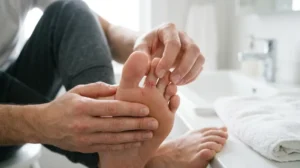
Sit somewhere well lit and wash your hands before touching the injury. A handheld mirror can help you see the underside without pulling the toe backward.
Look for the edges of the cut and anything caught inside it. Don’t probe the opening or dig for glass. If you can’t see the wound clearly, ask someone to help you inspect it.
2. Apply Steady Pressure to Stop Bleeding
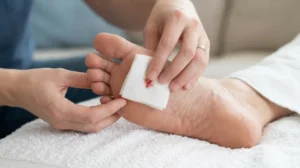
Hold clean gauze or a folded clean cloth against the cut. Keep firm, continuous pressure for about 10 minutes instead of lifting it repeatedly to check.
If blood soaks through, add another layer on top. Raise your foot while resting if you can do so comfortably.
Don’t press directly on an embedded object. Seek medical help and apply pressure around it instead. If bleeding remains uncontrolled, get urgent help while maintaining pressure.
3. Rinse Away Dirt Gently
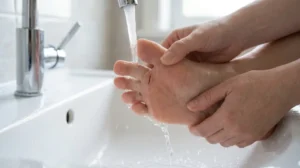
Once bleeding stops, rinse the cut with clean running water. Wash the surrounding skin with mild soap, then rinse away the soap.
Skip hydrogen peroxide, rubbing alcohol, and iodine inside the wound. They can irritate damaged tissue. Scrubbing with a washcloth can also make a small injury more painful.
If dirt remains after rinsing, have the wound checked. Pat the surrounding skin dry with clean gauze, including the nearby toe crease.
4. Apply a Thin Layer of Plain Petroleum Jelly
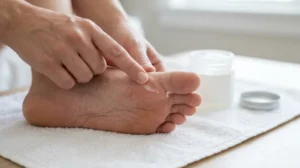
For a clean, superficial cut, use just enough plain petroleum jelly to lightly coat the injured surface. It helps prevent excessive drying and keeps the dressing from sticking.
You don’t need to coat the entire toe or pack ointment between your toes. The wound surface should stay lightly moist, while the surrounding skin stays free of trapped sweat.
Antibiotic ointment usually isn’t necessary for an uncomplicated cut that’s cleaned daily. Some formulas cause a rash. Follow any specific treatment instructions a clinician gives you.
5. Cover It Without Squeezing the Toe
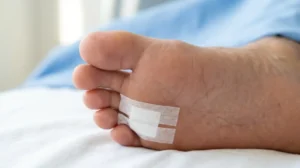
A cut on bottom of toe needs a dressing that stays in place when you move. Choose an adhesive bandage whose pad fully covers the injury, or use a small sterile nonstick pad with medical tape.
For awkward placement:
- Keep the toe in a relaxed position.
- Place the nonstick pad directly over the wound.
- Attach the adhesive to clean, dry, intact skin.
- Smooth the dressing so it doesn’t bunch beneath the toe.
Avoid stretching tape tightly around the toe. Remove and reapply the dressing if the toe becomes numb, cold, pale, blue, or more painful.
For a cut under toe crease, don’t pull the toe backward to make the bandage fit. If the dressing keeps slipping or the edges keep opening, ask a pharmacist or clinician for help choosing a suitable dressing.
6. Reduce Rubbing and Pressure
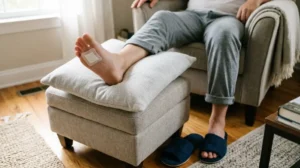
Notice what happens when you take a few steps. Does the shoe press against the dressing? Does the cut pull open when you push off the floor?
Pause running, long walks, and other activities that restart pain or bleeding. Choose clean footwear with enough room for the dressing and avoid walking barefoot.
Change damp socks. A bulky pad squeezed into a tight shoe may create more pressure, so check the fit before spending the day on your feet. If normal walking is difficult, get the injury assessed.
7. Change the Dressing and Check Your Tetanus Status
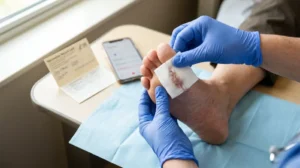
Replace the dressing at least daily and whenever it gets wet, dirty, or loose. If it sticks, dampen it with clean water or saline and ease it away.
Use each change to check whether tenderness, swelling, and drainage are improving.
Your tetanus vaccination history matters, too. If you completed the initial vaccine series, a booster is generally recommended when your last dose was:
- 10 or more years ago for a clean, minor wound.
- 5 or more years ago for a dirty or major wound, including a puncture.
If your vaccination history is unknown or incomplete, contact a healthcare professional. Some higher-risk wounds also require additional protection. Antibiotic ointment does not prevent tetanus.
What If the Skin Split Without an Injury?
A skin split under toe isn’t always caused by stepping on something. Dry, cracked skin can split as the toe bends. Friction, prolonged dampness, and skin conditions may also contribute.
Look at the skin around the opening. Itching, peeling, or whitish patches between the toes can occur with athlete’s foot. Those signs don’t confirm a diagnosis, but they’re a reason to ask a pharmacist or clinician about treatment.
If the same crease keeps splitting, repeatedly bandaging it may leave the cause untreated. Avoid putting thick layers of moisturizer between damp toes, and don’t apply steroid cream to a suspected fungal rash without advice.
How Long Does a Cut Under Toe Take to Heal?
A small, shallow cut should start improving within a few days. Many minor cuts heal within about a week, though a deeper cut or one that repeatedly opens can take longer.
Watch the direction of change rather than counting down to a fixed deadline. Less tenderness, closing edges, and a dressing that stays free of fresh blood are encouraging.
If there’s no clear improvement after a few days, arrange a medical check. Seek help sooner if symptoms worsen. Someone with diabetes or circulation problems should contact their care team promptly rather than waiting through a home-treatment period.
Signs of Infection in a Toe Cut
A little tenderness after an injury is expected. Increasing pain or changes spreading beyond the wound need attention.
Seek same-day care for:
- Spreading redness or another expanding change in skin color.
- Increasing warmth or swelling.
- Pus or worsening drainage.
- Pain that becomes stronger instead of easing.
Redness may be less obvious on darker skin, so watch warmth, swelling, and tenderness as well. Fever, red streaks, rapidly spreading changes, or feeling unwell warrant urgent medical assessment.
A cut under toe not healing can also involve repeated pressure, retained debris, or an underlying health problem. Don’t keep switching creams while the wound stays open.
Frequently Asked Questions
Should I leave the cut uncovered overnight?
Keep it covered while it’s open, especially if bedding rubs against it. A clean dressing protects the surface. Once the skin has closed and there’s no drainage, a dressing may no longer be necessary unless footwear still irritates it.
Can I shower with a bandage on my toe?
Protect the dressing from getting soaked. If it becomes wet, replace it afterward and gently dry the surrounding skin. Avoid soaking the foot in a bath or foot spa while the cut remains open.
Is salt water better than plain water?
Clean running water is suitable for routine wound cleaning. You don’t need a homemade salt solution, which can sting if mixed too strongly. Packaged sterile saline is another option.
Can I use superglue to close it?
Don’t use household superglue on the wound. A cut that gapes or opens whenever the toe moves needs assessment. Medical skin adhesive is used for selected wounds after appropriate cleaning and examination.
Why does it hurt more when I walk?
Walking puts pressure on the underside of the toe and stretches the crease. Check whether the dressing or shoe adds rubbing. Severe pain, worsening pain, or difficulty bearing weight should be assessed.
Conclusion
A minor cut under toe needs gentle cleaning, a secure dressing, and relief from the rubbing that keeps reopening it. There’s no guaranteed shortcut to healing. If the wound worsens, stays open, or keeps returning in the same spot, have it checked so the cause gets treated too.
Our Editorial Approach
Beauty and self-care information should be clear and easy to use. Our goal is to help you understand your options and make more informed choices about your everyday routine.
Our articles are for educational purposes only and do not replace advice from a qualified healthcare professional.