
A hair color you’ve worn for years can start feeling too dark, too yellow, or simply harder to maintain as more gray appears. The answer isn’t always to go blonde. Sometimes a softer brown, a few lighter pieces around the face, or a better balance between warm and cool tones gives you the change you wanted.
- Hair Colors at a Glance
- Fair Skin, Blue Eyes, and Age Don’t Tell the Whole Story
- 1. Beige Blonde
- 2. Champagne Blonde
- 3. Dark Blonde With Fine Highlights
- 4. Mushroom Brown
- 5. Light Chocolate Brown
- 6. Brown With Caramel Highlights
- 7. Strawberry Blonde
- 8. Muted Copper
- 9. Silver With Fine Lowlights
- 10. Natural Gray With Soft Highlights
- How to Choose Between Warm and Cool Hair Colors
- Decide How Much Gray You Want to Cover
- What to Ask for at the Salon
- Common Hair Color Mistakes
- Going Much Lighter Before Checking the Tone
- Choosing a Flat Color When You Wanted Softness
- Ignoring Root Contrast
- Expecting a Photo to Predict the Exact Result
- Conclusion
- Frequently Asked Questions
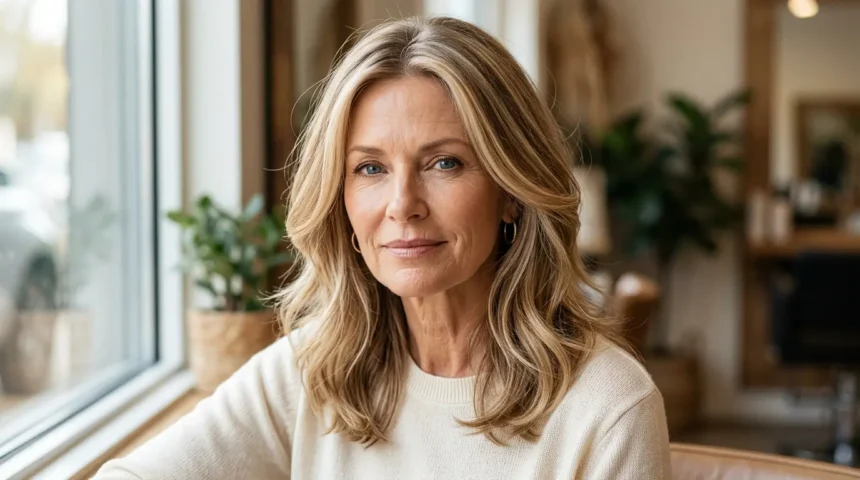
The best hair colors for fair skin blue eyes over 50 depends on your undertone, natural color, amount of gray, and preferred maintenance. Beige blonde, light brown, muted copper, and dimensional silver are all worth considering. Each creates a different amount of contrast around the face.
No shade makes everyone look younger. A useful goal is to choose color that feels fresh beside your skin, brings out your eyes, and grows out in a way you’re comfortable maintaining.
Hair Colors at a Glance
| Hair color | Color direction | Overall effect | Main maintenance consideration |
|---|---|---|---|
| Beige blonde | Balanced warm and cool | Soft and lightly defined | Keeping the tone balanced |
| Champagne blonde | Pale beige with gentle warmth | Bright and delicate | Lightening and visible roots |
| Dark blonde | Neutral or softly warm | Understated with more depth | Adjusting warmth as color fades |
| Mushroom brown | Cool beige-brown | Muted and dimensional | Preventing an overly gray result |
| Light chocolate brown | Neutral to warm | Rich without very dark contrast | Gray regrowth |
| Brown with caramel highlights | Brown and golden beige | Warm with lighter detail | Maintaining the lightened pieces |
| Strawberry blonde | Blonde with soft copper | Warm and noticeable | Refreshing the copper tone |
| Muted copper | Soft orange-red | Clear contrast with blue eyes | Color fading and root contrast |
| Silver with lowlights | Cool silver and deeper gray | Defined natural gray | Keeping dimension balanced |
| Natural gray with highlights | Mixed gray and lighter strands | Gradual gray blending | Matching placement to regrowth |
Use the table to shortlist a few options rather than choosing from a color name alone. “Beige blonde” can look quite different depending on its depth, brightness, and placement.
Fair Skin, Blue Eyes, and Age Don’t Tell the Whole Story
Fair describes skin depth, while undertone describes its underlying color impression. Fair skin can lean cool, warm, neutral, or olive.
Blue eyes also vary. Pale gray-blue eyes create a different contrast from bright blue eyes with a darker outer ring. Your eyebrows and natural hair color affect the overall balance, too.
Age doesn’t place you in a fixed color category. At 50 and beyond, the more useful questions are how much gray you want to show, whether you want softer or stronger contrast, and how often you’re willing to refresh the color.
1. Beige Blonde
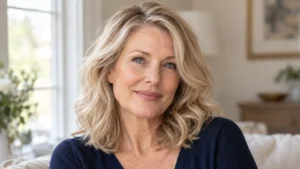
Beige blonde combines enough warmth to avoid an icy appearance with enough coolness to keep the color from looking strongly golden.
It’s a useful starting point if bright yellow blonde feels distracting beside your skin but very ashy blonde looks dull. Ask to compare a neutral beige sample with warmer and cooler versions before deciding.
Keep some depth through the roots or underneath if you want dimension. An entirely uniform pale blonde can give a different result from the same shade woven through darker hair.
Best for: A balanced blonde that feels soft without being extremely pale.
2. Champagne Blonde
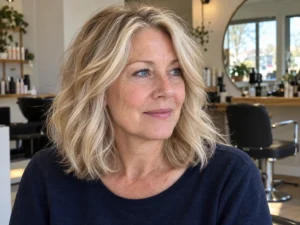
Champagne blonde is a lighter option with a gentle beige-gold reflection. It can bring brightness around the face while remaining softer than a stark white blonde.
The important detail is how pale the finished shade becomes. If you want a delicate change, concentrate the brightest pieces near the face and leave more depth elsewhere.
Starting color matters. Naturally dark or previously colored hair may require a more involved lightening process than lighter hair.
Best for: A bright blonde result with restrained warmth.
3. Dark Blonde With Fine Highlights
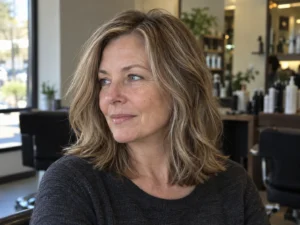
Dark blonde offers more definition than a pale blonde without the contrast of a deep brunette.
Fine beige or honey highlights can break up the base while keeping the overall color close to your natural shade. Narrow pieces give a quieter result than broad, bright sections.
This is worth considering if you want lighter hair but don’t want every strand lifted to the same pale level.
Best for: An understated color change with visible depth.
4. Mushroom Brown
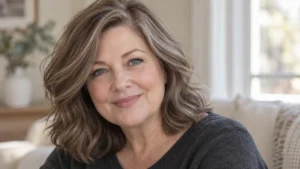
Mushroom brown blends brown with cool beige and taupe tones. It gives you a brunette option without a strong red or golden direction.
Keep enough brown in the formula for the result to remain dimensional. Too much gray-toned color may look flatter than you expected, especially if your natural hair is already quite cool.
Compare a lighter mushroom shade with a deeper one. You may prefer the undertone but need a different depth to give your face the amount of definition you want.
Best for: A muted brunette with cooler tones.
5. Light Chocolate Brown
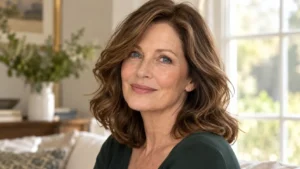
Light chocolate brown keeps the richness of brunette hair while creating less contrast than espresso or nearly black color.
Ask for a neutral or gently warm version according to your preference. “Chocolate” doesn’t guarantee one undertone; some shades lean red, while others look more balanced.
If your eyebrows are naturally dark, leaving some depth in the hair can help the finished color feel connected to the rest of your features.
Best for: Brunettes who want a softer shade without becoming blonde.
6. Brown With Caramel Highlights
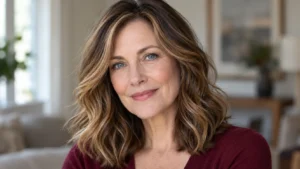
Caramel highlights add golden-beige pieces through a brown base. The combination can make solid brunette color feel lighter without replacing it completely.
Placement makes a noticeable difference. A few fine pieces around the face give a subtle change, while broader ribbons through the lengths create a more obvious highlighted result.
If orange tones aren’t what you want, ask for a beige caramel rather than a strongly copper version.
Best for: Adding warmth and lighter detail to brown hair.
7. Strawberry Blonde
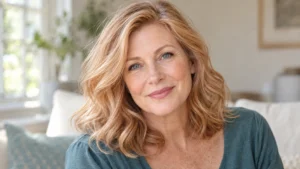
Strawberry blonde brings a soft copper tone into a blonde base. It creates a warmer frame around blue eyes than beige or ash blonde.
Choose the balance carefully. A blonde shade with a hint of peach looks quite different from a copper shade with a few blonde strands.
Bring reference photos showing both the color you like and the one you want to avoid. That helps clarify how much red you’re comfortable wearing.
Best for: A warm blonde with more personality than a neutral shade.
8. Muted Copper
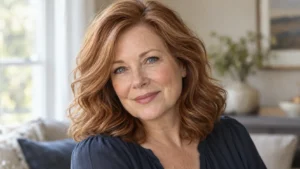
Copper creates a clear color contrast with blue eyes. A muted version gives you that warmth without the brightness of a vivid orange-red.
Soft cinnamon, beige copper, and light auburn are different directions to compare. Choose the depth first, then decide how noticeable you want the copper reflection to be.
If your cheeks often look pink, view a copper sample beside your face in daylight. You may enjoy the warmth or prefer a less saturated version.
Best for: A noticeable change that stays within a softer red palette.
9. Silver With Fine Lowlights
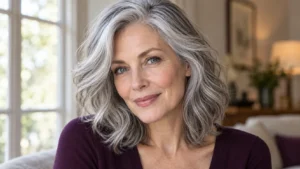
Silver hair doesn’t need to be covered to look polished. Fine lowlights can add depth where the color feels too uniform.
Choose a lowlight that relates to your natural darker strands rather than introducing an unrelated brown. The aim is to create separation through the silver, especially around the part and underneath.
If you like the brightness of your gray, keep the darker pieces selective. Too many lowlights can change the overall color more than you intended.
Best for: Natural silver that needs a little more definition.
10. Natural Gray With Soft Highlights
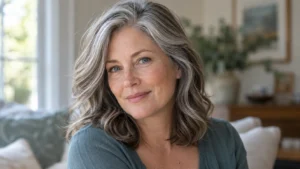
Highlights can help connect existing gray with darker strands during a transition away from full coverage.
Their placement should follow your gray pattern. Hair that’s brightest at the temples may need a different approach from gray concentrated around the crown.
You don’t have to reach an entirely silver result. A mixed finish with gray, darker strands, and selected highlights can be the final look if you enjoy the variation.
Best for: Blending gray while keeping some natural depth.
How to Choose Between Warm and Cool Hair Colors
Start with two shades at a similar depth. Comparing warm dark blonde with cool dark blonde tells you more about undertone than comparing warm blonde with almost-black brown.
Look at the samples beside your face in indirect daylight. Notice whether you prefer the warmth, the cooler contrast, or something between them.
Your undertone can guide the comparison, but it doesn’t have to restrict the choice. Fair skin with cool undertones can still wear copper, and warmer skin can still suit a cool brunette effect.
Also check the color against your eyebrows. A large difference isn’t automatically a problem, but it should feel intentional.
Decide How Much Gray You Want to Cover
The amount of coverage affects both the finished look and the upkeep.
- Full coverage: Creates a more uniform shade, with a clearer contrast as gray roots grow.
- Gray blending: Leaves some gray visible while using color to soften the difference between strands.
- Highlights or lowlights: Add lighter or darker pieces without coloring every strand.
- Natural gray: Keeps your existing pattern and focuses on the cut, finish, and any tone adjustment you prefer.
Be clear about this before discussing individual shades. A color you love in a photograph may rely on complete coverage when you were hoping for a softer grow-out.
What to Ask for at the Salon
Describe the depth, undertone, placement, and coverage you want.
For example: “I’d like a neutral light brown with fine beige highlights around my face. I want to blend the gray rather than hide every strand.”
Another option is: “I want to keep my silver, but add a few cool lowlights so the top doesn’t look one solid color.”
Bring photos with a similar starting shade to yours where possible. Tell the colorist about previous dye, lightening, and chemical treatments so they can assess a realistic route to the result.
Common Hair Color Mistakes
Going Much Lighter Before Checking the Tone
A lighter shade may still look too yellow, too white, or too gray for the effect you wanted. Compare undertone as well as brightness.
Choosing a Flat Color When You Wanted Softness
You may like your current shade but want more variation. Fine highlights or lowlights could provide that change without replacing the whole base.
Ignoring Root Contrast
A deep solid brunette and a softly blended brunette can have very different grow-out patterns. Choose according to how often you want to maintain the roots.
Expecting a Photo to Predict the Exact Result
Lighting, styling, filters, and the model’s starting color all affect the image. Use it to explain your preference, then discuss how the shade can be adapted to your hair.
Conclusion
The best hair color for fair skin blue eyes over 50 is one that gives you the contrast, tone, and upkeep you prefer. Beige blonde offers balance, light brown keeps depth, copper adds warmth, and silver can look complete without being covered.
Shortlist a few shades, compare them beside your face, and decide how much gray you want visible. A thoughtful adjustment to tone or placement may be all the change you need.
Frequently Asked Questions
Is blonde always the best hair color to look younger over 50?
No. Blonde is one option, but light brown, copper, and natural silver can also give a fresh-looking result. The depth and undertone matter more than choosing blonde automatically.
What brunette shade should I compare first for fair skin and blue eyes?
Neutral light brown or light chocolate is a useful starting point. Compare it with mushroom brown if you prefer a cooler effect, or caramel highlights if you want warmth.
Can very dark hair still work after 50?
Yes. Dark hair creates stronger contrast, which some people prefer. If a solid shade feels too heavy, try a slightly lighter base or a few dimensional pieces.
Do I need to cover all my gray?
No. Full coverage, blending, and natural gray are different choices. Decide how much variation you enjoy and what maintenance fits your routine.
Which hair color is easiest to maintain?
A color close to your natural depth and gray pattern may make regrowth less noticeable. The technique matters as much as the shade, so discuss upkeep before choosing.
Can fair skin and blue eyes suit red hair?
Yes. Strawberry blonde, muted copper, and auburn give different levels of warmth and contrast. Compare samples to choose how bright or deep you want the red to be.
Our Editorial Approach
Beauty and self-care information should be clear and easy to use. Our goal is to help you understand your options and make more informed choices about your everyday routine.
Our articles are for educational purposes only and do not replace advice from a qualified healthcare professional.