
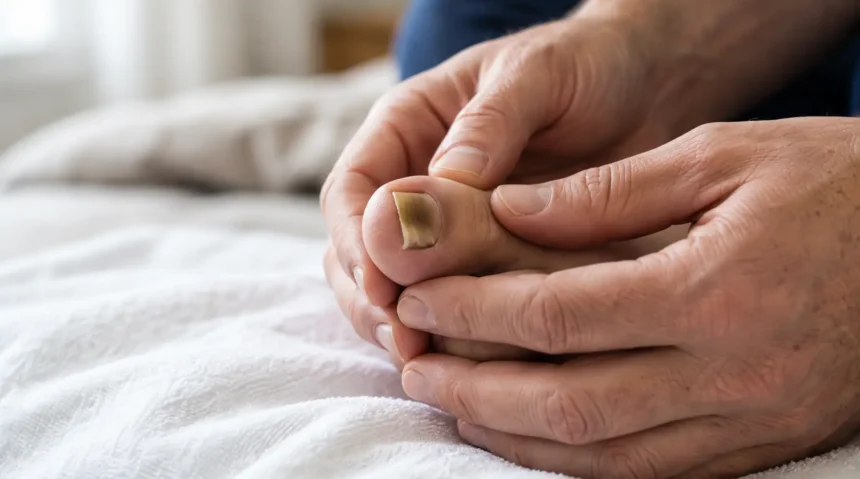
If your big toenail is falling off but still attached, don’t pull it. Gently wash the toe, trim only a completely loose edge if it keeps catching, and cover the nail with a nonstick dressing. Protect it from pressure while the attached portion loosens naturally. Get medical help for severe pain, infection, heavy bleeding, or a deep injury.
- First, Check How Serious the Injury Is
- What to Do When Your Big Toenail Is Coming Off
- 1. Wash your hands before touching the toe
- 2. Rinse the toe gently
- 3. Stop any bleeding
- 4. Decide whether any edge can be trimmed
- 5. Cover it with a nonstick dressing
- 6. Reduce pressure on the toe
- How to Bandage a Loose Toenail Without Making It Worse
- Should You Remove a Loose Toenail?
- Why Is the Big Toenail Lifting From the Nail Bed?
- What Happens After the Toenail Detaches?
- How Long Does a Big Toenail Take to Grow Back?
- When to Get Medical Care
- Common Mistakes to Avoid
- Frequently Asked Questions
- Can I shower with a partially detached toenail?
- Can I wear socks over a loose toenail?
- Will a detached big toenail reattach?
- What if the toenail is black but still attached?
- Can I use antibiotic ointment on the exposed nail bed?
- How do I know if the new toenail is growing?
- Final Takeaway
A partially detached toenail can look alarming. The safest next step depends on how much is loose, whether the nail bed is exposed, and what caused it.
First, Check How Serious the Injury Is
Remove your sock carefully. If fabric is stuck to dried blood, dampen it with clean water instead of pulling.
Look at the nail without lifting it repeatedly. Check whether it is loose only at the tip or sides, or whether the separation reaches the cuticle. Also note any bleeding, swelling, drainage, discoloration, or split in the skin.
Home care may be reasonable when bleeding has stopped, pain is manageable, and the toe is not badly swollen or misshapen. An injury at the nail base, a deep cut, uncontrolled bleeding, or severe throbbing needs prompt medical attention.
What to Do When Your Big Toenail Is Coming Off
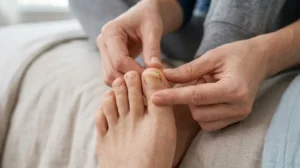
The goal is simple: keep the toe clean, stop the loose nail from snagging, and avoid damaging the new tissue underneath.
1. Wash your hands before touching the toe
Wash with soap and water before handling the nail or dressing.
2. Rinse the toe gently
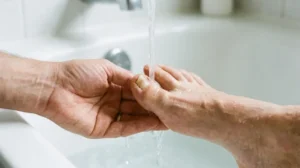
Use clean running water to remove visible dirt. Wash the surrounding skin with mild soap, but don’t scrub beneath the loose nail or force water into a tender gap. Pat the toe dry with clean gauze or a soft towel.
Hydrogen peroxide or alcohol can sting and irritate exposed tissue, so repeated soaking with harsh antiseptics is not necessary for routine cleaning.
3. Stop any bleeding
Apply steady, gentle pressure with clean gauze. Avoid checking every few seconds because lifting it can disturb the forming clot. Seek care if bleeding will not stop.
4. Decide whether any edge can be trimmed
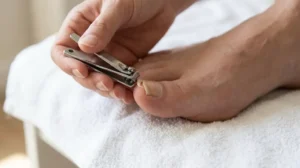
Do not remove a loose toenail that is still attached near the base or along a painful section. If a small, completely detached tip is catching on fabric, you may carefully clip only that free edge with clean nail clippers.
Never cut into pink, tender, or bleeding tissue. When it is difficult to tell where the nail is attached, leave it in place. A podiatrist or other healthcare professional can trim it safely if necessary.
5. Cover it with a nonstick dressing
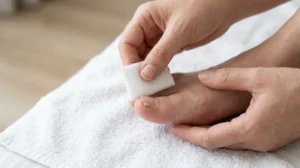
Place a nonstick pad over the nail, then secure it with gauze or medical tape. The wrap should be snug enough to stay put but loose enough that the toe remains warm and its normal color.
Avoid placing sticky tape directly over the damaged nail. When it is time to change the bandage, dried adhesive can tug on the nail and reopen the tender area.
6. Reduce pressure on the toe
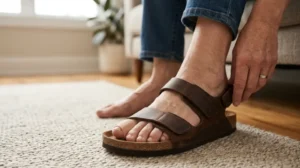
Choose open-toe footwear when the environment is safe, or wear shoes with a wide, deep toe box. Tight shoes can push the lifted nail backward and make every step painful.
Pause running, kicking sports, and long walks until the toe is comfortable and the nail no longer shifts with movement. If an activity makes it throb afterward, the toe probably needs more protection and rest.
How to Bandage a Loose Toenail Without Making It Worse
Keep the dressing simple:
- Clean and dry the toe.
- Place a small nonstick pad over the nail.
- Wrap gauze lightly around the toe once or twice.
- Secure the gauze without pulling the nail downward.
- Check that the toe is not pale, blue, cold, numb, or tingling.
Change the dressing daily and any time it becomes wet, dirty, or loose. If it sticks, moisten it with clean water or saline and wait for it to release. Pulling off a dry dressing may lift the nail or disturb the nail bed.
Should You Remove a Loose Toenail?
Usually, no. A nail that remains attached can act as a temporary cover for the sensitive nail bed. Pulling it may cause bleeding, pain, or additional injury.
As the old nail loosens, the fully detached portion may be trimmed a little at a time. Do not dig under the nail, cut into an attached side, or try to speed up the process. If the nail is barely hanging on, sharply bent, or pressing painfully into the skin, have it assessed rather than tearing it away.
Why Is the Big Toenail Lifting From the Nail Bed?
A direct impact is one common reason. Dropping something on the toe, stubbing it, or repetitive pressure from running shoes can damage the connection between the nail plate and nail bed. Sometimes a dark bruise develops beneath the nail before it begins to loosen.
Toenail separation, also called onycholysis, can have other causes. Fungal changes, certain skin conditions, repeated moisture, and irritation from nail products may contribute. A thick, crumbly, yellow, or slowly lifting nail without a clear injury should not automatically be treated as trauma.
If you are unsure what started the lifting, especially if more than one nail is involved, professional evaluation can help identify the cause.
What Happens After the Toenail Detaches?
The exposed nail bed may look pink, uneven, or more sensitive than the surrounding skin. Keep it clean and use a nonstick dressing until the surface is dry, no longer draining, and comfortable against a sock.
Do not scrape away tissue or try to smooth the nail bed. A new nail grows from the base beneath the cuticle, not from the exposed tip. You may first notice a thin strip of new nail near the base while the rest of the toe still looks bare.
How Long Does a Big Toenail Take to Grow Back?
Big toenails grow slowly. Full replacement commonly takes about 12 to 18 months, and it can take longer in some people. The new nail may look ridged or uneven at first, particularly after a strong impact.
Growth depends on whether the area that produces the nail was damaged. If the injury involved the nail base, the new nail can grow with a lasting ridge, split, or change in shape. Not seeing a complete nail after several months does not necessarily mean growth has stopped.
Take a clear photo every four weeks. Pictures make gradual growth easier to see and provide useful context if the nail is not progressing normally.
When to Get Medical Care
Seek prompt care if you notice:
- Bleeding that does not stop with steady pressure
- Severe or worsening pain
- A deep cut, crushed toe, or possible fracture
- The nail torn away from the base
- Increasing redness, warmth, swelling, pus, or a bad odor
- Red streaks spreading from the toe
- Fever or feeling unwell
- A large dark area under the nail with strong pressure or throbbing
- Numbness, loss of sensation, or unusual toe color
It is also wise to get professional help early if you have diabetes, poor circulation, reduced sensation in your feet, a weakened immune system, or take medication that affects bleeding. Small foot injuries can require closer monitoring in these situations.
If the injury was dirty or involved a puncture, ask a healthcare professional whether your tetanus vaccination is up to date.
Common Mistakes to Avoid
- Pulling the nail because it looks ready to come off
- Cutting below the point where the nail is firmly attached
- Wrapping the toe so tightly that circulation is reduced
- Using cotton directly on a moist nail bed where fibers can stick
- Wearing the same tight shoes that caused repeated pressure
- Covering unexplained discoloration with polish
- Ignoring increasing pain or signs of infection
Toenail polish can also make changes harder to monitor. Wait until the skin is healed, the nail is stable, and there is no unexplained discoloration before considering another pedicure.
Frequently Asked Questions
Can I shower with a partially detached toenail?
Yes, but avoid a long soak and do not scrub beneath the nail. Let clean water run over the toe, pat it dry afterward, and apply a fresh dressing if protection is still needed.
Can I wear socks over a loose toenail?
A clean, roomy sock is fine if the nail has a nonstick dressing and does not catch on the fabric. Avoid tight compression at the toe unless a healthcare professional advised it.
Will a detached big toenail reattach?
The separated portion generally does not bond back to the nail bed. It usually moves forward or comes away as new nail grows from the base.
What if the toenail is black but still attached?
A dark nail after an impact may contain trapped blood, but discoloration has other possible causes. Strong throbbing, a large dark area, no remembered injury, or pigment spreading onto nearby skin should be evaluated.
Can I use antibiotic ointment on the exposed nail bed?
Routine use is not always necessary. If the skin is open, follow the advice of a healthcare professional and stop any product that causes a rash or irritation. A clean nonstick dressing is often the most important protection.
How do I know if the new toenail is growing?
Look for a thin, firm strip emerging near the cuticle. Over time, the boundary between the new growth and the damaged area should move toward the tip.
Final Takeaway
When your big toenail is falling off, the safest approach is usually to leave the attached portion alone. Clean the toe gently, trim only a completely loose edge, apply a nonstick dressing, and protect it from shoe pressure.
Expect regrowth to be slow. A big toenail may take 12 to 18 months to fully return. During that time, worsening pain, swelling, drainage, spreading redness, or an injury near the nail base should be checked by a healthcare professional.
Our Editorial Approach
Beauty and self-care information should be clear and easy to use. Our goal is to help you understand your options and make more informed choices about your everyday routine.
Our articles are for educational purposes only and do not replace advice from a qualified healthcare professional.