

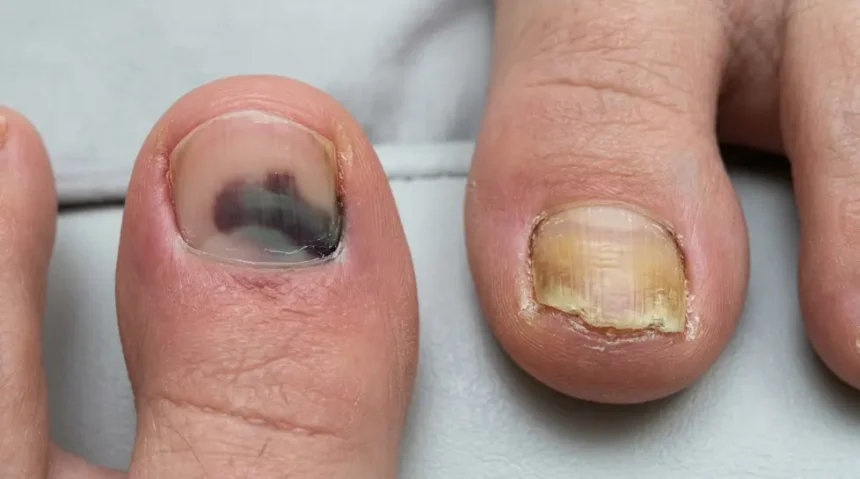
A bruised toenail usually appears after an impact or repeated shoe pressure. It may hurt at first and develop a red, purple, or black patch beneath the nail. Toenail fungus tends to develop gradually, causing yellow, white, or brown discoloration along with thickening, crumbling, debris, or lifting.
- Bruised Toenail vs Fungus
- What Does a Bruised Toenail Look Like?
- What Does Toenail Fungus Look Like?
- How to Tell If a Toenail Is Bruised
- 1. Was There a Clear Trigger?
- 2. Did Pain Come Before the Color Change?
- 3. Has the Nail’s Texture Changed?
- 4. Is the Discoloration Growing Out?
- Can a Bruise and Toenail Fungus Happen Together?
- Why You Should Confirm Fungus Before Treating It
- What to Do for a Recent Bruised Toenail
- What to Do If Fungus Seems More Likely
- When a Dark Toenail Needs Medical Attention
- Frequently Asked Questions
- Final Takeaway
The way the nail changes over time offers another useful clue. A bruise normally moves toward the tip as the nail grows. Fungus often spreads through the nail or affects its texture. However, appearance alone cannot confirm the cause, and an unexplained dark nail should not automatically be treated as either problem.
Bruised Toenail vs Fungus
| Feature | Bruised toenail | Fungal toenail |
|---|---|---|
| Usual cause | Impact, crush injury, running, hiking, or tight shoes | Fungal infection called onychomycosis |
| How it starts | Often sudden or shortly after repeated pressure | Usually gradual |
| Common color | Red, purple, dark brown, or black | White, yellow, brown, or occasionally darker |
| Early discomfort | May be tender, sensitive, or throbbing | Often painless at first |
| Nail texture | Usually remains fairly smooth initially | May become thick, brittle, ragged, or crumbly |
| Debris under the nail | Usually absent unless the nail is damaged or lifting | Common |
| Number of nails | Often one injured nail | May affect one nail and gradually spread to others |
| Change over time | Dark patch moves toward the tip with nail growth | Discoloration and thickening may expand |
| Contagious | No | Yes, fungal infections can spread |
| Best next step | Protect the toe and monitor healing | Get the diagnosis confirmed before treatment |
These differences are helpful clues, not a substitute for an examination. Trauma, psoriasis, bacterial infections, and other nail conditions can resemble fungus.
What Does a Bruised Toenail Look Like?
A bruised toenail develops when small blood vessels beneath the nail are damaged. Blood collects between the nail plate and nail bed, creating what healthcare professionals call a subungual hematoma.
Common causes include:
- Stubbing the toe
- Dropping something on the foot
- Wearing shoes with a short or narrow toe box
- Running or hiking downhill
- Repeatedly pushing the toe against the front of a shoe
- Sports that involve sudden stops and changes in direction
Typical bruised toenail symptoms include a red, purple, brown, or black area beneath the nail. A fresh injury may also cause swelling, tenderness, sensitivity, or throbbing pressure. The discoloration can cover a small spot or much of the nail.
According to the Cleveland Clinic’s guidance on subungual hematomas, pain from a straightforward nail bruise commonly improves within several days, while the discoloration can remain visible for much longer.
How a Bruise Changes as It Heals
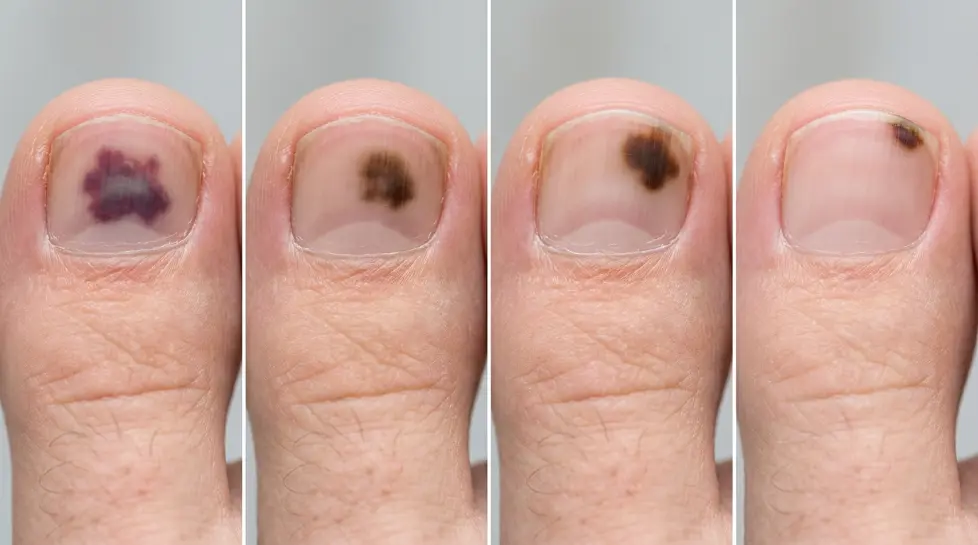
The dark area should gradually move away from the cuticle and toward the end of the toe as new nail grows from the base. Taking a clear photo every four to six weeks can make that movement easier to see.
Toenails grow slowly, so the mark may remain for months. A more serious injury can also cause the nail to lift or eventually fall off. If that happens, follow the steps in our guide to caring for a toenail that is falling off rather than pulling the loose nail away.
A bruise that stays at the base, widens, or changes independently of nail growth deserves professional evaluation.
What Does Toenail Fungus Look Like?
Toenail fungus, medically known as onychomycosis, is an infection within or beneath the nail. It commonly begins as a white, yellow, or yellow-brown area near the tip or side of the nail and progresses slowly.
Fungal toenail symptoms may include:
- White, yellow, brown, or uneven discoloration
- Thickening of the nail
- Brittle, cracked, or crumbling edges
- A ragged or distorted nail shape
- Chalky or crumbly buildup beneath the nail
- Gradual separation from the nail bed
- An unpleasant odor in some cases
- Similar changes appearing in another toenail
- Peeling, cracking, or itching skin from athlete’s foot
The American Academy of Dermatology notes that fungal discoloration can occasionally look greenish-black or black, so color alone does not reliably separate fungus from trauma. Thickening, crumbling, buildup, and gradual lifting provide stronger clues.
Fungus is often painless early on. A severe infection can eventually make the nail uncomfortable, particularly when a thickened nail presses against a shoe.
How to Tell If a Toenail Is Bruised
If you are trying to decide whether a black toenail is from an injury or fungus, work through these four questions.
1. Was There a Clear Trigger?
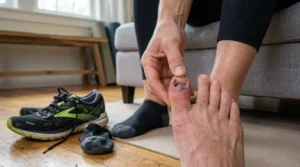
A recent impact strongly supports a bruise. Repeated pressure also counts as trauma, even if you cannot remember one painful moment.
Think about what happened before the color appeared. A long run, steep hike, new pair of shoes, or tight work boots can repeatedly press the nail against the shoe and cause blood under the toenail.
Fungus usually does not appear immediately after a single event. Its changes tend to develop over weeks or months.
2. Did Pain Come Before the Color Change?
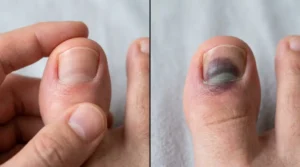
Pain, throbbing, or tenderness soon after pressure or impact points toward a subungual hematoma. The discomfort often settles while the dark patch remains.
Fungus usually begins with a visual or textural change rather than sudden pain. Pain may appear later if the nail becomes very thick, distorted, or separated.
A painless nail is not automatically fungal, however. Minor bruises and repetitive shoe trauma can cause little discomfort.
3. Has the Nail’s Texture Changed?
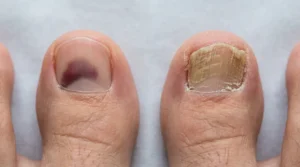
A simple bruise is located beneath the nail, so the surface may initially stay smooth and close to its usual thickness.
Fungus affects the nail material itself. Thickening, crumbling edges, powdery areas, ridges, distortion, or debris under the nail make a fungal infection more likely.
Trauma can eventually cause lifting or an uneven nail as well, which is why texture is only one part of the comparison.
4. Is the Discoloration Growing Out?
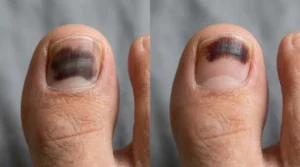
With a typical bruise, a strip of clear new nail should eventually appear at the base. The dark area then moves toward the free edge.
Fungal changes may continue spreading sideways or toward the cuticle. The nail may become increasingly thick or crumbly instead of simply carrying one stable dark patch forward.
Do not delay an evaluation for months simply to perform this test if the discoloration is unexplained, changing, or accompanied by warning signs.
Can a Bruise and Toenail Fungus Happen Together?
Yes. Toenail fungus and trauma are not mutually exclusive.
A fungal nail may be thick enough to repeatedly hit the inside of a shoe, causing bruising beneath it. An already damaged or lifted nail may also be more vulnerable to additional nail problems.
Mixed signs can therefore occur. For example, a nail might have an old yellow, thickened area and then develop a fresh black patch after a run. A clinician may need to examine or test the nail to determine which changes come from infection and which come from injury.
Why You Should Confirm Fungus Before Treating It
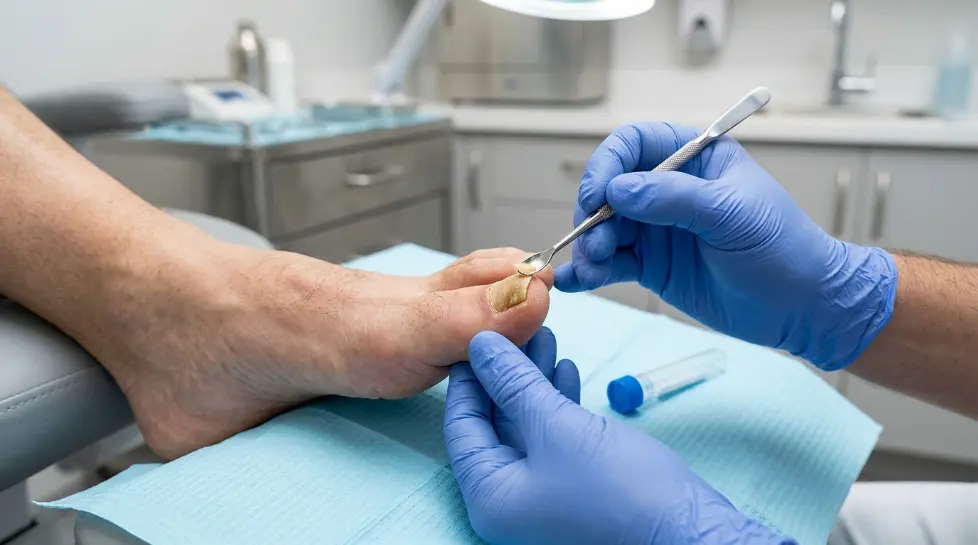
Several nail conditions can look like fungus, including old trauma and nail psoriasis. Treating every discolored toenail with an antifungal product may waste time while the actual cause remains unaddressed.
A dermatologist or another qualified healthcare professional may take a small clipping or scrape a sample from beneath the nail. Microscopic or laboratory testing can help confirm whether fungus is present. The AAD’s nail fungus treatment guidance explains that this testing is useful because injuries and other nail conditions can resemble a fungal infection.
This is particularly important before taking an oral antifungal medication. Nail fungus treatment can take months, and healthy-looking nail must grow in before the final result becomes visible.
What to Do for a Recent Bruised Toenail
For a mild injury:
- Remove tight footwear and reduce pressure on the toe.
- Apply a wrapped cold pack for short periods during the first day.
- Elevate the foot if it is swollen or throbbing.
- Keep the nail clean and dry.
- Wear shoes with enough space around the toes.
- Pause activities that continue to strike the affected nail.
- Do not pull off a nail that begins lifting.
Never drill, burn, or puncture the nail at home to release blood. If trapped blood is causing intense pressure, a healthcare professional can decide whether drainage is appropriate and check for a fracture or nail-bed injury.
What to Do If Fungus Seems More Likely
Keep the nail short, clean, and dry while arranging an evaluation. Use separate nail clippers for the affected nail, disinfect reusable tools, and avoid sharing towels, shoes, socks, or pedicure equipment.
Do not scrape deeply beneath the nail or aggressively file a thin, damaged area. These actions can injure the surrounding skin without eliminating an infection.
Because fungal infections can spread and rarely disappear without appropriate treatment, persistent thickening, crumbling, or lifting should be assessed rather than covered indefinitely with nail polish.
When a Dark Toenail Needs Medical Attention
Not every dark toenail is a bruise or fungus. Arrange an examination if a brown or black mark appears without an identifiable injury, especially if it:
- Forms a vertical band from the base toward the tip
- Becomes wider or darker
- Has irregular color or borders
- Does not move forward as the nail grows
- Spreads onto the skin around the nail
- Causes the nail to split or lift
- Is accompanied by a bump, sore, or bleeding
These changes do not necessarily mean skin cancer, but nail melanoma is one possibility that should be ruled out. The American Academy of Dermatology recommends having a new or changing dark nail band examined by a board-certified dermatologist.
Seek prompt care after an injury if the pain is severe or worsening, the toe looks bent, the nail is deeply cut, bleeding will not stop, or you cannot comfortably move or bear weight on the toe.
Increasing redness, warmth, swelling, pus, bad odor, red streaks, or fever can indicate an infection.
If you have diabetes, reduced circulation, loss of sensation in your feet, or a weakened immune system, contact a healthcare professional before relying on home treatment for a nail injury or suspected fungus. Mayo Clinic also recommends medical care for bleeding, swelling, pain around the nail, or difficulty walking.
Frequently Asked Questions
Can a bruised toenail turn yellow while healing?
A bruise may change from red or purple to brown or yellowish as it ages. However, continuing yellow discoloration accompanied by thickening, crumbling, or debris may suggest fungus or another nail condition.
Can toenail fungus make the nail black?
It can, although white, yellow, and brown are more common fungal colors. A black area may also come from bleeding, bacteria, medication-related pigmentation, or another condition. An unexplained black toenail should be examined.
Does a black toenail always fall off?
No. A small bruise can grow out while the nail stays attached. A larger injury may cause part or all of the nail to separate, particularly if the nail bed was significantly damaged.
How long does a bruised toenail remain dark?
The discomfort may improve within days, but the discoloration can remain for several months because it must grow toward the tip with the nail. Repeated shoe pressure can create new bruising and delay visible improvement.
Can toenail fungus go away without treatment?
Toenail fungus rarely clears completely on its own and may gradually spread or worsen. Because other conditions can resemble fungus, confirm the diagnosis before beginning a lengthy treatment plan.
Should I cover a dark toenail with polish?
It is better to leave an unexplained nail change visible until you understand the cause. Polish, gel, and artificial nails can hide progression and make it harder to monitor color, lifting, or new growth.
Final Takeaway
The clearest difference between a bruised toenail and fungus is the pattern of change. A bruise usually follows impact or shoe pressure, may hurt early, and creates a dark area that grows toward the tip. Fungus develops more gradually and commonly causes thickening, crumbling, buildup, or progressive lifting.
Do not rely on color alone. If the nail is changing without an obvious injury, looks increasingly distorted, or develops a persistent dark band, have it examined rather than treating it by guesswork.
Our Editorial Approach
Beauty and self-care information should be clear and easy to use. Our goal is to help you understand your options and make more informed choices about your everyday routine.
Our articles are for educational purposes only and do not replace advice from a qualified healthcare professional.