
The relief of finally removing an old acrylic set can disappear quickly when your natural nails feel sore, tender, or strangely sensitive. That soreness is often connected to the removal process rather than the acrylic material suddenly leaving your nails weak. Filing, scraping, peeling, prolonged acetone exposure, or pressure on an already stressed nail plate can all leave the area feeling uncomfortable.
- Why Nails Can Feel Sore After Acrylic Removal
- The Most Common Reasons for Pain
- The acrylic was peeled or forced off
- The natural nail was over-filed
- Acetone dried the nail and surrounding skin
- Pressure or trauma happened before removal
- The nail has lifted from the nail bed
- Irritation, allergy, or infection is developing
- What Normal Post-Removal Sensitivity Feels Like
- What to Do When Your Nails Hurt
- Give them a break from enhancements
- Keep the nails short and gently shaped
- Replenish moisture regularly
- Protect your hands from water and cleaners
- Be cautious with nail hardeners
- Do not test the nail repeatedly
- What Not to Put on Painful Nails
- How Long Does the Pain Usually Last?
- Can Damaged Nails Recover?
- How to Make Future Acrylic Removal Gentler
- When to See a Dermatologist or Doctor
- Conclusion
- Frequently Asked Questions
- Is it normal for nails to hurt after removing acrylics?
- Why do my nails feel thin after acrylic removal?
- Should I put acrylics back on sore nails?
- Does cuticle oil heal damaged nails?
- Can I use gel polish while my nails recover?
- Why does one nail hurt more than the others?
- How long should I wait before getting acrylics again?
Mild tenderness may settle as the nails recover, but intense pain, swelling, discoloration, or drainage should not be treated as a normal part of acrylic removal. Understanding what happened makes it easier to choose gentle aftercare and recognize when your nails hurt they need professional attention.
Why Nails Can Feel Sore After Acrylic Removal
Your nail plate is made of compact layers of keratin. It does not breathe, and the visible plate itself does not contain nerves. The sensitive tissue underneath it, known as the nail bed, does. When the nail plate becomes thinner or partly separates from that tissue, everyday pressure and temperature changes may feel much more noticeable.
Acrylic removal can expose this sensitivity in several ways. The product may have been filed too aggressively, lifted before removal, or pulled away while it was still firmly attached. Even careful soaking can temporarily dry the nail plate and surrounding skin. The result may be tenderness when you press the nail, wash your hands, type, or touch something cold.
The Most Common Reasons for Pain
The acrylic was peeled or forced off
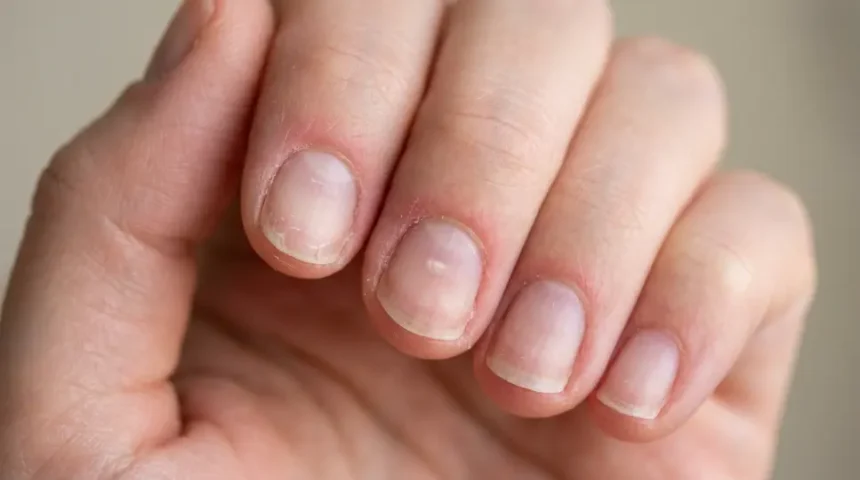
Peeling an acrylic nail rarely removes only the artificial product. Because acrylic adheres firmly to the natural nail, pulling it away can lift some of the upper keratin layers with it. The nail may then look chalky, rough, thin, or uneven and feel sore when touched.
It can be tempting to pry at a loose edge, especially when most of the set has already lifted. However, the attached areas may still have a strong bond. If the product does not slide away easily after soaking, it needs more time rather than more force.
The natural nail was over-filed
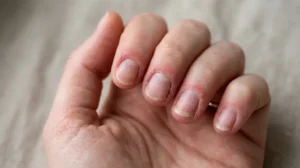
An electric file or coarse hand file can remove acrylic quickly, but it can also thin the natural nail when used too aggressively. Over-filed nails may feel hot during the appointment and remain tender afterward. They can also bend more easily because there is less nail plate protecting the tissue below.
Fine red lines, a burning feeling, or tenderness in one concentrated area may suggest that filing reached too close to the nail bed. Do not try to smooth the area by buffing it again. More filing removes additional nail material and can prolong the discomfort.
Acetone dried the nail and surrounding skin
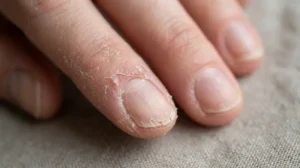
Acetone is effective because it softens acrylic, but it also strips surface oils. After a long soak, the nail plate may look white and feel brittle, while the cuticles and fingertips can become dry or tight. Dryness alone usually causes mild discomfort rather than sharp pain, but it can make already-thin nails feel more sensitive.
Pressure or trauma happened before removal
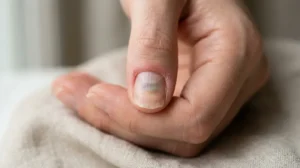
Long acrylic nails act like levers. Catching one on clothing, hitting it against a hard surface, or using it to open something can transfer force to the natural nail. The acrylic may appear intact even though the nail bed underneath has been bruised or stressed.
Once the enhancement is removed, the underlying tenderness becomes easier to notice. A dark red, purple, or black area may indicate blood trapped beneath the nail after an injury. Significant throbbing or a large dark patch should be assessed by a healthcare professional.
The nail has lifted from the nail bed
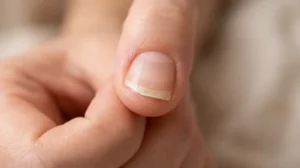
Separation of the nail plate from the tissue beneath it is called onycholysis. The detached part may appear white or opaque because air has entered the space. It may feel tender, particularly if the separation is recent or continues farther toward the cuticle.
Do not dig beneath a lifted nail or glue it back down. Keep it short, clean, and dry, and seek medical advice if the separation is spreading or accompanied by pain, odor, or color changes.
Irritation, allergy, or infection is developing
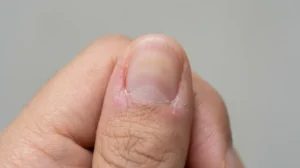
Some people react to ingredients used in acrylic systems, primers, adhesives, or nail products. An allergic reaction may cause itching, redness, swelling, blistering, or irritated skin around the fingertips. Infection is another possibility when bacteria or fungi enter through damaged skin or a space created by lifting.
Increasing warmth, pus, a bad smell, green discoloration, worsening swelling, or pain that becomes stronger rather than better needs prompt professional attention. Covering a possible infection with a new set of acrylics can hide the problem and trap moisture.
What Normal Post-Removal Sensitivity Feels Like
Mild sensitivity usually affects several nails and feels like tenderness rather than severe pain. The nails may look dry or rough and feel more flexible than usual. Discomfort should gradually improve once the nails are protected from further filing, chemicals, and pressure.
Sharp pain, persistent throbbing, bleeding, marked redness, or severe pain in one nail is different. Those signs are more consistent with an injury, significant thinning, separation, or infection and should not be dismissed as a routine part of removal.
What to Do When Your Nails Hurt
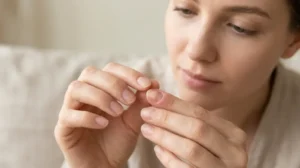
Give them a break from enhancements
Avoid immediately applying another acrylic, gel, dip, or press-on set over painful nails. A fresh enhancement may disguise damage without resolving it. Adhesives and removal chemicals can also irritate skin that is already sore.
Keep the nails short and gently shaped
Short nails are less likely to bend or catch on objects. Use a fine-grit file to smooth only the free edge, moving gently rather than sawing aggressively. Do not file the top surface in an attempt to erase ridges or white patches.
Replenish moisture regularly
Massage a simple cuticle oil or fragrance-free moisturizer into the nails and surrounding skin several times a day. Petroleum jelly can be useful at night for very dry fingertips. Moisturizer will not replace nail layers that have been removed, but it can improve flexibility and reduce dryness around the nail.
Protect your hands from water and cleaners
Repeated wetting and drying can make compromised nails feel even more fragile. Wear gloves for dishes and household cleaning, but remove them afterward so moisture does not remain trapped around the fingers. Use a mild hand wash and avoid very hot water.
Be cautious with nail hardeners
Hardener is not always the answer. Some formulas can make nails feel rigid but more prone to snapping, while others may irritate sensitive skin. A clear protective coat can reduce snagging if it does not sting, but painful or visibly damaged nails are better assessed before another product is added.
Do not test the nail repeatedly
Bending or pressing the nail to see whether it still hurts keeps placing stress on the same area. Treat tenderness as a reason to protect the nail, not something to test throughout the day.
What Not to Put on Painful Nails
Avoid household remedies that sting or dry the skin, including undiluted essential oils, lemon juice, bleach, or rubbing alcohol. Do not use nail glue on a crack that extends into the living tissue, and do not push tools beneath a lifted nail. These steps can cause more irritation or introduce germs.
If a product burns when applied, remove it and rinse the area rather than trying to tolerate the sensation. Pain is not evidence that a strengthening treatment is working.
How Long Does the Pain Usually Last?
Minor dryness or surface sensitivity may begin improving within a few days. Nails that were peeled or over-filed can remain tender longer because the damaged portion must grow forward. Fingernails grow slowly, so replacing the entire visible nail plate takes several months.
Healing time depends on the cause and severity. The useful question is not only how many days have passed, but whether the discomfort is steadily improving. Pain that remains unchanged, becomes worse, or is joined by redness, swelling, or discoloration warrants professional advice.
Can Damaged Nails Recover?
In many cases, yes. The nail plate already outside the cuticle cannot repair itself in the way skin does, but a healthy new nail can grow from the matrix beneath the skin. Your job is to protect that growth and prevent additional trauma.
You do not need to sand away every ridge or rough patch. Keep the nails comfortable, moisturized, and short while the affected section grows out. If your nails have also become unusually flexible, this guide to why nails become bendy explains other habits and conditions that may contribute.
How to Make Future Acrylic Removal Gentler
Professional removal is often the safest choice, particularly when the acrylic is thick, lifted unevenly, or attached to an injured nail. If removal is done at home, shorten the extensions, reduce only the bulk of the acrylic without filing into the natural nail, and allow enough soaking time for the remaining product to soften.
Never slide dental floss, cards, or metal tools beneath acrylic that is still attached. These viral shortcuts can place sudden pressure on the nail plate. If the product resists, rewrap it and wait. Patience is less damaging than force.
At future appointments, speak up if filing feels hot or painful. Nail services should not require you to tolerate burning. It is also reasonable to take breaks between sets when your natural nails look thin, sore, or separated.
When to See a Dermatologist or Doctor
Arrange medical care if you notice:
- Severe, throbbing, or worsening pain
- Redness or swelling that spreads around the nail
- Pus, drainage, odor, or unusual warmth
- Green, yellow, dark brown, or black discoloration without a clear explanation
- A nail lifting significantly from the nail bed
- Bleeding, an open wound, or a deep crack
- Tingling, numbness, or reduced sensation
- Symptoms that do not improve with gentle care
People with diabetes, poor circulation, or a weakened immune system should seek advice promptly for nail injuries or possible infections rather than relying only on home care.
Conclusion
If you have been asking why do my nails hurt after taking off acrylics, the most likely explanations include forced removal, over-filing, acetone-related dryness, or an injury hidden beneath the enhancement. Mild sensitivity should move in the right direction when you stop filing, keep the nails short, moisturize the surrounding skin, and avoid another set for a while.
Pain is not something a manicure should simply cover. Worsening soreness, swelling, drainage, discoloration, or nail separation deserves professional evaluation so an injury, allergy, or infection can be treated appropriately.
Frequently Asked Questions
Is it normal for nails to hurt after removing acrylics?
Mild tenderness can occur, especially after prolonged soaking or filing. Strong, throbbing, or worsening pain is not a routine result and may point to excessive thinning, trauma, separation, or infection.
Why do my nails feel thin after acrylic removal?
The surface may have been over-filed or layers may have been pulled away when the acrylic was peeled off. Acetone can also make the nails temporarily look dry and chalky, although it does not usually explain severe pain by itself.
Should I put acrylics back on sore nails?
No. Give painful nails time without enhancements and avoid covering signs of damage or infection. Applying and later removing another set may add more stress.
Does cuticle oil heal damaged nails?
Cuticle oil helps condition dry nails and surrounding skin, but it cannot rebuild nail layers that have already been removed. Consistent moisture and protection can make the growing nail feel more flexible and comfortable.
Can I use gel polish while my nails recover?
Wait until the nails are no longer painful and there are no signs of lifting, infection, or skin irritation. Gel removal requires additional soaking or filing, so applying it too soon can restart the problem.
Why does one nail hurt more than the others?
One nail may have been filed more deeply, caught or bumped before removal, or developed localized lifting or infection. Severe pain in a single nail, especially with color change or swelling, should be evaluated.
How long should I wait before getting acrylics again?
There is no universal number of days. Wait until tenderness has resolved and the nails and surrounding skin look healthy. Significant thinning or separation may require waiting for the damaged portion to grow out and getting advice from a dermatologist.
Our Editorial Approach
Beauty and self-care information should be clear and easy to use. Our goal is to help you understand your options and make more informed choices about your everyday routine.
Our articles are for educational purposes only and do not replace advice from a qualified healthcare professional.