
A nude polish can look softly pink in the bottle and almost orange on your hands. Pale beige may blend neatly with one person’s skin but make another person’s manicure look chalky. With fair skin, small differences in a polish’s undertone can noticeably change the result.
- Fair Skin Nail Polish Color Matching Chart
- Fair Skin and Undertone Are Different Things
- 1. Rosy Nude Nail Polish
- 2. Peach Beige and Warm Nude Shades
- 3. Sheer and Milky Pink
- 4. Classic Red Nail Polish
- 5. Lilac and Soft Purple
- 6. Mauve and Dusty Rose
- 7. Burgundy, Plum, and Black Cherry
- 8. Brown, Caramel, and Taupe
- 9. Sage, Olive, and Deep Green
- 10. Silver, Gold, and Champagne
- How to Find a Nude Polish That Actually Suits You
- Check the Color in More Than One Light
- Common Color-Matching Mistakes
- Choosing Only From a Bottle Photo
- Assuming Every Pale Nude Will Blend
- Treating Undertone Advice as a Restriction
- Changing the Shade Before Checking the Finish
- Final Takeaway
- Frequently Asked Questions
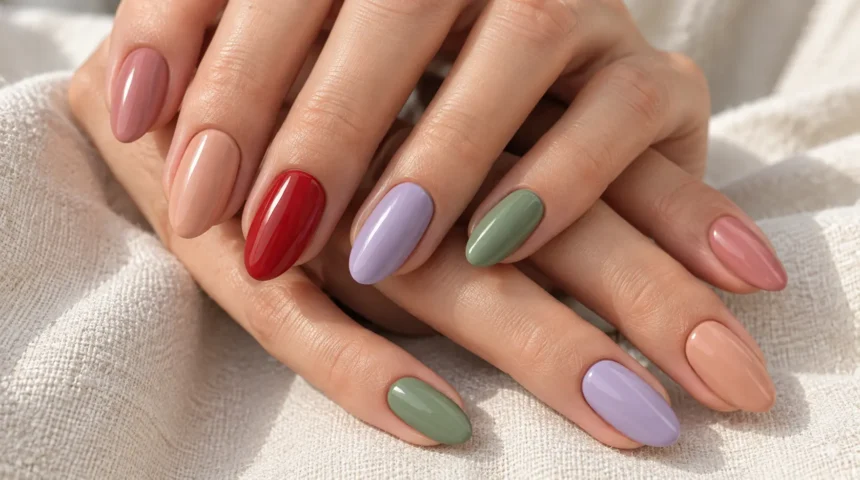
A fair skin nail polish color matching chart gives you a useful starting point. Rosy nudes, mauve, and berry shades are options to compare for cooler undertones. Peach, cream, and warm reds offer a different direction for warmer undertones. Neutral skin gives you room to experiment across both groups.
These are suggestions rather than rules. The best shade depends on whether you want the polish to blend with your hands, create a soft contrast, or stand out clearly.
Fair Skin Nail Polish Color Matching Chart
Start with the color family you want to wear, then compare its warmer and cooler versions.
| Color family | Cool undertones | Warm undertones | Neutral undertones | What to check |
|---|---|---|---|---|
| Nude | Rosy beige, pink taupe | Peach beige, light caramel | Balanced beige-pink | Whether it blends or looks chalky |
| Pale pink | Blue-based pink, soft rose | Peach pink, warm blush | Milky pink, muted blush | How white or opaque the shade looks |
| Red | Cherry, cranberry, blue-red | Tomato, brick, orange-red | Balanced classic red | Whether you prefer a warm or cool contrast |
| Purple | Blue-lilac, plum | Pink-lilac, reddish purple | Dusty lilac, muted mauve | Whether the shade feels too icy or too bright |
| Brown | Mushroom, cool cocoa | Caramel, cinnamon | Neutral chocolate | Whether it leans gray, orange, or red |
| Green | Sage, blue-green, emerald | Olive, moss, yellow-green | Muted sage, deep green | How strong the yellow or blue undertone is |
| Blue | Powder blue, navy | Teal, softened turquoise | Dusty blue, denim | Whether you want softness or clear contrast |
| Dark shades | Black cherry, plum, navy | Espresso, oxblood, deep olive | Burgundy, charcoal, black | How dark it looks in daylight |
| Metallic | Silver, cool pearl | Gold, copper, bronze | Champagne, mixed metallics | Whether the pigment hides the base color |
You don’t need to stay within one column. Use the chart to choose two or three shades to test, especially when a color you normally like looks different once it’s painted.
Fair Skin and Undertone Are Different Things
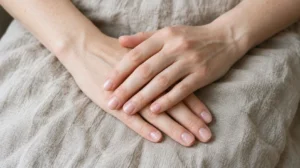
Fair describes how light your skin appears. Undertone describes the underlying color impression, which may lean cool, warm, neutral, or olive.
Two people with equally fair skin can have different preferences in nude polish. A peach beige may look understated on one hand and noticeably orange on another.
Surface redness can also make the choice confusing. Pinkness around your fingers doesn’t necessarily tell you which polish undertone you’ll prefer.
Instead of relying on one visual clue, compare actual color samples beside your hands. A rosy nude and a peach nude are a useful pair because their difference is easy to see.
1. Rosy Nude Nail Polish
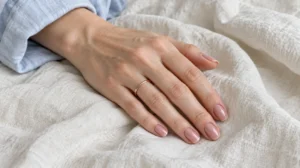
Rosy nude adds a little pink to beige, keeping the manicure close to a natural nail color without trying to match the skin exactly.
It’s a useful starting point when ordinary beige looks yellow or flat on your hands. Choose a muted rose rather than a bright pink if you want the result to remain understated.
Depth matters as much as undertone. A rosy nude slightly darker than your skin gives the nails a clearer outline, while a sheer version allows more of the natural nail to show.
Best for: A soft everyday manicure with a little definition.
2. Peach Beige and Warm Nude Shades
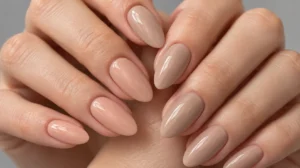
Peach beige gives a nude manicure more warmth. It can look creamy and subtle, although a strongly orange version creates a much more obvious contrast.
Compare the shade in daylight before choosing it. A polish that looks neutral under warm salon lighting may appear peachier outdoors.
If peach beige feels too orange, try a shade with less saturation or a little more pink. You may like the warmth while wanting a quieter version of it.
Best for: A warm nude manicure that doesn’t look stark.
3. Sheer and Milky Pink
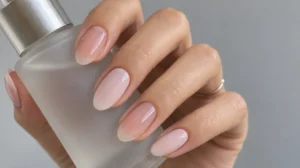
Sheer pink lets the natural nail remain visible, while milky pink adds a soft white veil. Both can give fair hands a neat, lightly polished appearance.
Check how opaque the formula becomes as you add coats. A milky shade may look delicate in one layer and much whiter after three.
For a barely-there manicure, choose a translucent pink. If you want the nails to stand out more clearly, try a creamy blush with slightly greater coverage.
Best for: Short natural nails and a subtle glossy finish.
4. Classic Red Nail Polish
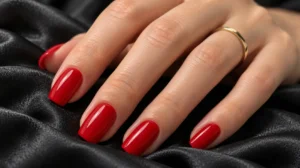
Red gives fair skin a clear contrast, but the undertone changes its character.
Cherry and cranberry lean cooler. Tomato and orange-red feel warmer. A balanced red sits between them and is a practical starting point if you’re unsure.
Hold two painted samples beside your hand rather than judging from the bottles. Decide whether you enjoy the brighter warmth of one shade or the deeper, cooler appearance of the other.
Best for: A defined manicure with strong color.
5. Lilac and Soft Purple
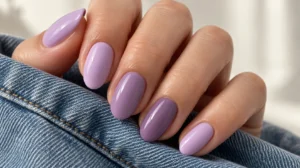
Lilac can lean pink, blue, gray, or white. Those differences matter when you’re choosing a pastel for fair skin.
A pink-lilac gives a warmer impression. Blue-lilac creates a cooler contrast, while dusty lavender feels more muted.
If a pale purple looks chalky, try a slightly deeper shade or a sheerer formula. You can keep the same color family while changing how much white is visible.
Best for: A pastel manicure with more color than a neutral pink.
6. Mauve and Dusty Rose
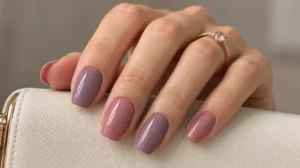
Mauve and dusty rose offer a middle ground between pale nude and dark berry. They provide visible color without the sharp contrast of red or black.
Compare their brown and purple tones. A brown-leaning dusty rose looks warmer, while a purple-leaning mauve feels cooler.
These shades work well when very pale polish seems to disappear against your hands. A little extra depth gives the nail outline more definition.
Best for: A muted manicure that remains noticeable.
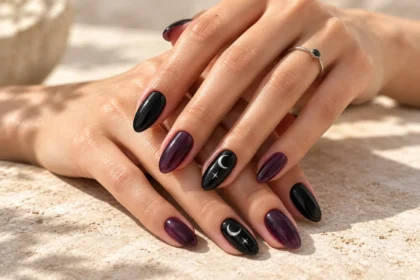
7. Burgundy, Plum, and Black Cherry
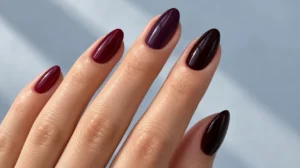
Dark shades create a strong outline against fair skin. The main decision is which undertone you want to see when the light catches the polish.
Burgundy brings wine-red color, plum adds purple, and black cherry can shift between deep red and nearly black.
Check the shade in daylight if you want its color to remain obvious. Some very dark formulas look mostly black once you’ve built full coverage.
Best for: A rich manicure with clear contrast.
8. Brown, Caramel, and Taupe
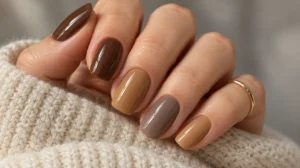
Brown polish ranges from pale mushroom to deep espresso. Choosing the undertone helps narrow the options.
Cool taupe can lean gray or purple. Caramel has more golden warmth, while neutral chocolate gives you depth without such an obvious yellow or gray direction.
If one brown looks dull to you, compare a different undertone before abandoning the color. A warmer cocoa or a rosier taupe may give the result you wanted.
Best for: A neutral alternative to pink and beige.
9. Sage, Olive, and Deep Green
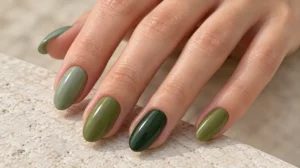
Green can be understated or striking, depending on its depth and undertone.
Soft sage gives a muted contrast. Olive introduces more yellow and brown, while emerald makes a stronger statement.
If a pale green seems too chalky, try a deeper version. If olive feels too yellow, compare it with a blue-green shade.
Best for: A color change that still works with a simple manicure.
10. Silver, Gold, and Champagne
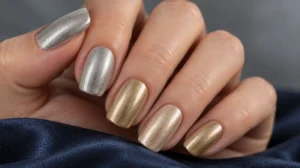
Metallic polish adds reflection as well as color. Silver creates a cooler impression, gold adds warmth, and champagne sits between pale gold and soft beige.
Test the finish as you move your hand. A metallic that looks subtle straight on may become much brighter under direct light.
For less contrast, use a translucent shimmer over a nude base. A fully opaque metallic gives a more defined result.
Best for: A reflective manicure or a small accent detail.
How to Find a Nude Polish That Actually Suits You
Matching your skin exactly isn’t necessary. A nude can look intentional when it’s slightly pinker, warmer, lighter, or darker than your hands.
Start by deciding what you want:
- A barely visible finish: Try sheer pink or translucent beige.
- A clear nail outline: Choose a nude with a little more depth.
- A creamy pastel effect: Compare milky pink and pale peach.
- A muted neutral: Look at rosy taupe or soft mauve.
Test the polish on a nail tip when possible. The bottle’s curved glass and the depth of the liquid can make the color look different from a thin painted layer.
Check the Color in More Than One Light
View your sample in indirect daylight and ordinary indoor lighting. Notice whether it becomes much more yellow, pink, gray, or white.
Apply the number of coats you expect to wear. One sheer layer and three opaque layers can give very different impressions.
You can also compare the same color in two finishes. Glossy polish adds reflection, while matte polish gives a more uniform view of the color.
Common Color-Matching Mistakes
Choosing Only From a Bottle Photo
A product image can help you shortlist colors, but it won’t show exactly how the shade looks beside your hands. Painted swatches are more useful.
Assuming Every Pale Nude Will Blend
A light beige may create a stronger contrast than a deeper rosy shade. Check undertone and opacity alongside depth.
Treating Undertone Advice as a Restriction
Cool skin can wear orange-red, and warm skin can wear lilac. The chart helps you compare effects; your preference decides the final choice.
Changing the Shade Before Checking the Finish
If a color looks too stark, a sheer formula may give you a softer version. You don’t always need a completely different shade.
Final Takeaway
The fair skin nail polish chart is a starting point for comparing color, undertone, and finish. Rosy nude, peach beige, lilac, red, and darker shades each give a different amount of contrast.
Test a few painted samples in daylight and decide how much definition you want. The most useful match is the one that gives your manicure the appearance you like.
Frequently Asked Questions
What nail polish color looks most natural on fair skin?
Sheer pink, rosy beige, and peach beige are useful starting points. Compare them beside your hands to see which gives the amount of contrast you prefer.
Can fair skin wear black nail polish?
Yes. Black creates a clear contrast against fair skin. Short nails, a glossy finish, or a narrow French tip offer different ways to wear it.
Why does nude polish look orange on me?
The polish may have more peach or yellow warmth than you expected. Compare it with a pinker or more neutral nude in daylight.
Should nail polish match my skin exactly?
No. A slight difference can help define the nails. Choose whether you want the color to blend softly or remain visibly separate.
Are pastel colors always flattering on fair skin?
It depends on the shade and the effect you like. Very white-based pastels can look stark; sheerer or slightly deeper versions offer a softer alternative.
Can I use this chart if I don’t know my undertone?
Yes. Choose one warm and one cool version of a color, then compare painted samples. You can select the shade you enjoy without assigning your skin a fixed label.
Our Editorial Approach
Beauty and self-care information should be clear and easy to use. Our goal is to help you understand your options and make more informed choices about your everyday routine.
Our articles are for educational purposes only and do not replace advice from a qualified healthcare professional.