
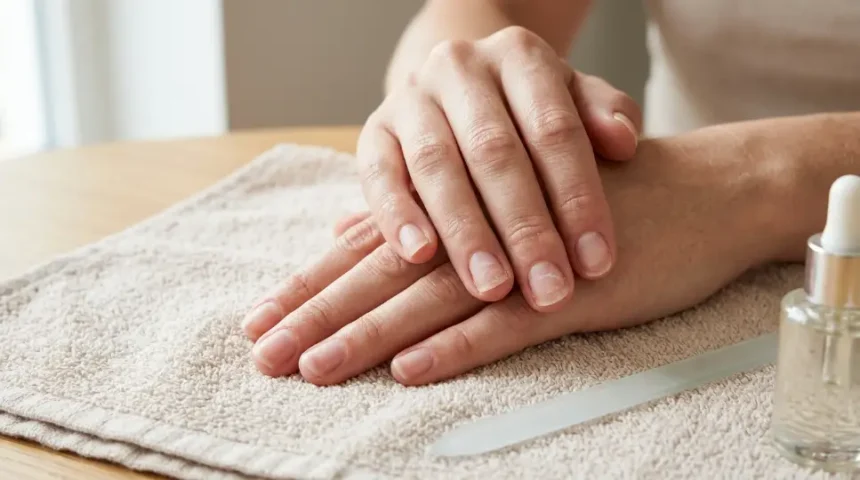
Damaged nails after gel polish may start looking and feeling better within two to four weeks, but the worn or thinned part of the nail cannot repair itself like skin. It has to grow out. A fingernail commonly needs about four to six months to replace itself from cuticle to tip, so deeper damage can remain visible for several months.
- Gel Polish Usually Isn’t the Only Problem
- How Long Do Nails Take to Recover After Gel Polish?
- Signs Your Nails Need a Break
- How to Repair Damaged Nails After Gel Polish
- 1. Keep the nails short and softly shaped
- 2. Apply cuticle oil consistently
- 3. Protect nails from repeated water exposure
- 4. Use regular polish only if it feels comfortable
- 5. Don’t peel the remaining gel
- 6. Treat the surrounding skin gently
- What Not to Do While Nails Recover
- How Long Should You Take a Break From Gel Nails?
- When Sore Nails After Gel Polish Removal Need Attention
- How to Prevent the Same Damage Next Time
- Frequently Asked Questions
- Can damaged nails heal in one week?
- Will thin nails become thick again after gel removal?
- Should I cut off peeling nails?
- Can I put gel over peeling nails?
- Does acetone permanently damage nails?
- How can I tell whether my nails are improving?
- Final Takeaway
The timeline depends on what happened during removal. Mild dryness is very different from a nail plate that was aggressively filed, peeled, or scraped.
Gel Polish Usually Isn’t the Only Problem
A well-applied gel manicure doesn’t automatically ruin healthy nails. Trouble often begins when the surface is filed too aggressively or when cured gel is pulled off before it has properly released.
Peeling gel can lift layers of the natural nail with it. Forceful scraping can do something similar, while repeated buffing may leave the plate noticeably thin. Acetone can temporarily strip away surface oils and make nails and surrounding skin feel dry, but dryness alone isn’t the same as permanent nail damage.
How Long Do Nails Take to Recover After Gel Polish?
Use these ranges as practical expectations rather than a strict deadline:
| What you notice | What may be happening | Realistic recovery window |
|---|---|---|
| Dry, dull surface | Temporary dehydration and surface roughness | Often looks better within days to two weeks |
| Mild peeling at the tips | Layers of the free edge are separating | Several weeks as the peeling portion grows out |
| Thin, bendy nails | Over-filing or layers removed during peeling | Commonly two to four months, sometimes until full regrowth |
| Ridges or rough patches | Uneven surface filing or removal | The mark moves forward as the nail grows |
| Soreness after removal | Pressure, scraping, or an overly thin nail plate | Mild tenderness should settle within a few days |
| Damage close to the cuticle | New growth was affected near its starting point | May remain visible for much of the four-to-six-month growth cycle |
Healthy new nail grows from beneath the skin at the base. That means the useful sign to watch is not whether an old rough patch suddenly becomes smooth, but whether clearer, stronger-looking nail is appearing near the cuticle.
If soreness is worsening, lasts more than a few days, or comes with redness, swelling, warmth, drainage, or a dark area that wasn’t caused by a known bruise, have the nail checked by a healthcare professional.
Signs Your Nails Need a Break
Weak nails after gel polish removal can look different from one person to the next. A short break is sensible if you notice:
- Layers flaking away at the tips
- Nails bending with very little pressure
- Rough white patches that don’t wipe away
- Tenderness when you press on the nail
- Splits that catch on clothing or hair
- Heat or discomfort under the curing lamp
- A nail lifting away from the skin beneath it
A green, yellow, or brown color change isn’t something to cover immediately with another manicure. Discoloration can have several causes, and sealing it beneath fresh gel makes it harder to monitor.
How to Repair Damaged Nails After Gel Polish
There is no topical product that can fuse removed nail layers back together. The goal is to protect the existing plate, prevent more splitting, and support comfortable new growth.
1. Keep the nails short and softly shaped
Long, flexible nails act like levers. Every small knock can bend a weakened section and encourage a deeper split. Trim them to a comfortable length and use a fine file to smooth snags.
File gently and focus on creating a smooth edge. Avoid buffing the top to erase discoloration or ridges; that removes more nail from a plate that may already be thin.
2. Apply cuticle oil consistently
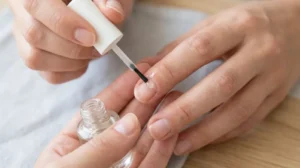
Massage a drop of cuticle oil around each nail once or twice a day, especially after washing your hands. Oil will not make a damaged nail regrow overnight, but it can improve flexibility and reduce the dry, brittle feeling that makes tips prone to catching and peeling.
If you don’t have a dedicated nail oil, a simple fragrance-free hand cream followed by a small amount of petroleum jelly around the cuticles can help limit moisture loss.
3. Protect nails from repeated water exposure
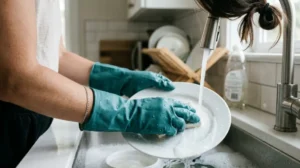
Nails absorb water and swell, then contract as they dry. Repeating that cycle throughout the day can be hard on already peeling nails. Wear gloves for dishes, household cleaning, and other wet work. Remove wet gloves promptly so moisture isn’t trapped around the fingers.
4. Use regular polish only if it feels comfortable
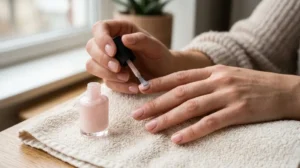
A standard base coat or regular nail polish may add a light layer of protection while the damage grows out. Remove it gently and avoid changing colors every few days. If polish causes stinging, or if the nail is separating from the nail bed, leave it bare and get professional advice.
Use hardening treatments cautiously. Stop if a hardener makes your nails more brittle or uncomfortable.
5. Don’t peel the remaining gel
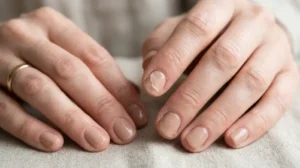
Once one edge lifts, it can be tempting to pull off the rest. That is one of the fastest ways to remove surface layers of the natural nail. If gel remains, have it removed carefully or follow the product’s proper soak-off directions without forcing resistant areas.
6. Treat the surrounding skin gently
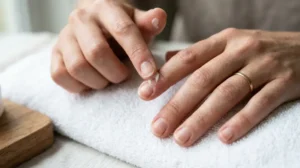
Acetone, filing dust, and frequent washing can leave the cuticles and fingertips dry. Use a fragrance-free hand cream and avoid cutting live cuticle tissue. Trim only a true hangnail with clean nippers rather than pulling it.
For more practical beauty-care guidance, browse The Serenity Lab.
What Not to Do While Nails Recover
Try to avoid:
- Peeling, picking, or scraping off leftover product
- Buffing until the nail looks perfectly even
- Using the nails to open packages or pry up labels
- Gluing over a painful or deep split without checking it
- Covering unexplained discoloration with an opaque manicure
- Reapplying gel simply because the thin nails feel exposed
High-dose beauty supplements are not a quick repair for damage caused by removal. They can also cause side effects or interfere with medical tests.
How Long Should You Take a Break From Gel Nails?
There is no universal rule that everyone needs a fixed break after every gel manicure. If your nails are smooth, comfortable, and professionally removed without surface damage, you may not need a long pause.
If they are peeling, sore, or noticeably thin, wait until tenderness has resolved and enough healthy nail has grown in to give the weak area stability. For mild dryness, that may mean a couple of weeks. After over-filing or significant peeling, a break of several weeks to a few months is more realistic.
The calendar matters less than the condition of the nail. Reapplying gel over a plate that still bends painfully or continues to split can hide the problem without fixing it.
When Sore Nails After Gel Polish Removal Need Attention
Mild sensitivity immediately after a rough removal can settle quickly. Pain that is strong, throbbing, or getting worse is different. Seek professional care if you notice:
- Persistent pain or marked tenderness
- Swelling, warmth, pus, or spreading redness
- Bleeding or a deep crack into attached nail
- The nail lifting significantly from the nail bed
- New green, dark brown, or black discoloration
- Itching, blistering, or a rash around multiple nails
Itchy or swollen skin around gel manicures can sometimes reflect a reaction to nail products. Don’t keep testing the same gel at home if that happens.
How to Prevent the Same Damage Next Time
The next removal matters as much as the next application. Ask your nail technician not to thin the natural nail during prep, and speak up if filing feels hot or painful. Gel should be removed according to the system used, with enough time for the coating to soften before it is gently lifted away.
At home, don’t mix random lamps and gel systems. Follow the manufacturer’s curing instructions, keep uncured product off the skin, and stop if the lamp causes intense heat or pain. A fresh manicure should never require you to tolerate ongoing discomfort.
Frequently Asked Questions
Can damaged nails heal in one week?
Surface dryness may improve within a week, especially with regular oil and hand cream. Peeling, thin areas, and filing marks will not fully disappear that quickly because the affected nail must grow forward.
Will thin nails become thick again after gel removal?
The existing thin section cannot rebuild itself, but new nail growth may return to its usual thickness if the nail-forming area is healthy and the cause was temporary over-filing or peeling.
Should I cut off peeling nails?
Trim only the loose portion that extends beyond the fingertip, then smooth the edge with a fine file. Do not cut into attached or tender nail tissue.
Can I put gel over peeling nails?
It is better to pause when nails are actively peeling, sore, or very thin. A new coating may disguise the damage and removal can take off additional layers.
Does acetone permanently damage nails?
Acetone can make the nail surface and surrounding skin feel temporarily dry. The greater risk of visible thinning usually comes from forceful scraping, peeling, or excessive filing during removal.
How can I tell whether my nails are improving?
Look at the area closest to the cuticle. A smooth band of new growth that gradually pushes the damaged section toward the tip is a better progress marker than day-to-day changes in the old nail.
Final Takeaway
Damaged nails after gel polish rarely return to normal overnight. Dryness may settle within days, while peeling or thin nails can take several weeks to feel sturdier. If the nail plate was significantly over-filed or peeled, complete recovery may take four to six months as a new nail grows from base to tip.
Keep nails short, moisturize them consistently, protect them during wet work, and resist covering ongoing pain or discoloration. The most effective repair plan is simple: prevent another round of damage while healthy nail grows in.
Our Editorial Approach
Beauty and self-care information should be clear and easy to use. Our goal is to help you understand your options and make more informed choices about your everyday routine.
Our articles are for educational purposes only and do not replace advice from a qualified healthcare professional.