
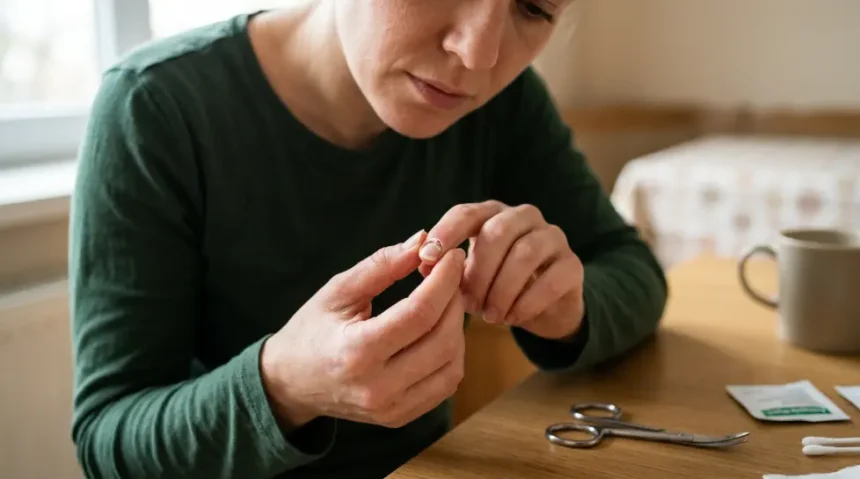
If your fingernail falling off but still attached, resist the urge to pull it off. A partially detached nail can happen after a crush injury, impact, manicure-related trauma, or other damage to the nail. The safest approach is usually to protect the attached portion, keep the area clean, and avoid catching or tearing the loose nail. If the injury is severe, painful, bleeding, or shows signs of infection, professional medical care may be needed.
- What Does It Mean When a Fingernail Is Partially Detached?
- What to Do When Your Fingernail Falling Off But Still Attached
- 1. Don’t Pull the Nail Off
- 2. Gently Clean the Finger
- 3. Protect the Loose Fingernail
- 4. Keep an Eye on Pain and Swelling
- 5. Give the Nail Time to Grow Out
- Why Is My Fingernail Coming Off?
- Should You Cut a Fingernail That Is Falling Off?
- What If There Is Blood Under the Nail?
- When Should You See a Doctor?
- How Long Does It Take for a Fingernail to Grow Back?
- Fingernail Healing: What to Expect
- How to Protect a Damaged Fingernail While It Heals
- Can a Partially Detached Fingernail Grow Back Normally?
- Final Takeaway
- Frequently Asked Questions
A damaged nail can look alarming, but many injured fingernails eventually grow out and are replaced by new nail growth. Fingernails typically take around six months to grow back completely after being lost.
What Does It Mean When a Fingernail Is Partially Detached?
A partially detached fingernail means part of the nail plate has separated from the nail bed while another section remains attached.
You may notice:
- The nail looks lifted from the fingertip.
- A white or empty-looking space appears underneath part of the nail.
- The nail moves when you touch it.
- The nail is attached at one end but loose at another.
- There may be bruising, swelling, tenderness, or blood underneath.
- The nail may eventually come off completely as new growth pushes it forward.
The medical term for separation of the nail plate from the nail bed is onycholysis. Trauma is one possible cause, although fungal infections and other nail conditions can also cause nail separation.
What to Do When Your Fingernail Falling Off But Still Attached
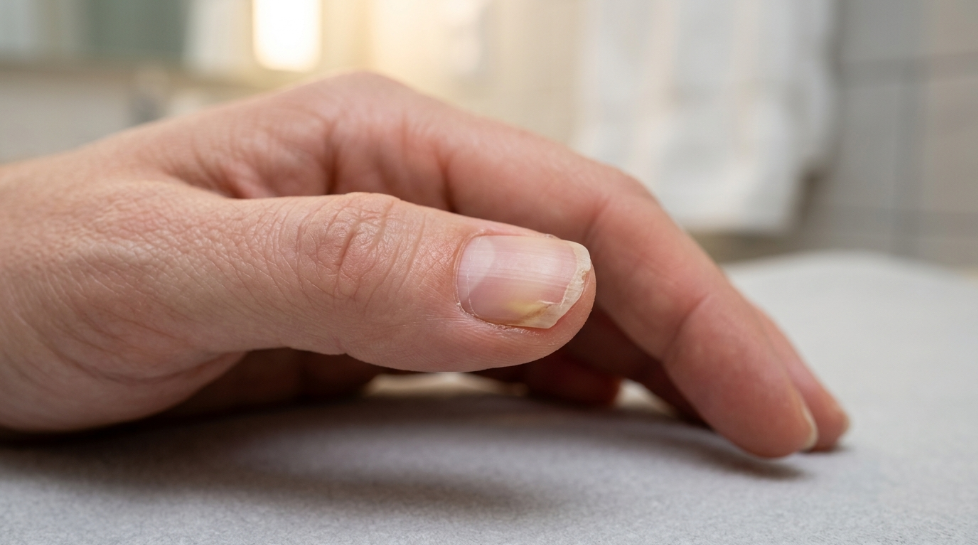
The most important thing is not to rip or pull the nail away. If some of it is still firmly attached, forcing it off can cause additional injury to the tissue underneath.
1. Don’t Pull the Nail Off
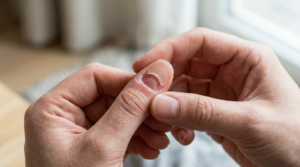
Even when a loose fingernail seems like it’s barely attached, don’t tug on it.
The attached portion may still be protecting the nail bed underneath. Pulling it prematurely can cause bleeding and potentially worsen the injury.
If the nail is dangling and repeatedly catching on clothing or objects, a healthcare professional can determine whether it should be trimmed or removed.
2. Gently Clean the Finger
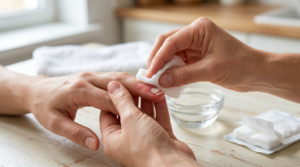
If the injury is fresh, gently clean the area with mild soap and water.
Avoid aggressively scrubbing underneath the loose nail. Don’t use sharp objects, tweezers, or manicure tools to pry underneath it.
The tissue beneath the nail is delicate, and unnecessary manipulation can increase irritation and the risk of infection.
3. Protect the Loose Fingernail
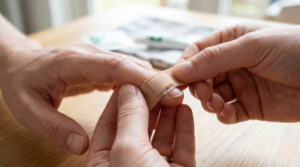
A loose nail can easily catch on hair, clothing, towels, or other objects.
Keeping the injured fingertip protected can reduce accidental pulling. A clean bandage can be useful when the area is tender or likely to be bumped.
If a dressing becomes wet or dirty, replace it with a clean one.
The NHS also recommends trimming an injured, loose nail back to the point where it remains attached if needed, because this can prevent it from bending and catching. However, if you’re unsure how much can safely be trimmed, especially after significant trauma, it’s better to have it assessed rather than cutting deeply into an injured nail.
4. Keep an Eye on Pain and Swelling
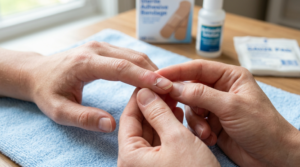
A recently injured nail may be sore or swollen.
A cold pack wrapped in a cloth can help with discomfort after an injury. Don’t place ice directly against the skin.
If pain is severe, continues getting worse, or seems disproportionate to the visible injury, consider getting medical attention.
A hard impact can sometimes cause a subungual hematoma, which is bleeding underneath the nail. This can make the nail look dark purple, blue, brown, or black and may cause throbbing pain.
5. Give the Nail Time to Grow Out
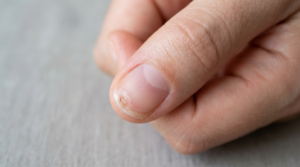
Once part of a nail has separated from the nail bed, that detached section generally won’t simply reattach itself.
Instead, the damaged portion gradually grows forward and can eventually be trimmed away as healthy nail grows from the base.
Think of it as a slow transition rather than something you need to fix immediately.
Why Is My Fingernail Coming Off?
A nail falling off but still attached is often related to some type of trauma.
Common causes include:
| Possible cause | What may happen |
|---|---|
| Door or drawer injury | The nail may bruise, lift, or partially detach |
| Heavy impact | Blood can collect underneath the nail |
| Nail caught on something | Part of the nail may pull away from the nail bed |
| Manicure or artificial nails | Excessive pressure or trauma may contribute to nail separation |
| Repeated irritation | The nail may gradually lift |
| Fungal infection | The nail may become discolored, thickened, brittle, or separated |
Not every loose fingernail is caused by an injury. Nail fungus, for example, can cause nails to become thickened, discolored, brittle, or lifted from the nail bed.
If your nail is separating and you don’t remember injuring it, that’s a good reason to have the cause evaluated.
Should You Cut a Fingernail That Is Falling Off?
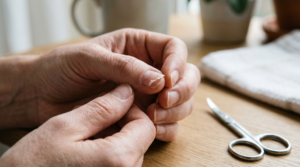
It depends on how much of the nail is detached and where the remaining attachment is.
If a loose edge is catching on things, carefully trimming only the completely detached portion may reduce the chance of further tearing. Don’t cut through an area that is still attached to the nail bed or surrounding tissue.
The NHS specifically recommends cutting injured, loose nails back to where they remain attached to help prevent them from bending or catching.
If the nail is significantly damaged, bleeding, or attached in an unusual way, let a healthcare professional decide whether it needs to be removed or repaired.
What If There Is Blood Under the Nail?
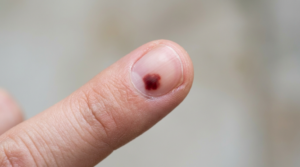
Blood underneath a fingernail after an injury is commonly called a subungual hematoma.
It can happen when a fingertip is hit, crushed, or slammed in a door. The pressure from blood collecting under the nail can cause significant throbbing pain and may push the nail away from the nail bed.
Don’t try to drill, puncture, or burn a hole through your nail at home to release the blood.
If the pressure is painful or the injury is significant, a healthcare provider can determine whether treatment is appropriate.
When Should You See a Doctor?
A small nail injury can often heal without complications, but some injuries deserve prompt medical attention.
Seek professional care if:
- The finger looks deformed.
- You can’t move the finger normally.
- There is severe or worsening pain.
- The fingertip is badly swollen.
- The nail is extensively detached.
- There is a deep cut around or underneath the nail.
- Bleeding doesn’t stop.
- You suspect the finger may be fractured.
- Pus or other drainage develops.
- Redness or swelling around the nail is getting worse.
- You develop a fever.
- The nail starts separating without an obvious injury.
Crush injuries can sometimes occur alongside nail-bed injuries or fractures at the fingertip, so a seemingly simple damaged fingernail isn’t always just a cosmetic problem.
How Long Does It Take for a Fingernail to Grow Back?
Fingernails grow slowly, so don’t expect the damaged area to disappear within a few weeks.
A fingernail that has fallen off after an injury generally takes about six months to grow back, although the exact timeline can vary. Cleveland Clinic notes that fingernails grow at roughly 3 millimeters per month.
The appearance of the nail can change during this period. You may notice ridges, discoloration, or other temporary irregularities as the nail grows out.
A more serious injury involving the nail matrix can sometimes affect how the nail grows. The nail matrix is the tissue responsible for producing new nail cells, so significant damage there can lead to longer-lasting changes.
Fingernail Healing: What to Expect
The healing process can look different depending on the original injury.
Early stage
The finger may be painful, swollen, bruised, or tender. The nail may be partially lifted or discolored.
Middle stage
The damaged nail gradually moves forward as new nail grows from the base. The separated portion doesn’t become permanently reattached to the nail bed.
Later stage
The damaged section can eventually be trimmed away as it reaches the free edge. New nail growth should gradually replace the injured portion.
Patience matters here. Trying to speed up the process by pulling, picking, filing, or aggressively cleaning underneath the nail can cause unnecessary irritation.
How to Protect a Damaged Fingernail While It Heals
A few simple habits can make the healing period easier:
- Keep the nail reasonably short once loose sections can be safely trimmed.
- Protect the fingertip from knocks and repeated pressure.
- Avoid picking or peeling the nail.
- Don’t use sharp tools underneath the nail.
- Avoid aggressive manicures while the nail is healing.
- Keep the area clean.
- Change protective dressings when they become wet or dirty.
- Watch for increasing redness, swelling, warmth, pain, or drainage.
Once the injury has settled, normal nail care can gradually resume.
Can a Partially Detached Fingernail Grow Back Normally?
Often, yes.
If the nail-producing matrix hasn’t been seriously damaged, the nail can grow back normally over time. However, significant trauma to the matrix or nail bed can sometimes affect the appearance or growth of the new nail.
That’s one reason a severe nail injury should not be treated as purely cosmetic.
Final Takeaway
If your fingernail falling off but still attached, the safest move is usually to leave the attached portion alone rather than pulling it off. Keep the finger clean, protect the loose nail from catching, and monitor the injury as new nail grows.
Most injured fingernails eventually grow out, but severe pain, extensive separation, deep cuts, suspected fractures, or signs of infection deserve medical attention. With time and gentle care, the damaged nail can gradually be replaced by new growth.
Frequently Asked Questions
Should I pull off a fingernail that is half detached?
No. Don’t pull on a partially attached nail. Protect the loose portion from catching and have significant injuries assessed by a healthcare professional.
Will a detached fingernail reattach?
The detached section generally does not reattach to the nail bed. Instead, new nail grows from the base and gradually replaces the damaged portion.
How long does it take for a fingernail to grow back after falling off?
A fingernail usually takes around six months to grow back completely, although the timing varies between people and depends on the extent of the injury.
Is it normal for a bruised nail to fall off?
It can happen after significant trauma. Blood collecting beneath the nail can cause separation from the nail bed, and the damaged nail may eventually loosen and fall away as new growth develops.
What if my nail is falling off without an injury?
A nail that becomes loose without an obvious injury may have another cause, including fungal infection or another nail condition. If you don’t know why the nail is changing, it’s worth having it evaluated rather than assuming it is trauma-related.
Can I put nail polish on a damaged fingernail?
It’s generally better to avoid irritating products while the nail and surrounding skin are healing, particularly if there is an open wound, significant tenderness, or infection. Let the injured area recover before returning to regular manicure products.
For more practical beauty, wellness, and self-care guidance, explore The Serenity Lab.
Our Editorial Approach
Beauty and self-care information should be clear and easy to use. Our goal is to help you understand your options and make more informed choices about your everyday routine.
Our articles are for educational purposes only and do not replace advice from a qualified healthcare professional.