
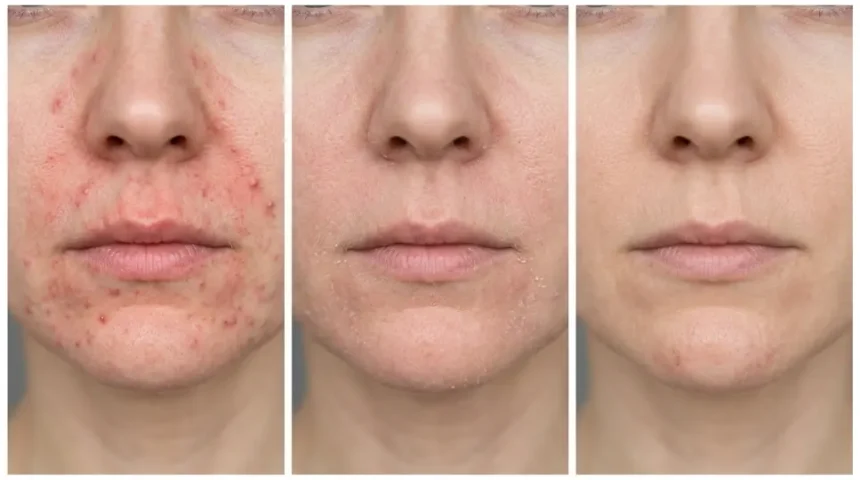
The stages of perioral dermatitis healing can be described as the flare settling, bumps and irritation easing, and the skin staying clear as any remaining discoloration fades. These are practical descriptions, not medically defined stages. They can overlap, and recovery usually takes weeks to months rather than following a predictable daily schedule.
- First, Make Sure You’re Treating the Right Rash
- The 3 Stages of Perioral Dermatitis Healing at a Glance
- Stage 1: The Flare Begins Settling
- Stage 2: Existing Bumps and Irritation Ease
- Stage 3: Skin Stays Clear as Remaining Color Changes Settle
- How Long Does Perioral Dermatitis Take to Heal?
- Skincare During Perioral Dermatitis Treatment
- How to Track Progress Without Overchecking
- Frequently Asked Questions
- Does peeling mean perioral dermatitis is healing?
- Does everyone get worse before getting better?
- Can I wear makeup while it heals?
- Is perioral dermatitis returning after treatment common?
- Will it leave permanent scars?
- Conclusion
One morning, the bumps look flatter. The next, the area around your mouth seems just as pink as before. That can make it hard to tell whether treatment is helping, especially when you’re checking the mirror several times a day.
The useful question is whether the rash is becoming less active overall. Color is only one part of that picture.
First, Make Sure You’re Treating the Right Rash
Perioral dermatitis often causes clusters of small bumps around the mouth, sometimes with dryness, flaking, or burning. A narrow strip beside the lip may stay clear. Similar bumps can appear around the nose or eyes.
On darker skin, the bumps may look skin-colored, purple, or slightly darker than the surrounding area rather than bright red.
A rash around the mouth can also be contact dermatitis, acne, rosacea, or another condition. If yours hasn’t been diagnosed, arrange an assessment before treating it as perioral dermatitis. Applying stronger acne products to every facial bump can leave already sensitive skin more irritated.
The 3 Stages of Perioral Dermatitis Healing at a Glance
Use this as a way to organize what you notice, not a checklist your skin must complete in order.
| Recovery phase | Changes you might notice | What to keep track of |
|---|---|---|
| 1. The flare begins settling | Fewer fresh bumps and less frequent burning | Whether new areas are still developing |
| 2. Existing bumps and irritation ease | Flatter texture, less flaking, improving comfort | Whether improvement continues between check-ins |
| 3. Skin stays clear | Few or no new bumps; remaining color changes may linger | Whether symptoms return after treatment or product changes |
Stage 1: The Flare Begins Settling
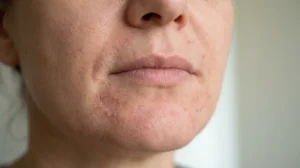
Early progress can be subtle. You may still see the original rash, but fewer fresh bumps appear. Washing may feel less uncomfortable, or the burning may bother you less often.
That’s different from expecting the whole area to look normal immediately. A useful comparison is: “Am I getting fewer new spots than last week?”
This phase can be confusing if topical steroid use has been involved. Hydrocortisone and prescription steroid creams may briefly suppress the rash, then contribute to a rebound flare when stopped.
If you’re using a prescribed facial steroid, ask the prescriber how to discontinue it safely. A supervised reduction may be needed, particularly after stronger or prolonged use. Don’t repeatedly restart a steroid to chase temporary relief.
Medically necessary inhalers, nasal sprays, and oral steroids need separate consideration. Continue them as prescribed and discuss ways to limit medicine residue on facial skin.
A worsening rash isn’t automatically proof that healing has started. If symptoms escalate, contact your clinician rather than assuming you need to endure them.
Stage 2: Existing Bumps and Irritation Ease
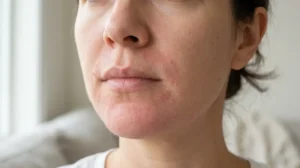
As treatment takes effect, raised bumps may flatten and the skin may feel less rough. Dryness, scaling, and discomfort can also ease, although they won’t necessarily improve together.
For example, your chin might feel smoother while the area beside your nose remains irritated. That unevenness doesn’t give you a reliable “stage number.” It gives you something specific to mention at follow-up.
Avoid scrubbing off flakes or squeezing the remaining bumps. Neither helps you judge treatment response, and both can irritate the area.
This is also an easy point to stop medication early because the rash looks much better. Follow the prescribed duration and ask before changing it. Visible improvement doesn’t always mean treatment is complete.
Stage 3: Skin Stays Clear as Remaining Color Changes Settle
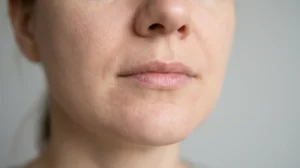
Later recovery is about maintaining the improvement. The bumps have largely resolved, discomfort has eased, and fresh clusters aren’t appearing.
Some people have lingering redness or darker marks after inflammation settles, especially after more severe disease. Others clear without noticeable discoloration. Flat marks alone don’t necessarily mean the rash is still active.
Perioral dermatitis redness fading can be gradual. Look at texture and comfort alongside color: a flat, comfortable patch is different from an area developing new bumps and burning again.
Resist adding an exfoliating acid or brightening serum just to hurry the last visible marks along. Ask when it’s reasonable to reintroduce optional products, and bring them back individually so you can notice a reaction.
How Long Does Perioral Dermatitis Take to Heal?
Expect gradual improvement over several weeks, with complete clearing sometimes taking a few months. Treatment courses often run for roughly four to eight weeks, but some need two to three months or longer.
Those ranges describe treatment and recovery broadly. They don’t assign a deadline to each stage.
The timeline depends on how extensive the rash is, whether triggers remain, previous steroid use, and how well the chosen treatment suits your skin. Untreated perioral dermatitis can persist for months or longer.
A clinician may prescribe a topical medicine such as metronidazole or an oral medicine such as doxycycline. Antibiotics can be used for their anti-inflammatory effects; a prescription doesn’t mean the rash is contagious. Medication choices differ for children and during pregnancy.
At the start of treatment, ask two questions: “When should I expect some improvement?” and “When should I contact you if nothing changes?” That gives you a useful review point.
Skincare During Perioral Dermatitis Treatment
A complicated skin-barrier routine can be tempting when your face feels dry. But layering thick balms, oils, and several new serums may make this particular rash worse.
Your clinician may recommend temporarily reducing skincare to very little beyond prescribed treatment.
Keep Cleansing Gentle
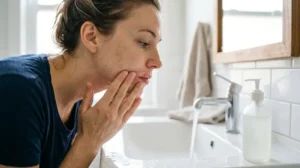
Use lukewarm water and avoid rubbing. Depending on your treatment plan, wash with water alone or a mild, fragrance-free, non-soap cleanser.
Set aside scrubs, cleansing brushes, and exfoliating toners. Pat dry rather than dragging a towel across the rash.
Be Selective With Moisturizer
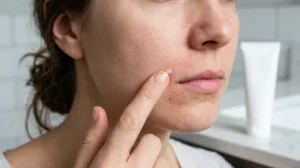
Ask whether you need moisturizer on the affected area. If dryness requires one, a small amount of a bland, lightweight product may be suitable.
Heavy, occlusive ointments can aggravate perioral dermatitis. A product being labeled “barrier repair” doesn’t guarantee that it will suit the rash.
Keep Sun Protection Practical
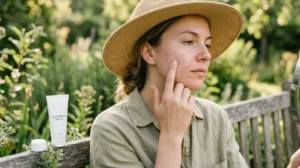
Use shade and a hat. Ask about a tolerable sunscreen formulation, such as a light fluid or gel, rather than repeatedly applying a product that stings.
Pause optional cosmetics on the rash if advised. Continue prescribed topical treatment according to instructions, and report persistent irritation instead of adding products to cover it up.
How to Track Progress Without Overchecking
Take a photo once or twice a week in the same lighting, from the same angle, before makeup. Keep filters and portrait effects off.
Alongside each photo, note:
- Whether you noticed new bumps.
- Whether burning or tightness affected your day.
- Any medication or product changes.
This creates a more useful record than comparing your face under bathroom lighting in the morning and a car mirror at noon.
Bring the record to follow-up. If the rash is spreading, increasingly uncomfortable, or showing no improvement by the agreed review point, your clinician can reconsider the treatment or diagnosis.
Eye pain, light sensitivity, or vision changes need prompt medical assessment. Don’t treat those symptoms as another healing phase.
Frequently Asked Questions
Does peeling mean perioral dermatitis is healing?
Not necessarily. Flaking can occur during an active rash or from irritation. It becomes more reassuring when fresh bumps are decreasing and the skin feels more comfortable. Peeling by itself doesn’t tell you whether treatment is working.
Does everyone get worse before getting better?
No. A rebound flare can happen after stopping a topical steroid, but it isn’t a required step in recovery. New or worsening symptoms deserve a conversation with your clinician, especially if you aren’t withdrawing a steroid.
Can I wear makeup while it heals?
It’s often helpful to pause makeup on affected skin, particularly if applying or removing it causes irritation. If coverage is important to you, ask your dermatologist what would fit your treatment plan. Stop any cosmetic that consistently worsens symptoms.
Is perioral dermatitis returning after treatment common?
It can return, even after successful treatment. Re-exposure to a trigger or an insufficient treatment course may contribute, but the reason isn’t always obvious. Contact your prescriber instead of restarting leftover antibiotics or steroid cream yourself.
Will it leave permanent scars?
Typical perioral dermatitis usually clears without scarring. Severe or uncommon forms can behave differently, and temporary color changes may remain. Avoid picking, and have persistent marks or changes in skin texture assessed.
Conclusion
The most useful signs across the stages of perioral dermatitis healing are fewer new bumps, less discomfort, and improvement that lasts. Your skin doesn’t need to follow a perfect sequence. Keep care simple, follow the treatment plan, and check in when recovery stalls or symptoms worsen.
Our Editorial Approach
Beauty and self-care information should be clear and easy to use. Our goal is to help you understand your options and make more informed choices about your everyday routine.
Our articles are for educational purposes only and do not replace advice from a qualified healthcare professional.