
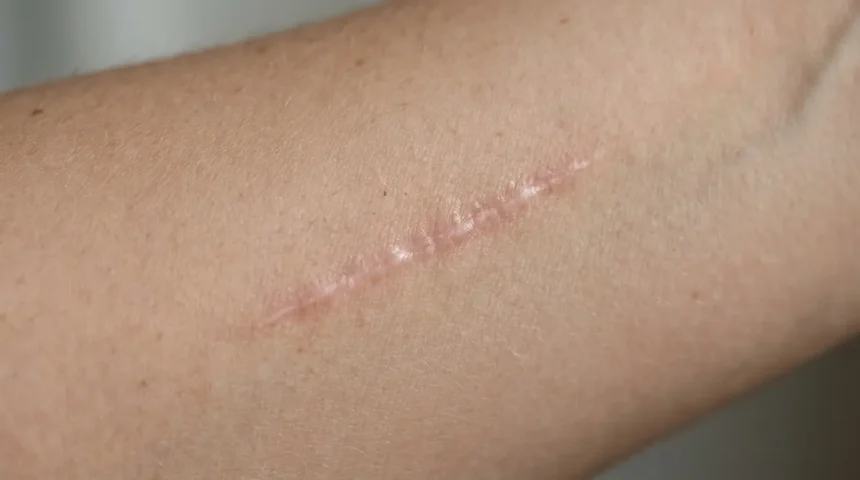
A cut can close long before the mark it leaves behind starts to fade. You might notice a pink line at first, then a deeper red or brown shade that stays visible for months. That can make it difficult to tell whether the scar is improving.
- What Are the Color Stages of a Scar?
- 1. Pink or Red: The Newly Healing Scar
- 2. Purple or Dusky: A Color That Needs Context
- 3. Brown: Pigmentation After Inflammation
- 4. Fading Color: The Scar Begins to Settle
- 5. Pale or White: A Possible Mature Appearance
- How Long Does Scar Color Take to Change?
- Why Some Scars Stay Raised or Dark
- How to Care for a Healing Scar
- Follow Wound-Care Instructions First
- Protect the Healed Area From Sunlight
- Consider Silicone for an Appropriate Scar
- Keep Products Gentle
- When a Color Change Needs Medical Attention
- Frequently Asked Questions
- Does a red scar mean it is infected?
- Can a scar turn brown before it fades?
- Will a white scar return to my normal skin color?
- Can you tell how old a scar is by its color?
- Do scars always become flat as they heal?
- Can scar cream remove a scar completely?
- Final Takeaway
The color stages of a scar aren’t a fixed sequence. Many new scars look pink or red before becoming less noticeable, but others develop brown pigmentation or settle into a lighter shade than the surrounding skin. Your skin tone, the injury, and the type of scar all influence the result.
Color is one clue. How the area feels, whether it’s getting thicker, and whether the wound has fully closed matter just as much.
What Are the Color Stages of a Scar?
A healing scar may look red, pink, purple, brown, or pale at different points. These colors can overlap, and some scars never pass through every shade.
It helps to separate the early wound from the scar that develops afterward. A scab, dried blood, or bruising around an injury can change the appearance without showing the color of the scar itself.
| Appearance | What it may reflect | What to notice alongside it |
|---|---|---|
| Pink or red | Blood vessels in newly healing tissue | Whether discomfort and swelling are improving |
| Purple or dusky | Vascular color, nearby bruising, or skin-tone differences | Whether the change is stable or suddenly worsening |
| Brown or darker than your skin | Pigmentation following inflammation | Whether the surface is flat, raised, or changing |
| Fading toward your skin tone | Gradual scar maturation | Whether the tissue is also becoming softer |
| Pale or white | Reduced pigment in the healed area | Whether the appearance is stable |
This is a guide to possible appearances, not a way to diagnose a wound from its color.
1. Pink or Red: The Newly Healing Scar
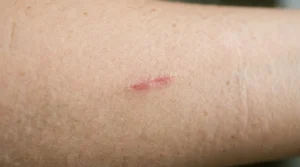
Once a wound closes, the new mark may look much brighter than the skin around it. A thin surgical line can remain pink even when the surface looks completely healed.
New tissue has a blood supply supporting the repair process. That can contribute to the pink or reddish appearance.
The scar may also feel firm or slightly raised. Closing the surface is only part of healing; the tissue underneath continues changing.
Look for the overall direction of recovery. A pink mark with gradually improving tenderness is different from an area becoming increasingly painful, hot, or swollen.
Redness alone doesn’t confirm infection, but worsening symptoms shouldn’t be dismissed as a normal scar stage.
2. Purple or Dusky: A Color That Needs Context
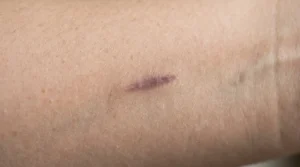
Some healing marks have a purple or dusky tone rather than a clear pink shade. Nearby bruising can also make a fresh injury look darker.
On deeper skin tones, inflammation may be less visibly red and appear darker or more purple instead.
That doesn’t mean purple is a required stage of scar healing. It also doesn’t tell you exactly how old the scar is.
Pay attention to changes. A stable mark that slowly becomes less prominent is different from sudden darkening accompanied by increasing pain, swelling, numbness, or wound breakdown.
If the tissue itself becomes black or the wound appears to be deteriorating, seek prompt medical assessment. Don’t assume it is simply dried blood or another expected color stage.
3. Brown: Pigmentation After Inflammation
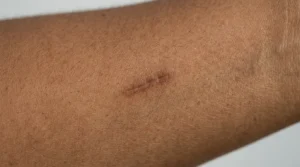
A brown mark can remain after the original injury has settled. Inflammation may trigger extra pigment, leaving the area darker than the surrounding skin.
This is often called post-inflammatory hyperpigmentation. It can occur over or around a scar, but pigmentation and scarring are different changes.
For example, a flat brown spot after a breakout may be a lingering pigment mark. A depression, thickened area, or lasting change in texture suggests scarring as well.
Brown discoloration doesn’t automatically mean healing has stopped. Pigment can remain noticeable while other parts of the recovery continue.
Sun exposure may deepen the contrast. Protecting the healed area is more useful than repeatedly scrubbing it or trying several strong brightening products at once.
4. Fading Color: The Scar Begins to Settle
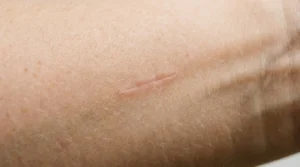
Over time, many scars become less red and less noticeable. Some also soften or flatten as the tissue matures.
The change is usually gradual. You may see little difference from one day to the next but notice improvement when comparing photographs taken several weeks apart.
A fading scar doesn’t always match the surrounding skin perfectly. It may remain slightly darker, lighter, shinier, or different in texture.
Raised scars and depressed scars can also keep their shape even after their color improves. That’s why fading and disappearing aren’t the same thing.
5. Pale or White: A Possible Mature Appearance
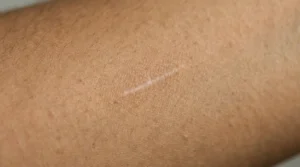
Some scars eventually become pale or white. The healed area may have less pigment than the skin beside it, making the contrast more obvious on deeper skin tones.
A pale scar isn’t necessarily unhealthy or unfinished. It may be the settled appearance of that particular injury.
Dark-spot treatments won’t restore missing pigment. Using them on a lighter scar may irritate the skin without addressing the concern.
If the contrast bothers you, a dermatologist can explain which options are appropriate. The choice depends on the scar’s texture and pigment, not just how long it has been there.
How Long Does Scar Color Take to Change?
Scar fading often takes months. Some scars continue softening and changing for two years or longer.
That doesn’t mean every scar follows the same schedule. A shallow injury, a deeper surgical wound, and a burn can leave very different marks.
The location matters too. Repeated stretching, rubbing, or tension can affect the developing scar.
A practical way to monitor progress is to take occasional photographs in similar lighting. Compare color, thickness, and the size of the mark rather than checking only whether it looks lighter.
Seek advice sooner if the scar is growing, becoming more painful, or restricting movement. You don’t need to wait for a particular anniversary.
Why Some Scars Stay Raised or Dark
Skin Tone and Pigmentation
The same injury can leave different colors on different people. Brown discoloration may be particularly noticeable on medium and deeper skin tones, while pinkness may stand out more clearly on lighter skin.
Neither appearance gives a complete picture of healing.
The Type of Scar
A hypertrophic scar is raised but stays within the original wound’s boundaries. A keloid grows beyond those boundaries.
These scars may need a different approach from a flat mark that is gradually fading. Increasing thickness or growth outside the original injury deserves professional advice.
Irritation and Sun Exposure
Picking, rubbing, and irritating products can interfere with recovery. Sun exposure can also make discoloration more noticeable.
A consistent, gentle routine is easier to assess than constantly changing treatments.
How to Care for a Healing Scar
The right care depends on whether the wound is still open or has fully healed.
Follow Wound-Care Instructions First
For a surgical wound, follow the instructions from your surgical team. Dressings, cleansing, and activity restrictions may be specific to the procedure.
Don’t pick off scabs or remove closure strips early. Avoid treating an open wound as though it were ordinary skincare.
Protect the Healed Area From Sunlight
Once the surface has healed, use broad-spectrum SPF 30 or higher on exposed skin and reapply as directed. Clothing can provide additional protection.
Sun protection may help limit further discoloration. It won’t erase existing scar tissue.
Consider Silicone for an Appropriate Scar
Silicone gel or sheets may help improve some raised scars. They don’t guarantee a flat or invisible result.
Use them only when the skin has fully closed and the product instructions or your clinician indicate they are suitable. Don’t apply scar sheets over an open, draining, or infected wound.
Keep Products Gentle
A simple moisturizer can help a healed area feel more comfortable. Stop using a product if it causes persistent burning, redness, or a rash.
Avoid applying exfoliating acids, retinoids, or strong pigment treatments to a newly healing area without appropriate guidance.
Scar massage may be recommended in some situations, but timing and technique matter. Ask your clinician before starting, especially after surgery.
When a Color Change Needs Medical Attention
Contact a healthcare professional promptly if you notice:
- Redness or discoloration spreading beyond the wound.
- Increasing warmth, swelling, or pain.
- Pus, an unpleasant smell, or new drainage.
- Fever or feeling unwell.
- A wound reopening.
- New black tissue or rapid deterioration.
Also arrange an assessment if a healed scar grows beyond the original injury, repeatedly bleeds, develops an ulcer, or limits movement.
On deeper skin tones, visible redness may be subtle. Changes in warmth, tenderness, swelling, and drainage are useful signs to notice.
Frequently Asked Questions
Does a red scar mean it is infected?
Not necessarily. New scars can remain pink or red during recovery. Spreading discoloration with increasing pain, warmth, swelling, drainage, or fever needs medical attention.
Can a scar turn brown before it fades?
Yes. Pigmentation can develop after inflammation and remain after the wound closes. It doesn’t happen with every scar, and the fading time varies.
Will a white scar return to my normal skin color?
It may remain lighter than the surrounding skin. Moisturizers and dark-spot products don’t reliably restore missing pigment.
Can you tell how old a scar is by its color?
Not reliably. Skin tone, scar type, irritation, and sun exposure all affect its appearance.
Do scars always become flat as they heal?
No. Some soften and flatten, while others remain raised or depressed. A scar that keeps thickening or grows beyond the wound should be assessed.
Can scar cream remove a scar completely?
No cream can guarantee complete removal. Some treatments may improve color, thickness, or comfort, but results depend on the scar.
Final Takeaway
The color stages of a scar can include pink, red, purple, brown, or pale shades, but there isn’t one path every scar follows.
Watch the whole area: its color, texture, size, and comfort. Give a stable scar time to mature, protect healed skin from sunlight, and keep care gentle. Increasing pain, spreading discoloration, drainage, or rapid changes deserve medical attention.
Our Editorial Approach
Beauty and self-care information should be clear and easy to use. Our goal is to help you understand your options and make more informed choices about your everyday routine.
Our articles are for educational purposes only and do not replace advice from a qualified healthcare professional.