You might still like the length of your hair but feel that the shape no longer works. The sides sit heavily, the ends look thinner than you want, or the front takes more styling than you have time for. A different balance of length and layers may be enough to make the haircut feel right again.
- Mid-Length Haircuts at a Glance
- 1. Collarbone-Length Blunt Lob
- 2. Softly Layered Shoulder Cut
- 3. Lob With Face-Framing Pieces
- 4. Shoulder-Length Cut With Curtain Bangs
- 5. Textured Lob
- 6. Medium Curly or Coily Cut
- 7. Soft Shoulder-Length Shag
- 8. Angled Long Bob
- 9. One-Length Shoulder Cut
- 10. Medium Cut With Side-Swept Bangs
- Choose for Your Texture and Density
- Do Bangs Make You Look Younger?
- What to Ask for at the Salon
- Common Mid-Length Haircut Mistakes
- Choosing a Reference With Very Different Texture
- Asking Only for “Something Younger”
- Removing Weight Where You Wanted Fullness
- Assuming Fewer Inches Means Less Work
- Final Takeaway
- Frequently Asked Questions
Shoulder and collarbone lengths leave room for those adjustments. You can keep a solid edge, introduce movement through longer layers, or change the front with bangs—also called a fringe. Start with what you want your hair to do each morning.
These mid-length haircuts for women over 40 offer ten ways to refresh a familiar style. No haircut guarantees a younger appearance. Choose a shape you enjoy wearing and a routine you’re comfortable keeping.
Mid-Length Haircuts at a Glance
| Haircut | Main feature | What to discuss | Likely styling effort |
|---|---|---|---|
| Collarbone-Length Blunt Lob | A defined perimeter | End fullness and weight through the sides | Low to medium |
| Softly Layered Shoulder Cut | Blended movement | Where the shortest layers begin | Low to medium |
| Lob With Face-Framing Pieces | Shorter front sections | Whether they need to tuck or tie back | Low to medium |
| Shoulder-Length Cut With Curtain Bangs | A parted, blended front | How the bangs sit without styling | Medium to high |
| Textured Lob | A softly broken-up edge | How much texture the ends can support | Low to medium |
| Medium Curly or Coily Cut | Shape built around the curl pattern | Shrinkage and volume placement | Depends on your routine |
| Soft Shoulder-Length Shag | Shorter upper layers | Crown shape and end density | Medium |
| Angled Long Bob | A shorter back and longer front | How pronounced the angle should be | Medium |
| One-Length Shoulder Cut | A consistent perimeter | How the ends sit against the shoulders | Low to medium |
| Medium Cut With Side-Swept Bangs | A diagonal front section | Parting and natural growth direction | Medium |
The effort estimates are general styling guidance. Your texture, preferred finish, and natural growth patterns can make the same haircut easier or more demanding.
1. Collarbone-Length Blunt Lob
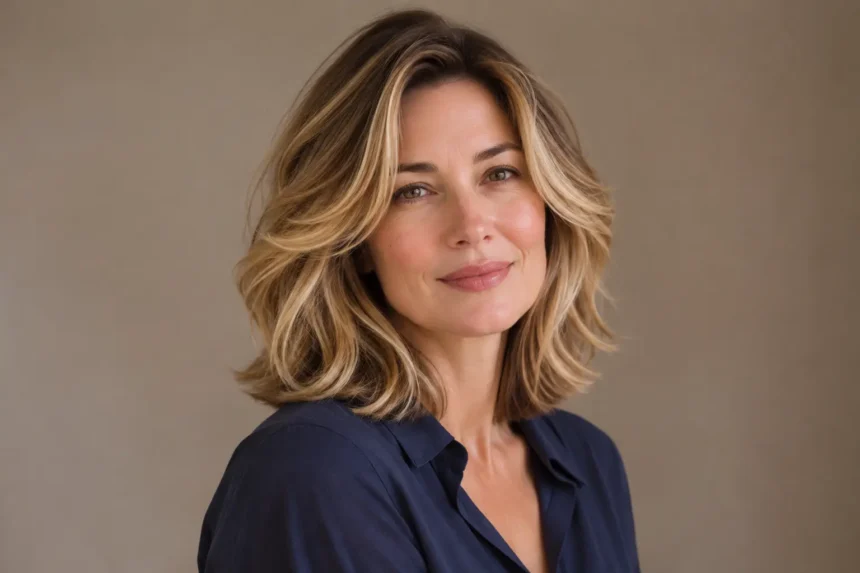
A blunt lob, or long bob, keeps a defined edge around the collarbones. It gives you a clear shape without taking the hair as short as a chin-length bob.
Marie Claire UK quotes hairstylist Edward James recommending a solid perimeter to make fine, straight hair look fuller. The effect comes from the outline of the cut; it doesn’t add hair or increase density.
On dense hair, that same edge may feel heavy. Ask whether removing a little weight inside the cut would help while leaving the perimeter defined.
Point to where you want the ends to land when dry. A little above or below the collarbone can change how the front sits against your clothes.
Best for: A defined outline with substantial-looking ends.
2. Softly Layered Shoulder Cut
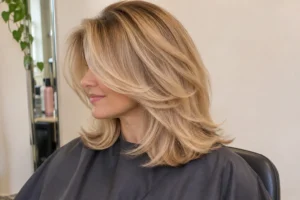
Soft layers give a shoulder-length cut movement without creating an obvious stepped shape.
The shortest layer matters more than the word “layered.” A few long sections through the lower lengths create a different result from layers beginning high around the crown.
Point to the area that feels heavy or flat. Your stylist can discuss where to adjust the weight instead of layering the whole head automatically.
If you like your current length, make that clear. Adding movement doesn’t necessarily mean shortening the entire perimeter.
Best for: Adding movement while keeping a familiar medium length.
3. Lob With Face-Framing Pieces
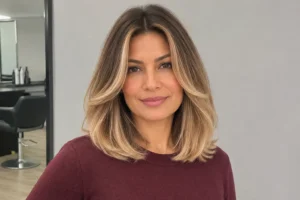
Face-framing pieces change the front without requiring much length to come off the back.
A section beginning near the cheekbone creates a noticeable detail. Longer pieces starting around the jaw blend more gradually into the rest of the cut.
If you often tuck your hair behind your ears, say so before the shortest pieces are cut. The same applies if you want every front section to reach a ponytail.
Keep the back relatively simple if you want the front to provide most of the movement.
Best for: A smaller change that’s visible around the face.
4. Shoulder-Length Cut With Curtain Bangs
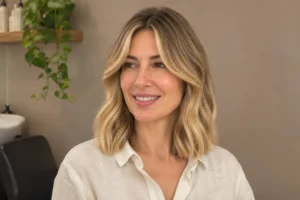
Curtain bangs part near the center and connect with longer side sections.
A shorter middle gives you a clear set of bangs. Longer pieces create a softer front that sits closer to a face frame.
Ask your stylist to show you how to style them and roughly how long that takes. Notice whether they need drying into place after each wash or reshaping between washes.
A cowlick or a strong natural side part may affect the result. Work with that growth pattern when choosing the length.
Best for: A more detailed front, with some daily styling.
5. Textured Lob

A textured lob has a less solid edge than a blunt cut. The ends separate into smaller sections, giving the outline a more relaxed appearance.
Decide how much of that effect you want. Light texture through the bottom is different from heavy texturizing through the lengths.
If your ends are already fine, ask your stylist to preserve enough weight there. You may prefer texture in selected areas rather than throughout.
This cut is useful to discuss when you like your natural waves but find a solid edge too blocky.
Best for: A relaxed shape with softly separated ends.
6. Medium Curly or Coily Cut
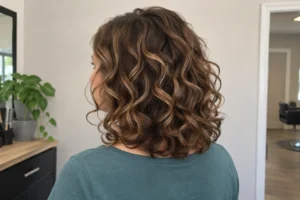
A medium curly or coily cut needs to account for how the hair sits naturally, not just how long it measures when pulled straight.
Discuss where you want volume. You might prefer a rounded outline, more room around the crown, or less width through the sides.
If your hair is coily or tightly curled, explain how much it shrinks in your usual routine. Ask your stylist to allow for that and show you the finished shape once it’s dry.
Also mention whether you sometimes wear it stretched. The cut should work with the ways you actually style your hair.
Best for: A balanced shape built around curls or coils.
7. Soft Shoulder-Length Shag
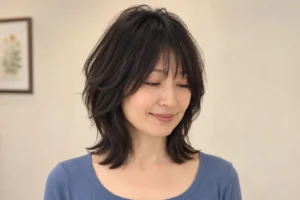
A soft shag combines shorter upper layers with longer pieces around the bottom.
It gives waves or curls a more broken-up silhouette. The top and front become part of the shape, rather than all the movement sitting near the ends.
Choose a version suited to your density. If your hair is fine, discuss fewer, longer layers instead of copying a heavily feathered reference.
Expect to spend some time shaping the crown or bangs if you want a particular finish. A casual-looking haircut can still need deliberate styling.
Best for: A noticeable change in shape while keeping medium length.
8. Angled Long Bob
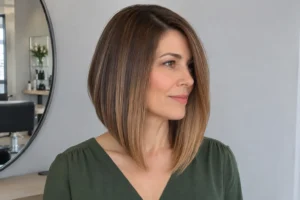
An angled lob sits shorter at the back and longer toward the face.
A small difference in length can be subtle. A stronger angle makes the side profile much more distinct.
Look closely at the nape in your reference. The front can appear quite long while the back is shorter than you expected.
Ask how the angle will read in your natural texture. If you only like it when straightened, consider whether that fits your everyday routine.
Best for: A structured outline with extra length at the front.
9. One-Length Shoulder Cut
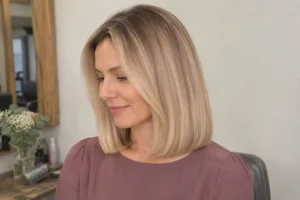
A one-length shoulder cut keeps most of the perimeter at a similar level.
It’s an option when you like a simple outline and don’t want several short layers to arrange.
Ends resting directly against the shoulders may turn outward. Cutting just above or below that point may reduce the flip, although texture and styling still affect how they sit.
A slight bend at the ends can also be part of the look. You don’t need to straighten it away if you enjoy the shape.
Best for: A straightforward cut with a consistent edge.
10. Medium Cut With Side-Swept Bangs

Side-swept bangs bring a diagonal line across the forehead and connect with the sides.
Longer bangs give you more flexibility to move them away from your face. Shorter ones become a more definite part of the haircut.
Choose the parting with your growth direction in mind. A section that naturally moves to one side may be easier to work with than one you have to force into place.
Ask how the bangs will blend as they grow. That matters if you prefer fewer appointments to maintain the front.
Best for: Changing the front without choosing full, straight-across bangs.
Choose for Your Texture and Density
Describe both the individual strands and the overall amount of hair when talking to your stylist. “My hair is fine” may not explain whether your main concern is delicate strands, heavy sides, or ends that look sparse.
Fine Hair
Keep the ends in mind when discussing layers.
In Marie Claire UK’s haircut guide, Edward James recommends restrained interior or face-framing layers as options for fine hair. Your stylist can help decide where movement is useful and where keeping weight gives a better outline.
Dense or Thick Hair
Point out where the weight becomes uncomfortable or difficult to manage.
You might want less bulk behind the ears but prefer to keep the bottom solid. Removing weight everywhere can give a different result from adjusting one heavy section.
Hair That Feels Thinner Than Before
Tell your stylist if your ponytail feels smaller or your usual haircut no longer holds its outline.
UCLA Health explains that strand thickness, texture, and density can change with age. A cut may need adjusting as your hair changes.
A haircut can change the appearance of the ends, but it doesn’t identify or treat the cause of hair loss.
Wavy Hair
Let your stylist see the waves before they’re brushed out or straightened.
Explain which sections tend to sit differently. You may have a straighter front and stronger waves underneath, which affects how the layers fall.
Curly and Coily Hair
See Look 6 above for shrinkage and volume placement, and bring a photo of your hair on a typical day.
Do Bangs Make You Look Younger?
Not necessarily. Bangs change the outline around the forehead and eyes. Whether that feels fresher is a matter of preference.
They can be a welcome change if you enjoy styling the front of your hair. They can also become inconvenient if you constantly pin them away.
Try arranging longer front pieces across your forehead to explore the general shape. It won’t predict the exact haircut, but it may help you decide whether you like having hair there.
Choose the length for how you want to wear it, including on days when you have little time.
What to Ask for at the Salon
Describe the length, perimeter, and shortest sections.
For example: “I want collarbone length when dry, a mostly solid edge, and a few long pieces around my face. I’d like movement without making the bottom look thin.”
Explain whether you air-dry, diffuse, blow-dry, or straighten, and how often you’re willing to style the bangs.
Ask to see a simple finishing method you can repeat at home. UCLA Health’s hair-care guidance recommends limiting heat styling and using a low heat setting.
Common Mid-Length Haircut Mistakes
Choosing a Reference With Very Different Texture
A smooth blowout can hide how much styling a cut needs. Bring at least one reference close to the way your own hair naturally sits.
Asking Only for “Something Younger”
That leaves the result open to interpretation. Explain whether you want fuller-looking ends, lighter sides, more movement, or different bangs.
Removing Weight Where You Wanted Fullness
Be specific about which areas feel heavy. You may want lighter sides while keeping the ends substantial.
Assuming Fewer Inches Means Less Work
A precise lob or newly cut bangs may require more shaping than longer hair. Choose the routine alongside the haircut.
Final Takeaway
When choosing among mid-length haircuts for women over 40, start with the shape and routine you want. A blunt lob gives a defined edge, soft layers introduce movement, and bangs change the front.
Keep the parts of your current haircut that work, then be specific about what doesn’t. That gives your stylist a clearer goal than trying to make your hair look a certain age.
Frequently Asked Questions
What is a good mid-length haircut for women over 40?A collarbone lob, softly layered shoulder cut, or medium curly shape is a useful starting point. The best choice depends on your texture, density, and styling preferences.
Should fine hair have layers?It can. Discuss subtle layers that add movement without leaving the ends thinner than you want.
Which cut needs the least styling?Cuts with a simple outline, such as a one-length shoulder cut or blunt lob, may need less arranging when they work with your natural texture. No haircut has the same upkeep for everyone.
Can coily hair work at shoulder length?Yes. Plan the shape around its natural shrinkage and how you usually wear it, rather than choosing solely by stretched length.
Can I keep my gray hair with these cuts?Yes. Choose the haircut separately from whether you color your hair.
What if I wear my hair tied back most days?Tell your stylist where you place the tie and which sections need to reach it. That’s more useful than asking for a length name alone.
Our Editorial Approach
Beauty and self-care information should be clear and easy to use. Our goal is to help you understand your options and make more informed choices about your everyday routine.
Our articles are for educational purposes only and do not replace advice from a qualified healthcare professional.