
A nail that keeps peeling or splitting can make everyday tasks frustrating. You trim one rough edge, then another catches on your clothes a few days later. If you also feel unusually tired, notice changes in your hair, or already have a thyroid condition, you may wonder whether the problems are connected.
- Thyroid Nail Splitting at a Glance
- 1. Can Thyroid Problems Cause Splitting Nails?
- 2. Underactive Thyroid Symptoms to Notice
- 3. Overactive Thyroid Symptoms to Notice
- 4. Splitting and Nail Lifting Are Different Problems
- Other Causes of Splitting Nails
- How Thyroid Nail Splitting Is Investigated
- Treatment for Thyroid-Related Nail Splitting
- Everyday Care for Brittle Nails
- Keep the Free Edge Manageable
- Moisturize After Washing
- Protect Against Wet Work
- Avoid Peeling and Picking
- Should You Take Biotin or Nail Supplements?
- How Long Does Improvement Take?
- When to Get Medical Help
- Common Thyroid Nail Splitting Mistakes
- Final Takeaway
- Frequently Asked Questions
Thyroid disease can affect nail strength, growth, and attachment. However, splitting nails alone cannot tell you whether your thyroid is underactive or overactive. Frequent wet work, manicure damage, skin conditions, and other causes can produce similar changes.
Understanding thyroid nail splitting starts with looking beyond the nail itself. The pattern of damage, other symptoms, and appropriate blood tests help determine whether thyroid treatment, changes to nail care, or another approach is needed.
Thyroid Nail Splitting at a Glance
| What you notice | What it may indicate | A useful next step |
|---|---|---|
| Nails that peel or break repeatedly | Brittle nails with several possible causes | Review nail habits and persistent symptoms |
| Changes in nail growth | Thyroid disease or another influence on growth | Discuss the timing with a clinician |
| A white area lifting from the nail bed | Nail separation, also called onycholysis | Avoid digging underneath and arrange an assessment |
| Splitting with fatigue, cold intolerance, and dry skin | An underactive thyroid is one possibility | Ask whether thyroid testing is appropriate |
| Nail changes with heat intolerance, trembling, or palpitations | An overactive thyroid is one possibility | Arrange a medical review |
| One repeatedly damaged nail | Local injury or a nail condition may be involved | Have the affected nail examined |
| Pain, pus, warmth, or spreading redness | Possible infection | Seek prompt medical care |
These patterns help describe the problem. They do not confirm a diagnosis, and more than one cause can affect the nails at the same time.
1. Can Thyroid Problems Cause Splitting Nails?
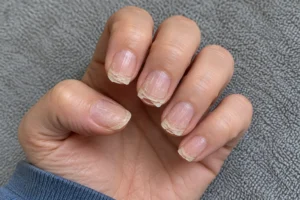
Yes. Both underactive and overactive thyroid conditions can be associated with nail changes.
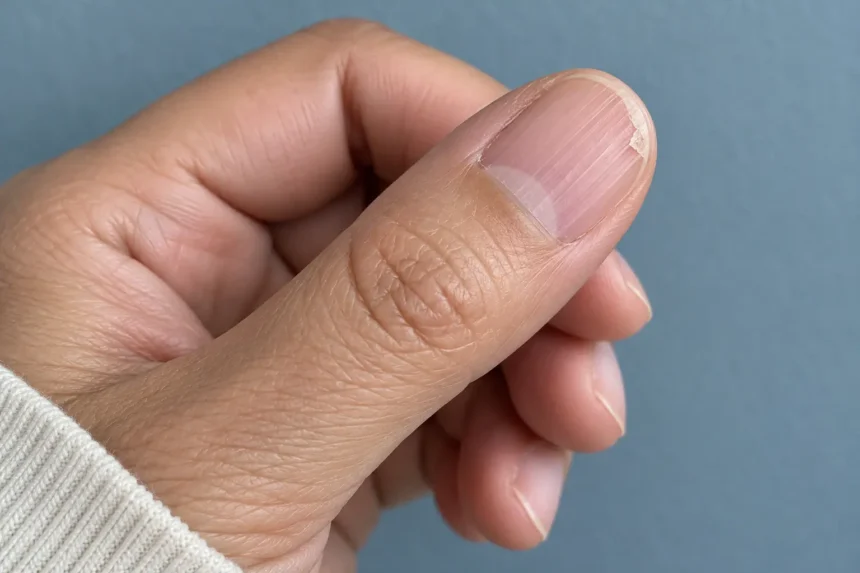
The American Academy of Dermatology lists brittle nails, peeling, crumbling, altered growth, and lifting among possible signs of thyroid disease. These changes overlap with other nail problems, so there is no single appearance that proves a thyroid cause.
A clinician will consider the nails alongside your symptoms, medical history, and test results.
If you already have thyroid disease, new splitting does not automatically mean your medication dose is wrong.
2. Underactive Thyroid Symptoms to Notice
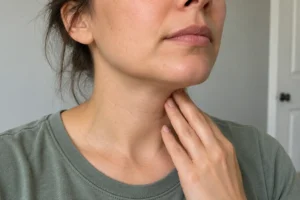
An underactive thyroid, or hypothyroidism, means the thyroid gland does not produce enough thyroid hormone.
Nail concerns deserve a broader review when they occur alongside persistent tiredness, feeling colder than usual, constipation, dry skin, hair changes, or unexplained weight gain.
These symptoms often develop gradually and can have other explanations. Their presence makes assessment useful rather than confirming the diagnosis.
Write down when the nail changes began and which other symptoms you have noticed.
3. Overactive Thyroid Symptoms to Notice
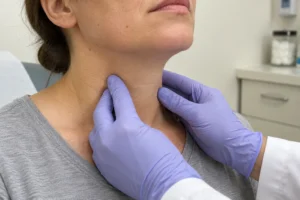
An overactive thyroid, or hyperthyroidism, involves excess thyroid hormone.
Possible symptoms include heat intolerance, trembling, difficulty sleeping, unexplained weight loss, and an unusually fast or irregular heartbeat. Nail lifting or fragility may occur alongside these changes.
Do not use the direction of a nail split to decide whether your thyroid is overactive or underactive.
Arrange a medical review if you have persistent symptoms, particularly palpitations or unexplained weight changes.
4. Splitting and Nail Lifting Are Different Problems
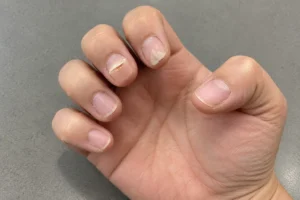
Splitting affects the nail plate itself. The tip may peel into thin layers, or a crack may run along the nail.
Lifting means the plate is separating from the nail bed underneath. The detached area may look white because there is a gap beneath it.
This separation is called onycholysis. Thyroid disease is one possible association, but trauma, infection, and psoriasis can also cause it.
Avoid pulling up the nail or inserting tools beneath the gap. A clinician can assess the cause and advise on care.
Other Causes of Splitting Nails
A thyroid condition should not become the automatic explanation for every nail change.
Consider what the nails have been exposed to and whether the problem affects one nail or several.
| Possible cause | Details worth mentioning |
|---|---|
| Repeated wetting and drying | Frequent washing, cleaning, or dishwashing |
| Manicure-related damage | Peeling off gel, heavy filing, or forceful removal |
| Repeated injury | Picking, biting, or using nails to open objects |
| Skin conditions | Rash, itching, nail pitting, or persistent inflammation |
| Nail infection | Thickening, discoloration, crumbling, or soreness |
| Nutritional problems | Restricted intake or a previously diagnosed deficiency |
| Medicines | A change that began after starting treatment |
| Aging | Gradual changes in strength and growth |
Several of these causes are described in MedlinePlus guidance on nail abnormalities. A clinician may need to examine the nails or investigate further to distinguish them.
How Thyroid Nail Splitting Is Investigated
Review the Pattern
Your clinician may ask when the splitting started, whether your toenails are affected, and what nail products you use.
Mention previous thyroid disease, recent illness, medicines, and supplements.
Photographs taken over time can help show whether the damage is moving outward or repeatedly appearing in the same place.
Consider Thyroid Blood Tests
Thyroid assessment commonly involves a thyroid-stimulating hormone test, called TSH, with free thyroxine, or free T4, depending on the situation and initial result.
Further tests may be needed to clarify the cause. Nail appearance alone cannot establish hypothyroidism.
Not everyone with a peeling nail needs a full thyroid investigation. Testing should reflect the broader clinical picture.
Check for Other Explanations
Depending on the examination, a clinician may consider iron studies, a blood count, or testing a nail sample for infection.
These are selected according to the suspected cause rather than ordered automatically for every split.
Treatment for Thyroid-Related Nail Splitting
Treat Confirmed Thyroid Disease
Hypothyroidism is usually treated with levothyroxine, which replaces missing thyroid hormone. The dose is monitored through blood tests and clinical review.
Hyperthyroidism requires a different treatment plan. Options can include antithyroid medicines, radioactive iodine, or surgery, depending on its cause and the person’s circumstances.
Do not start thyroid medicine or change an existing dose to treat nail splitting without medical advice.
Address Additional Nail Damage
Thyroid treatment will not prevent injury from picking, repeated soaking, or aggressive manicure removal.
You may need to change those habits while the underlying condition is managed.
If another problem is present, such as a nail infection or dermatitis, it needs its own treatment.
Everyday Care for Brittle Nails
Keep the Free Edge Manageable
Keep nails reasonably short and gently smooth snags with a file.
Avoid filing deeply into the sides or thinning the surface to remove visible ridges.
Moisturize After Washing
Apply a plain moisturizer to the nails and surrounding skin after handwashing.
A cream or ointment can be useful when the nail folds feel dry.
Protect Against Wet Work
Wear suitable gloves for dishwashing and cleaning. Remove them if they become wet inside, and dry your hands afterward.
Repeated water exposure can weaken nails. The AAD recommends gloves for wet work, moisturizing after washing, and avoiding using nails as tools.
Avoid Peeling and Picking
Do not pull away peeling layers or use an artificial nail to cover a painful split.
If the plate is lifting, bleeding, or sore, pause cosmetic treatments and have it assessed.
Should You Take Biotin or Nail Supplements?
Splitting nails do not automatically mean you need a supplement.
Biotin is often marketed for nails, but it does not treat thyroid disease. It can also interfere with some thyroid blood tests and produce misleading results.
Tell your clinician and the testing service about any hair, skin, or nail supplements you take. Ask whether to pause them and for how long; the instructions depend on the dose and laboratory method.
Avoid starting iodine, iron, or a “thyroid support” product solely because your nails are splitting. Supplements should address an identified need.
How Long Does Improvement Take?
Nail changes are slow to assess because the damaged plate has to grow outward.
Even when treatment addresses the cause, the existing split does not instantly become healthy nail. Look for stronger new growth near the base and less repeated breakage over the following months.
The timeline depends on the cause, the extent of damage, and ongoing exposure to injury.
If your thyroid results are stable but the splitting continues, ask about other explanations rather than assuming you need more thyroid medicine.
When to Get Medical Help
Arrange an appointment if splitting persists, affects several nails, or occurs with symptoms suggestive of thyroid disease.
Also have a nail examined if it repeatedly cracks in one place, lifts without a clear injury, or develops a new or changing dark streak.
Seek prompt care for increasing pain, swelling, warmth, pus, or spreading redness.
Chest pain, fainting, or severe breathlessness alongside a rapid heartbeat requires emergency assessment.
Common Thyroid Nail Splitting Mistakes
Diagnosing Thyroid Disease From a Photograph
Similar nail changes can have different causes. An image cannot establish your thyroid hormone levels.
Changing Medication Without Testing
Nail splitting is not a reliable guide to thyroid dosage.
Taking Supplements Before Mentioning Them
Some supplements can affect test interpretation. Include them in your medication list.
Treating Every Split as Fungus
Peeling or lifting does not automatically mean a fungal infection. Testing may be appropriate before treatment.
Expecting Immediate Regrowth
Judge the new nail as it grows rather than expecting the damaged tip to repair itself.
Ignoring Everyday Damage
Protecting nails from repeated trauma remains useful even when thyroid disease is confirmed.
Final Takeaway
Thyroid disease can contribute to splitting or lifting nails, but nail appearance cannot confirm the diagnosis. Other symptoms, an examination, and appropriate tests help identify the cause.
Treat confirmed thyroid problems as prescribed, protect fragile nails from everyday damage, and allow time for new growth. Persistent or painful changes need a closer look.
Frequently Asked Questions
What does thyroid nail splitting look like?
It may involve brittle tips, peeling layers, cracks, or lifting. None of these appearances is specific enough to diagnose thyroid disease.
Can both hypothyroidism and hyperthyroidism affect nails?
Yes. Both can be associated with nail changes, although the pattern varies between people.
Are vertical nail ridges a sign of thyroid disease?
They can occur for several reasons, including aging. Ridges alone do not establish a thyroid problem.
Should I get a thyroid test for splitting nails?
Ask a clinician if the problem is persistent, unexplained, or accompanied by other symptoms. They can decide whether thyroid testing or another investigation is appropriate.
Will thyroid medicine fix my nails?
It may help new growth when thyroid dysfunction is contributing. Other causes of splitting may still need attention.
Can I use nail polish while my nails recover?
If the nails are sore, lifting, or damaged by previous treatments, leave them free of cosmetic products while they are assessed. Avoid forceful removal and heavy buffing.
Does biotin help thyroid nail splitting?
Biotin does not correct a thyroid hormone problem and may interfere with thyroid testing. Discuss supplements with your clinician before using them.
What if my thyroid tests are normal?
Other causes remain possible, including wet work, trauma, skin conditions, and infection. Persistent nail changes still deserve assessment.
Our Editorial Approach
Beauty and self-care information should be clear and easy to use. Our goal is to help you understand your options and make more informed choices about your everyday routine.
Our articles are for educational purposes only and do not replace advice from a qualified healthcare professional.