

A foundation can be the lightest shade on the shelf and still look wrong on fair skin. It might turn too pink along your jaw, look yellow around your mouth, or leave a noticeable line beside your neck. Choosing a lighter shade doesn’t always solve the problem.
- Fair Skin at a Glance
- 1. Fair Skin Describes Depth, Not Undertone
- 2. Your Skin Type Still Guides Your Skincare
- 3. Sunscreen Needs to Be Comfortable Enough to Wear Properly
- 4. A Gentle Routine Doesn’t Need Many Steps
- 5. Facial Redness Isn’t a Reliable Foundation Match
- 6. Foundation Needs a Daylight Check
- 7. Concealer Doesn’t Always Need to Be Lighter
- 8. Blush Is Easier to Control in Small Amounts
- 9. Bronzer and Contour Serve Different Purposes
- 10. Fair Skin Doesn’t Limit You to Pale Makeup
- How to Find Your Undertone
- A Simple Skincare Routine for Fair Skin
- Make Your Makeup Finish Fit Your Skin
- Common Fair Skin Skincare and Makeup Mistakes
- Conclusion
- Frequently Asked Questions
Skincare comes with similar confusion. Having a light complexion doesn’t automatically mean your skin is dry or sensitive, and a product labeled “for fair skin” doesn’t tell you whether it suits your actual needs.
Understanding the difference between skin depth, undertone, and skin type makes both choices easier. Start with how your skin behaves, then compare the colors and textures you want to wear.
Fair Skin at a Glance
| What you’re choosing | What matters most | A useful starting point |
|---|---|---|
| Cleanser | Oiliness, dryness, and product tolerance | A gentle formula that cleans without leaving discomfort |
| Moisturizer | How much moisture your skin needs | A lighter lotion or richer cream according to skin type |
| Sunscreen | Protection and comfortable application | Broad-spectrum, water-resistant SPF 30 or higher |
| Foundation | Depth and undertone | Compare several shades along the jaw |
| Concealer | Whether you’re covering or brightening | Start close to your foundation shade |
| Blush | Color, pigment strength, and placement | Apply a small amount and build gradually |
| Bronzer | Depth and warmth | Compare softly pigmented shades |
| Powder | Finish and amount | Apply only where you need it |
These are starting points rather than fixed rules. Two people with equally fair skin may need different skincare formulas and completely different foundation undertones.
1. Fair Skin Describes Depth, Not Undertone
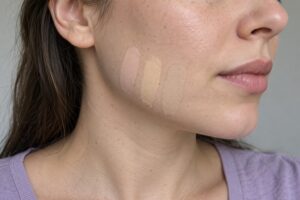
Fair skin describes a light complexion. It doesn’t tell you whether the underlying color looks pink, golden, peach, neutral, or olive.
That distinction matters when choosing makeup. A fair foundation with a strong pink undertone can look obvious on someone whose skin is light but more yellow or olive.
Compare shades at a similar depth before deciding you need something lighter or darker. Sometimes the depth is close, but the undertone is wrong.
Brand labels can help narrow the options, although “fair neutral” won’t necessarily look the same across different ranges.
Best for: Understanding why a light foundation can still look mismatched.
2. Your Skin Type Still Guides Your Skincare

Fair skin can be oily, dry, combination, or relatively balanced. Sensitivity is another consideration, rather than something you can determine from complexion alone.
Look at how your skin feels after cleansing and throughout the day. Notice whether you develop shine, feel tight, or react to particular products.
Choose your cleanser and moisturizer around those observations. A heavy cream may feel comfortable on dry cheeks but excessive on an oily forehead.
You don’t need a separate skincare category simply because your complexion is light.
Best for: Building a routine around your skin’s needs.
3. Sunscreen Needs to Be Comfortable Enough to Wear Properly
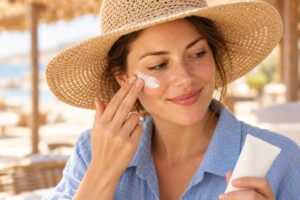
A sunscreen that looks good under makeup is useful, but the protection on the label still matters.
The American Academy of Dermatology recommends broad-spectrum, water-resistant sunscreen with SPF 30 or higher. Apply it to exposed skin and reapply every two hours outdoors, as well as after swimming or sweating, following the product directions. Shade and protective clothing also matter.
Compare the finish before adding foundation. Some formulas leave more shine, while others feel drier or have a visible tint.
If a tinted sunscreen looks too orange or dark, try another shade or an untinted option. The tint should be something you can comfortably wear in the recommended amount.
Best for: Making sun protection a practical part of your routine.
4. A Gentle Routine Doesn’t Need Many Steps
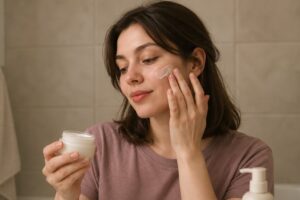
A basic routine gives you a clearer starting point than several new products introduced together.
Begin with cleansing, moisturizing, and daytime sun protection. Add other products for a specific concern rather than because they appear in someone else’s routine.
If your skin reacts easily, introduce products individually. The AAD recommends testing a new skincare product on a small area twice daily for seven to ten days before applying it more widely. Follow the product’s directions during the test.
This also makes it easier to notice which formula feels comfortable and which one doesn’t.
Best for: Keeping your routine manageable while trying new products.
5. Facial Redness Isn’t a Reliable Foundation Match

Your cheeks may look pinker than your neck. Matching foundation only to that pink area can leave the whole face looking rosier than you intended.
Compare shades along the jaw and look at the face, neck, and upper chest together.
A foundation doesn’t have to erase every natural color variation to look even. You may prefer a light layer with concealer on selected areas.
If redness is persistent, uncomfortable, or accompanied by other symptoms, ask a dermatologist about the cause rather than relying on makeup alone.
Best for: Choosing a base without copying temporary surface redness.
6. Foundation Needs a Daylight Check
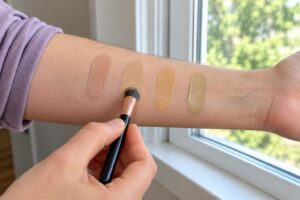
Store lighting and phone screens can change how a shade appears.
Apply a few narrow swatches along the jaw and blend the edges slightly. Compare which shade becomes least noticeable beside your skin.
Let the formula settle before making the final choice. Check it in natural daylight, away from strongly colored walls or direct glare.
Look beyond the center of your face. A shade that seems fine on the cheek may leave a clearer border near the ear or beneath the jaw.
Best for: Checking both shade and undertone before buying.
7. Concealer Doesn’t Always Need to Be Lighter
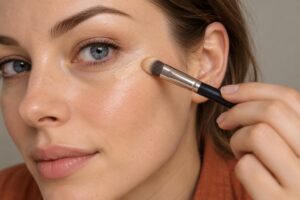
A very pale concealer can create a noticeable patch beneath the eyes, especially beside a foundation that already matches your skin.
For covering blemishes or small marks, start with a shade close to the surrounding base.
For the under-eye area, compare a matching shade with a slightly brighter option. Choose according to the result you want rather than automatically selecting the lightest one.
Use a small amount first. More coverage isn’t always more flattering when the product collects in lines or emphasizes texture.
Best for: Keeping concealer blended with the rest of the makeup.
8. Blush Is Easier to Control in Small Amounts
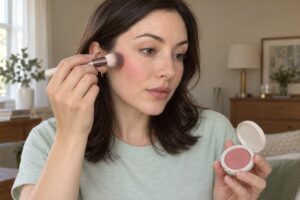
A strongly pigmented blush can be easy to overapply when it creates a clear contrast against your complexion.
Start with a light layer and check both cheeks before adding more.
Soft rose, peach, muted berry, and beige-pink offer different effects. Compare the actual product rather than assuming one color family suits every fair complexion.
For powder blush, pick up a little product and tap off the excess. For cream, place a small amount on the back of your hand before applying.
Best for: Building cheek color gradually.
9. Bronzer and Contour Serve Different Purposes
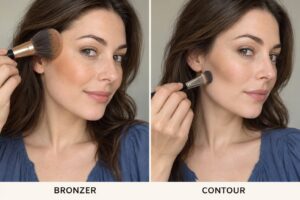
Bronzer adds warmth to the makeup. Contour creates the appearance of shadow.
A warm bronzer may look suitable around the forehead but too orange when used as a deep cheek contour. A cooler contour shade may look overly gray when spread widely.
Choose the product according to the effect you want.
Start with a shade that gives a small change in depth and build from there. There’s no requirement to use either product if you prefer your base without them.
Best for: Adding warmth or definition with more control.
10. Fair Skin Doesn’t Limit You to Pale Makeup

Light pink lipstick and soft brown eyeshadow are options, but they aren’t requirements.
A red lip, deeper berry blush, or dark eyeliner can create a deliberate contrast against fair skin.
Adjust the amount and placement to your preference. A berry lipstick applied lightly gives a different result from the same shade worn at full coverage.
Choose colors you enjoy, then decide whether you want soft edges, sheer coverage, or a more defined finish.
Best for: Exploring makeup beyond a fixed “fair skin” color list.
How to Find Your Undertone
Undertone labels are most useful when they help you compare products. You don’t need to fit perfectly into one category.
| What you notice in foundation swatches | What to compare next |
|---|---|
| Similar-depth shades look too pink | Less rosy neutral, yellow, or olive options |
| Similar-depth shades look too yellow | Cooler or less golden options |
| Warm and cool shades both look obvious | More muted neutral shades |
| Shades look peach or orange | Less saturated options at the same depth |
| Every shade looks darker than your neck | A lighter depth with a suitable undertone |
Change one thing at a time when comparing. If you switch depth, undertone, and formula together, it becomes harder to see what improved the match.
Vein color and jewelry preferences can be informal clues, but they shouldn’t overrule how foundation looks on your skin.
A Simple Skincare Routine for Fair Skin
Morning
Cleanse gently if needed, then apply moisturizer according to how your skin feels.
Follow with sunscreen before makeup. Let each layer settle enough that the next product spreads without rolling or lifting it.
You may need less moisturizer beneath a moisturizing sunscreen, or a separate cream on drier areas.
Evening
Remove makeup and sunscreen, then cleanse gently.
Apply moisturizer and keep additional treatments focused on a specific need. Follow the directions for any treatment you use.
If your skin becomes irritated, avoid adding more products to compensate. Persistent burning, itching, or a rash deserves professional advice.
Make Your Makeup Finish Fit Your Skin
Dry-looking areas may become more noticeable beneath heavy powder. Try a smaller amount and check whether your skincare preparation feels comfortable.
If shine develops mainly through the center of your face, you may prefer powder there rather than across the cheeks.
Choose coverage separately from finish. A lightweight foundation can be matte, while a fuller-coverage formula can still look luminous.
Check the makeup after a few hours. How it wears through your usual day is more useful than its appearance immediately after application.
Common Fair Skin Skincare and Makeup Mistakes
Assuming Fair Means Cool-Toned
A light complexion can have different undertones. Compare actual swatches before choosing a pink-based foundation.
Buying the Lightest Shade Automatically
The lightest shade may be too pale or have the wrong undertone. Start with a match rather than a shade name.
Using More Foundation to Fix a Color Mismatch
Extra coverage won’t correct a shade that looks too yellow, pink, or dark. Recheck the color before adding another layer.
Choosing Skincare Only by Complexion
Your skin’s oiliness, dryness, and tolerance provide more useful guidance than the word “fair” on a product description.
Applying Cheek Products Too Heavily
Blush and bronzer are easier to adjust when you begin with a small amount. Build the color while checking it in balanced lighting.
Expecting Makeup SPF to Replace Your Sunscreen Routine
Don’t assume your usual amount of foundation provides the protection stated on its label. Keep a dedicated sunscreen step and follow its application directions.
Conclusion
Fair skin tells you about complexion depth, but it doesn’t decide your skincare routine or makeup palette. Your skin type guides product texture, while depth and undertone help you choose a closer foundation match.
Keep skincare manageable, make sun protection consistent, and compare makeup in daylight. Small adjustments to shade and application can be more useful than adding more coverage.
Frequently Asked Questions
What does fair skin mean?
Fair skin describes a light skin depth. It doesn’t identify your undertone, skin type, or which skincare ingredients you can tolerate.
Is fair skin always sensitive?
No. A light complexion alone doesn’t establish sensitivity. Pay attention to how your skin responds to products.
Can fair skin have warm undertones?
Yes. Fair skin can look golden, peach, pink, neutral, or olive. Foundation depth and undertone need to be considered separately.
Which foundation is best for fair skin?
Start with a formula that suits your preferred coverage and skin type, then compare shades in daylight. There isn’t one foundation shade or finish that suits every fair complexion.
What blush colors suit fair skin?
Soft rose, peach, muted berry, and beige-pink are useful options to compare. Pigment strength and application amount matter alongside the color.
Can fair skin wear bronzer?
Yes. Try a small amount of a softly pigmented shade and build gradually. Choose the warmth and depth according to the result you want.
Does fair skin need SPF 50?
SPF 50 is an option. The AAD recommends at least SPF 30 with broad-spectrum protection and water resistance. Correct application, reapplication, shade, and protective clothing remain important.
Should I cover all my freckles with foundation?
That’s a personal preference. Sheer coverage leaves more freckles visible, while fuller coverage conceals more of them. Choose the effect you enjoy.
Our Editorial Approach
Beauty and self-care information should be clear and easy to use. Our goal is to help you understand your options and make more informed choices about your everyday routine.
Our articles are for educational purposes only and do not replace advice from a qualified healthcare professional.