
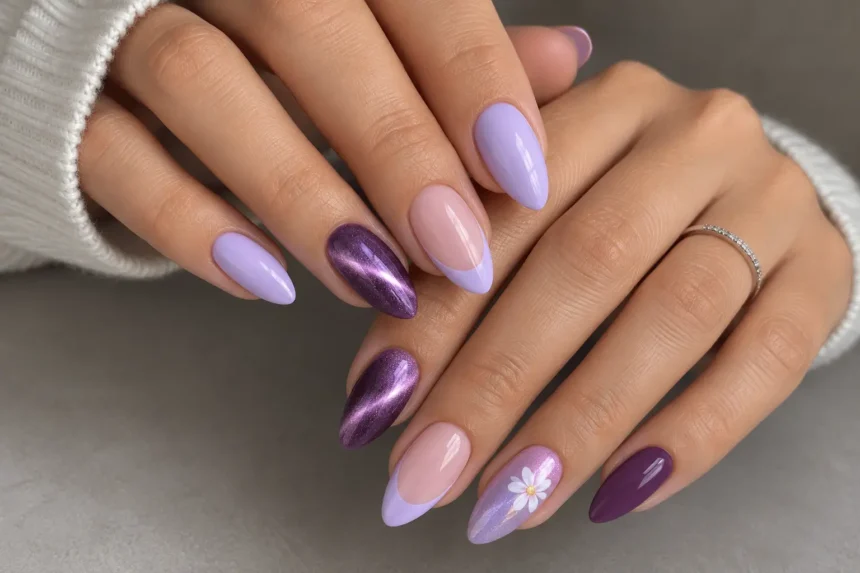
Purple polish can look barely noticeable in a sheer lilac wash or almost black in a deep plum manicure. That range makes it easy to adjust the color to your taste. You can keep the nails light and simple, choose a darker glossy shade, or add a reflection that changes as your hands move.
The finish matters as much as the shade. A milky lavender looks different from a translucent purple jelly, even when both start with a similar color. French tips leave more of the nail uncovered, while chrome and cat eye finishes give a plain base extra detail.
These 10 purple nail ideas cover softer everyday looks and more noticeable designs. Start with the shade you enjoy, then decide how much art or shine you want around it.
Purple Nail Ideas at a Glance
| Nail idea | Main colors | Suggested shape | Overall effect |
|---|---|---|---|
| Milky lavender | Pale purple and soft white | Round or squoval | Creamy and understated |
| Deep plum jelly | Translucent plum | Oval or almond | Rich and light-catching |
| Purple French tips | Purple and sheer pink | Square or oval | Defined without full coverage |
| Lilac chrome | Lilac with reflective pigment | Oval or almond | Bright and dimensional |
| Violet cat eye | Violet and magnetic shimmer | Round or almond | A shifting reflection |
| Purple aura | Lavender and deeper purple | Oval or squoval | Soft and diffused |
| Lavender ombré | Nude, pink, and lavender | Almond or square | Gradually blended |
| Purple and silver accents | Plum or lilac with silver | Any shape | Small metallic details |
| Purple floral nails | Lilac, white, and violet | Short oval | Delicate and playful |
| Mixed purple tones | Several related purple shades | Short square or round | Colorful and coordinated |
The suggested shapes aren’t requirements. Adjust the design to the length you already have, especially when choosing the size of an accent.
1. Milky Lavender Nails
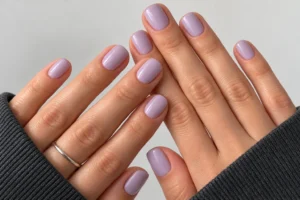
Milky lavender brings a soft white base into pale purple. The result feels creamier than a sheer lilac wash and quieter than a bright violet manicure.
Choose how much coverage you want before painting. A lightly translucent formula lets some of the natural nail show, while an opaque version creates a clearer pastel outline.
Short round and squoval nails suit this simple finish. Keep the edges tidy and let the color remain the main feature.
If the shade looks too chalky beside your hands, compare a slightly deeper lavender or a formula with less white.
Best for: A soft purple manicure with minimal decoration.
2. Deep Plum Jelly Nails
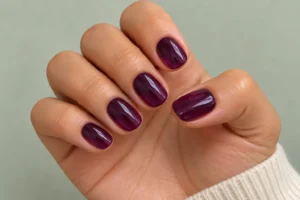
Plum jelly polish lets light pass through the color, giving a dark manicure more transparency than an opaque cream.
Build the shade gradually according to the product’s directions. One layer may show a berry tint, while additional coats create a deeper purple.
Check the result in daylight before adding another coat. Stop while some transparency remains if you want the jelly effect to stay visible.
Choose a formula designed for this finish. Adding thinner to an ordinary polish won’t necessarily produce the same appearance.
Best for: Dark purple nails that still catch the light.
3. Purple French Tips
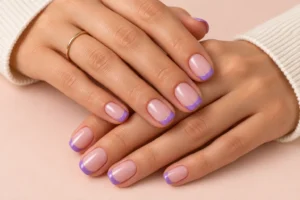
Purple French tips place the color along the free edge while leaving the base sheer pink, beige, or clear.
Lilac gives a gentle contrast. Violet makes the edge brighter, while deep plum creates a darker outline.
Keep the width suited to your nail length. A narrow line leaves more space on short nails; a deeper curved tip needs enough room to remain distinct from a solid manicure.
Compare the tips across the hand before finishing. Consistent thickness helps a simple design look coordinated.
Best for: Wearing purple without covering the entire nail.
4. Lilac Chrome Nails
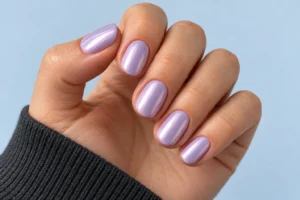
Lilac chrome adds a reflective layer over a purple base. Depending on the pigment and application, the result can stay softly lavender or shift toward a stronger metallic finish.
If you want the purple to remain obvious, ask to see the combination on a practice tip. A heavily opaque silver pigment may hide more of the base than you expected.
Keep the surface even before adding the reflective layer. Small ridges or bulky product can interrupt the reflection.
You can also use chrome on one accent nail and leave the others glossy lilac.
Best for: A simple purple manicure with noticeable shine.
5. Violet Cat Eye Nails
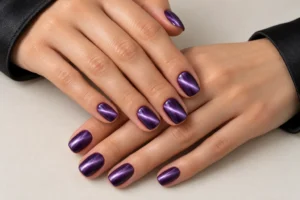
A violet cat eye finish creates a shifting highlight through a darker purple background.
A narrow diagonal band gives a defined pattern. A broader reflection creates a softer velvet appearance, although the technique depends on the polish and magnet.
Pink or purple shimmer keeps the colors closely related. Silver gives the highlight more contrast against the violet.
The magnetic design must be shaped before the polish sets. Follow the specific formula’s application instructions, including lamp and curing directions when using gel.
Best for: Purple nails with detail that changes as the hand moves.
6. Purple Aura Nails
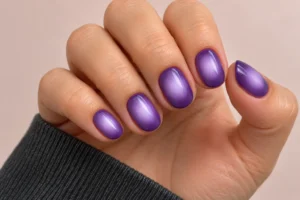
Purple aura nails place a diffused patch of color within a lighter or darker background.
Try a violet center fading into pale lavender for a clear purple combination. A lilac center over deep plum reverses the effect and gives the middle a lighter appearance.
Keep the edge hazy. A sharply outlined circle looks more like a dot than a soft aura.
On short nails, use a compact center and leave enough background visible around it. Extra gems or painted lines aren’t necessary.
Best for: A blended design with one central detail.
7. Lavender Ombré Nails
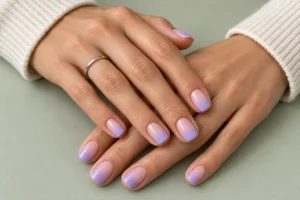
Lavender ombré gradually blends purple into sheer pink, nude, or milky white.
Concentrate the purple near the tips if you want the base to remain light. A lavender-to-white blend gives a more pastel result across the whole nail.
Longer nails offer more room for the transition, but short nails can still carry a simple two-color fade.
Check the blend from different angles. A hard band between colors can make the design look striped rather than graduated.
Best for: A softer way to combine purple with a neutral base.
8. Purple Nails With Silver Accents
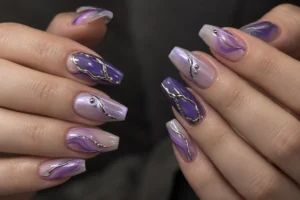
A tiny silver dot, narrow curve, or small piece of foil adds reflection without changing the whole manicure.
Deep plum creates a clear background for metallic details. Pale lilac gives a gentler combination, particularly with a fine silver line.
Choose one type of decoration and place it on one or two nails. Leave plain purple around the accent so its outline remains visible.
If you use raised decorations, consider whether they’ll catch during your usual activities. Painted metallic details give a flatter alternative.
Best for: A purple manicure with restrained metallic art.
9. Lavender Nails With Tiny Flowers
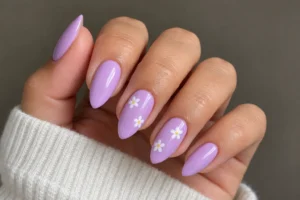
Small flowers give lavender polish a playful detail without filling the entire nail.
Try a white flower with a violet center over a sheer accent base. Paint the surrounding nails lavender to repeat the color through the set.
Keep the petals small and separate. On short nails, one recognizable flower may look clearer than several overlapping blooms.
A dotting tool can help create simple petals. Test the size first so the finished flower fits comfortably.
Best for: Light purple nails with compact floral accents.
10. Mixed Purple Tones
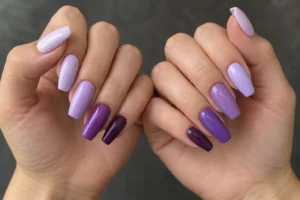
A tonal manicure uses several purple shades across the hand.
Begin with pale lilac, then move through lavender and violet toward plum. Alternatively, alternate two neighboring shades for a quieter variation.
Compare the polishes together before painting. A very pink lilac and a strongly blue violet create more contrast than shades with similar undertones.
Keep the finish consistent if you want the changing colors to be the main detail. Glossy solid shades are enough to make the set feel complete.
Best for: Enjoying several purple colors without detailed nail art.
How to Choose Your Purple Shade
Purple can lean pink, blue, gray, red, or nearly black. Those differences affect the result more than the word “purple” on the bottle.
| If you want | Compare these options |
|---|---|
| A barely-there color | Sheer lilac or translucent pink-purple |
| A creamy pastel | Milky lavender |
| A brighter manicure | Violet or orchid |
| A muted shade | Dusty lavender or gray-purple |
| A rich dark color | Plum, aubergine, or berry-purple |
| A reflective finish | Purple shimmer, chrome, or magnetic polish |
Look at a painted sample when possible. The depth of polish inside the bottle can make it appear darker than a thin layer on the nail.
Your preference should guide the choice. You don’t need to rule out a purple simply because it falls outside an undertone chart.
Make the Design Fit Your Nail Length
Short nails suit solid purple, narrow French tips, small flowers, and one metallic accent.
Keep gradients simple when there’s limited space. Two colors may give a clearer transition than several shades competing across a short nail.
Oval and almond nails provide more room for aura designs and longer reflections. Square nails give French tips a straighter, more structured edge.
Choose a length you can comfortably maintain. Purple nail art doesn’t require extensions to look finished.
Getting a Smooth Purple Manicure
Prepare the shape before painting and use the base coat recommended for your polish.
Apply controlled layers rather than loading enough color onto the brush to cover everything at once. Pale shades may look uneven initially, so judge the coverage after the recommended application.
Keep polish away from the surrounding skin and clean small smudges before the product sets.
For regular polish, follow the drying instructions before adding details or top coat. For gel, use the compatible lamp and full curing directions supplied by the manufacturer.
Finish with a top coat suited to the effect you want. Matte changes the appearance of the color, while gloss preserves a reflective surface.
Common Purple Nail Design Mistakes
Choosing the Color Only From a Screen
Lighting and display settings can change how purple appears. Use online photos to shortlist shades, then compare painted samples where possible.
Hiding the Base Beneath Metallic Pigment
Check how much purple remains visible after chrome or shimmer is added. Test the full combination before doing the hand.
Crowding a Small Accent Nail
A flower, silver curve, and several gems can compete for the same space. Choose the main detail first.
Mixing Too Many Finishes
Gloss, matte, chrome, and glitter can work together, but each adds variation. Start with one finish and add another only if it improves the design.
Final Takeaway
Purple nails can be light and understated, dark and glossy, or highly reflective. Milky lavender keeps things simple, plum jelly adds depth, and French tips leave more of the nail uncovered.
Choose a shade you enjoy, then give one design detail enough room to stand out. A tidy purple manicure doesn’t need several layers of decoration to look complete.
Frequently Asked Questions
Which purple nail design is easiest to try at home?
A solid lilac or plum manicure is a straightforward starting point. For simple art, add one small dot to an accent nail.
Can purple nails work on short natural nails?
Yes. Milky lavender, narrow French tips, small floral accents, and solid plum all work without extra length.
What colors go well with purple nails?
Sheer pink, cream, white, silver, navy, and deeper purple create different contrasts. Choose one pairing according to how light or bold you want the result.
What’s the difference between lilac and lavender polish?
The names overlap. Lilac often suggests a pinker purple, while lavender may lean cooler, but the actual shades vary between brands.
Can I create purple chrome nails with regular polish?
Some products create a reflective effect without gel. Loose chrome powders have specific surface requirements, so follow the instructions for the product you choose.
What should I ask for at the salon?
Describe the shade, shape, finish, and amount of art. For example: “Short oval nails with glossy milky lavender and a tiny silver accent on two nails.”
Our Editorial Approach
Beauty and self-care information should be clear and easy to use. Our goal is to help you understand your options and make more informed choices about your everyday routine.
Our articles are for educational purposes only and do not replace advice from a qualified healthcare professional.