
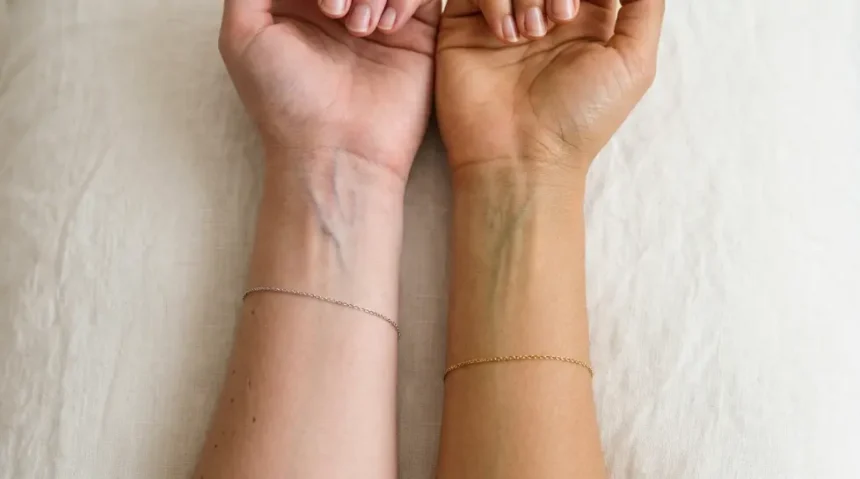
If you’re comparing blue vs green veins to find your skin undertone, the basic rule is simple: blue or purple-looking veins often suggest a cool undertone, while green-looking veins may indicate a warm undertone. If you see both colors, you may be neutral.
- Blue vs Green Veins at a Glance
- What Is a Skin Undertone?
- Why Do Veins Look Blue or Green?
- How to Tell Your Undertone by Veins
- 1. Use Indirect Natural Light
- 2. Start With Clean, Bare Skin
- 3. Check More Than One Vein
- 4. Identify the Overall Pattern
- What Do Blue Veins Say About Your Undertone?
- What Do Green Veins Say About Your Undertone?
- What If Your Veins Look Blue and Green?
- Do Blue-Green Veins Mean You Have Olive Skin?
- Why Can’t You Tell If Your Veins Are Blue or Green?
- How to Confirm Your Undertone
- Choosing Makeup Once You Know Your Undertone
- Common Wrist Vein Test Mistakes
- Does Vein Color Say Anything About Your Health?
- Frequently Asked Questions
- Final Takeaway
That rule is a helpful starting point, but it isn’t a diagnosis or a perfect color test. Lighting, skin depth, pigmentation, and even the position of a vein can change how its color appears. For a more accurate answer, use the wrist vein test alongside foundation swatches and a few other visual clues.
Blue vs Green Veins at a Glance
| Vein Appearance | Possible Undertone | What to Check Next |
|---|---|---|
| Blue or purple | Cool | Rosy foundations, silver jewelry, crisp white fabric |
| Green | Warm | Golden or peach foundations, gold jewelry, cream fabric |
| Both blue and green | Neutral | Balanced or neutral foundation shades |
| Blue-green or teal | Neutral or olive | Olive foundation shades and muted color tests |
| Veins are difficult to see | Undetermined | Use foundation swatches and fabric draping instead |
These categories are guidelines, not strict rules. It’s common for veins on one part of your wrist to look blue while others appear slightly green.
What Is a Skin Undertone?
Your skin tone describes how light or deep your skin looks on the surface. Your undertone is the more subtle color beneath that surface appearance.
The main undertone categories used in beauty and color matching are:
- Cool: Pink, rosy, red, or bluish undertones
- Warm: Golden, yellow, or peach undertones
- Neutral: A relatively balanced mix of warm and cool tones
- Olive: A muted green, gray, or golden-green cast
Any skin depth can have any undertone. Fair skin isn’t automatically cool, and deep skin isn’t automatically warm. Someone with a deep complexion may have a cool red undertone, while someone with fair skin may have distinctly golden warmth.
Your surface coloring can also change without changing your underlying undertone. Tanning, redness, acne, irritation, and temporary dryness may all affect how your complexion looks from day to day.
Why Do Veins Look Blue or Green?
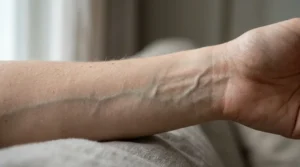
Human blood is red, including the blood inside veins. Veins can appear blue, green, or purple through the skin because light is absorbed and reflected differently as it passes through skin and tissue.
Research on the visual appearance of veins shows that vessel depth, diameter, surrounding skin, light absorption, and human color perception can all influence the color we see. In other words, a green-looking vein does not contain green blood.
Your natural skin coloring also changes the contrast. A vein viewed through skin with more golden or yellow tones may appear greener, while the same vein could look bluer through skin with a cooler surface cast.
This is why the vein color skin undertone method works best as one clue among several.
How to Tell Your Undertone by Veins
The wrist vein test takes only a minute, but the setting matters. Poor lighting can easily make a blue vein appear green or turn both colors gray.
1. Use Indirect Natural Light
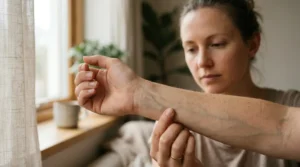
Stand near a window during daylight, but keep your wrist out of direct sunlight. Direct sun can create glare and make subtle colors harder to judge.
Avoid warm bathroom bulbs, colored LED lighting, and heavily tinted windows.
2. Start With Clean, Bare Skin
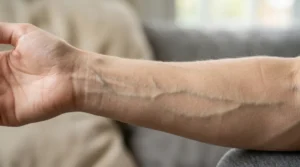
Remove makeup, body bronzer, self-tanner, and tinted sunscreen from your wrist and inner forearm. These products can add yellow, pink, or orange tones that change how your veins appear.
Let your skin settle if you’ve just taken a hot shower or exercised, since temporary redness can interfere with the test.
3. Check More Than One Vein
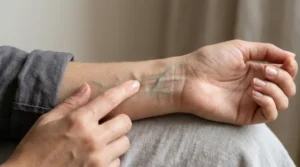
Look at several veins across both wrists and the inner forearms. Don’t make your decision based on one tiny area.
Keep your arm relaxed. Pulling or pressing the skin may make the vein look more prominent, but it can also change the surrounding color.
4. Identify the Overall Pattern
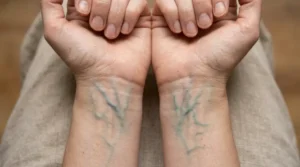
Ask yourself which description fits best:
- Mostly blue or purple
- Mostly green
- A visible mixture of blue and green
- Teal, gray-green, or difficult to classify
- Too faint to judge confidently
If you have to stare for several minutes and still can’t decide, treat the result as inconclusive. That often happens with deeper complexions, subtle olive coloring, or veins positioned farther below the skin.
What Do Blue Veins Say About Your Undertone?
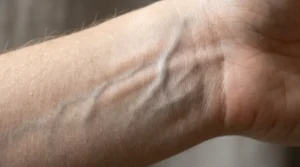
A blue veins undertone result usually points toward cool coloring, particularly when the veins look distinctly blue, violet, or purple in natural light.
Cool undertones often coordinate well with foundations labeled:
- Cool
- Rosy
- Pink
- Red
- Blue-red
You may also notice that mauve, berry, blue-based red, cool pink, silver, or white gold looks harmonious against your skin. These are supporting clues rather than rules. Personal contrast and color intensity matter too.
What Do Green Veins Say About Your Undertone?
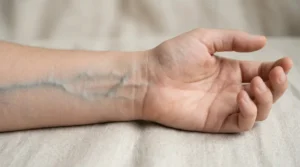
A green veins undertone result commonly suggests warm coloring. The vein itself isn’t green; it may look that way through skin with a golden, yellow, or peach cast.
Warm undertones may find better foundation matches among shades described as:
- Warm
- Golden
- Yellow
- Peach
- Honey
Cosmetic colors such as peach, coral, terracotta, bronze, warm brown, and orange-red can be useful starting points.
Be careful with overly yellow foundation, however. A warm undertone doesn’t always require the yellowest shade in the range. Foundation depth and color intensity still need to match your complexion.
What If Your Veins Look Blue and Green?
Seeing blue and green veins may indicate a neutral undertone. Neutral skin has a more balanced mix of warm and cool coloring, so neither side appears especially dominant.
Neutral undertones often have flexibility with makeup and jewelry. Both gold and silver may look natural, while foundations that are strongly pink or strongly yellow can appear slightly off.
Look for foundation labels such as neutral, beige, balanced, or neutral-warm. Because shade descriptions aren’t standardized across cosmetic brands, always swatch before buying when possible.
Do Blue-Green Veins Mean You Have Olive Skin?
Blue-green, teal, or muted green veins can be associated with olive skin, but vein color alone cannot confirm an olive undertone.
Olive complexions often have a subtle green, gray, or muted golden quality. They can lean warm, neutral, or cool. This is why olive skin may be mistaken for a standard warm undertone.
Foundation can offer a stronger clue. You may have an olive undertone if:
- Warm foundation repeatedly turns orange
- Cool foundation looks noticeably pink
- Neutral foundation appears peachy or slightly ashy
- Olive-labeled shades blend more naturally into your neck
- Muted colors suit you better than extremely bright warm or cool shades
Not everyone with green veins has olive skin, and people with olive skin can sometimes see blue or purple veins.
Why Can’t You Tell If Your Veins Are Blue or Green?
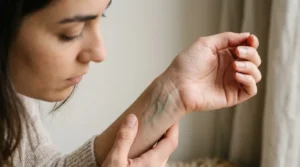
Many wrists don’t fit neatly into a blue-or-green category. Several factors can make the result ambiguous.
Your Lighting Is Changing the Color
Warm indoor bulbs can make veins appear greener. Cool fluorescent or LED lighting may emphasize blue and purple. Phone cameras can also alter white balance automatically, so a photo isn’t always more accurate than your eyes.
Your Veins Sit at Different Depths
Veins closer to the surface may appear different from deeper ones. Their size, depth, and the surrounding tissue all affect how light reaches your eyes.
Your Surface Skin Color Is Interfering
A tan, temporary redness, visible pigmentation, self-tanner, or even a colored product can change the contrast between your skin and veins.
Your Undertone Is Subtle
Neutral and olive undertones are often harder to classify with one quick test. If the result consistently looks blue-green rather than clearly one color, that ambiguity may itself be useful information.
Your Veins Aren’t Visible Enough
The wrist vein test is less helpful when the veins are faint or difficult to see. There’s no need to force an answer. Other color-matching methods may work much better.
How to Confirm Your Undertone
No single at-home skin tone test is perfect. Use two or three methods and look for a consistent pattern.
Compare White and Cream Fabric
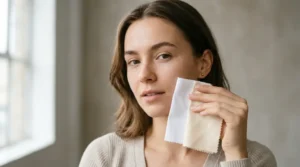
Hold a plain white fabric and a warm ivory or cream fabric near your makeup-free face in natural light.
Crisp white may look especially clear against cool undertones, while cream may complement warm undertones. If both look equally balanced, you could be neutral. Olive coloring may respond more clearly to muted ivory, soft white, or stone than to either extreme.
Compare Gold and Silver Jewelry
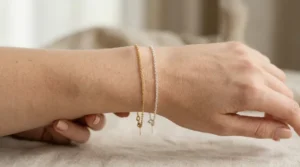
Try plain gold and silver pieces of a similar size.
Silver may blend more naturally with cool skin, while yellow gold may complement warm skin. If both look equally convincing, neutral or olive coloring is possible.
Use this test cautiously. Jewelry finish, personal style, hair color, and clothing can influence the result.
Swatch Foundation Along Your Jaw
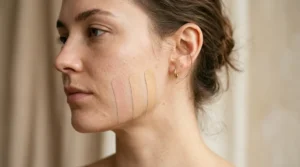
Foundation is usually the most practical confirmation because it shows how an undertone behaves directly against your skin.
Apply narrow stripes of similar-depth foundations with different undertones along the jawline. Extend each stripe slightly toward the neck and wait for the formulas to dry, since some foundations darken or shift color after application.
The best match should appear to disappear into both your face and neck without becoming:
- Orange
- Pink
- Yellow
- Gray
- Peachy
- Ashy
Match the depth first, then compare undertones within that depth. A shade that is too light or too dark can make the undertone seem wrong even when its color family is correct.
Choosing Makeup Once You Know Your Undertone
Undertone can narrow your options, but it shouldn’t limit what you wear.
| Undertone | Foundation starting point | Makeup colors to explore |
| Cool | Cool, rosy, pink, or red | Mauve, berry, plum, cool pink, blue-red |
| Warm | Warm, golden, yellow, or peach | Coral, peach, bronze, terracotta, warm red |
| Neutral | Neutral, beige, or balanced | Rose-beige, soft peach, balanced red, taupe |
| Olive | Olive, neutral-olive, or golden-olive | Muted rose, brick, bronze, earthy peach, plum |
Color intensity matters alongside temperature. Someone with soft, muted coloring may prefer dusty shades, while a person with stronger natural contrast may look better in richer colors, even when both share the same undertone.
Common Wrist Vein Test Mistakes
A few habits can make undertone results less reliable:
- Checking veins under yellow bathroom lighting
- Judging the color from a phone photo
- Looking at only one small vein
- Assuming fair skin must be cool
- Assuming tan or deep skin must be warm
- Confusing temporary redness with a cool undertone
- Treating jewelry preference as definitive evidence
- Choosing foundation by its label without swatching it
- Forcing a warm-or-cool answer when neutral or olive fits better
The purpose of undertone analysis is to make color matching easier. If a label creates more confusion than clarity, pay attention to how the actual product looks on your skin.
Does Vein Color Say Anything About Your Health?
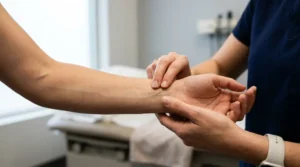
The blue or green appearance of ordinary veins is usually an optical effect and does not indicate whether your blood is healthy or properly oxygenated.
Undertone tests should only involve the normal color of veins visible beneath the skin. They shouldn’t be used to assess swollen, painful, warm, hard, or suddenly prominent veins.
Seek medical guidance if a vein becomes painful, bulges unexpectedly, or appears with swelling, redness, warmth, skin changes, or shortness of breath. These symptoms are unrelated to beauty undertones and deserve proper evaluation.
Frequently Asked Questions
Are green veins normal?
Yes. Veins commonly look green, blue, or purple through the skin. Green-looking veins usually reflect the way light and surrounding skin color affect their appearance, not the actual color of the blood.
Can you have both blue and green veins?
Yes. You might have veins at different depths or a neutral undertone that makes both colors visible. Lighting and the area of the body you examine can also affect the result.
Do blue veins always mean a cool undertone?
No. Blue veins are a useful clue, but they don’t confirm a cool undertone by themselves. Compare the result with foundation swatches, fabric colors, and jewelry before deciding.
Can your undertone change after tanning?
A tan changes your surface skin tone, but your underlying undertone generally remains consistent. Tanning may make your veins harder to see or change the contrast around them, making the wrist test look different.
What is the best undertone test for deeper skin?
Foundation swatching along the jaw and neck is often more helpful when wrist veins aren’t clearly visible. Compare shades of the same depth in cool, warm, neutral, and olive undertones under natural light.
Can olive skin have blue veins?
Yes. Olive skin can lean cool, neutral, or warm, so its veins may appear blue, green, purple, or a mixture. How foundation behaves on your skin is usually a better indicator of an olive undertone.
Final Takeaway
Blue veins often point toward a cool undertone, green veins commonly suggest warm coloring, and a mixture may indicate neutral or olive skin. However, the wrist vein test is only a starting point.
Check your veins in indirect daylight, then confirm the result with foundation swatches and fabric comparisons. The most useful undertone is ultimately the one that helps you choose colors that blend naturally with your complexion.
For more practical color and self-care advice, explore The Serenity Lab’s beauty guides.