
Noticing an unpleasant odor when you trim your nails or take off your socks can feel embarrassing, but it is more common than many people realize. If you are trying to understand why do my toenails smell, the answer is usually connected to moisture, bacteria, trapped debris, or a change in the nail itself. The odor may seem as though it comes directly from the nail, although the skin underneath and around it is often involved too.
- Why Can Toenails Develop an Odor?
- Common Reasons Your Toenails Smell
- 1. Sweat and bacteria are trapped around the nails
- 2. Debris has collected beneath the nail
- 3. You may have toenail fungus
- 4. Athlete’s foot is affecting the skin around your toes
- 5. A nail has lifted from the nail bed
- 6. The skin around the nail is infected
- 7. Your shoes or socks are holding odor
- How to Tell Where the Smell Is Coming From
- What to Do About Smelly Toenails
- Wash gently and dry carefully
- Trim your toenails correctly
- Keep your feet and shoes dry
- Avoid covering a suspicious nail with polish
- Use antifungal treatment only for the right problem
- Habits That Can Make the Problem Worse
- When Should You See a Doctor or Podiatrist?
- How to Prevent Toenail Odor From Returning
- The Bottom Line
- Frequently Asked Questions
Most mild cases improve when the feet are kept clean and dry. A persistent odor accompanied by thickening, discoloration, pain, swelling, drainage, or nail separation deserves more attention because those changes can point to a fungal or bacterial infection.
Why Can Toenails Develop an Odor?
A healthy nail plate is made of keratin and should not normally produce a strong smell. Odor develops when sweat, dead skin, sock fibers, and microorganisms collect around the nail folds or beneath a lifted edge of the nail.
Feet contain many sweat glands and spend hours inside shoes, creating a warm environment where bacteria and fungi can thrive. The problem can be more noticeable around thick, difficult-to-clean nails or beneath nails that have partially separated from the nail bed.
Common Reasons Your Toenails Smell
1. Sweat and bacteria are trapped around the nails
Sweat itself is not usually the main source of foot odor. The smell develops when bacteria break down sweat and dead skin. Closed shoes, synthetic socks, hot weather, exercise, and naturally sweaty feet can all increase moisture around the toes.
If the odor affects several toes and becomes strongest after wearing shoes all day, sweat and bacterial buildup may be the simplest explanation. The surrounding skin may look normal, and the smell may improve after washing and drying the feet.
2. Debris has collected beneath the nail
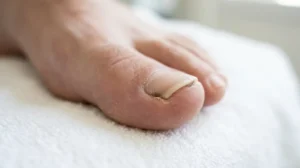
Dead skin, lint, soap residue, and keratin can collect underneath the free edge of a toenail. This is especially common when nails are long, curved, thick, or slightly lifted. The material can hold moisture and begin to smell even when the visible surface of the nail looks reasonably clean.
Avoid scraping deeply under the nail with a sharp tool. That can injure the nail bed and create an opening for infection. Clean only the accessible edge with a soft nail brush and gentle pressure.
3. You may have toenail fungus
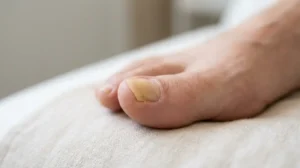
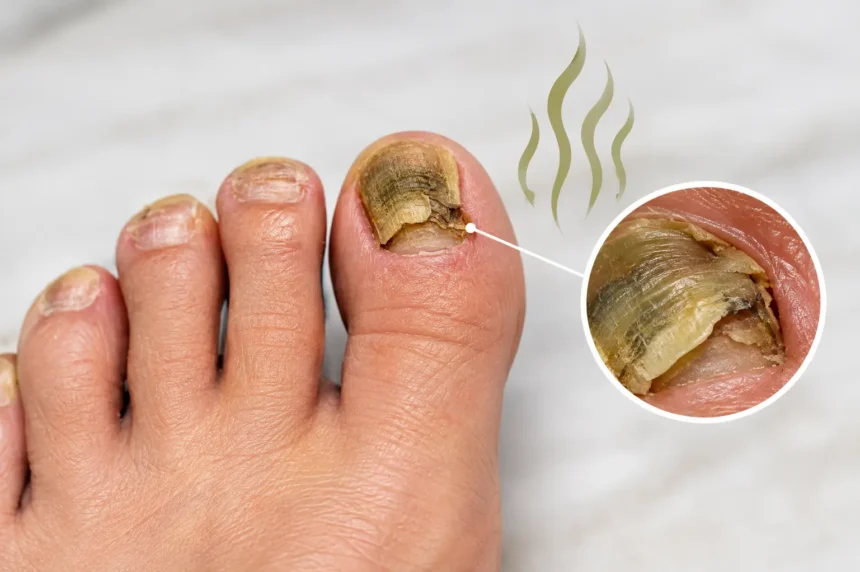
Toenail fungus, medically called onychomycosis, can make a nail yellow or brown, thick, brittle, crumbly, or distorted. Debris may build up beneath the nail, and the nail can lift away from the nail bed. These changes can trap moisture and contribute to a musty or unpleasant odor.
Not every thick or yellow nail is fungal. Repeated shoe pressure, an old injury, psoriasis, and normal changes with age can look similar. Our guide to a bruised toenail vs fungus explains the differences in color, timing, and texture. A healthcare professional may take a nail clipping or sample before recommending treatment. Mayo Clinic notes that testing debris from beneath the nail can help identify the cause because other conditions may resemble a fungal infection.
4. Athlete’s foot is affecting the skin around your toes
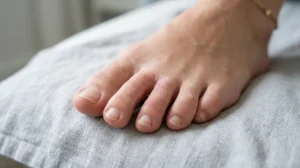
Athlete’s foot is a fungal skin infection that often appears between the toes. It may cause peeling, itching, burning, cracking, or pale, soggy-looking skin. Damp skin and a secondary buildup of bacteria can create an odor that seems to be coming from the toenails.
Athlete’s foot and fungal nail infections can occur together. Check the spaces between your toes instead of looking only at the nail plates.
5. A nail has lifted from the nail bed
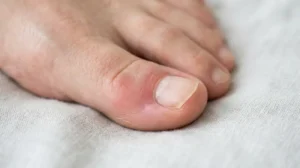
Trauma, tight footwear, fungal infection, psoriasis, and repeated pressure can cause part of a nail to separate from the skin underneath. The medical term for this is onycholysis. The resulting pocket can collect water and debris, making it difficult to keep the area dry.
A detached section will not reattach. As the nail grows, the damaged area must gradually move forward. Protecting the toe from further pressure and keeping the nail trimmed can help, but unexplained or spreading separation should be assessed by a professional. If the nail is becoming loose, see our guide to what to do when a toenail is falling off.
6. The skin around the nail is infected
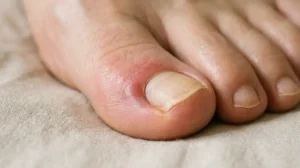
Paronychia is inflammation or infection around the nail fold. The skin may become red, warm, swollen, and tender. Pus or other drainage can produce a stronger, more localized odor. An ingrown toenail can also break the skin and allow bacteria to enter.
The Cleveland Clinic explains that some cases of paronychia form an abscess that needs professional drainage. Do not squeeze, puncture, or cut an infected area yourself.
7. Your shoes or socks are holding odor
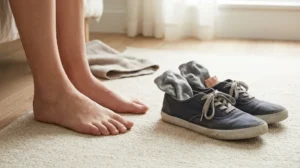
Sometimes the nail is not the source at all. Damp insoles and frequently worn shoes can retain bacteria and odor, which transfers back to clean feet. Wearing the same pair every day gives the inside little time to dry.
Notice whether the smell returns immediately after putting on a particular pair. Rotating shoes, washing socks thoroughly, and allowing footwear to air out may solve the problem faster than adding another foot product.
How to Tell Where the Smell Is Coming From
Wash your feet, dry them carefully, and put on a clean pair of breathable socks. Check your nails again after a few hours at home without wearing the shoes that usually cause the problem.
Look for these clues:
- Odor from most toes with damp skin usually suggests sweat and bacterial buildup.
- Itching or peeling between the toes may point to athlete’s foot.
- A thick, yellow, crumbly, or lifted nail may be affected by fungus or previous trauma.
- Redness, heat, worsening pain, pus, or drainage can indicate a bacterial infection.
- Odor linked to one pair of shoes may be coming from the footwear rather than the nails.
Appearance alone cannot reliably confirm toenail fungus. If the changes persist, testing is more useful than repeatedly trying random treatments.
What to Do About Smelly Toenails
Wash gently and dry carefully
Wash your feet once daily with mild soap and lukewarm water. Clean around the nail edges with your fingertips or a soft brush. Dry the tops, soles, nail folds, and spaces between the toes before putting on socks.
Constant scrubbing, harsh antiseptics, and very hot water can irritate the skin. A consistent gentle routine is usually more helpful.
Trim your toenails correctly
Cut toenails straight across and leave them long enough that the corners remain visible. Cutting deeply into the sides increases the risk of an ingrown nail. Smooth rough edges with a clean file, and disinfect reusable clippers after use.
Do not share nail tools. If one nail appears infected, clean the tool before using it on another nail.
Keep your feet and shoes dry
Change damp socks promptly and choose breathable materials. Rotate shoes so each pair has time to dry completely. Remove insoles when possible and follow the manufacturer’s washing instructions.
Foot powder may help manage moisture, but it does not treat a nail infection. Avoid packing powder beneath a lifted nail because it can mix with sweat and create more debris.
Avoid covering a suspicious nail with polish
Nail polish can hide changes that would otherwise help you monitor the problem. It may also trap moisture when a nail is already lifting or crumbling. Leave the nail bare until you understand why it has changed.
Use antifungal treatment only for the right problem
Over-the-counter products can help some fungal infections of the skin, including athlete’s foot. Thick toenail infections are harder to treat because medication must reach organisms within or beneath the nail. Treatment can take months, and oral antifungal medicines require professional guidance because they are not suitable for everyone.
If you are unsure whether the nail is fungal, ask a dermatologist, podiatrist, or primary-care professional before committing to a long treatment plan.
Habits That Can Make the Problem Worse
Avoid digging beneath the nail, cutting away attached nail tissue, or using unproven remedies that burn or irritate the skin. Bleach, undiluted essential oils, and strong acids can cause chemical injury without addressing the underlying problem.
Wearing narrow shoes can repeatedly press the nail into the surrounding skin. Leaving sweaty socks on for hours and sharing clippers can also encourage recurrence or spread.
When Should You See a Doctor or Podiatrist?
Arrange an appointment if the odor continues despite good hygiene or if the nail becomes thick, discolored, crumbly, painful, distorted, or separated. Seek care sooner when there is spreading redness, warmth, swelling, pus, bleeding, severe pain, fever, or red streaking on the foot.
For a small break in the skin beneath a toe, follow these first-aid steps for a cut under the toe and monitor the area for infection.
People with diabetes, poor circulation, reduced sensation, or a weakened immune system should not attempt aggressive home treatment. Small injuries may be harder to notice and can become more serious. The NHS advises seeking medical help when an ingrown toenail is painful and swollen with pus or when a person has diabetes.
How to Prevent Toenail Odor From Returning
Keep nails short but not overly close, dry carefully after bathing, and change socks whenever they become damp. Wear shower shoes in shared locker rooms and pool areas, and avoid sharing footwear or nail tools.
Give shoes time to dry between wears and address peeling or itching between the toes early. If a nail has been injured, protect it from repeated pressure while healthy nail grows forward. Toenails grow slowly, so visible improvement can take time even after the cause has been treated.
The Bottom Line
Understanding why your toenails smell starts with checking more than the nail surface. Moisture, bacteria, debris, damp shoes, athlete’s foot, nail lifting, and infection are all possible causes. Begin with gentle cleaning, careful drying, clean socks, and properly fitted shoes. If the smell persists or appears with nail changes, pain, redness, or drainage, seek professional advice rather than trying to dig or cut the problem away.
Frequently Asked Questions
Is it normal for toenails to smell when I cut them?
A mild odor can occur when clippings release debris that was trapped beneath a long or thick nail. A strong or recurring smell, particularly with discoloration, crumbling, pain, or drainage, should not be ignored.
Does a smelly toenail always mean fungus?
No. Sweat, bacteria, trapped keratin, damp footwear, nail separation, athlete’s foot, and bacterial infection can also cause odor. A nail test may be needed to confirm fungus.
Why does only my big toenail smell?
The big toe experiences more shoe pressure and is more likely to develop trauma, an ingrown edge, thickening, or nail separation. Inspect the skin around it for redness, tenderness, or drainage.
Can I clean underneath a smelly toenail?
You can gently clean the accessible edge with soap, water, and a soft brush. Do not force sharp tools deep beneath the nail because this can damage the nail bed and introduce bacteria.
Will toenail fungus go away on its own?
Established fungal nail infections often persist without treatment. Because several nonfungal conditions resemble fungus, professional confirmation can help you choose an appropriate treatment.
How quickly should toenail odor improve?
Odor caused by sweat or footwear may improve within several days of better drying, clean socks, and shoe rotation. Odor linked to a nail or skin infection may continue until the underlying condition is treated.
Our Editorial Approach
Beauty and self-care information should be clear and easy to use. Our goal is to help you understand your options and make more informed choices about your everyday routine.
Our articles are for educational purposes only and do not replace advice from a qualified healthcare professional.