
Skin can feel tight, look dull, and show fine lines more clearly without making it obvious what is actually wrong. Those signs are often blamed on dryness, but they can also appear when skin is short on water. Understanding dry vs dehydrated skin matters because the two concerns need slightly different care. Adding more oil will not always solve dehydration, while layering lightweight hydrating products may not be enough for skin that naturally produces too little oil.
- Dry Skin and Dehydrated Skin Are Not the Same
- Dry vs Dehydrated Skin at a Glance
- Signs Your Skin May Be Dry
- Signs Your Skin May Be Dehydrated
- Can Oily Skin Be Dehydrated?
- A Simple At-Home Check
- How to Care for Dry Skin
- Use a gentle cleanser
- Apply a richer moisturizer
- Moisturize while skin is slightly damp
- Protect skin from the weather
- Do not forget sunscreen
- How to Care for Dehydrated Skin
- Scale back potential irritants
- Add a humectant
- Seal hydration with moisturizer
- Keep cleansing gentle
- Review the whole routine
- What If Your Skin Is Both Dry and Dehydrated?
- Mistakes That Can Make Both Problems Worse
- When to See a Dermatologist
- Conclusion
- Frequently Asked Questions
The good news is that you do not need a complicated routine to tell them apart. Paying attention to how your skin feels throughout the day, how much oil it produces, and how it responds to moisturizer can reveal a great deal. It is also possible to have dry and dehydrated skin at the same time, so the answer is not always one or the other.
Dry Skin and Dehydrated Skin Are Not the Same
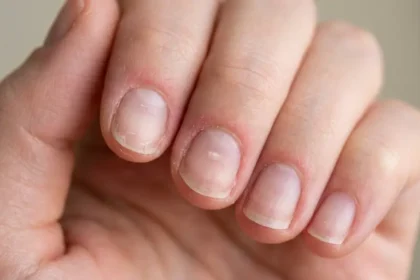
Dry skin is generally considered a skin type. It produces less sebum, the natural oil that helps soften and protect the skin’s surface. Because it lacks oil, dry skin may feel rough, flaky, uncomfortable, or persistently tight. It can affect the face and body and often becomes more noticeable during cold weather, after hot showers, or with age.
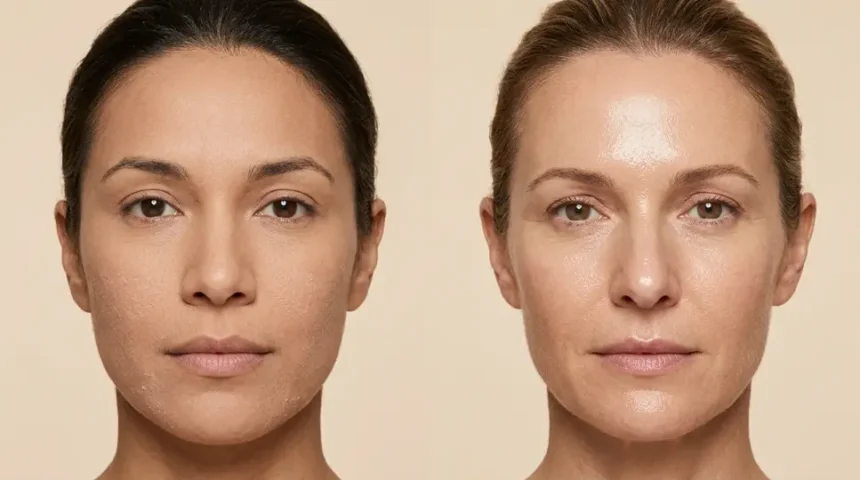
Dehydrated skin is a temporary condition in which the skin does not hold enough water. It can happen to any skin type, including oily and acne-prone skin. A person may have a shiny forehead and congested pores while still experiencing tightness, dullness, or fine dehydration lines.
The simplest way to remember the distinction is this: dry skin lacks oil, while dehydrated skin lacks water. In real life, however, oil and water balance influence each other. When the skin barrier is not working well, water escapes more easily and the surface becomes vulnerable to irritation. That is why both concerns often improve when the routine supports the skin barrier rather than aggressively stripping or exfoliating it.
Dry vs Dehydrated Skin at a Glance
| Sign | Dry skin | Dehydrated skin |
|---|---|---|
| Main issue | Not enough natural oil | Not enough water in the skin |
| Can affect | Usually a consistent skin type | Any skin type, including oily skin |
| Typical feel | Rough, flaky, persistently tight | Tight but sometimes oily or shiny |
| Appearance | Dull, scaly, or ashy in some skin tones | Dull, tired, with fine surface lines |
| Pores | Often appear smaller | May still be visible or congested |
| Common triggers | Genetics, age, weather, harsh cleansing | Over-cleansing, dry air, heat, irritating products |
| Helpful approach | Emollients and richer barrier-supporting creams | Humectants plus a moisturizer to seal in water |
This table is a guide, not a diagnosis. Eczema, contact dermatitis, psoriasis, medication side effects, and other health issues can also cause dryness, scaling, or irritation. Persistent or painful changes deserve professional advice.
Signs Your Skin May Be Dry

Dry skin tends to feel consistent rather than appearing only after a particular product or a long day. The cheeks may feel rough, the area around the mouth may flake, and makeup can catch on dry patches. The body may also show signs, particularly on the hands, shins, elbows, and knees.
Common signs include:
- Rough or uneven texture
- Visible flakes or scaling
- Tightness that continues after moisturizer
- Itching or general discomfort
- Fine cracks in more severe cases
- A matte or dull appearance
- Greater sensitivity to wind, cold, and fragranced products
Dry skin may be genetic, but it can become more pronounced over time. Sebum production often changes with age, and low humidity, indoor heating, long hot showers, and strong soaps can remove more protective oil from the surface.
Signs Your Skin May Be Dehydrated
Dehydration can be less obvious because the skin may continue producing plenty of oil. You might notice that your face looks shiny by midday but feels tight immediately after cleansing. Foundation may separate in oily areas yet settle into fine lines elsewhere. Skin can also seem less bouncy and more tired than usual.
Possible signs include:
- Tightness that comes and goes
- Increased oiliness alongside discomfort
- Fine surface lines that look more visible than usual
- A dull or tired-looking complexion
- Makeup that appears patchy or creased
- Skin that feels better in humid weather
- Sensitivity after exfoliating or using active ingredients
Dehydration is commonly linked to a disrupted skin barrier. Frequent exfoliation, foaming cleansers, very hot water, low humidity, and using several strong active ingredients at once can all contribute. Travel, seasonal changes, and air conditioning may also make the problem more noticeable.
Can Oily Skin Be Dehydrated?

Yes. Oiliness describes sebum production, not the amount of water within the upper layers of skin. Oily skin can become dehydrated when it is cleansed too aggressively or treated with too many drying acne products. The face may then feel tight and irritated while still becoming shiny later.
This combination often leads people to use an even stronger cleanser, skip moisturizer, or add another exfoliating acid. That can make the cycle worse. A gentle cleanser and a lightweight, non-comedogenic moisturizer are usually more helpful than trying to remove every trace of oil.
Moisturizer does not have to feel heavy. Gel-creams and light lotions can provide humectants and barrier support without leaving a rich finish. The important point is to choose a formula that feels comfortable enough to use consistently.
A Simple At-Home Check
There is no perfect home test for dry vs dehydrated skin, and the popular pinch test is not a reliable way to diagnose facial dehydration. A better approach is to observe your skin over several days.
After washing with a mild cleanser, gently pat the skin so it remains slightly damp. Do not apply anything for about 20 to 30 minutes. If the face feels rough and tight across most areas and rarely becomes oily, dryness is more likely. If it feels tight at first but becomes shiny later, dehydration may be contributing. If flakes, burning, redness, or itching continue, the issue may involve irritation or a skin condition rather than a simple moisture imbalance.
Also consider what changed recently. A new retinoid, acne treatment, exfoliating toner, foaming cleanser, colder weather, or a week in air conditioning may provide a more useful clue than a one-time test.
How to Care for Dry Skin

The goal for dry skin is to replace softness and reduce moisture loss. A simple routine is usually easier on the barrier than a long lineup of active products.
Use a gentle cleanser
Choose a fragrance-free cream or lotion cleanser that does not leave the face feeling squeaky. In the morning, some people with very dry skin may prefer a lukewarm-water rinse, followed by moisturizer and sunscreen.
Apply a richer moisturizer
Look for a cream containing ingredients such as ceramides, glycerin, squalane, shea butter, or petrolatum. Humectants attract water, emollients smooth the spaces between skin cells, and occlusives slow water loss. A balanced formula may contain more than one of these ingredient types.
Moisturize while skin is slightly damp
Applying moisturizer soon after cleansing or showering helps trap water at the surface. The same habit works well for dry hands and body skin.
Protect skin from the weather
Cold air, wind, and indoor heating can worsen dryness. A richer cream at night, gloves outdoors, and a humidifier in a dry room may make the skin more comfortable.
Do not forget sunscreen
Daily broad-spectrum SPF 30 or higher helps protect skin from ultraviolet damage. Choose a creamier formula if fluid or mattifying sunscreens leave the face feeling tight.
How to Care for Dehydrated Skin

Dehydrated skin needs water-binding ingredients, but it also needs a healthy surface barrier to keep that water from escaping.
Scale back potential irritants
If the skin stings, feels unusually tight, or has become suddenly sensitive, pause unnecessary exfoliating acids, scrubs, and strong treatments. You may not need to abandon an effective active ingredient forever; reducing frequency can give the barrier time to settle.
Add a humectant
Glycerin, hyaluronic acid, panthenol, urea, and beta-glucan can help attract and hold water in the outer skin layers. Apply a hydrating serum or essence to slightly damp skin rather than allowing it to dry completely on the face.
Seal hydration with moisturizer
A hydrating serum is not always a substitute for moisturizer. Follow with a lotion or cream suited to your skin type. Oily skin may prefer a light gel-cream, while combination or dry areas may need a more cushioning layer.
Keep cleansing gentle
Wash with lukewarm rather than hot water and avoid repeatedly cleansing until the skin feels oil-free. If you double cleanse to remove makeup or water-resistant sunscreen, both steps should be mild.
Review the whole routine
Using a retinoid, exfoliating acid, acne treatment, and strong vitamin C product together may overwhelm some skin. Introduce products slowly and avoid assuming that tingling means they are working.
What If Your Skin Is Both Dry and Dehydrated?
This is common, particularly in winter or after overusing active ingredients. Skin can naturally produce little oil and also lose too much water through a weakened barrier. In that case, combine the two strategies: use gentle cleansing, apply a humectant to damp skin, and follow with a cream containing emollient and occlusive ingredients.
At night, very dry areas may benefit from a thin layer of petrolatum over moisturizer. This technique is not ideal for everyone, particularly if you dislike heavy textures or are using potentially irritating prescription treatments, but it can reduce moisture loss in selected areas.
Keep the routine steady for at least a couple of weeks before judging every product. Skin comfort may improve quickly, while visible flaking and roughness can take longer to settle.
Mistakes That Can Make Both Problems Worse
The same habits can aggravate dry and dehydrated skin:
- Washing with very hot water
- Using harsh soap on the face
- Exfoliating whenever skin looks dull
- Skipping moisturizer because the face is oily
- Applying fragranced products to irritated skin
- Starting several active ingredients at once
- Changing the routine every few days
- Relying on facial oils alone for hydration
Facial oil can soften and reduce water loss, but it does not supply much water by itself. It usually works best over a hydrating product or moisturizer rather than as the only step.
When to See a Dermatologist
Seek professional advice if dryness or tightness is severe, painful, suddenly worsening, or accompanied by cracking, bleeding, swelling, a persistent rash, or intense itching. It is also worth getting help when a simplified routine does not improve the problem. Conditions such as eczema, psoriasis, rosacea, and contact dermatitis can resemble ordinary dryness but may need specific treatment.
Should I exfoliate flaky skin?
Not immediately. Flakes can tempt you to scrub, but exfoliation may worsen irritation when the barrier is already compromised. Begin with gentle cleansing and regular moisturizing; introduce mild exfoliation only when the skin feels calm.
Conclusion
The central difference in dry vs dehydrated skin is oil compared with water. Dry skin naturally produces less oil, while dehydrated skin is temporarily lacking water and can still look shiny. Because the symptoms overlap, pay attention to persistent roughness, changing tightness, oil production, recent product use, and environmental triggers.
You do not need a crowded shelf to address either concern. Gentle cleansing, well-chosen humectants, a moisturizer suited to your skin type, and daily sunscreen create a strong foundation. If discomfort or scaling continues, a dermatologist can help identify whether something beyond simple dryness or dehydration is involved.
Frequently Asked Questions
How can I tell if my skin is dry or dehydrated?
Dry skin is more likely to feel consistently rough, flaky, and low in oil. Dehydrated skin may feel tight or look dull while still becoming oily during the day. Looking at patterns over several days is more useful than relying on a single home test.
Can skin be dry and dehydrated at the same time?
Yes. A person can naturally produce less oil while also losing too much water from the skin’s surface. A routine combining humectants with a richer barrier-supporting moisturizer can address both concerns.
Does drinking more water fix dehydrated skin?
Drinking enough water supports general health, especially if you are genuinely dehydrated, but an extra glass of water is not a complete skin treatment. Topical care and a healthy skin barrier still matter because surface water loss can be driven by weather, cleansing habits, and irritating products.
Is hyaluronic acid good for dry skin?
Hyaluronic acid can help attract water, but dry skin usually needs more than a hydrating serum. Follow it with a cream containing emollient and occlusive ingredients so the added hydration does not escape quickly.
Why is my skin oily but tight after washing?
That combination can suggest dehydration or irritation from an overly strong cleanser. Try a gentler cleanser, avoid very hot water, and use a lightweight moisturizer rather than skipping hydration.
How long does dehydrated skin take to improve?
Mild tightness may improve within days after removing the trigger and simplifying the routine. A stressed skin barrier can take several weeks to feel consistently comfortable. Ongoing redness, itching, or pain should be assessed by a dermatologist.
Our Editorial Approach
Beauty and self-care information should be clear and easy to use. Our goal is to help you understand your options and make more informed choices about your everyday routine.
Our articles are for educational purposes only and do not replace advice from a qualified healthcare professional.