
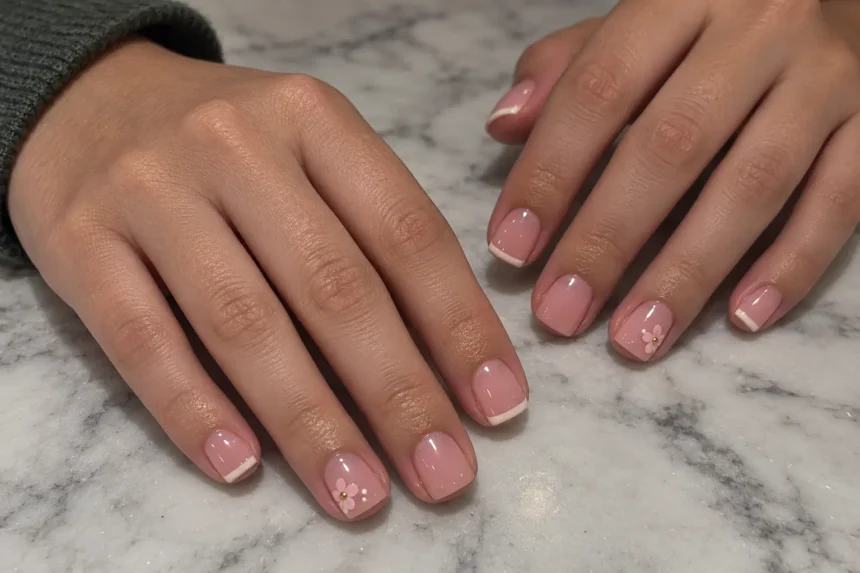
A thin white tip looks different on a straight nail edge than it does on a rounded one. The line feels more defined, even when the nails are short and the base is barely tinted. That simple outline is part of what makes short square nails appealing.
- Short Square Nail Ideas at a Glance
- What Are Short Square Nails?
- 1. Sheer Pink Short Square Nails
- 2. Milky Nude Short Square Nails
- 3. Short Square French Tips
- 4. Dusty Rose Short Square Nails
- 5. Classic Red Short Square Nails
- 6. Chocolate Brown Short Square Nails
- 7. Muted Lavender Short Square Nails
- 8. Soft Blue Short Square Nails
- 9. Short Square Nails With Tiny Metallic Dots
- 10. Short Square Nails With Minimal Side Lines
- Short Square vs. Squoval vs. Round Nails
- How Short Should Square Nails Be?
- How to Shape Short Square Nails
- Choosing a Color for Daily Wear
- Natural Nails, Gel, or Press-Ons?
- Keeping the Manicure Comfortable During the Day
- Common Short Square Nail Mistakes
- Making the French Tip Too Wide
- Filing the Sides Too Narrow
- Leaving Rough Corners
- Crowding the Accent Nail
- Choosing Length Only From a Photo
- Final Takeaway
- FAQs
You can keep the manicure sheer, choose a solid color, or add one small detail without needing much extra length. Milky pink softens the shape, deep brown makes the edge clearer, and a tiny dot gives a plain base something extra.
These short square nail ideas cover simple colors and lightly decorated designs. Start with a length that feels comfortable during your usual day, then choose how much coverage, shine, or art you want.
Short Square Nail Ideas at a Glance
| Nail idea | Main colors | Finish or detail | Overall effect |
|---|---|---|---|
| Sheer pink | Translucent rose pink | Glossy wash | Light and understated |
| Milky nude | Beige, pink, or cream | Soft, cloudy coverage | Neutral and polished |
| Narrow French tips | Sheer base and white | Fine tip line | Defined and simple |
| Dusty rose | Muted rose pink | Solid glossy color | Soft color with depth |
| Classic red | Red | Opaque cream | Bright and clearly outlined |
| Chocolate brown | Medium or deep brown | Glossy solid color | Rich and uncomplicated |
| Muted lavender | Pale or gray-purple | Cream finish | Gentle pastel color |
| Soft blue | Powder or muted blue | Solid color | Cool and softly defined |
| Tiny metallic dots | Pink-beige and gold or silver | One small dot | Restrained reflection |
| Minimal side lines | Sheer nude and a contrasting shade | Fine painted line | Simple graphic detail |
The designs don’t require identical nail beds or extra length. Scale the tips and accents to each nail so the whole set feels balanced.
What Are Short Square Nails?
Short square nails have a relatively flat free edge and straight-looking sides, with the length kept close to the fingertip.
The corners make the outline different from a round or oval shape. OPI describes square nails as flat across the top with defined corners, while squoval nails combine a flatter edge with rounded corners.
Salon interpretations can vary. A softly finished square may look close to squoval, especially on very short nails.
Bring a reference photo if you want a particular corner shape or amount of visible length.
1. Sheer Pink Short Square Nails
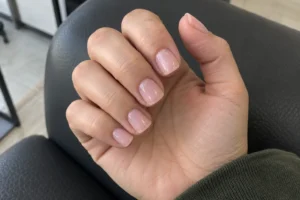
Sheer pink adds a light tint while allowing some of the natural nail to remain visible.
The flat edge gives the manicure a clear outline without needing an opaque color.
Compare a rosy pink with a neutral pink-beige. Your natural nail color will influence how each translucent formula looks.
Keep the coverage even and decide how much of the free edge you want to show. A glossy top coat can finish the look without additional decoration.
Best for: A simple manicure with light coverage.
2. Milky Nude Short Square Nails
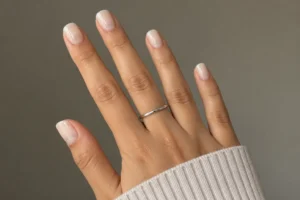
Milky nude gives the square shape a softly cloudy finish.
Choose a pink, beige, or cream influence according to the result you want. A shade close to your skin depth may blend quietly, while a lighter one creates more contrast.
Check whether the formula is translucent or opaque before choosing. Both can be described as milky.
Apply the recommended layers rather than trying to achieve full coverage with one heavy coat.
Best for: A neutral manicure with a soft, creamy appearance.
3. Short Square French Tips
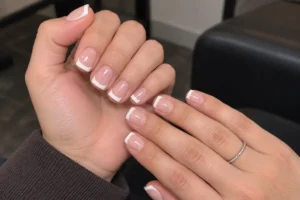
A narrow French tip follows the free edge over a sheer pink, beige, or clear base.
Keep the white line proportionate to the nail. On a short square shape, a wide band can cover much of the visible length.
The tip doesn’t have to be completely straight. A gentle curve can follow the natural smile line while the outer edge remains square.
Compare the thickness across the hand before finishing. Similar proportions matter more than making every line exactly the same width.
Best for: Showing the flat edge with a familiar design.
4. Dusty Rose Short Square Nails
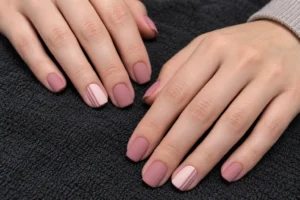
Dusty rose brings muted pink color to a compact square shape.
Some shades lean beige or brown, while others have a cooler mauve influence. Compare them together before deciding.
A glossy cream finish gives the color a clear outline. Matte changes the surface and makes the same shade look different.
Keep the manicure solid if you want the rose color to be the main feature. One small metallic accent is enough if you prefer a little detail.
Best for: A muted pink manicure with more depth than a sheer wash.
5. Classic Red Short Square Nails
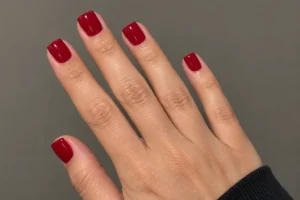
Red gives short square nails a noticeable block of color.
A warmer tomato red looks different from a cooler cherry shade, even when both have similar depth.
Compare the color in daylight as well as indoor lighting. Deeper reds may look close to burgundy in some settings.
Keep the edges tidy and the layers controlled. The color and shape provide enough detail without extra art.
Best for: A bright manicure on a manageable length.
6. Chocolate Brown Short Square Nails
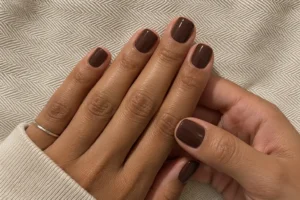
Chocolate brown creates a darker outline around the nail.
A medium brown keeps the color clearly visible, while a deeper version can look almost black indoors.
Check the undertone alongside the depth. Some browns show red warmth, while others look more neutral.
Choose a glossy finish if you want a visible reflection across the surface. A plain brown set can feel complete without contrasting accents.
Best for: A rich, darker manicure with minimal decoration.
7. Muted Lavender Short Square Nails
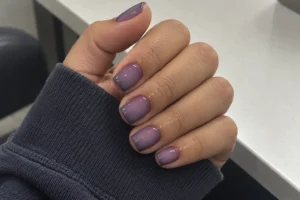
Muted lavender introduces purple without the brightness of a stronger violet.
A pale cream creates a defined pastel nail. A gray-purple version gives a quieter result with slightly more depth.
Compare the polish beside your hands rather than judging from a screen. Some lavender shades look pinker or bluer once painted.
You can also use lavender along the tips over a sheer base if you prefer less full-nail coverage.
Best for: A soft purple manicure with a simple outline.
8. Soft Blue Short Square Nails
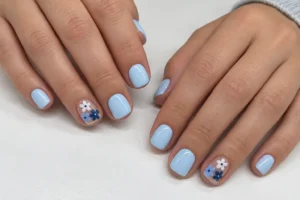
Soft blue gives the square shape a cooler color option.
Powder blue has a pale, creamy appearance, while a muted blue-gray offers a little more depth.
Choose how much contrast you want. An almost-white blue creates a different result from a shade with more visible blue pigment.
Keep the finish consistent across the hand. A solid glossy set lets the color remain the main detail.
Best for: A light manicure beyond pink and beige.
9. Short Square Nails With Tiny Metallic Dots
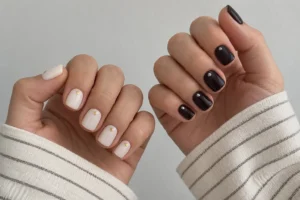
A small gold or silver dot adds reflection to a sheer or neutral base.
Place one near the base of each nail, or reserve the detail for one or two accent fingers.
Keep the dot compact and leave space between it and the surrounding skin. A larger metallic circle creates a stronger pattern.
Painted dots offer a flat finish. If you choose raised decorations, consider whether they’ll catch during your usual activities.
Best for: A little metallic detail without full glitter coverage.
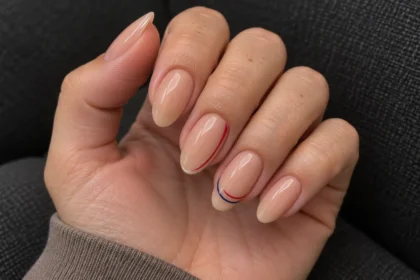
10. Short Square Nails With Minimal Side Lines
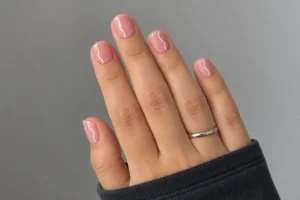
One fine line can give a plain manicure a small graphic detail.
Try brown over pink-beige, white over sheer pink, or muted blue over a neutral base.
Place the line along one side rather than outlining the entire nail. Leaving the center open keeps the design easy to see.
Use the same color on one or two accent nails. Several intersecting lines may become crowded on a short surface.
Best for: Simple nail art with plenty of visible base.
Short Square vs. Squoval vs. Round Nails
These shapes can look similar when the nails are very short, but the free edge and corners change the outline.
| Nail shape | Free edge | Corners | What to compare |
|---|---|---|---|
| Square | Relatively flat | Defined | A straighter, more structured outline |
| Squoval | Mostly flat | Rounded | A square influence with softer edges |
| Round | Curves with the fingertip | No distinct corners | A compact, curved outline |
Choose the shape that feels comfortable on your own nails.
If square corners repeatedly catch, ask whether a slight adjustment or a squoval finish would suit your routine better.
You don’t need to preserve sharp corners simply to keep the name of the shape.
How Short Should Square Nails Be?
There isn’t one measurement that works for everyone.
Start with where the free edge sits against your fingertip and how the length feels during tasks you repeat.
Typing, fastening jewelry, handling contact lenses, and working with small objects can help you judge whether the length is practical.
Leave enough free edge to create the outline without cutting into the attached nail.
If your nails are too short for a distinct square shape, keep them comfortable while they grow rather than forcing the corners.
How to Shape Short Square Nails
Check the Existing Length
Look at each nail before trimming.
Choose a realistic overall length based on the shorter nails instead of removing extra length from the sides to make them appear identical.
Refine the Free Edge
File gradually across the tip to create a relatively flat edge.
Check your hand from above and with the fingers pointing forward. An edge that looks straight from one angle may lean to one side from another.
Preserve the Sides
Avoid filing deeply into the attached sides to make the nail appear narrower.
The aim is a balanced outline that fits your existing nail, rather than forcing every finger into the same width.
Check the Corners
Remove roughness carefully and test whether the edges catch on fabric.
If you round the corners more noticeably, the result moves toward squoval. That may be a comfortable choice if you prefer a softer outline.
Choosing a Color for Daily Wear
Start with how much contrast and coverage you enjoy.
| If you want | Compare these options |
|---|---|
| A barely-there tint | Sheer pink |
| A creamy neutral | Milky nude or pink-beige |
| A defined tip | Narrow white French |
| Muted pink color | Dusty rose |
| A brighter manicure | Classic red |
| A darker finish | Chocolate brown |
| A soft pastel | Lavender or powder blue |
| A small reflective accent | Gold or silver dots |
| Minimal painted art | One fine side line |
No color is required for a particular nail width or skin tone.
A pale shade may create strong contrast on one person, while a deeper neutral blends more closely on another. Compare painted samples and choose the effect you prefer.
Natural Nails, Gel, or Press-Ons?
Natural Nails With Regular Polish
Natural nails can carry a short square shape when there is enough suitable free edge.
Regular polish lets you change the color without adding length. Follow the product’s application and removal directions.
Gel Polish
Gel can provide the color and finish you want on a short nail.
Follow the manufacturer’s instructions for application, compatible lamp, curing, and removal. Keep uncured product away from the surrounding skin.
Press-Ons
Short square press-ons offer a way to try the outline.
Check the fit across each nail rather than choosing only by length. A tip that presses into the sides or sits awkwardly may need a different size or style.
Follow the adhesive and removal instructions for the set you choose.
Keeping the Manicure Comfortable During the Day
Check the edges when you notice a snag rather than pulling at it.
Keep the length manageable and avoid using the nails to lift lids, scrape labels, or open packaging.
If a nail breaks, adjust the damaged edge carefully or ask a nail professional for help. Don’t keep filing into an attached or painful area to match the remaining nails.
Follow any workplace rules about nail length, polish, and enhancements.
A manicure for daily wear should fit what you regularly do with your hands.
Common Short Square Nail Mistakes
Making the French Tip Too Wide
A broad white band can take over a short nail.
Keep enough base visible for the tip to remain a separate detail.
Filing the Sides Too Narrow
Excessive side filing can change the outline and remove more than you intended.
Work gradually and preserve the attached sidewalls.
Leaving Rough Corners
A corner that catches repeatedly can become frustrating during the day.
Smooth the roughness or choose a softer shape.
Crowding the Accent Nail
Dots, foil, flowers, and lines all use space.
Choose one main detail and leave plain color around it.
Choosing Length Only From a Photo
The same visible length can feel different depending on your nail beds and daily activities.
Judge the fit on your own hands.
Final Takeaway
Short square nails give sheer colors, solid polish, and small details a defined outline. A narrow French tip emphasizes the edge, while milky nude and dusty rose keep the color soft.
Choose a comfortable length, check the corners, and scale the decoration to the available space. An even shape and a simple finish can be enough for a manicure you enjoy wearing every day.
FAQs
What are short square nails?
They have a relatively flat tip, straight-looking sides, and defined corners, with the length kept close to the fingertip.
Can natural nails have a square shape?
Yes, when there is enough suitable free edge. Very short nails may need to grow slightly before the outline becomes distinct.
What’s the difference between square and squoval?
Square nails have more defined corners. Squoval keeps a flatter edge but rounds the corners more noticeably.
Do short square nails work with French tips?
Yes. A narrow tip usually leaves more room for the base than a wide white band.
Which colors look good on short square nails?
Sheer pink, milky nude, dusty rose, red, brown, lavender, and blue all offer different effects. Choose according to the contrast and coverage you like.
Are short square nails comfortable for typing?
They can be, but comfort depends on the length and your usual hand position. Try a conservative length first and adjust if needed.
What if the corners keep catching?
Check for rough edges and consider a slightly softer corner. A squoval shape may feel more comfortable if you prefer less definition at the sides.
What should I ask for at the salon?
Describe the length, corners, color, and finish. For example: “Short square nails with a flat edge, comfortable corners, and glossy sheer pink polish.”
Our Editorial Approach
Beauty and self-care information should be clear and easy to use. Our goal is to help you understand your options and make more informed choices about your everyday routine.
Our articles are for educational purposes only and do not replace advice from a qualified healthcare professional.