


Your face feels tight after washing, moisturizer stops feeling comfortable by lunchtime, and foundation catches on patches that weren’t there a few weeks ago. When that happens, the products you used comfortably in warmer weather may need a few adjustments.
- Winter Skincare Routine at a Glance
- 1. Start With a Gentle Cleanser
- 2. Keep Water Warm Rather Than Hot
- 3. Choose a Moisturizer With Enough Staying Power
- 4. Apply Moisturizer After Washing
- 5. Keep Sunscreen in Your Morning Routine
- 6. Reassess Exfoliation and Strong Treatments
- A Simple Morning Winter Skincare Routine
- A Simple Evening Winter Skincare Routine
- Remove Makeup and Sunscreen Gently
- Apply Your Usual Comfortable Moisturizer
- Protect Selected Dry Areas if Needed
- How to Choose a Winter Moisturizer
- Don’t Forget Your Hands, Lips, and Body
- Make Your Makeup Fit Your Winter Routine
- When Dryness Needs More Than a Routine Change
- Common Winter Skincare Mistakes
- Final Takeaway
- Frequently Asked Questions
Cold weather and dry indoor air can make it haarder to keep skin comfortable. Long, hot showers and irritating products can add to the problem. A winter skincare routine should account for those everyday exposures instead of simply adding more layers.
Start with gentle cleansing, a moisturizer that suits your skin, and daytime sun protection. Then adjust the parts of your routine that leave you feeling dry, sore, or uncomfortable.
Winter Skincare Routine at a Glance
| Routine step | What to choose | What to consider |
|---|---|---|
| Morning cleanse | A gentle cleanser if needed | Avoid repeated washing that leaves discomfort |
| Moisturizer | A fragrance-free cream or suitable lotion | Use a richer texture where skin feels dry |
| Sunscreen | Broad-spectrum, water-resistant SPF 30 or higher | Choose a finish you can wear comfortably |
| Evening cleanse | Gentle removal of sunscreen and makeup | Avoid scrubbing or unnecessary cleansing steps |
| Evening moisturizer | A comfortable cream | Apply after washing while skin is slightly damp |
| Extra protection | A small amount of suitable ointment | Use on selected dry areas if tolerated |
| Exfoliation | Reassess according to skin condition | Don’t scrub sore or actively peeling skin |
| Hands and lips | Hand cream and a plain lip ointment | Reapply through the day as needed |
These are starting points rather than a requirement to buy a completely new routine. Keep products that remain comfortable and change the steps that are causing problems.
1. Start With a Gentle Cleanser

A cleanser should remove what needs washing away without leaving your face feeling uncomfortable.
If your skin feels tight immediately afterward, review the formula, water temperature, and how often you cleanse. A rich moisturizer may not fully compensate for an irritating washing routine.
Choose a gentle, fragrance-free product. “Unscented” and “fragrance-free” aren’t necessarily interchangeable, so check the label rather than relying on the smell.
The American Academy of Dermatology recommends gentle cleansing and avoiding excessive lather when caring for dry skin.
You don’t need a particular cleanser texture simply because it’s winter. Judge how your skin feels after using it.
2. Keep Water Warm Rather Than Hot

A hot shower can feel welcome after being outside, but it may leave already-dry skin less comfortable.
Use warm water and keep bathing brief. Avoid standing beneath the water longer than you need to.
Pat your skin gently afterward instead of rubbing it with a towel.
Keep your face away from a hot shower stream if you notice that it becomes flushed or uncomfortable.
Small changes to washing habits can be more useful than adding another serum.
3. Choose a Moisturizer With Enough Staying Power
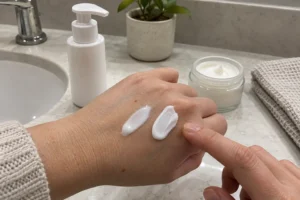
A lightweight lotion may still suit you, but dry areas might need a cream or ointment.
Compare how long the product keeps your skin comfortable. If your cheeks feel tight again soon after application, a different texture may be worth trying.
You can use a richer product on the cheeks and a lighter amount through an oily forehead.
There’s no need to make every area equally coated. Choose the amount and texture according to how each part of your face behaves.
4. Apply Moisturizer After Washing

Keep moisturizer close to where you wash so it’s easy to apply afterward.
Gently pat away excess water, then apply it while the skin is still slightly damp. The AAD explains that this helps trap water in the skin rather than allowing it to evaporate.
You don’t need to leave your face dripping wet.
If you use a prescribed treatment, follow its application instructions. Some products need dry skin or a particular order, so don’t automatically apply every step to damp skin.
5. Keep Sunscreen in Your Morning Routine
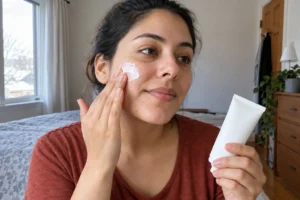
A cold day doesn’t remove the need for sun protection.
The AAD recommends broad-spectrum, water-resistant sunscreen with SPF 30 or higher. Use it alongside shade and protective clothing, and follow the application and reapplication directions.
Compare finishes if your usual sunscreen feels uncomfortable over dry patches.
A moisturizing formula may reduce how much separate moisturizer you want underneath. Drier areas may still need both.
Don’t mix sunscreen with moisturizer or foundation in your hand. Apply it as directed so you aren’t changing the formula before use.
6. Reassess Exfoliation and Strong Treatments

Flaking can make it tempting to scrub until the surface feels smooth.
However, a sore or irritated patch isn’t a reason to increase exfoliation. Review scrubs, exfoliating acids, retinoids, and other products that may be contributing to discomfort.
You may need to reduce or pause optional irritating products while your skin settles.
If a prescribed treatment is causing dryness, ask the prescriber about adjusting its use. Don’t replace it with another treatment simply because the season has changed.
The AAD advises caution with retinoids when skin is already dry, red, or inflamed.
A Simple Morning Winter Skincare Routine
Cleanse According to What Your Skin Needs
If you wake with oiliness or residue, use your gentle cleanser.
If a second daily cleanse consistently leaves your face uncomfortable, reassess that step rather than washing automatically. Follow any specific advice given for a diagnosed skin condition.
Avoid washcloth scrubbing over flaky areas.
Apply Moisturizer
Use enough to spread comfortably without repeatedly rubbing the skin.
Pay attention to the cheeks, around the mouth, and any other areas that feel dry. Keep heavy products away from areas where they feel excessive.
An extra hydrating serum is optional. It doesn’t need to be part of the routine if your moisturizer already works well.
Finish With Sunscreen
Apply sunscreen according to its directions before makeup.
Let the layers settle enough that the next product spreads without lifting or rolling.
If pilling occurs, review the amount of each preceding product and simplify where possible. Don’t solve it by applying too little sunscreen.
A Simple Evening Winter Skincare Routine
Remove Makeup and Sunscreen Gently
Use a removal method that works without repeated rubbing.
A separate remover may help with long-wearing makeup, but two cleansing steps aren’t compulsory for everyone.
Judge the finished result: your skin should be clean without feeling stripped.
Apply Your Usual Comfortable Moisturizer
Keep the evening routine straightforward when your skin feels irritated.
You don’t need to add several overnight masks, oils, and serums at once. One suitable moisturizer gives you a clearer starting point.
Introduce changes individually so you can notice how your skin responds.
Protect Selected Dry Areas if Needed
A small amount of plain petroleum jelly can help limit moisture loss on particularly dry patches. The AAD recommends applying it over damp skin or over a lotion or cream.
You don’t have to coat the whole face.
Avoid layering it over irritating treatments unless you’ve been advised that the combination is appropriate. Stop using a product if it makes the area less comfortable.
How to Choose a Winter Moisturizer
Start with texture, tolerance, and how your skin feels between applications.
| If you notice | What to compare |
|---|---|
| A light lotion stops feeling comfortable quickly | A richer fragrance-free cream |
| Dry cheeks with an oily forehead | Different amounts or textures by area |
| Products frequently sting | A simpler formula and a review of irritation |
| Makeup slides over heavy skincare | A smaller amount or lighter daytime texture |
| A few stubborn dry patches | Targeted ointment over moisturizer |
| Persistent itching or a rash | Medical assessment alongside basic care |
A longer ingredient list doesn’t automatically make a moisturizer better.
You also don’t need a separate product labeled “winter.” A familiar cream may work well with a small adjustment in amount or placement.
Don’t Forget Your Hands, Lips, and Body
Hands
Keep hand cream near the sink and apply it after washing.
Work it around the fingertips and nail folds as well as across the backs of the hands.
The AAD recommends cream or ointment on slightly damp hands to help manage dryness from washing.
Wear suitable gloves for cleaning and protect your hands from cold weather.
Lips
Use a plain lip product that feels comfortable.
Avoid picking loose skin or repeatedly licking the lips. If a balm burns or tingles, don’t assume that sensation means it’s working.
Persistent cracking or soreness may need a closer look.
Body
Apply moisturizer after bathing, including areas you tend to overlook.
Shins, elbows, and other dry patches may need a different texture from the face.
If clothing feels irritating against dry skin, compare softer fabrics and fragrance-free laundry products.
Make Your Makeup Fit Your Winter Routine
Foundation may collect around flakes even when the shade is correct.
Prepare the skin gently and try a thinner base layer before adding coverage only where you want it.
Use powder selectively. You may prefer it through the center of the face while leaving dry cheeks less powdered.
Avoid repeatedly rubbing makeup over a sore patch to make it blend.
If the skin underneath remains irritated, changing foundation alone may not resolve the problem.
When Dryness Needs More Than a Routine Change
Not every flaky patch is ordinary seasonal dryness.
Arrange an assessment if the problem persists despite gentle care, keeps returning in the same area, or comes with significant itching, burning, or a rash. The AAD recommends dermatology advice when basic changes don’t relieve dry skin.
Painful cracks, bleeding, or an area that becomes increasingly swollen or develops discharge also need attention.
Avoid assuming the answer is stronger exfoliation or an over-the-counter treatment chosen from a photograph.
Common Winter Skincare Mistakes
Adding More Products Before Checking the Basics
Review cleansing, moisturizer, and irritating treatments first.
Several new layers make it harder to identify what helps.
Scrubbing Away Every Flake
Repeated rubbing can leave an uncomfortable area feeling worse.
Let the condition of the skin guide the next step.
Using Very Hot Water
A richer cream doesn’t make a long, hot shower harmless to dry skin.
Adjust the washing habit too.
Applying Rich Products Everywhere
Dry cheeks and an oily forehead may need different amounts.
Use the texture where it feels useful.
Expecting a Serum to Replace Moisturizer
A hydrating serum may be an optional addition, but it doesn’t automatically provide the same lasting protection as a suitable cream.
Continuing Products That Burn
Persistent stinging deserves a review of the product and your skin’s condition.
Don’t treat discomfort as proof of effectiveness.
Final Takeaway
A winter skincare routine should help your skin stay comfortable between washes. Gentle cleansing, timely moisturizing, and consistent sun protection provide a useful starting point.
Adjust the texture where needed, reconsider irritating extras, and avoid scrubbing flaky areas. Dryness that remains painful, itchy, or persistent deserves a closer look.
Frequently Asked Questions
What is a good winter skincare routine?
Start with gentle cleansing, a suitable moisturizer, and daytime sunscreen. Adjust optional treatments according to your skin’s comfort and tolerance.
Why does my face feel tight after washing in winter?
Your cleanser, water temperature, washing frequency, and seasonal dryness may contribute. Review those factors rather than assuming you need another serum.
Should I use a cream instead of a lotion?
A cream may suit dry areas better, but it isn’t compulsory. Choose according to how long the product keeps your skin comfortable.
Can oily skin become flaky in winter?
Yes. Visible oiliness doesn’t rule out dry or irritated areas. Adjust products by area rather than treating the whole face identically.
Should I exfoliate flaky winter skin?
Avoid scrubbing sore, irritated, or actively peeling skin. Reassess products that may be contributing and seek advice if the flaking persists.
Do I need sunscreen in winter?
Yes. Keep appropriate sun protection when outdoors, including sunscreen, clothing, and shade.
Can I use petroleum jelly on dry patches?
A small amount can help retain moisture over damp skin or moisturizer. Use it selectively and check whether it suits your skin.
How long should I try a simpler routine?
Watch for a trend toward better comfort rather than expecting an immediate change. Seek advice if symptoms persist, worsen, or include a rash or painful cracking.
Our Editorial Approach
Beauty and self-care information should be clear and easy to use. Our goal is to help you understand your options and make more informed choices about your everyday routine.
Our articles are for educational purposes only and do not replace advice from a qualified healthcare professional.