

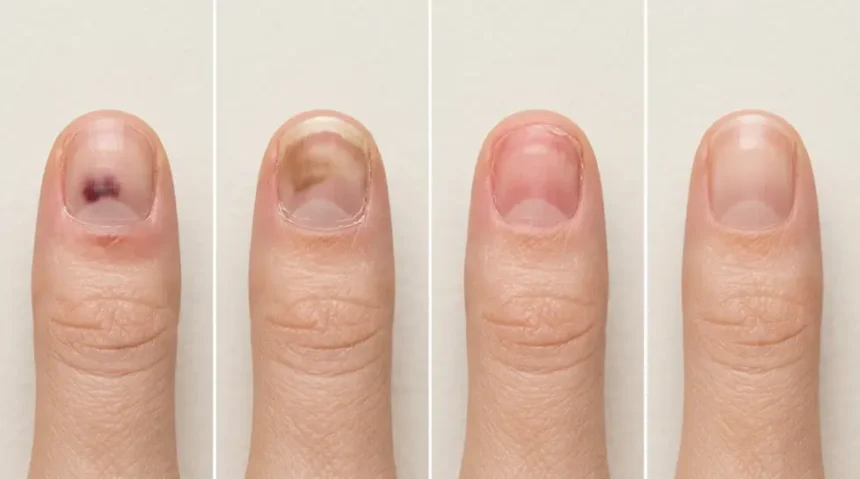
Losing a fingernail after an injury can look alarming, especially when the nail turns dark, begins lifting, or eventually falls away. The good news is that a damaged nail often grows back as the underlying nail-producing tissue remains healthy.
- The 5 Stages of Losing a Fingernail
- Stage 1: The Initial Fingernail Injury
- Stage 2: The Nail Begins to Change or Separate
- Stage 3: The Fingernail Falls Off
- Stage 4: The Nail Bed Heals
- Stage 5: New Fingernail Growth
- Fingernail Regrowth Stages: What You May Notice
- How to Protect a Fingernail While It Heals
- What Can Slow or Complicate Nail Regrowth?
- When to See a Doctor or Dermatologist
- Final Takeaway
- Frequently Asked Questions
The stages of losing a fingernail generally include the initial injury, discoloration or separation, nail detachment, nail bed healing, and gradual regrowth. The exact timeline varies depending on how severe the injury was and whether the nail matrix was damaged.
If you’re watching a damaged fingernail change from week to week, here’s what you can reasonably expect.
The 5 Stages of Losing a Fingernail
| Stage | What may happen | What to expect |
|---|---|---|
| 1. Initial injury | Pain, swelling, bleeding or bruising | The nail may become tender or discolored |
| 2. Nail changes | Darkening, lifting or separation | The nail plate may begin separating from the nail bed |
| 3. Nail detachment | Part or all of the nail falls away | The exposed area may be sensitive |
| 4. Nail bed healing | The injured tissue gradually settles | Tenderness and swelling should improve |
| 5. New nail growth | A new nail slowly emerges | Full regrowth can take about 6 months or longer |
These aren’t rigid medical stages. Some people skip certain steps, while others experience several changes at once.
Stage 1: The Initial Fingernail Injury
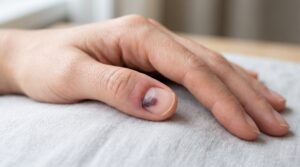
The process usually starts with trauma to the finger.
A fingernail can be injured by closing a door on a finger, hitting it with a heavy object, catching the nail on something, or experiencing another type of crush or impact injury.
Immediately afterward, you may notice:
- Pain or throbbing
- Swelling around the fingertip
- Bleeding
- Tenderness
- A dark red, purple, or black area underneath the nail
Blood trapped beneath the nail is called a subungual hematoma. The pressure from this bleeding can separate the nail plate from the nail bed and may eventually cause the nail to fall off.
A small bruise may simply grow outward with the nail. A more significant injury can result in nail separation and eventual nail loss.
When an injury needs medical attention
Don’t assume every dark or painful nail should be treated at home. The American Academy of Dermatology recommends medical evaluation when you can’t bend the injured finger, blood covers more than half the nail, the nail is black or purple, or the injury is particularly painful.
Stage 2: The Nail Begins to Change or Separate
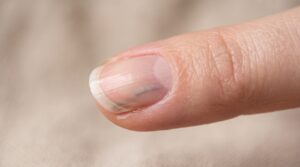
After the initial injury, the nail may start changing appearance.
You might notice that part of the nail looks:
- White or cloudy
- Dark purple or black
- Loose around the edges
- Raised from the nail bed
- More fragile than usual
This happens because the nail plate, the hard visible part of the nail, can become separated from the tissue underneath it.
Nail separation is known medically as onycholysis. Trauma is one possible cause, although infections and other nail conditions can also cause a nail to lift.
If the nail is already detached, don’t repeatedly pull at it. A loose piece can catch on clothing or other objects and cause additional trauma.
For a mild injury, the AAD recommends gently trimming away a portion of the nail that is no longer connected to the skin, then cleaning the area with soap and water.
Stage 3: The Fingernail Falls Off
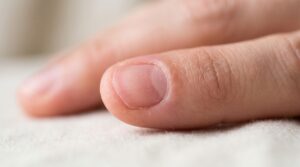
This is the stage most people worry about.
As the damaged nail loses its attachment, it may gradually lift and eventually fall off. Sometimes only part of the nail is lost. In other cases, the entire fingernail comes away.
The timing isn’t identical for everyone. With certain traumatic nail injuries, the nail can fall off several weeks after the original injury. A new nail may already be developing underneath or behind the damaged nail.
Seeing exposed nail bed tissue can be unsettling, but the appearance alone doesn’t tell you whether the nail will grow normally.
Should you pull off a loose fingernail?
Usually, don’t force a nail off simply because it looks ready to fall.
If a piece is completely detached and catching on things, carefully trimming the unattached portion can be appropriate for a minor injury. If the nail remains attached, pulling it away can create additional damage to the tissue underneath.
Keep the injured area protected with a light dressing while it remains sensitive.
Stage 4: The Nail Bed Heals
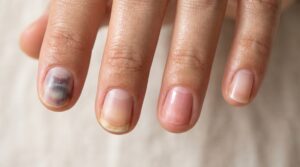
Once the damaged nail has come away, the nail bed underneath can begin recovering.
The nail bed is the tissue beneath the nail plate. After an injury, it may initially look red, raw, swollen, or unusually sensitive.
During this period, protecting the fingertip matters more than trying to make the nail grow faster.
The American Academy of Dermatology recommends cleaning a minor nail wound with soap and water. If it is bleeding, petroleum jelly and a protective gauze dressing can help keep the wound from sticking to dry gauze while it heals.
A cool, damp cloth can also help with swelling after a new injury. Keeping the finger elevated may reduce swelling as well.
What healing should feel like
As healing progresses, you should generally see gradual improvement rather than increasing pain.
Tenderness should settle, swelling should decrease, and the exposed area should become less sensitive.
If the area becomes increasingly painful, red, swollen, warm, or develops drainage, it’s worth contacting a healthcare professional because infection can occur after nail injuries.
Stage 5: New Fingernail Growth
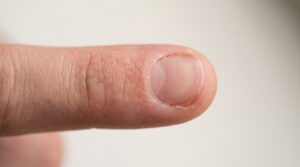
The final stage is the slowest: fingernail regrowth.
New fingernail cells are produced by the nail matrix, which sits near the base of the nail underneath the skin. The matrix acts as the nail’s growth-producing tissue.
As new nail material forms, it gradually moves forward across the nail bed.
At first, the new nail may look different from your usual nail. You might notice:
- A thin or uneven surface
- Ridges
- Temporary discoloration
- A slightly unusual shape
- Tenderness around the growing edge
An injury that affects nail growth can sometimes leave temporary ridges or other changes that become less noticeable as the nail grows out.
How long does it take for a fingernail to grow back?
A completely removed fingernail can take about six months or longer to grow back fully. The timeline depends on the individual and the extent of the injury.
Don’t expect the nail to look normal immediately. Even when the nail has started growing, the older damaged portion may take months to disappear completely.
If the nail matrix has suffered significant damage, regrowth may be abnormal or, in severe cases, incomplete.
Fingernail Regrowth Stages: What You May Notice
Fingernail regrowth isn’t usually an overnight transformation. Think of it as a slow replacement process.
Early growth
A small amount of new nail may become visible near the base. It can appear thin or slightly uneven.
Middle growth
The new nail gradually moves forward. The difference between the new growth and the older damaged nail may become easier to see.
Later growth
More of the original damaged nail grows toward the fingertip and can eventually be trimmed away.
Full regrowth
Once the entire nail has grown forward, the appearance should become easier to judge. If the nail matrix wasn’t seriously damaged, the nail may eventually return close to its previous appearance.
How to Protect a Fingernail While It Heals
You don’t need an elaborate nail-care routine during recovery. Gentle protection is usually more useful.
Keep the area clean
For a minor injury, wash gently with soap and water and follow any care instructions provided by your healthcare professional.
Protect exposed tissue
A light dressing can provide padding and protect the injured area from accidental bumps. The AAD recommends continuing protection while the injury heals.
Don’t pick or tear
Avoid pulling at partially attached nail pieces. Additional trauma can make recovery more difficult.
Be careful with manicures
Give the injured nail time to recover before using aggressive manicure techniques, artificial nails, or products that could irritate the area.
Keep the remaining nail short
Once it’s safe to trim the nail, keeping it short can reduce the chance of catching it on clothing or objects.
What Can Slow or Complicate Nail Regrowth?
Not every damaged fingernail follows the same healing pattern.
Regrowth can be affected by the severity and location of the injury. Damage involving the nail matrix is particularly important because that is where new nail cells are produced.
An infection or another underlying nail condition can also cause nail separation or changes that look similar to an injury. For that reason, a nail that starts lifting without an obvious injury should be evaluated rather than automatically assumed to be healing from trauma.
When to See a Doctor or Dermatologist
A minor nail injury often improves with basic care, but some injuries deserve professional evaluation.
Seek medical attention if:
- You cannot bend the injured finger.
- The injury causes severe or worsening pain.
- Blood covers more than half of the nail.
- The nail becomes black or purple after significant trauma.
- The finger appears deformed.
- Redness, swelling, warmth, or drainage is increasing.
- The nail continues to lift without an obvious injury.
- The wound isn’t improving after several days.
The AAD specifically recommends professional evaluation for several of these warning signs, particularly severe pain, extensive blood under the nail, inability to bend the finger, or significant discoloration.
Final Takeaway
The 5 stages of losing a fingernail are best understood as a general healing pattern rather than a strict timeline: injury, nail changes or separation, nail loss, nail bed healing, and gradual regrowth.
A fingernail can take six months or longer to completely grow back, so patience is part of the process.
If the injury is severe, the pain is getting worse, or the nail changes don’t match an obvious injury, don’t rely on appearance alone. A dermatologist or other healthcare professional can determine whether the nail bed or matrix needs additional care.
Frequently Asked Questions
Will my fingernail grow back after it falls off?
Usually, yes. Fingernails generally regrow after being lost, provided the nail-producing matrix has not suffered severe permanent damage. Complete fingernail regrowth can take about six months or longer.
How long does it take for a fingernail to fall off after an injury?
There isn’t one fixed timeline. A severely damaged nail may loosen and fall away over the following weeks, while some injured nails never completely detach. The severity and type of injury make a difference.
Can a damaged fingernail grow back normally?
It can. If the nail matrix remains healthy, the new nail may eventually look much like the original. Significant matrix damage can cause lasting changes in nail growth or appearance.
Should I cover a fingernail that has fallen off?
For a healing minor injury, a light dressing can protect exposed tissue from friction and accidental bumps. Keep the area clean and follow medical instructions if the injury was evaluated professionally.
Is it normal for a new fingernail to look ridged?
Temporary ridges or unevenness can occur after nail trauma because an injury can interrupt normal nail growth. As the affected portion grows forward, the appearance may improve.
Can I speed up fingernail regrowth?
There isn’t a reliable way to dramatically accelerate the natural nail-growth process after an injury. The most useful approach is protecting the nail and surrounding tissue while it heals and avoiding additional trauma.
For more practical beauty, wellness, and self-care guidance, explore The Serenity Lab.
Our Editorial Approach
Beauty and self-care information should be clear and easy to use. Our goal is to help you understand your options and make more informed choices about your everyday routine.
Our articles are for educational purposes only and do not replace advice from a qualified healthcare professional.