

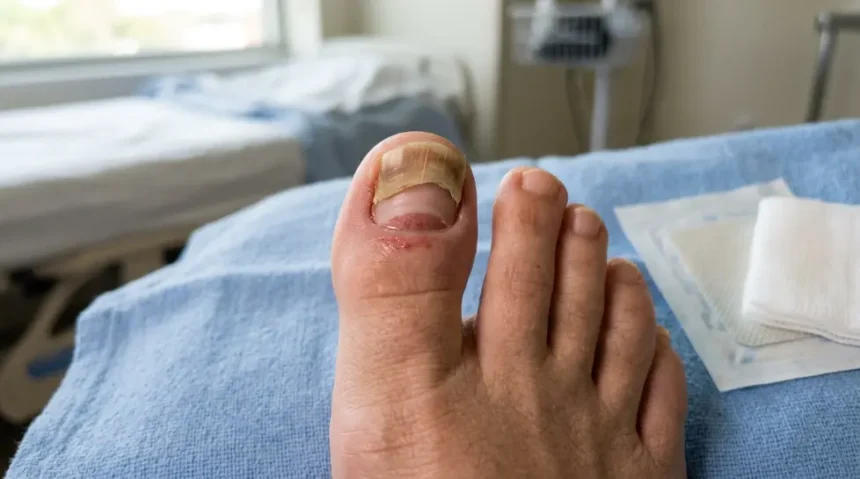
A toenail falling off is usually caused by an injury, repeated pressure from tight shoes, or a fungal infection. If the nail is loose but still attached, do not pull it off. Protect it from snagging, trim only the portion that is completely detached, and keep the exposed area clean and lightly covered while it heals.
- Why Is My Toenail Falling Off?
- A direct injury
- Repeated pressure from shoes or activity
- Toenail fungus causing nail loss
- Other possible causes
- Causes at a Glance
- What to Do When a Toenail Falls Off
- 1. Do Not Pull the Nail
- 2. Trim Only the Fully Detached Edge
- 3. Clean the Area Gently
- 4. Keep the Dressing From Sticking
- 5. Reduce Swelling and Pressure
- 6. Check the Toe Each Day
- What If a New Toenail Is Growing Under the Old Toenail?
- How Long Does a Toenail Take to Grow Back?
- When to See a Doctor or Podiatrist
- Common Mistakes That Can Slow Healing
- Frequently Asked Questions
- Final Takeaway
Most toenails grow back, but the process is slow. A full replacement often takes about 12 to 18 months. The right care depends on why the nail loosened and whether the nail bed underneath is injured or infected.
Important: Home care is reasonable for a mild injury, but severe pain, uncontrolled bleeding, spreading redness, pus, fever, or an unexplained loosening nail should be assessed by a healthcare professional.
Why Is My Toenail Falling Off?
The hard part you see is the nail plate. It normally rests on the nail bed and grows from tissue beneath the skin at the base of the nail. When the plate separates from the bed, the condition is called onycholysis. The detached part cannot reattach, but healthy new growth may remain connected as it moves forward.
A direct injury
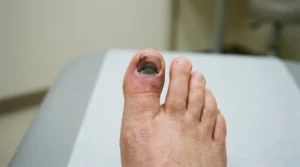
Stubbing a toe, dropping something heavy on the foot, or catching the nail can damage the plate and the tissue underneath. Blood may collect under the nail, causing a dark red, purple, or black area. The nail can loosen immediately or fall off days or weeks later.
A very painful dark nail, a large collection of blood, a deep cut, or a toe that looks bent or misshapen needs medical attention. Do not try to drill or burn a hole through the nail at home to release pressure.
Repeated pressure from shoes or activity

A toenail can loosen without one dramatic accident. Running, hiking, dancing, or wearing shoes with a narrow toe box can repeatedly push the toe against the shoe.
The nail may feel sore at first, turn dark, and later begin to lift. Changing footwear and reducing pressure are essential, or the new nail may be injured as it grows.
Toenail fungus causing nail loss
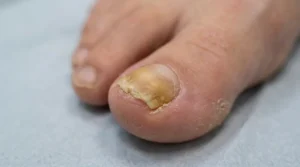
Fungal nail infections can make a toenail yellow, white, brown, thick, brittle, misshapen, or crumbly. Debris may collect under the nail, and the plate can gradually lift from the nail bed. In advanced cases, part or all of the nail may fall off.
Not every thick or discolored nail is fungal. Psoriasis and trauma can look similar, so unexplained or persistent changes are worth showing to a dermatologist, podiatrist, or primary care clinician.
Other possible causes
Less commonly, nail separation may be associated with psoriasis, nail-product irritation, certain medications, or an underlying health condition. Arrange an evaluation if several nails are lifting or the problem keeps returning.
Causes at a Glance
| Possible cause | Clues you may notice | Sensible next step |
|---|---|---|
| Sudden injury | Pain, bleeding, swelling, or a dark nail after impact | Protect the toe and seek care if the injury is severe |
| Repeated shoe pressure | Soreness after running or hiking, bruising, gradual loosening | Reduce activity temporarily and correct shoe fit |
| Fungal infection | Thickening, yellow or brown color, crumbling, debris, gradual lifting | Get a professional diagnosis and appropriate treatment |
| Skin or medical condition | Multiple affected nails, pitting, skin changes, or no clear injury | See a healthcare professional for assessment |
What to Do When a Toenail Falls Off
1. Do Not Pull the Nail
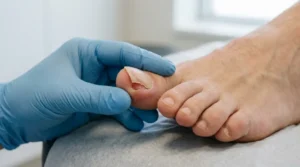
If your toenail is falling off but still attached, leave the connected portion in place. Pulling can tear living tissue, restart bleeding, and expose more of the nail bed.
2. Trim Only the Fully Detached Edge
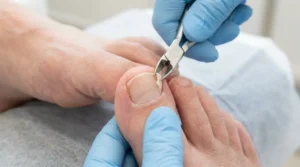
Use clean clippers to shorten a loose section that catches on socks or bedding. Trim only what is no longer connected to skin, and stop if you feel pain or resistance or see bleeding.
If the nail is split near the base, barely attached, or difficult to trim safely, have a clinician handle it.
3. Clean the Area Gently
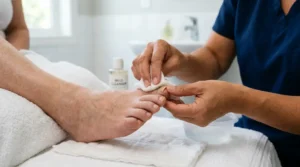
Wash the toe with mild soap and water, then pat it dry. Do not dig under the remaining nail or scrub an exposed nail bed.
4. Keep the Dressing From Sticking
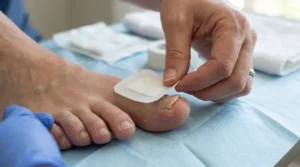
For a minor injury, a thin layer of plain petroleum jelly can help prevent gauze from sticking. Add a light, clean bandage or nonstick dressing. Place adhesive on the surrounding skin and do not wrap tightly.
Change the dressing daily or whenever it becomes wet or dirty. After the skin closes and stops draining, use a light bandage only when protection from friction is needed.
5. Reduce Swelling and Pressure
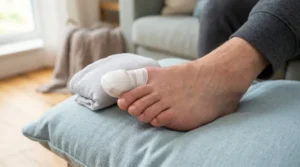
For a recent minor injury, apply a cool, damp washcloth and elevate the foot. Wear clean socks and roomy shoes with a wide toe box.
Pause activities that repeatedly hit the affected toe. Return gradually when footwear feels comfortable and the toe is no longer bleeding or significantly painful.
6. Check the Toe Each Day
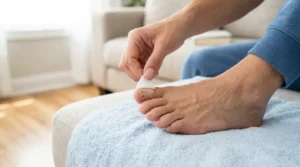
Look for increasing redness, warmth, swelling, pain, bad odor, or yellow or white drainage. These changes can signal infection. Also watch the remaining nail so a sharp edge does not press into nearby skin.
What If a New Toenail Is Growing Under the Old Toenail?
New growth can appear beneath or behind a damaged old nail. It begins at the base and may push the old plate forward until that nail can be trimmed or sheds on its own.
Do not slide tools between the nails or pry the old one up. Keep the old nail smooth and short only where it is completely loose.
Early regrowth may look thin, uneven, or ridged. A major nail bed or nail matrix injury can sometimes cause lasting changes in shape or texture.
How Long Does a Toenail Take to Grow Back?
Toenails grow much more slowly than fingernails. The exposed nail bed from an uncomplicated injury may begin healing within roughly 7 to 10 days, while replacing the full nail usually takes about 12 months and can take up to 18 months.
The big toenail often takes the longest. Age, circulation, infection, repeated pressure, and the original injury can affect the timeline.
| Stage | What you may notice |
|---|---|
| First days | Tenderness, bruising, or an exposed and sensitive nail bed |
| First few weeks | Skin heals and discomfort gradually settles |
| Following months | A thin new nail becomes visible at the base and moves forward |
| About 12–18 months | The nail may reach full length if growth is healthy and uninterrupted |
Progress is easier to judge month to month than day to day. Taking a clear photo every four weeks can help you see whether the new nail is advancing.
When to See a Doctor or Podiatrist
Seek prompt medical care if:
- Bleeding does not stop with gentle pressure.
- Pain is severe, worsening, or throbbing intensely.
- Blood covers a large part of the nail or the nail looks black or purple after an injury.
- The toe looks bent, misshapen, numb, or difficult to move.
- There is a deep cut, crush injury, or concern about a fracture.
- Redness, warmth, swelling, or pain is spreading.
- Pus, bad odor, red streaks, or fever develops.
- The nail is lifting without a clear injury.
- Several nails are affected or the problem keeps returning.
- A suspected fungal nail is thick, painful, crumbling, or getting worse.
- No new growth appears, or the regrowing nail becomes increasingly distorted.
If you have diabetes, reduced circulation, loss of sensation in your feet, or a weakened immune system, contact a healthcare professional before relying on home treatment. A small toe wound can be harder to notice and may need closer care.
Common Mistakes That Can Slow Healing
- Pulling off a partially attached nail: This can tear the nail bed and increase pain.
- Putting strong adhesive on the nail: Tape should sit on the surrounding skin rather than the injured plate.
- Wrapping the toe too tightly: A dressing should protect the area without restricting circulation.
- Going back to tight shoes too soon: Continued pressure can damage the new growth.
- Assuming every yellow nail is fungus: Testing may be needed because several conditions look alike.
- Trying to drain a dark nail at home: This can cause burns, deeper injury, or infection.
Frequently Asked Questions
Will a Loose Toenail Reattach Itself?
No. A separated section will not reattach. Protect the area while the damaged portion grows forward and healthy new nail replaces it.
Should I Cover a Toenail That Is Falling Off?
Cover it when the nail bed is open, bleeding, draining, tender, or likely to rub. Use a light, nonstick dressing and change it when wet or dirty.
Does a Falling Toenail Always Need to Be Removed?
No. A partly attached nail can often remain while it grows out. A clinician may remove it after a significant injury or for another medical reason.
Can I Use Nail Polish While the Toenail Grows Back?
Avoid polish, gel, glue, and artificial nails while the nail bed is injured or the cause is unclear. They can hide changes and irritate damaged tissue.
How Can I Tell Whether the New Toenail Is Growing?
Look for a thin strip of fresh nail at the base that gradually moves toward the tip. Compare monthly photos rather than expecting visible daily change.
What If the Toenail Fell Off Without Pain?
Painless separation can still result from repeated pressure or fungal infection. If there was no obvious injury, or if the nail is thick, discolored, or crumbly, schedule an examination so the cause can be identified.
Final Takeaway
When a toenail is falling off, the safest response is usually simple: do not pull it, trim only the fully detached edge, clean and lightly cover any exposed tissue, and remove pressure from the toe. Watch closely for infection or signs of a more serious injury.
Regrowth requires patience. A replacement toenail commonly needs 12 to 18 months, and protecting the toe during that time gives the new nail the best chance to grow in normally.
For more practical nail and self-care guidance, explore The Serenity Lab.
Our Editorial Approach
Beauty and self-care information should be clear and easy to use. Our goal is to help you understand your options and make more informed choices about your everyday routine.
Our articles are for educational purposes only and do not replace advice from a qualified healthcare professional.