
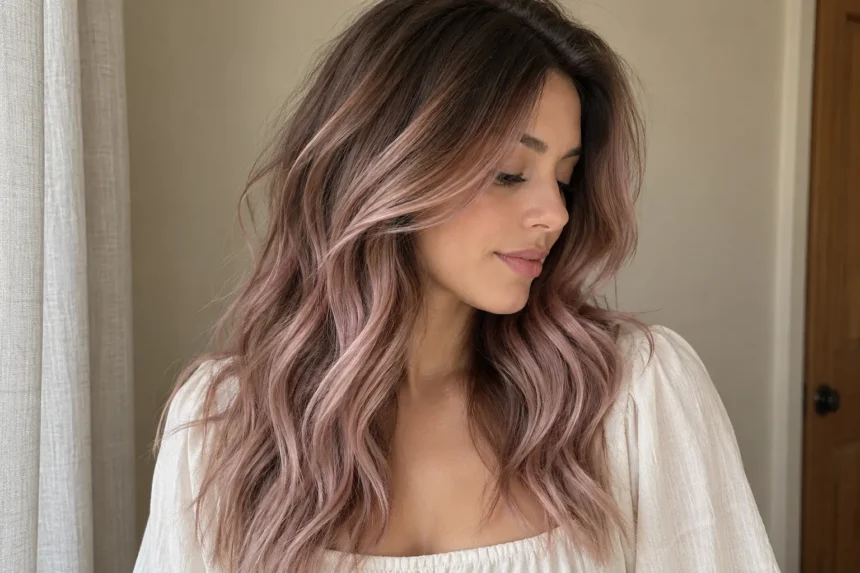
Rose brown hair can look mostly brunette indoors, then reveal a pink reflection when you step into daylight. That subtle change is part of its appeal. You can keep a deep chocolate base, add a few rosy pieces, or choose a lighter brown that makes the pink more noticeable.
- Rose Brown Hair Ideas at a Glance
- 1. Chocolate Rose Brown Hair
- 2. Soft Rose Brown Balayage
- 3. Mauve Rose Brown Hair
- 4. Rose Gold Brown Hair
- 5. Dark Espresso Rose Brown Hair
- 6. Dusty Rose Brown Highlights
- 7. Face-Framing Rose Brown Hair
- 8. Rose Brown Ombré
- 9. Chestnut Rose Brown Hair
- 10. Plum Rose Brown Hair
- 11. Hidden Rose Brown Panels
- 12. Light Mushroom Rose Brown Hair
- What Is Rose Brown Hair?
- How to Choose Your Rose Brown Shade
- Does Rose Brown Hair Need Bleach?
- Make the Placement Fit Your Haircut
- What to Ask for at the Salon
- Keeping Rose Brown Hair Looking the Way You Want
- Common Rose Brown Hair Color Mistakes
- Conclusion
- Frequently Asked Questions
The balance between brown and rose matters more than the name. A peachy rose gives a warmer result, while mauve creates a cooler pink-purple tint. Placement changes the look too: fine highlights blend through the hair, while a rose-colored front section creates a clearer contrast.
These 12 rose brown hair ideas cover understated tints and more visible color. Start with the depth you want to keep, then decide how much pink you’d like to see.
Rose Brown Hair Ideas at a Glance
| Hair color idea | Main tones | Suggested placement | Overall effect |
|---|---|---|---|
| Chocolate rose brown | Chocolate and muted rose | Blended throughout | Deep brunette with a rosy reflection |
| Soft rose brown balayage | Brown and dusty pink | Mid-lengths and ends | A gradual change through the lengths |
| Mauve rose brown | Brown, pink, and violet | Fine highlights or an overall tint | Cool and muted |
| Rose gold brown | Brown, gold, and peach-pink | Highlights or lighter lengths | Warm and softly reflective |
| Dark espresso rose brown | Deep brown and rose | Selected ribbons | Subtle color within a dark base |
| Dusty rose brown highlights | Medium brown and muted pink | Fine woven sections | Soft, distributed color |
| Face-framing rose brown | Brunette and rose | Around the face | A more noticeable front detail |
| Rose brown ombré | Dark brown fading into rose | Lower lengths and ends | A visible transition |
| Chestnut rose brown | Chestnut and warm pink | Blended throughout | Warm brunette with a pink influence |
| Plum rose brown | Brown, plum, and rose | Deeper tint or selected sections | Rich pink-purple depth |
| Hidden rose brown panels | Brunette and rosy pink | Beneath the top layers | Color revealed through movement |
| Light mushroom rose brown | Muted brown, beige, and mauve-pink | Lighter lengths | Soft and smoky |
These names describe color directions rather than standardized salon formulas. Bring reference photos and explain which parts of the color you want to keep or change.
1. Chocolate Rose Brown Hair
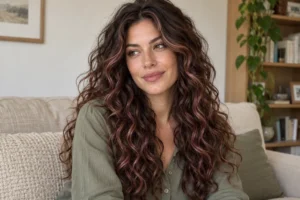
Chocolate rose brown keeps a rich brunette base with a muted pink reflection.
The brown remains the main color, making this a useful starting point if you want something subtle.
Compare a warmer rosy chocolate with a cooler mauve version. Both can look brown at first, but their reflections differ in daylight.
Ask how visible the pink will be on your current hair. A shade that looks obvious on a lighter sample may be much quieter on a dark base.
Best for: A brunette look with a restrained rose tint.
2. Soft Rose Brown Balayage
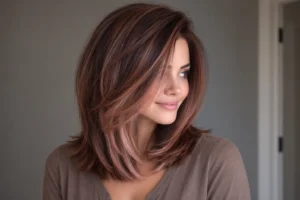
Rose brown balayage places lighter, rosy sections through the mid-lengths and ends while leaving more depth near the roots.
Keep the transition gradual if you want the color to feel blended.
Fine pieces give a softer result than broad sections with a large difference in depth. Show your colorist how much contrast you want between the brown and pink.
Check a reference from behind as well as the front. The distribution through the back can change the overall look.
Best for: Rosy lengths with a deeper root area.
3. Mauve Rose Brown Hair
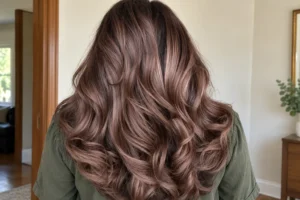
Mauve rose brown brings a pink-purple influence into a brunette base.
It gives a cooler appearance than a peachy rose shade, although the exact result depends on the underlying hair color.
Choose whether you want a faint mauve reflection or distinctly colored sections. Those are different requests even when both references are labeled rose brown.
Compare the shade beside your face rather than only on a screen.
Best for: A muted rose shade with a violet influence.
4. Rose Gold Brown Hair
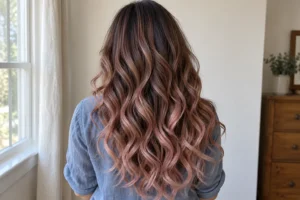
Rose gold brown combines brunette depth with golden and peach-pink tones.
Lighter sections can show the rose gold more clearly, while the darker base keeps the overall appearance grounded in brown.
Decide how much gold you enjoy. Some versions look more caramel, while others lean noticeably pink.
Bring examples of both your preferred shade and a version that looks too orange or too bright. This helps explain the balance you want.
Best for: A warm rose variation through brown hair.
5. Dark Espresso Rose Brown Hair
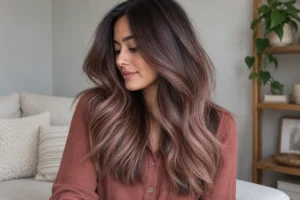
Dark espresso rose brown keeps most of the hair deep brown, with selected rosy ribbons or a subtle colored reflection.
This creates a different effect from light pink highlights. The color may be discreet until light catches the treated sections.
If you want clearly visible pink against espresso hair, discuss whether those sections would need lightening first.
Keep enough dark hair between the pieces if preserving the deep base is your priority.
Best for: Adding rose detail while keeping a dark brunette appearance.
6. Dusty Rose Brown Highlights
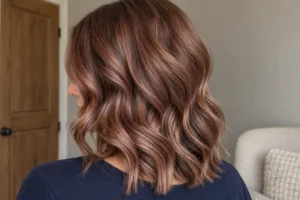
Dusty rose highlights spread small sections of muted pink through brown hair.
Fine woven pieces give a more blended result. Wider highlights make the pink easier to distinguish from the base.
Look at how the highlights sit when the hair is straight as well as waved. Styling can make the same placement appear more separated or more blended.
Choose the highlight depth according to the amount of contrast you want.
Best for: Rosy dimension distributed throughout the hair.
7. Face-Framing Rose Brown Hair
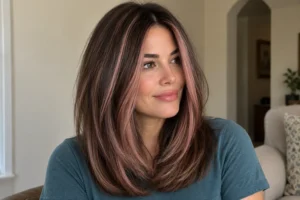
Face-framing rose brown concentrates the color around the front.
A few narrow pieces create a smaller change, while a wider panel makes the rose more prominent beside your skin.
Compare warm rose and muted mauve near your face before deciding. You may prefer a different balance here than you would through the ends.
Ask how the front sections will connect with the rest of the hair, especially if you often wear it tied back.
Best for: A visible rose detail around the face.
8. Rose Brown Ombré
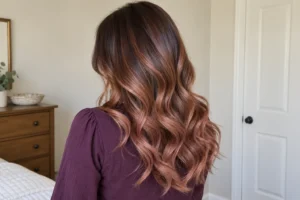
Rose brown ombré moves from a deeper brown near the top into a rosier color through the lower lengths.
The transition can be subtle or more obvious depending on the difference between the two shades.
Leave enough room for the blend. A sharp change at one horizontal point can look more like a band than a gradual fade.
Show your colorist where you want the rose to begin when your hair is worn naturally.
Best for: Keeping the roots brunette with more color toward the ends.
9. Chestnut Rose Brown Hair
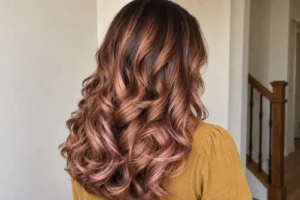
Chestnut rose brown adds a pink influence to a warm brown base.
The result may look reddish brown in some lighting, so clarify whether you want the pink to remain recognizable.
Compare a chestnut reference with an auburn one. This helps separate the rose-brown result you want from a stronger copper-red shade.
Keep the color depth consistent if you want the change in tone to be the main feature.
Best for: A warm brunette shade with a softer pink reflection.
10. Plum Rose Brown Hair
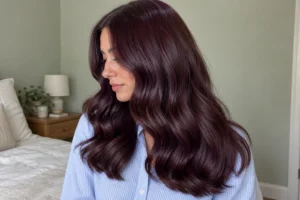
Plum rose brown combines deeper pink and violet tones with brown.
It offers more depth than a pale dusty rose and can look close to a wine-colored brunette.
Decide whether brown or plum should dominate. A subtle plum reflection looks different from saturated purple-red lengths.
Check the color in daylight and indoor lighting before judging how dark or vivid it feels.
Best for: A richer rose shade with pink-purple depth.
11. Hidden Rose Brown Panels
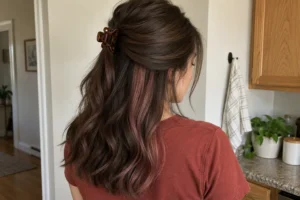
Hidden panels place the rose color beneath a brunette top layer.
The pink becomes more visible when the hair moves, is tucked behind the ears, or is arranged in a half-up style.
Discuss the placement while wearing your usual parting. A section that looks concealed in one style may be obvious in another.
Choose a narrow panel for a small detail or a larger underlayer for more visible color.
Best for: Rose color that appears differently as you style your hair.
12. Light Mushroom Rose Brown Hair
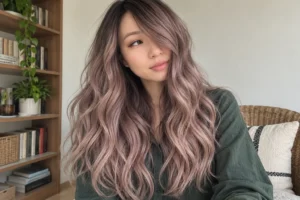
Light mushroom rose brown combines a muted brown base with beige and mauve-pink tones.
The result is softer and smokier than a warm rose gold brown.
Compare how gray you want the base to look. Too much ash may move the result away from the rosy shade you had in mind.
If your hair is dark or previously colored, ask what preparation is needed before choosing a light, muted reference.
Best for: A lighter rose brown with restrained warmth.
What Is Rose Brown Hair?
Rose brown hair combines brunette color with pink tones. The rose can appear as a subtle reflection, separate highlights, or more visibly colored lengths. Wella describes the look as brunette hair enhanced with pink and shows variations ranging from lightly tinted ends to stronger rosy sections.
It doesn’t have to look pastel.
A deep brown with a faint rosy tint and a lighter brunette with dusty pink highlights can both fit the description. Explain the amount of pink you want instead of relying on the name alone.
How to Choose Your Rose Brown Shade
Your preferred brown depth is a useful place to start. Then compare the warmth and intensity of the rose.
| If you want | Compare these options |
|---|---|
| A subtle brunette change | Chocolate rose brown |
| A deep base with small color details | Espresso with rose ribbons |
| A cooler pink reflection | Mauve rose brown |
| A warmer result | Rose gold brown or chestnut rose |
| More noticeable pink | Rose brown ombré or wider highlights |
| Color concentrated near the face | Face-framing rose brown |
| A partly concealed detail | Hidden rose panels |
| A lighter muted shade | Mushroom rose brown |
Look at references with a complexion and starting hair color reasonably close to yours.
Undertone guides can help you compare, but they don’t need to dictate the choice. Notice whether you enjoy the whole combination beside your face.
Does Rose Brown Hair Need Bleach?
Not every version requires the same process.
A subtle tint over lighter brown hair is a different goal from visible dusty pink sections in dark, previously colored hair. Lighter or brighter results may require pre-lightening, as L’Oréal Paris explains in its rose brown color guide.
Tell your colorist about previous dye and lightening through the lengths. Your starting color and hair condition affect what is achievable.
Avoid assuming a pink product will create the color shown on its packaging over any brunette base. Ask for a strand test when the outcome is uncertain.
Make the Placement Fit Your Haircut
Short hair can carry an overall rose tint, fine highlights, or a small front section.
On a bob, check how the color sits along the perimeter. A strong band near the ends may look more defined than it would on longer layers.
Medium and long hair provide more room for balayage and ombré transitions.
If you have curly hair, discuss where the colored sections will sit when the curls are dry. A reference photographed on straight hair may show the placement differently.
What to Ask for at the Salon
Describe the base, rose tone, placement, and amount of contrast.
For example: “I want to keep my medium chocolate base, with fine dusty rose pieces through the lengths. I’d like the pink visible in daylight without making the whole color look bright.”
Bring a few reference photos and identify what you like in each.
Also explain what you want to avoid, such as orange warmth, a purple result, or very pale ends. That gives your colorist a clearer target.
Keeping Rose Brown Hair Looking the Way You Want
Ask what the shade is expected to look like as it fades. The brown base and rose-toned sections may change differently.
Use care products recommended for your color service and follow their directions.
If a color-depositing conditioner is suggested, confirm the shade and frequency. Adding more pink or purple pigment can shift the balance rather than simply restore the original look.
Plan refresh appointments around the result you want to maintain. A faint rose reflection and a clearly visible dusty pink don’t necessarily have the same upkeep.
Common Rose Brown Hair Color Mistakes
Choosing Only From the Shade Name
Rose brown isn’t one fixed formula. Use photos and describe the balance between brunette and pink.
Expecting Pastel Pink on a Dark Base Without Preparation
A product can add a tint without creating the lightness needed for a pastel result. Discuss the starting base and process first.
Mixing Up Rose, Copper, and Burgundy
These colors can overlap in photographs, but they contain different amounts of pink, orange, red, and violet.
Ignoring Highlight Placement
Fine ribbons, broad panels, and colored ends create different looks even with the same shades.
Comparing Only Styled Photos
Waves and salon lighting can emphasize the color. Ask how it will look with your usual texture and styling routine.
Choosing a Shade Without Discussing Fading
Find out how the color is likely to change and how it can be refreshed before committing.
Conclusion
Rose brown hair can be a small tonal change or a more visible pink-and-brunette combination. Chocolate rose keeps the result deep, mauve adds a cooler tint, and balayage places more color through the lengths.
Choose the brown depth first, then decide on the rose tone and placement. Clear references and a realistic discussion about your starting hair make the final result easier to plan.
Frequently Asked Questions
What color is rose brown hair?
Rose brown hair is brunette hair with a pink influence. It can lean warm and peachy, cool and mauve, or deeper and plum-toned.
Does rose brown hair work on dark brunettes?
Yes, although the result depends on the goal. A subtle reflection is different from clearly visible pink highlights, which may require selected sections to be lightened.
Is rose brown the same as rose gold?
No. Rose brown keeps a stronger brunette base, while rose gold usually describes a pink-and-gold appearance on a lighter base. Some looks combine elements of both.
Can rose brown hair suit fair skin?
Yes. Compare muted mauve, chocolate rose, and warmer rose gold versions beside your face. Fair skin can have different undertones, so one shade won’t suit everyone equally.
Can I get rose brown hair without coloring all my hair?
Yes. Fine highlights, face-framing pieces, tinted ends, or hidden panels let you place the rose in selected areas.
Does rose brown hair fade?
The rose tone can fade, and the way it changes depends on the formula, starting hair, and care routine. Ask your colorist what to expect from your particular service.
Can I create rose brown hair at home?
A subtle tint on a suitable base may be achievable with a product designed for that purpose. Larger changes, previous dark dye, or pre-lightening make the process more complicated. Follow all product directions and required testing.
Which rose brown idea is the most subtle?
Chocolate rose brown or a few fine rose highlights can keep the overall appearance mostly brunette. Ask for a restrained reflection rather than saturated pink sections.
Our Editorial Approach
Beauty and self-care information should be clear and easy to use. Our goal is to help you understand your options and make more informed choices about your everyday routine.
Our articles are for educational purposes only and do not replace advice from a qualified healthcare professional.