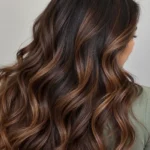

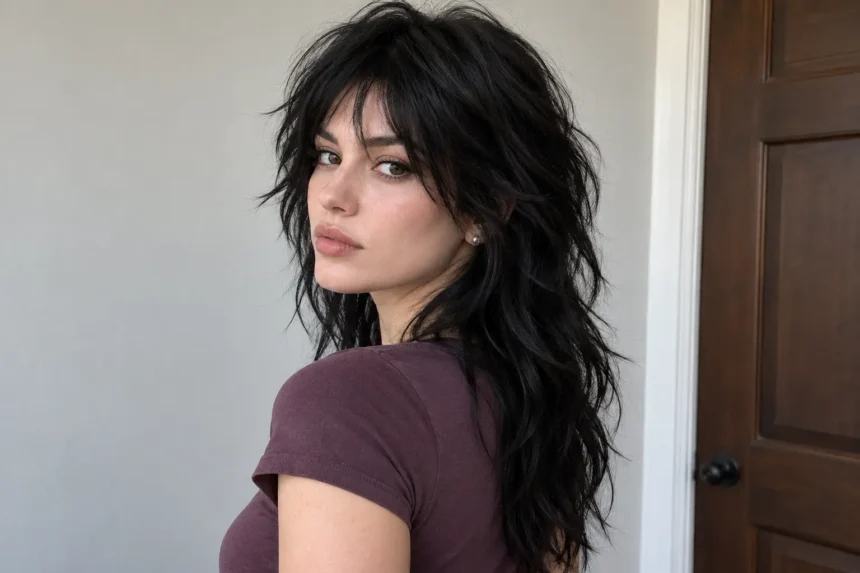
Jet black hair can make a simple haircut look more defined. The edge of a bob becomes clearer, long layers create darker ribbons through the lengths, and curls show different reflections as they move. You don’t need highlights for the color to have detail.
- Jet Black Hair Ideas at a Glance
- 1. Classic Glossy Jet Black Hair
- 2. Blue-Black Hair
- 3. Jet Black Blunt Bob
- 4. Collarbone-Length Jet Black Hair
- 5. Long Jet Black Layers
- 6. Jet Black Hair With Soft Waves
- 7. Defined Jet Black Curls
- 8. Jet Black Coils
- 9. Jet Black Pixie
- 10. Jet Black Hair With Curtain Bangs
- What Is Jet Black Hair?
- Jet Black vs. Soft Black vs. Blue-Black
- How to Choose Your Jet Black Shade
- Does Jet Black Hair Need Bleach?
- Think About Going Lighter Again
- Keeping Jet Black Hair Shiny
- Cleanse According to Your Scalp
- Condition the Lengths
- Limit Repeated Heat
- Use Finishing Products Sparingly
- Discuss Refresh Appointments
- What to Ask for at the Salon
- Common Jet Black Hair Mistakes
- Final Takeaway
- Frequently Asked Questions
The shade matters as much as the styling. A neutral black looks different from a blue-black tint, especially in daylight. Your starting color also affects the process, whether you’re refreshing naturally dark hair or making a larger change from blonde.
For 2026, inky black and glossy finishes appear in hair-color trend coverage, including Vogue’s annual shade forecast. The ideas below offer different ways to wear that direction, from short cuts to longer textured styles.
Jet Black Hair Ideas at a Glance
| Hair idea | Main feature | Suggested length | Overall effect |
|---|---|---|---|
| Classic glossy jet black | Deep, consistent color | Any length | Defined and reflective |
| Blue-black hair | A cool blue reflection | Any length | Inky with a colored sheen |
| Jet black blunt bob | A solid perimeter | Chin to neck length | Structured and simple |
| Collarbone-length jet black | A longer, defined outline | Collarbone | Balanced and versatile |
| Long jet black layers | Movement through the lengths | Long | Flowing with visible shape |
| Jet black waves | Rounded bends | Medium or long | Soft movement and reflection |
| Defined jet black curls | Separated curl shapes | Any length | Textured and dimensional |
| Jet black coils | A shaped natural silhouette | Any length | Rich color with varied texture |
| Jet black pixie | Short sides and a shaped top | Cropped | Compact and expressive |
| Jet black with curtain bangs | Shorter pieces around the face | Medium or long | A softer front outline |
These are styling options rather than separate color formulas. Choose the black shade first, then adapt the haircut and finish to your texture.
1. Classic Glossy Jet Black Hair
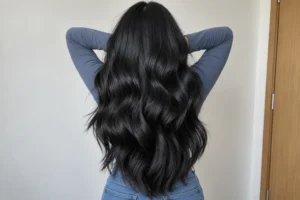
Classic jet black keeps the color deep and consistent, without an obvious blue, violet, or brown reflection.
It’s a useful reference if you want the haircut to provide most of the detail.
Compare the shade in daylight as well as indoor lighting. A color that looks neutral in a salon photograph may reveal a cooler tint outside.
Keep the finish suited to your hair. Straight lengths, waves, and curls can all reflect light without being styled into the same smooth surface.
Best for: A deep black shade with a clear, uncomplicated appearance.
2. Blue-Black Hair
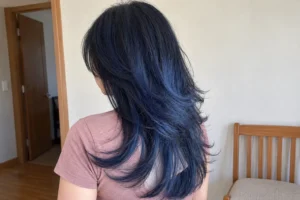
Blue-black adds a cool reflection to a dark base.
The blue may appear quietly when light catches the hair, or look much more visible through selected sections. Those results require different color plans.
Show your colorist whether you want hair that reads as black first or a more noticeable blue shade.
Check references carefully. Cool lighting and photo editing can make an ordinary black look bluer than it is.
Best for: Jet black hair with a visible cool influence.
3. Jet Black Blunt Bob
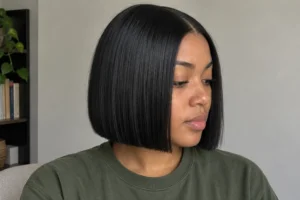
A blunt bob gives jet black hair a clearly defined edge.
Chin length creates a different outline from a bob that sits lower around the neck. Decide where you want the finished ends to fall before choosing the reference.
Compare the back as well as the front. An angled bob may keep more length beside the face while sitting considerably higher at the nape.
Ask how the perimeter will look in your usual texture, particularly if the inspiration photo shows a straightened finish.
Best for: A short black hairstyle with a strong outline.
4. Collarbone-Length Jet Black Hair
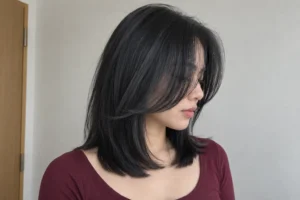
Collarbone length gives you more room around the face than a short bob while keeping a noticeable perimeter.
A solid edge emphasizes the shape. Light layering adds movement without necessarily changing the longest length.
Think about whether you want to tie your hair back. The front sections need enough length too, especially if you’re considering shorter face-framing pieces.
Check where the ends sit against your shoulders when dry. That contact can affect whether they bend inward or outward.
Best for: A medium-length black hairstyle with several styling options.
5. Long Jet Black Layers
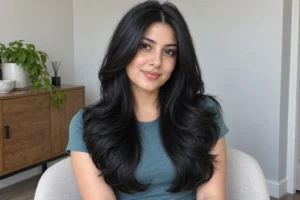
Long layers introduce movement while preserving length through the back.
The dark color can make the difference between shorter sections and longer ends easier to see, particularly when the hair moves.
Choose how much fullness you want to keep at the bottom. Heavy layering creates a different perimeter from a few long, blended sections.
Bring a back-view reference so your stylist can see the balance you want between length and shape.
Best for: Long black hair with movement through the lengths.
6. Jet Black Hair With Soft Waves
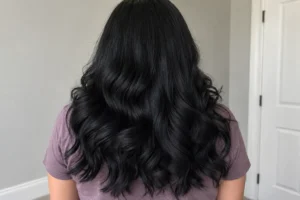
Soft waves create broad changes in reflection through jet black hair.
A loose bend gives a quieter result than a more defined wave pattern. You can also keep the roots relatively smooth and place most of the movement below the jaw.
Use your natural texture where it gives you a finish you enjoy.
If you use heated tools, choose a suitable heat protectant and follow the tool’s directions. Repeated high heat isn’t necessary to make dark hair look finished.
Best for: A flowing style with rounded movement.
7. Defined Jet Black Curls
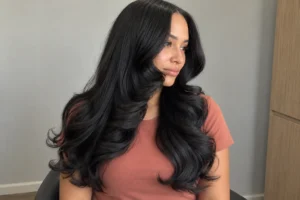
Defined curls give jet black hair detail through their shape and separation.
The haircut matters as much as the styling product. Layers can change where the volume sits and how the curls fall around your face.
Discuss the dry shape before cutting. A reference on a different curl pattern may not show how the same length will behave on your hair.
Apply styling products according to your routine and check whether you prefer more separation or a fuller finish.
Best for: Showing curl shape within a deep black color.
8. Jet Black Coils
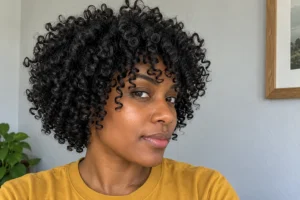
Jet black coils can carry a rounded shape, a tapered outline, or longer sections with varied volume.
Choose the silhouette you want before focusing on shine. A photograph of stretched hair gives a different length reference from hair worn in its usual coiled texture.
If coloring, discuss previous dye, relaxers, and other chemical services with your colorist.
You don’t need to straighten your hair to make the shade noticeable. Texture and shape remain part of the finished look.
Best for: Rich black color with a carefully chosen natural outline.
9. Jet Black Pixie
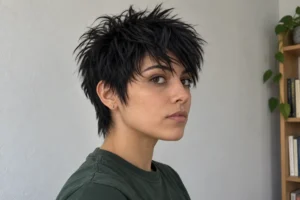
A jet black pixie brings attention to the shape around the forehead, ears, and nape.
A longer top gives you more styling variation. A closer crop creates a more compact outline.
Look at how the hair sits without a polished salon finish. Your natural growth direction can influence the fringe and crown.
Ask about trim appointments before choosing a precise shape. A short cut may dry quickly while still needing regular upkeep.
Best for: A short black style with a distinct shape.
10. Jet Black Hair With Curtain Bangs
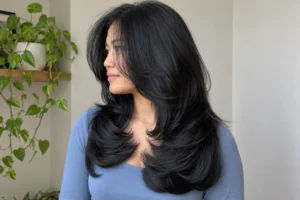
Curtain bangs break up the front outline while leaving the main lengths dark and solid.
A shorter center creates a more noticeable fringe. Longer pieces give a gentler transition into the sides.
Show where you want the shortest section to fall when dry.
Consider your usual parting and styling habits. A fringe that needs daily shaping may be less convenient if you normally leave your hair to dry naturally.
Best for: Adding movement around the face without changing the overall color.
What Is Jet Black Hair?
Jet black describes a very deep black shade with little obvious brown showing through.
It can be a natural hair color or a result achieved with dye. The exact appearance varies with the formula, lighting, and starting hair.
The name doesn’t guarantee a particular undertone.
Some products labeled jet black look relatively neutral, while others have a cooler reflection. Compare samples and reference photographs rather than choosing from the box name alone.
Jet Black vs. Soft Black vs. Blue-Black
These names describe different color directions, although brands may use them differently.
| Shade | Typical appearance | What to compare |
|---|---|---|
| Jet black | Deep, strong black | Whether you enjoy the overall depth |
| Soft black | A less intense black appearance | How much brown softness remains visible |
| Blue-black | Black with a blue influence | Whether the blue is subtle or obvious |
| Espresso brown | Very dark brown | How much brown appears in daylight |
Compare the shades beside your face.
If jet black feels darker than you expected, soft black or espresso may give you a result you prefer. Choosing a slightly different depth is easier before coloring than after.
How to Choose Your Jet Black Shade
Start with the appearance you want to keep rather than an undertone rule.
A cool black and a more neutral black can create different effects on the same person. Your preference matters alongside your complexion, eyebrows, and existing hair color.
| If you want | Compare these options |
|---|---|
| A strong, consistent black | Neutral jet black |
| A noticeable cool reflection | Blue-black |
| A less intense dark result | Soft black |
| Dark hair with visible brown | Espresso brown |
| A small change to naturally dark hair | A suitable tonal refresh |
| A defined overall shape | Jet black with a blunt perimeter |
Look at references with similar skin coloring and hair texture where possible.
Use virtual try-on tools to compare broad options, but don’t expect them to predict the exact color or condition of your finished hair.
Does Jet Black Hair Need Bleach?
Going darker usually involves a different process from lightening hair.
However, naturally dark hair, highlighted blonde hair, and previously colored hair won’t necessarily produce the same result with one black dye.
Previously lightened sections may need additional preparation to achieve an even, lasting dark shade. Your colorist can assess whether a filling step or another approach is appropriate.
Tell them about all previous color through the lengths.
If your goal includes a clearly visible blue section, discuss that separately from an all-over black result. The preparation may differ.
Think About Going Lighter Again
Before choosing permanent black, consider whether you may want blonde or lighter brown soon afterward.
A dark result can require a substantial correction process to lighten later. Don’t assume a lighter box dye will reverse it.
Ask what returning to your previous shade would involve.
If you’re uncertain about the depth, discuss a less permanent option with your colorist. Even a color described as temporary or demi-permanent may behave differently on porous, previously lightened hair.
Keeping Jet Black Hair Shiny
Cleanse According to Your Scalp
Choose a washing routine that keeps your scalp comfortable.
Follow the directions for your color service and shampoo rather than avoiding washing simply to preserve the shade.
A product that leaves your scalp uncomfortable isn’t a useful trade-off for darker lengths.
Condition the Lengths
Apply conditioner where your hair needs it, paying attention to the ends.
Start with a manageable amount and adjust according to how your hair feels.
More product doesn’t always create more shine. Heavy residue can leave some hair looking coated or reduce movement.
Limit Repeated Heat
You don’t need to straighten the same sections repeatedly to maintain a glossy appearance.
Choose a finish that works with your texture and use heated tools carefully when needed.
The American Academy of Dermatology notes that coloring and other cosmetic treatments can leave hair dry and brittle, so the condition of the hair matters alongside the shade.
Use Finishing Products Sparingly
A small amount of serum or another suitable finishing product may help you control the surface.
Check the result before adding more, especially on fine hair or near the roots.
Product shine and healthy hair aren’t interchangeable. A glossy coating won’t repair split ends.
Discuss Refresh Appointments
Ask whether your roots and lengths need different treatment.
Don’t assume every appointment requires permanent color over the whole head.
Explain whether the concern is visible regrowth, fading, an unwanted reflection, or a dull finish. Each may need a different response.
What to Ask for at the Salon
Describe the depth, undertone, haircut, and finish.
For example: “I want a deep neutral black without an obvious blue reflection, with collarbone-length ends and a mostly solid perimeter.”
Bring several reference photographs and explain which features you like.
Also mention future color plans, previous lightening, and any chemical treatments.
If you’re coloring at home, follow all product directions, including the required skin test before each use. The FDA notes that a reaction can still happen even when a skin test shows no reaction.
Common Jet Black Hair Mistakes
Choosing Only From an Edited Photo
Lighting and filters can change both depth and reflection.
Compare several references before deciding.
Confusing Jet Black With Dark Brown
Espresso may look black indoors while showing more brown outside.
Check the distinction in daylight.
Expecting Dye to Create Shine by Itself
Color, hair condition, styling, and lighting all affect the finish.
Adding more pigment won’t resolve every dull-looking result.
Recoloring the Lengths Automatically
Discuss whether the existing color needs refreshing before applying more dye over it.
Ignoring Previous Lightening
Porous blonde sections may respond differently from untreated roots.
Include your full color history when planning the service.
Choosing Without Considering Future Changes
A deep black result can be a longer commitment than the initial appointment suggests.
Discuss a later move to lighter shades before coloring.
Final Takeaway
Jet black hair gives bobs a defined edge, adds depth to long layers, and works with waves, curls, and coils. A neutral shade keeps the color straightforward, while blue-black introduces a cooler reflection.
Compare the depth in daylight, discuss your previous color, and choose a finish that fits your routine. The best result starts with a clear shade choice and hair that is handled carefully.
Frequently Asked Questions
What color is jet black hair?
Jet black is a very deep black shade with little obvious brown. Its exact undertone depends on the natural hair or color formula.
Is jet black hair trending in 2026?
Inky black appears in 2026 hair-color forecasts, alongside an emphasis on glossy finishes. That makes it a current option to compare, rather than a requirement for a particular haircut.
What’s the difference between jet black and blue-black?
Jet black describes depth, while blue-black specifically includes a blue influence. Product names overlap, so check the actual shade.
Can jet black hair suit fair skin?
Yes. It creates a noticeable contrast, which some people enjoy. Compare it with soft black and espresso to choose the depth you prefer.
Does jet black hair work with curls?
Yes. Curls and coils add shape and changing reflections without needing a straight finish.
Can I dye blonde hair jet black?
It may be possible, but previously lightened hair can need preparation for an even result. Discuss the process and your color history with a colorist.
How do I make jet black hair look shiny?
Keep the hair conditioned, avoid excessive heat, and use finishing products in suitable amounts. Choose styling that works with your texture.
Is jet black hair easy to maintain?
That depends on your starting color, visible regrowth, haircut, and desired finish. A shade close to your natural color presents different upkeep from black over blonde or gray roots.
Our Editorial Approach
Beauty and self-care information should be clear and easy to use. Our goal is to help you understand your options and make more informed choices about your everyday routine.
Our articles are for educational purposes only and do not replace advice from a qualified healthcare professional.